


05 November, 2026
A plate of sliced bánh chưng is a familiar sight at Vietnamese Tet gatherings, but the small bowl beside it can reveal a different regional tradition. In some Ninh Binh and central VietNam households, that bowl holds dark, glossy sugarcane syrup, ready for dipping.
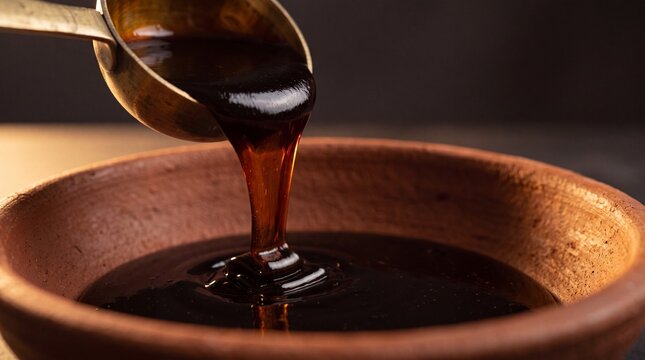
Ninh Binh chung cake meets fragrant sugarcane syrup in a comforting sweet and savory pairing.
The pairing gives Ninh Binh chung cake an unexpected sweetness, bringing together tender sticky rice, mellow mung beans, and savory pork in a single bite.
It is a simple pleasure, and a starting point for discovering how much this familiar cake can vary—from sweetened fillings to fragrant young green rice and distinctive versions shaped by life in Vietnam’s northern highlands.
Ninh Binh Chung Cake savour and the Simple Pleasure of a Sugarcane Dip
The appeal begins with a contrast: a pale slice of sticky rice cake lowered into a bowl of deep amber syrup. A little sweetness clings to its edges, meeting the soft mung beans and rich pork as you take a bite. For anyone accustomed to enjoying bánh chưng with savory accompaniments, this first taste can be a surprise.
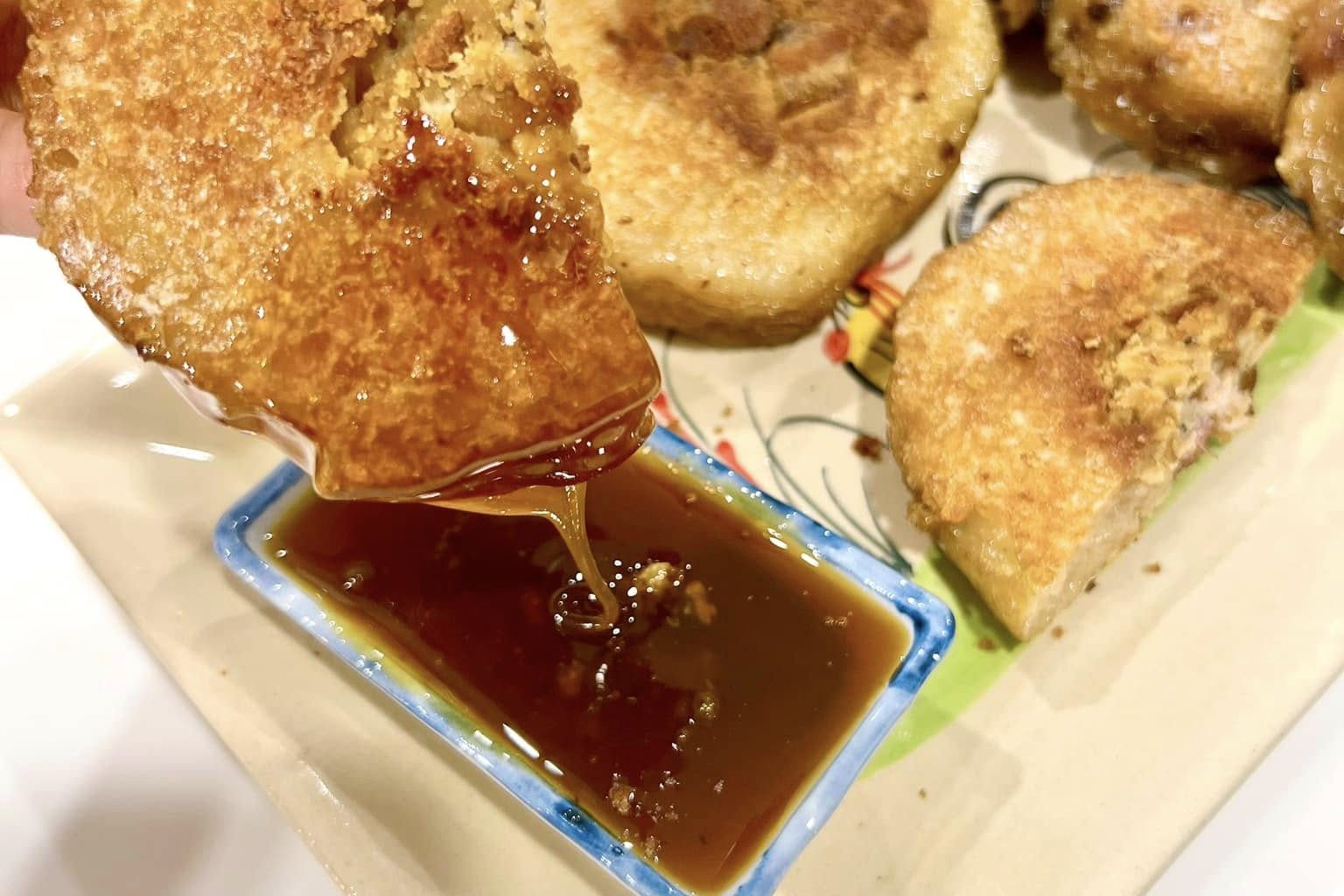
A gentle dip adds amber sweetness to sticky rice, mung beans, and pork.
Known as mật mía, the dipping syrup is made by slowly concentrating sugarcane juice until it becomes thick and fragrant. Its sweetness is pronounced, so only a small amount is needed. A light coating lets the rice and filling remain distinct, while a deeper dip makes the sweet and savory combination more noticeable. Part of the pleasure lies in finding the balance you enjoy.
In the family traditions described here, banh chung with sugarcane syrup belongs to the food memories of Tet: a cake unwrapped from its leaves, sliced for sharing, and placed beside a small bowl of syrup. There is little ceremony to serving it, yet the choice of accompaniment gives a familiar festive dish a character of its own. Some people prefer a touch of sugar instead; others return to the syrup for its smooth texture and rounded sweetness.
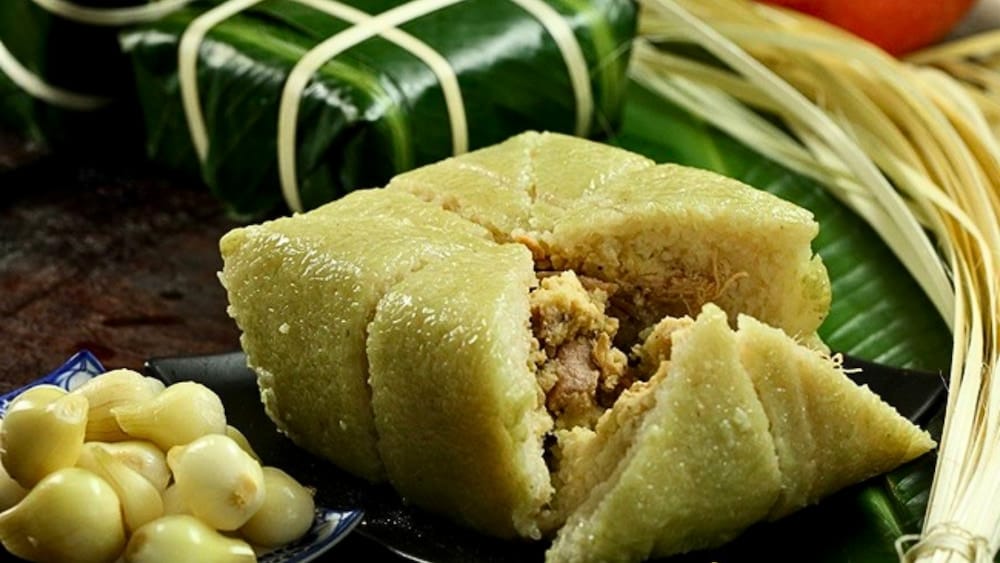
Banh chung with sugarcane syrup reflects a fondness for sweet and savory flavors.
To try Ninh Binh chung cake this way, begin with a small piece on its own, then dip one edge into the syrup. Tasting the two bites side by side makes the difference easy to appreciate. The sweetness arrives first, followed by the gentle flavor of mung beans and the savory richness within—a modest pairing that invites another bite.
Beyond its local flavors, Ninh Binh offers plenty to discover in spring, from peaceful landscapes to lively festivals. Read more in our Ninh Binh spring travel guide.
Why a Bowl of Sugarcane Syrup Belongs Beside Banh Chung
The pairing also sits within a broader tradition of using sugarcane syrup in Vietnamese kitchens. In Thanh Hoa and Nghe An, syrup-making communities supply an ingredient used in braised dishes, traditional sweets, and festive cooking.
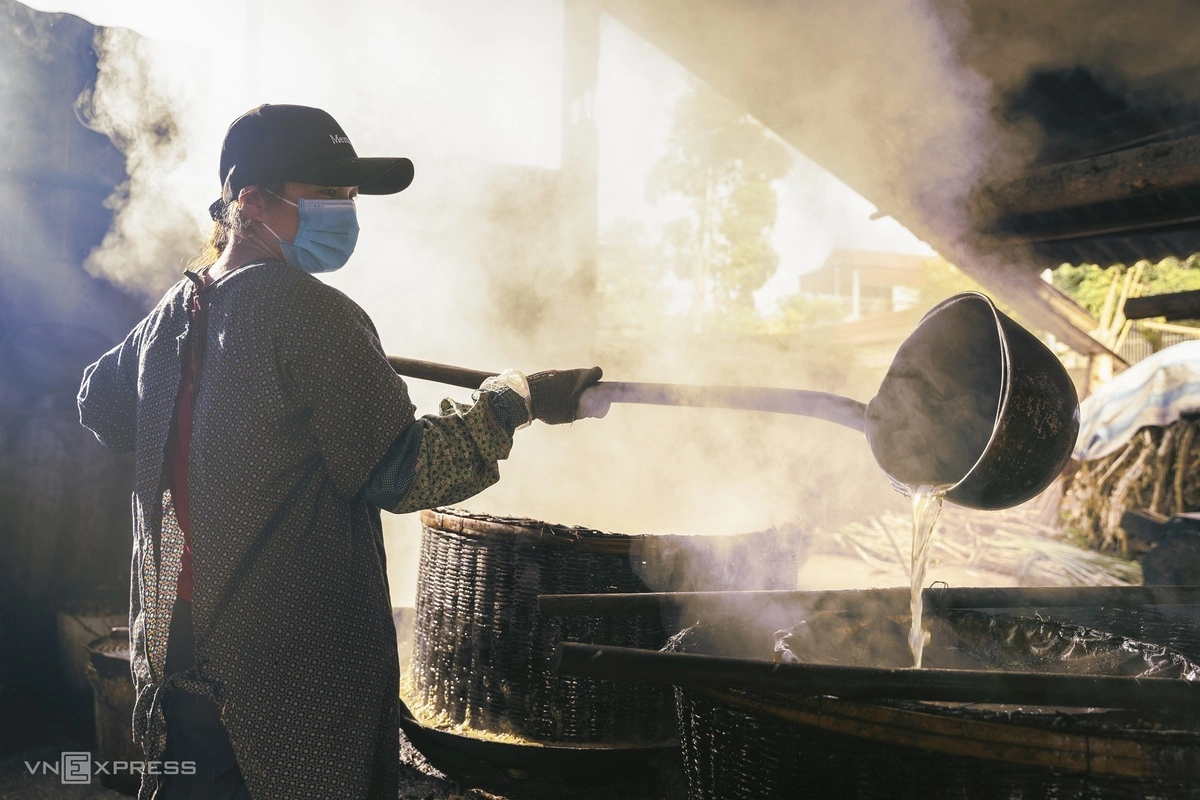
Handmade sugarcane syrup connects everyday cooking with festive food traditions.
In Nghe An’s Lang Gang village, bánh chưng is among several foods enjoyed with a syrup dip, alongside sticky rice and other rice cakes. This regional food culture helps explain why the combination feels so familiar at some family tables.
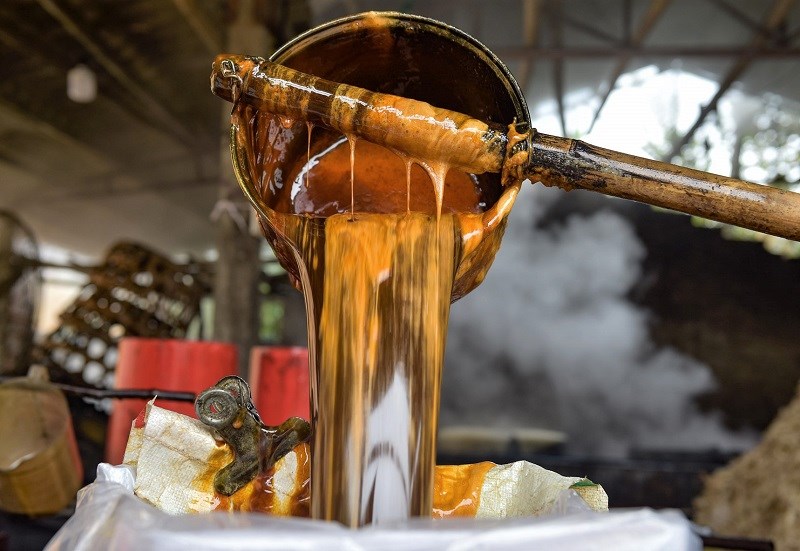
A small bowl of sugarcane syrup carried a story of tradditional craft of central vietnam and ancient wisdom
There is a pleasure in the flavors themselves, too. The syrup’s sweetness contrasts with the savory pork, while its smooth texture coats the chewy rice and soft mung beans. A little is enough to change the character of a mouthful, adding a fragrant sweetness without hiding the filling beneath it.
Beyond the Sugarcane Dip: Discovering Vietnam’s Banh Chung Variations
Exploring Ninh Binh chung cake begins with a sweet dip, but the story continues beneath the wrapping leaves. Across Vietnam, cooks give banh chung its character through different fillings, shapes, and seasonings. Sweetened mung beans, fragrant green rice, and a generous pinch of pepper each offer another way to enjoy this familiar chung cake. The following variations reach beyond Ninh Binh, introducing regional traditions and flavors worth discovering.
Banh Chung Mat: A Little Sweetness Hidden in Every Slice
After discovering the sugarcane dip served with Ninh Binh chung cake, bánh chưng mật offers another expression of that sweet and savory pairing. Here, the sweetness is tucked inside the cake, waiting to be revealed when it is sliced.
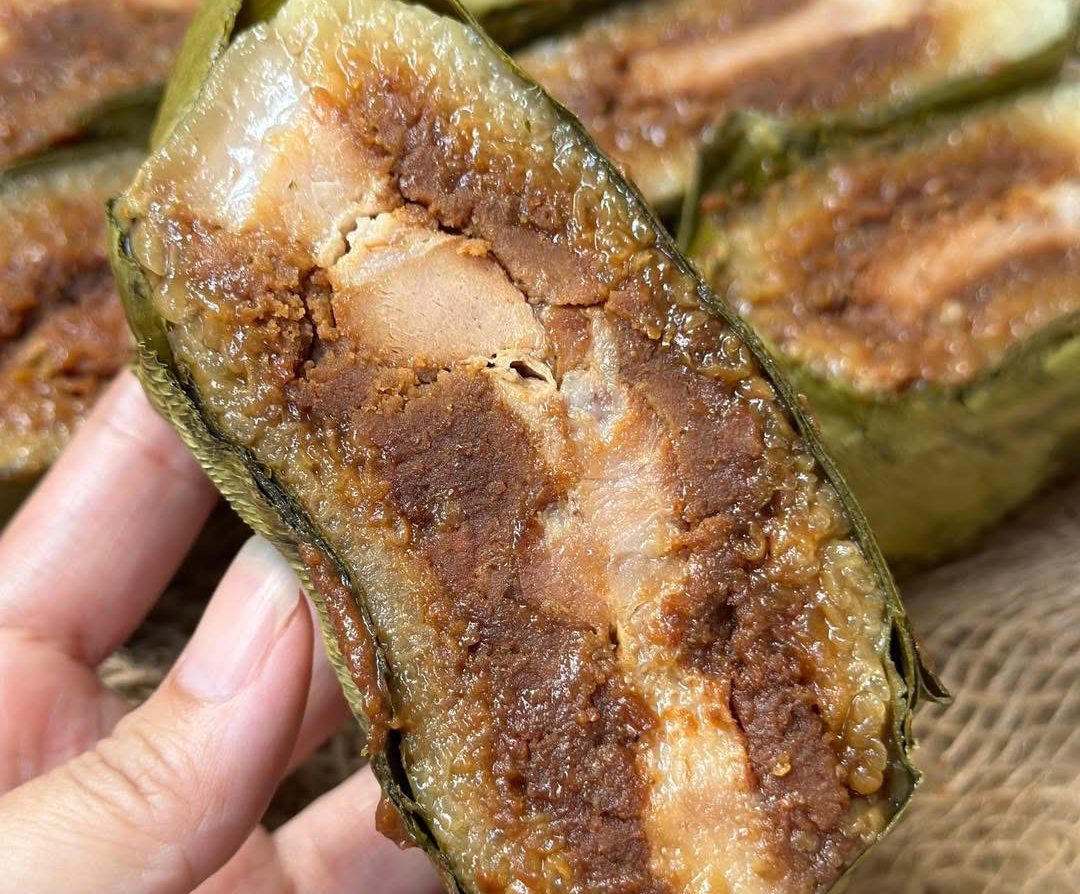
The sweetness is tucked inside the cake, ready to emerge with the first slice.
Mung beans are cooked until tender, then gently stirred with sugarcane syrup or traditional cane sugar until the filling thickens. In the pork-filled version, this sweetened layer surrounds seasoned pork belly before being enclosed in sticky rice and leaves.
As the cake cooks, the pork fat softens into the beans, creating a rich filling beneath the mild rice. Recipes vary between households, but this banh chung variation invites the same pleasure: discovering how naturally sweetness can sit beside a savory bite.
Banh Chung Gu: A Small Cake with a Story from the Northern Highlands
Among the many shapes of banh chung, the gently raised back of bánh chưng gù is particularly memorable. Associated with communities in Vietnam’s northern highlands, this compact cake offers a different silhouette from the familiar square parcel placed on Tet tables.
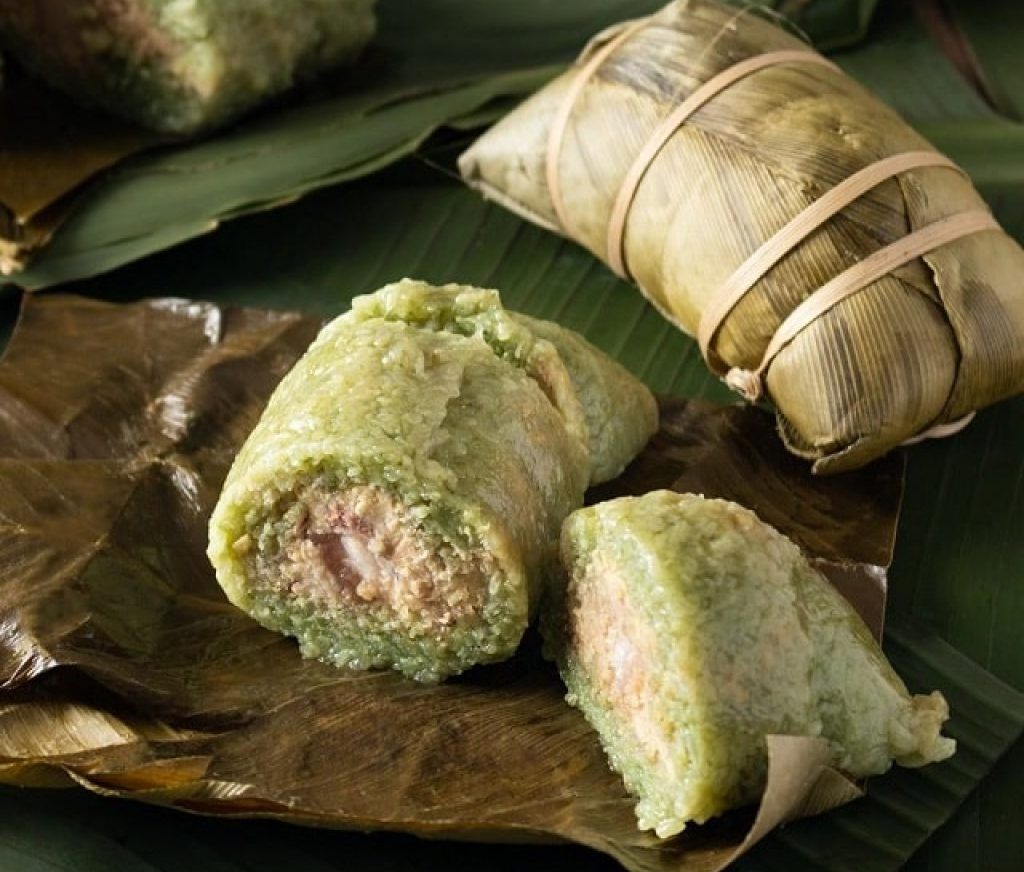
Banh chung gu brings a distinctive curved shape to Vietnam’s northern highland food traditions.
In the Hà Giang version, galangal leaves lend the rice a green hue and a distinctive fragrance. Beneath this soft outer layer, mung beans and pork form a filling that feels familiar even when the shape is new.
Local explanations connect the curved form with the image of highland women bending under their carrying baskets. This gives the small chung cake a cultural meaning alongside its flavor, recalling the work and daily lives of the communities that make it.
Banh Chung Tieu: Small Parcels with the Warmth of Hue Pepper
Small enough to sit comfortably in the palm, bánh chưng tiêu from Huế brings its own charm to the table. Often tied together in pairs, these little parcels reveal soft sticky rice around a filling of mung beans and pork, with black pepper lending a gentle warmth.
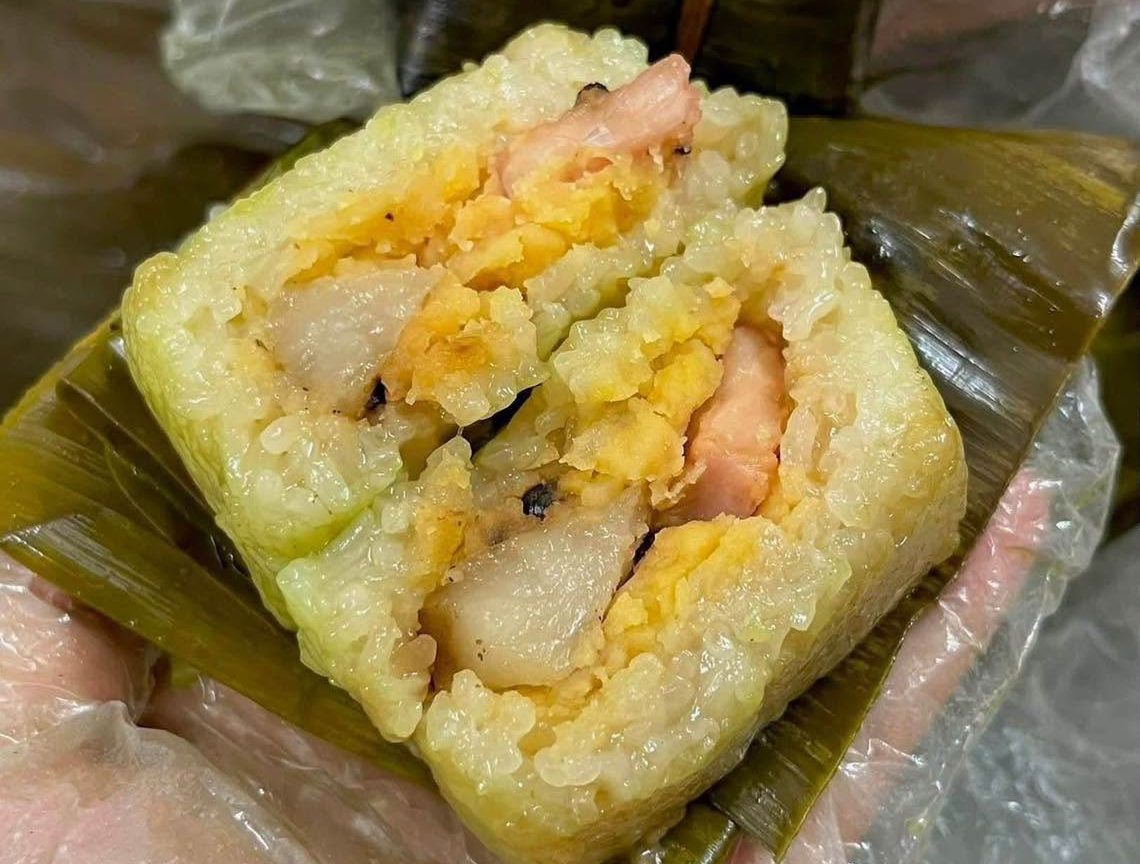
Beneath the wrapping leaves, a modest parcel holds plenty of savory flavor.
The pleasure unfolds slowly: mild rice first, then the richness of the filling, followed by the pepper’s lingering presence. Its character comes from the seasoning as much as its modest size, offering a savory contrast to the syrup pairing introduced in the Ninh Binh chung cake story.
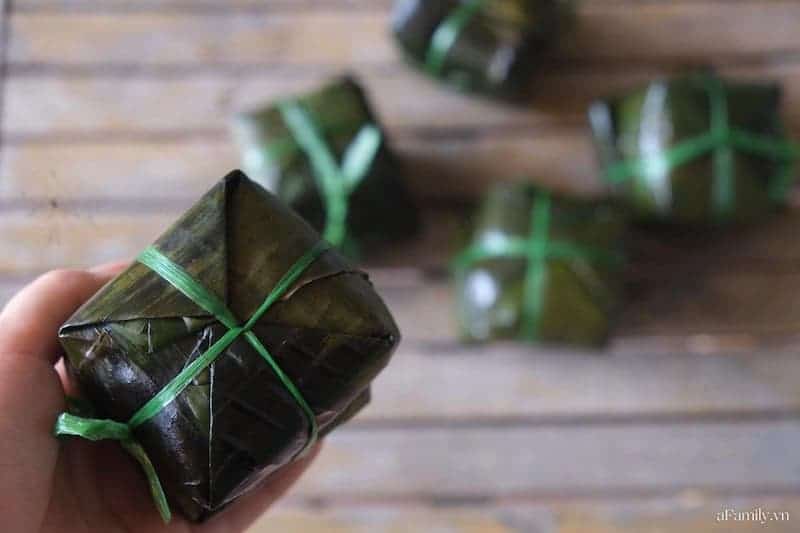
Small cakes tied in pairs bring a charming detail to the table.
For readers exploring banh chung beyond the familiar large square cake, this Huế variation shows how a small change in proportion and seasoning can make a memorable difference.
Banh Chung Gac: A Splash of Red on the Tet Table
Unwrap bánh chưng gấc, and the rice reveals a warm orange-red glow. The color comes from the flesh of gac fruit, mixed with glutinous rice before the cake is wrapped and cooked. Sliced on a plate, its bright outer layer frames the pale mung beans and pork tucked inside.
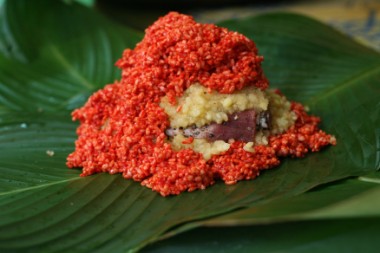
A bright rice layer frames the pale mung beans and savory filling.
This chung cake brings visual warmth to a festive spread while preserving the familiar pleasure of soft rice and a generous filling. Some recipes introduce sweetness through cane sugar, creating another meeting of sweet and savory flavors.
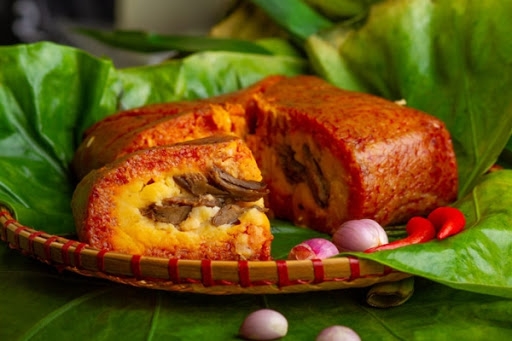
Gac fruit gives a familiar leaf-wrapped cake a striking new appearance.
For readers drawn to the sugarcane pairing of Ninh Binh chung cake, bánh chưng gấc offers a colorful continuation: a familiar festive food with a different appearance and, depending on the recipe, a sweeter heart.
Banh Chung Gao Lut: A Familiar Favorite with a Nuttier Character
The first difference in bánh chưng gạo lứt appears in the rice itself. Wholegrain varieties give the cake a deeper color and a more noticeable grain texture, bringing a nuttier character to the familiar layers of rice and filling.
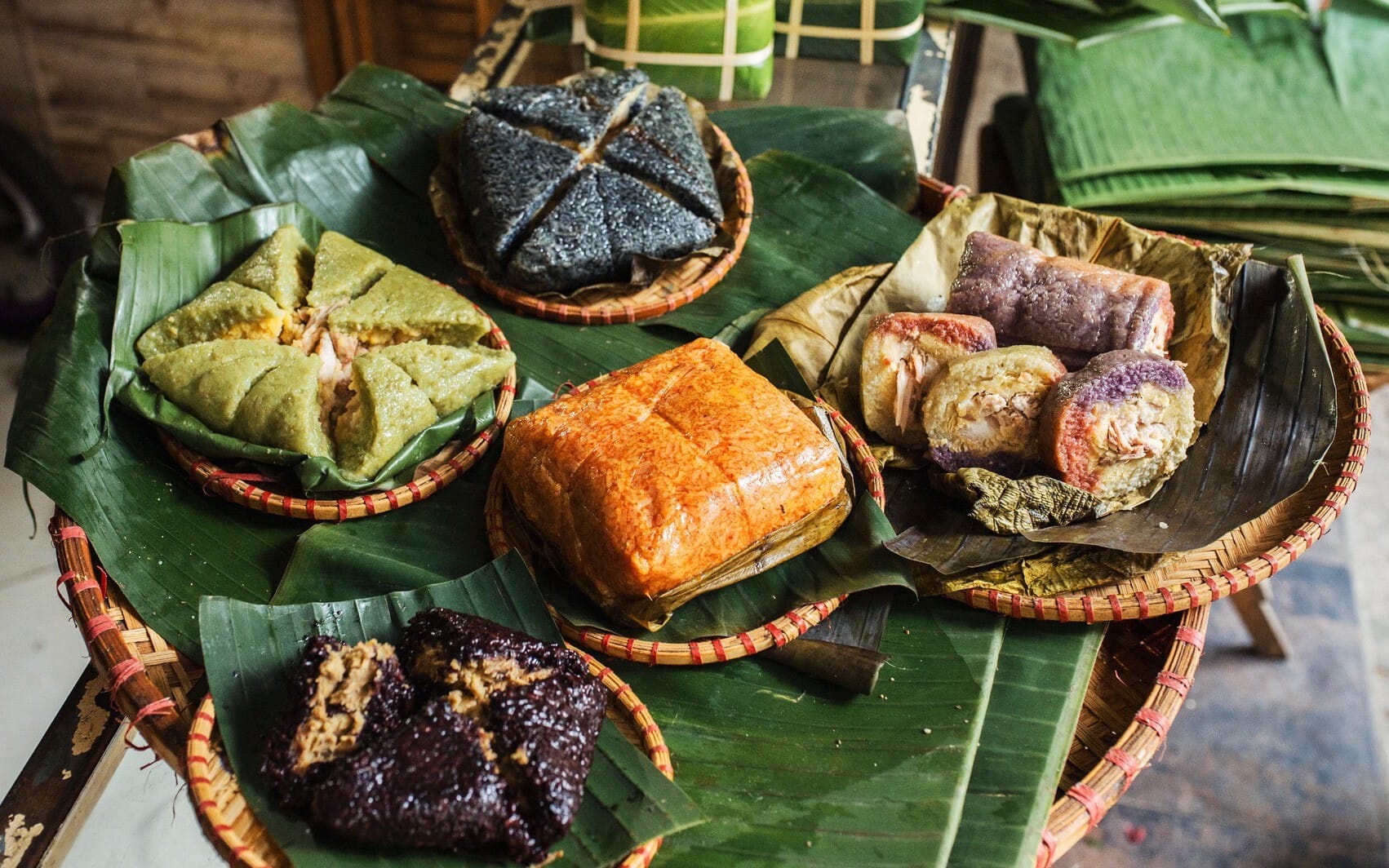
From Ninh Binh chung cake to regional banh chung varieties, familiar ingredients take on different characters.
Recipes differ: some use wholegrain glutinous rice, while others combine rice varieties to achieve the desired softness. Mung beans and pork remain familiar companions, although vegetarian versions offer alternative fillings. Each slice reflects those choices, from its color to the way the grains hold together.
Among modern banh chung variations, this cake invites attention to an ingredient often overshadowed by the filling. It also differs from ash-colored black chung cake: here, the darker appearance comes from the rice rather than added plant ash.
Banh Chung Den: A Taste of Tet in the Tay Villages of Bac Ha
As peach blossoms approached their spring flowering, Tày cake-maker Vàng Thị Hoa would prepare dried núc nác wood for the fire in Nà Kim village, Bắc Hà. In the account she shared, its ashes became the ingredient that gave her family’s banh chung its distinctive dark color.
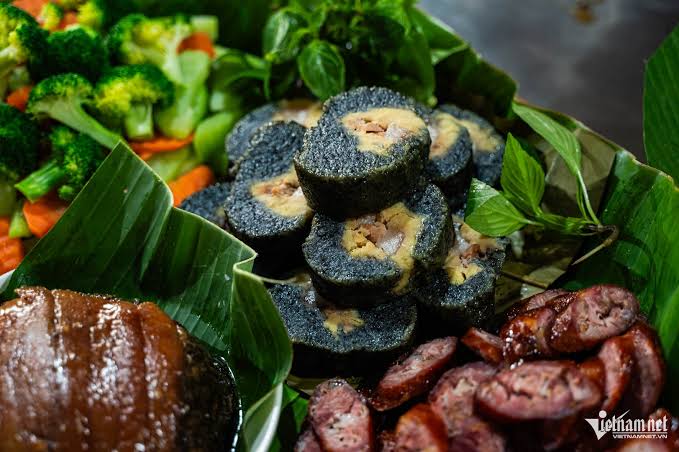
Prepared núc nác wood ash gives the sticky rice its distinctive dark color.
Finely crushed ash is mixed with glutinous rice, which is wrapped around pork, mung beans, pepper, and black cardamom. The resulting chung cake carries the fragrance of its filling beneath a dark, leaf-wrapped exterior.
Unlike versions made with rice-straw ash elsewhere, this Bắc Hà tradition uses núc nác wood. Once reserved for Tet, the cakes described in the account were also being made throughout the year, allowing visitors to discover a flavor rooted in local celebrations.
Banh Chung Com: The Delicate Fragrance of Young Green Rice
Before the filling comes into view, bánh chưng cốm introduces itself through its gentle fragrance. Made with young green rice flakes, known as cốm, this variation brings a delicate cereal aroma to the familiar leaf-wrapped cake.
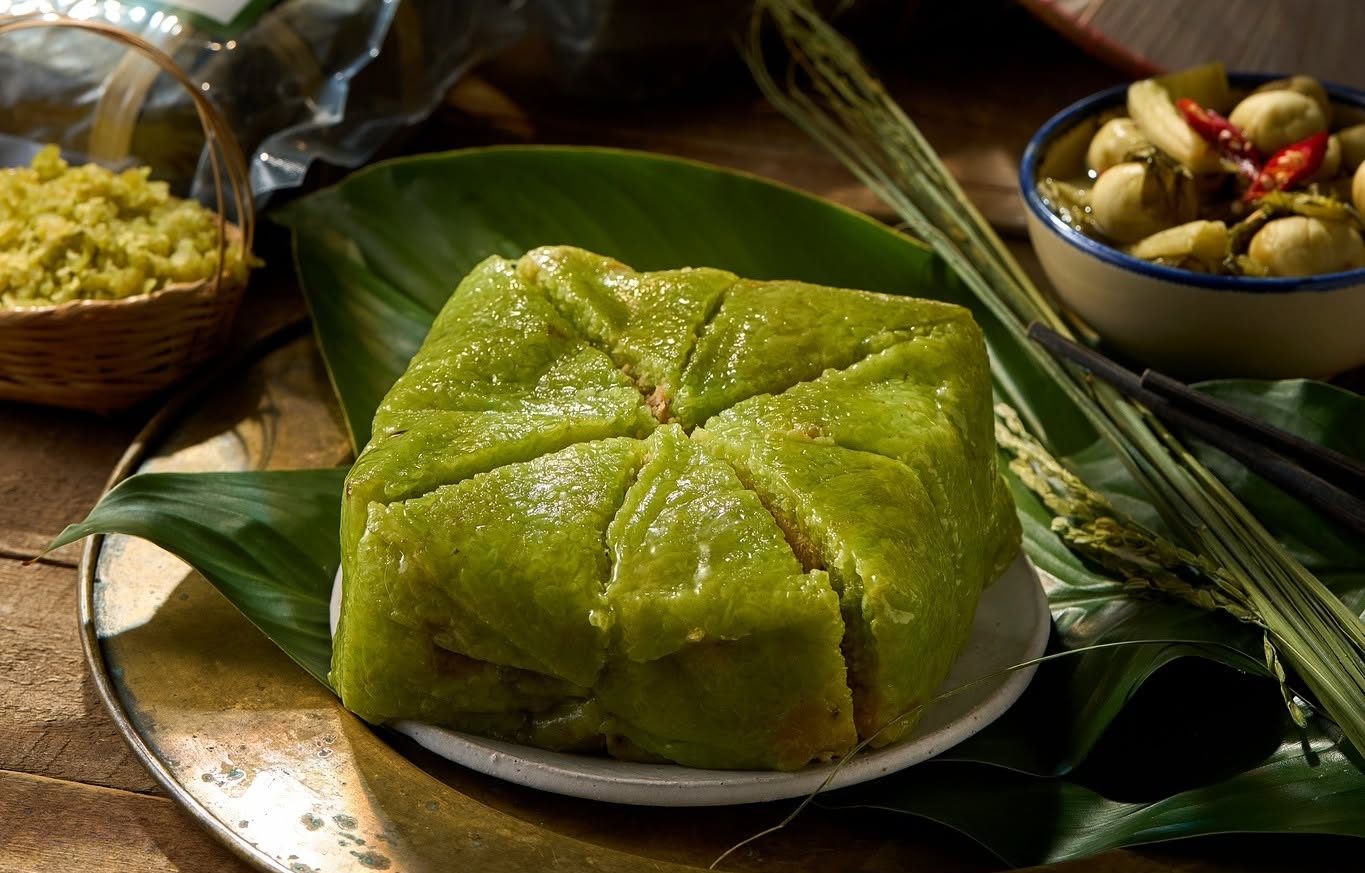
A fragrant variation reveals how one ingredient can change the character of a cake.
The flakes are combined with glutinous rice to form the outer layer, surrounding mung beans and pork. Their fragrance accompanies the richness of the filling, giving each bite a slightly different character from traditional banh chung.
Despite the similar name, this chung cake should not be confused with bánh cốm, the small sweet confection commonly filled with mung bean paste. Bánh chưng cốm retains the substantial rice-and-filling structure of its festive counterpart, offering another way to appreciate how a single ingredient can change a familiar food.
Discover how cốm’s delicate fragrance captures the season in our Vietnam autumn cuisine guide, alongside other comforting dishes worth savoring.
Ready to Experience Jiva?
Immerse yourself in a stay where northern Vietnamese architecture meets world-class comfort. At Jiva Hoalu Retreat, each accommodation blends locally inspired décor with modern luxuries, offering a unique fusion of culture, tradition, and elegance. Whether you’re here for a romantic getaway, a family escape, or a tranquil retreat, Jiva promises unforgettable moments in the heart of Ninh Binh.
Contact Us:
📞 +84 933 006 886
📧 inquiry@jivahoaluretreat.com
🌐 https://jivahoaluretreat.com/