


03 July, 2026
The traditional Vietnamese dress, known for its grace and symbolism, reflects the nation’s deep cultural roots and artistic heritage. From the elegant Áo Dài to the colorful ethnic costumes of Vietnam’s 54 groups, each garment tells a unique story of identity, beauty, and timeless tradition passed down through generations.
What are Vietnam’s traditional dresses called?
The most iconic and widely recognized traditional Vietnamese dress is the Áo Dài – a long, graceful tunic worn over silk trousers. Flowing elegantly along the body, the Áo Dài has become a timeless symbol of Vietnamese beauty, femininity, and national identity.

Modern Vietnamese women wearing Ao Dai walking past ancient temples in Ninh Binh.
Originating from royal garments of the Nguyễn Dynasty, it has evolved through centuries to reflect both heritage and modern aesthetics. Today, the Áo Dài is worn during Lunar New Year (Tết), weddings, school ceremonies, and other formal occasions, representing both tradition and pride in Vietnamese culture.

ethnic women wearing bright red scarves and indigo tunics during a village festival.
Beyond the Áo Dài, Vietnam is home to 54 ethnic groups, each with its own distinctive traditional attire that embodies regional identity, lifestyle, and craftsmanship. In the northern highlands, H’Mông women are known for their colorful pleated skirts and intricately embroidered jackets, while the Tày and Nùng people favor indigo-dyed garments with simple yet elegant designs. In the Central Highlands, the Ê Đê and Ba Na communities wear handwoven tube skirts and beaded ornaments rich in symbolic patterns.
Together, these diverse costumes form a vivid cultural mosaic, where the Áo Dài stands as the national symbol, while the many ethnic dresses across the country celebrate the depth and beauty of Vietnam’s living heritage.
The Origins of the Ao Dai: From Court Attire to National Dress
The elegant garment known today as the Áo Dài traces its roots back to the 18th century in Vietnam, when under the rule of Nguyễn Phúc Khoát (1738-1765) the southern court sought to distinguish itself from the northern regime.
He ordered the adoption of a new form of attire derived from the earlier cross-collar robes (áo giao lĩnh) and the five-panel tunic, the Áo Ngũ Thân, which featured five flaps and five buttons representing the Confucian virtues of kindness, propriety, wisdom, faithfulness and uprightness.
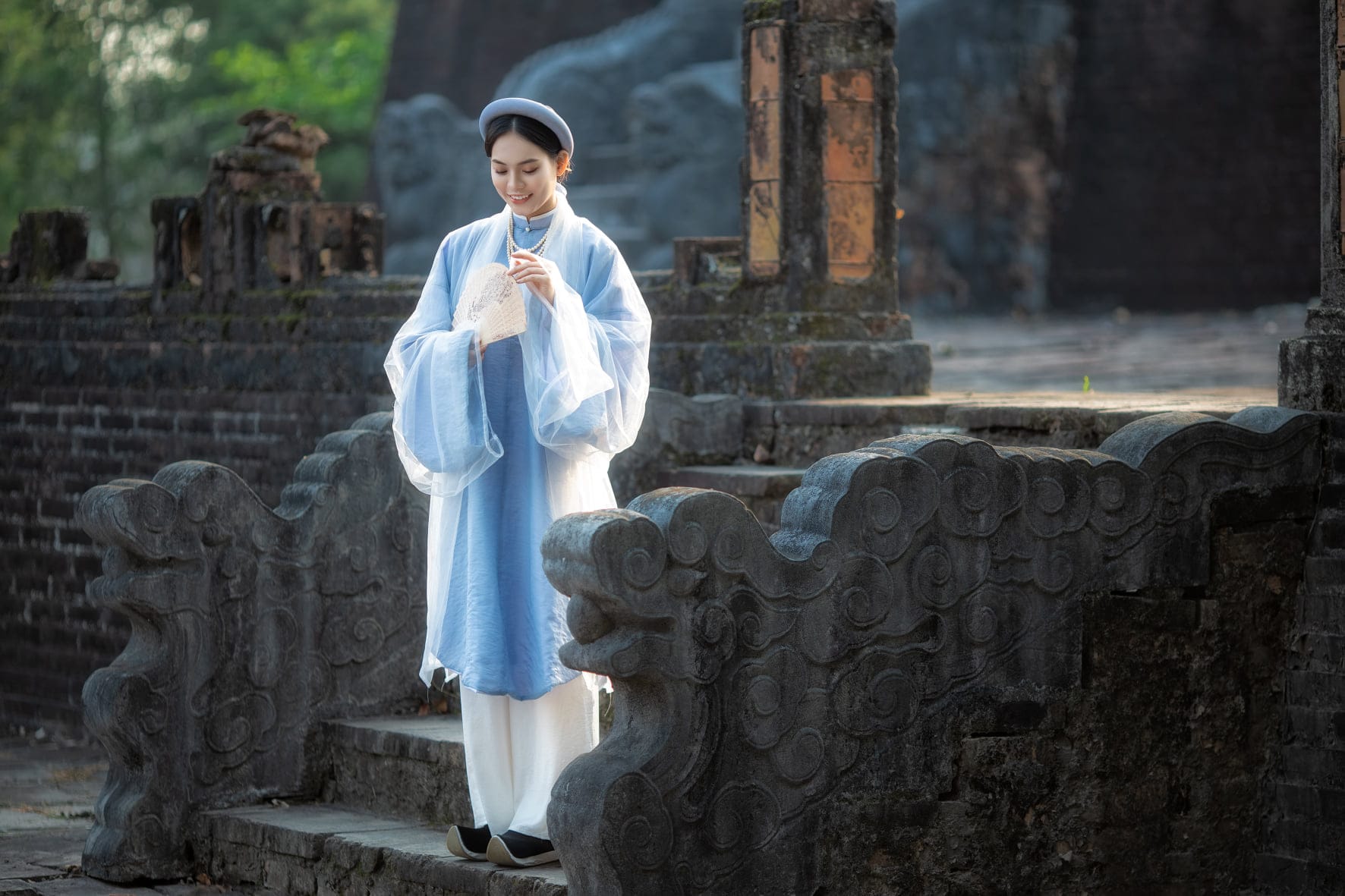
Traditional five-panel Áo Ngũ Thân
Over time, the áo ngũ thân became established among both men and women of the elite, particularly during the rule of the Nguyễn Dynasty (1802-1945), and was a precursor to the modern áo dài.
The modern silhouette began to emerge in the early 20th century when Vietnamese artists and tailors such as Nguyễn Cát Tường (also known by the French-influenced name “Le Mur”) introduced a slimmer cut, a high collar, and longer panels reaching the ankles, influenced by Western and French colonial fashions.
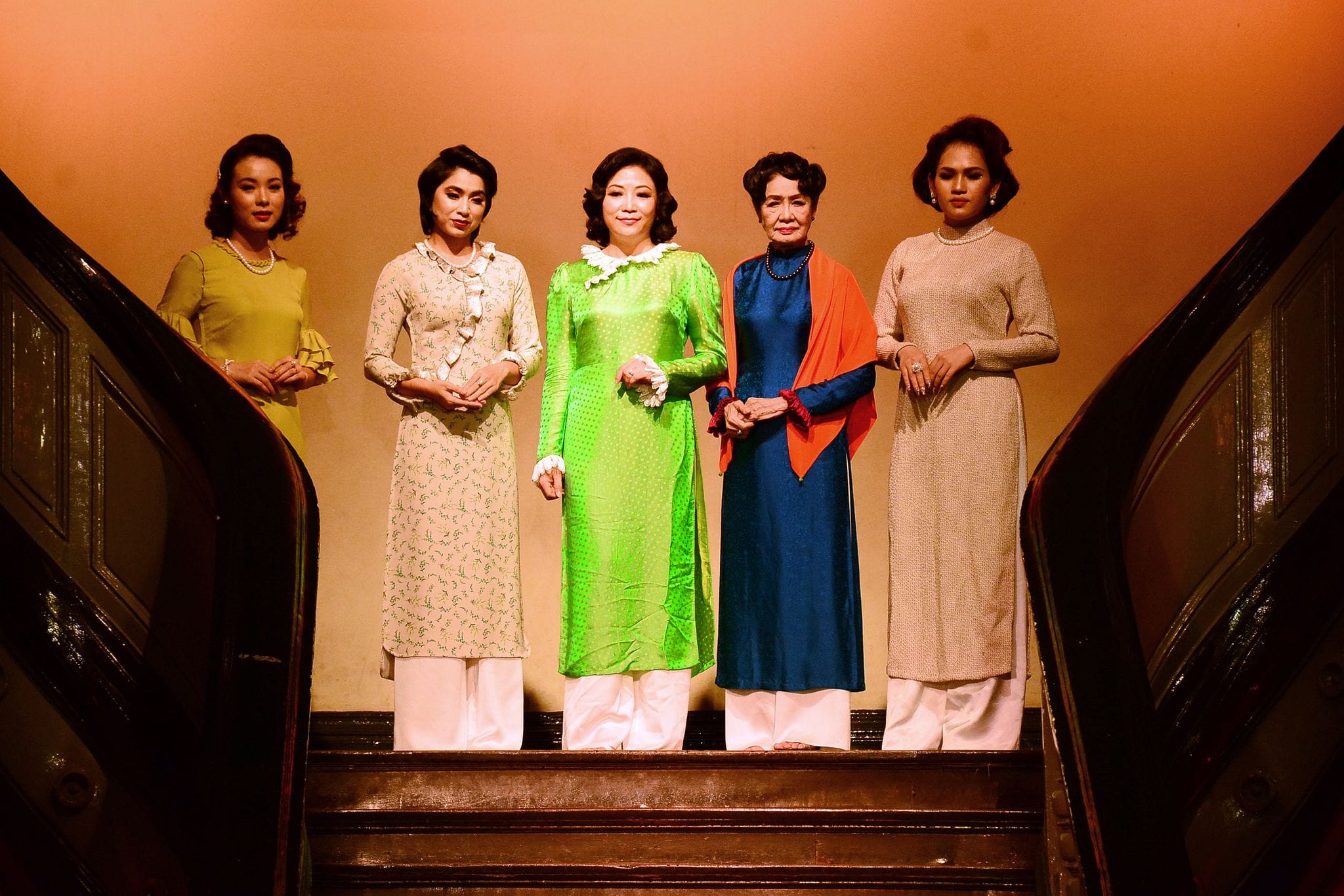
Vintage portrait of women in early 20th-century Áo Dài inspired by French colonial design.
By the 1930s and 1940s, the áo dài had firmly transformed into the national dress, recognized not just as court wear but as a clothing form for women (and some men) across the country.
Despite its evolution, the áo dài still retains the historic link to Vietnamese identity, court tradition and cultural refinement, a garment born in the palace but now emblematic of a nation.
The Cultural and Symbolic Meaning of the Ao Dai
The Áo Dài is more than a national costume; it is a living symbol of Vietnamese identity, grace, and inner strength. Its flowing form, which both reveals and conceals, represents the harmony between tradition and modernity, modesty and confidence. The high collar and long panels convey respect and refinement, while the gentle curves express elegance and femininity, qualities long admired in Vietnamese culture.

Modern Vietnamese women wearing Nhat Binh walking past ancient temples in Hue.
Every detail of the Áo Dài carries meaning. The colour white often represents purity and innocence, especially for young women and students, while red and gold are chosen for weddings and celebrations to symbolize happiness and prosperity.

Student wearing a white Áo Dài, the symbol of innocence and grace in Vietnamese culture.
The use of silk reflects luxury, softness, and a connection to nature, as many fabrics are dyed with hues drawn from the Vietnamese landscape. Traditional patterns such as lotuses, cranes, or bamboo signify purity, resilience, and longevity, virtues deeply rooted in Vietnamese philosophy.
Beyond fashion, the Áo Dài connects generations. It is worn in schools, on national holidays, and at diplomatic events, standing as a reminder of heritage and pride. Whether seen on the streets of Hanoi or among Vietnamese communities abroad, the Áo Dài remains a powerful emblem of cultural continuity and timeless beauty.
Is the Ao Dai still worn in Vietnam today?
Yes. The Áo Dài is still widely worn in Vietnam today. It appears in schools, offices, festivals, and national events, symbolizing elegance and cultural pride. While modern versions feature new fabrics and styles, the Áo Dài remains a cherished expression of Vietnamese identity that bridges tradition and contemporary life.
The Many Shades and Designs of Vietnam’s Traditional Dress
Vietnam’s traditional dress, the Áo Dài, reflects the country’s deep appreciation for beauty, harmony, and symbolism. While the overall design embodies elegance and cultural pride, its variations in color, form, and detail reveal the diverse expressions of Vietnamese identity. Both men and women have their own versions of the Áo Dài, each representing distinct values and aesthetics that together form a timeless portrait of Vietnamese heritage.
Traditional Vietnamese Dress for Men
The Áo Dài for men, or Áo Dài Nam, preserves the traditional form with a straighter cut and more reserved design. Historically derived from the five-paneled Áo Ngũ Thân of the Nguyễn Dynasty, it was once worn by scholars, courtiers, and the elite.
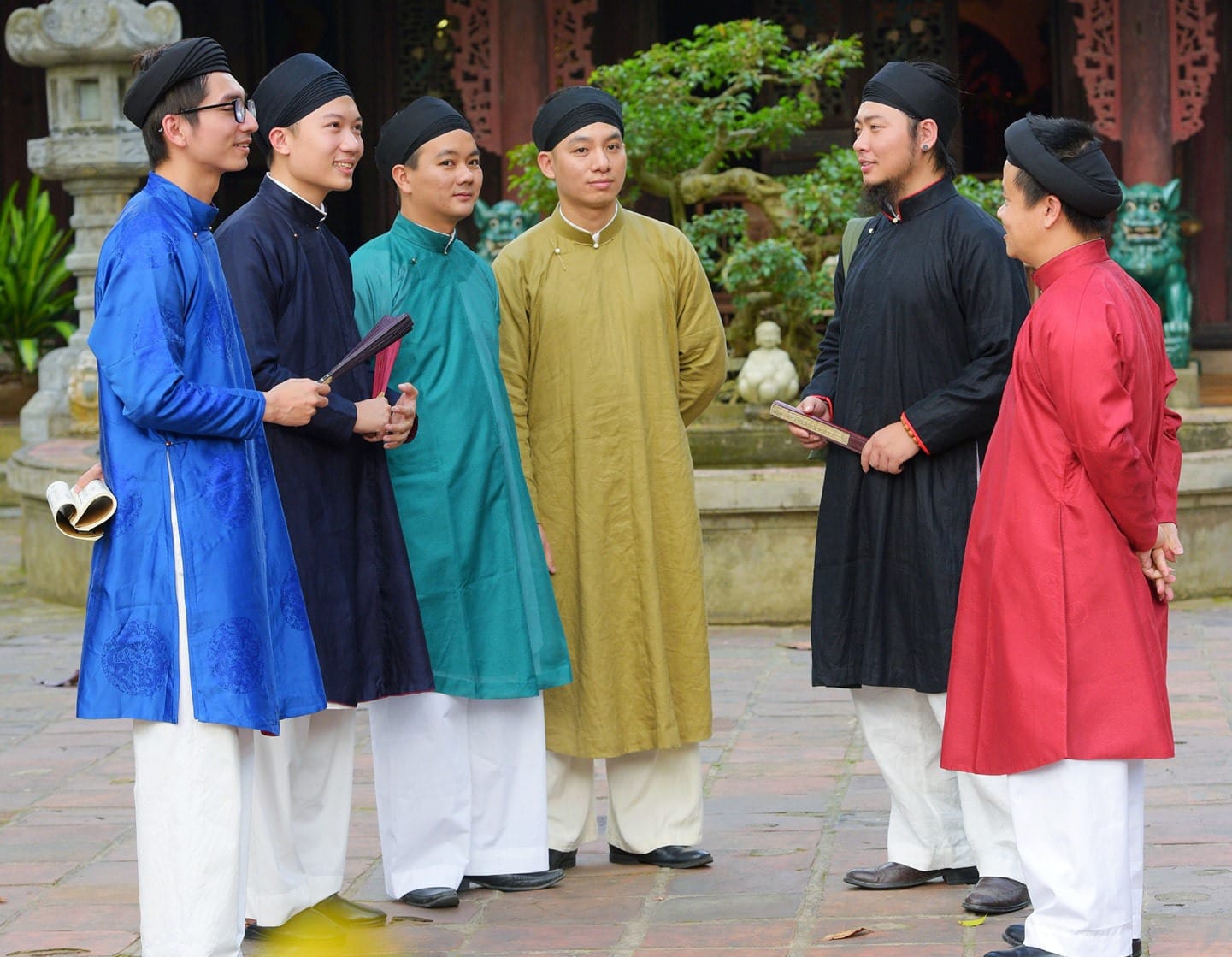
Men’s Áo Dài Nam in color silk tones, symbolizing dignity and tradition.
Men’s Áo Dài often uses darker tones like black, navy, or brown, symbolizing dignity and restraint. Crafted from thicker silk or brocade, it pairs with a traditional turban (khăn đóng) during formal occasions. Today, the Áo Dài Nam remains a proud emblem of Vietnamese masculinity, elegant, modest, and deeply rooted in cultural identity.
Traditional Vietnamese Dress for Women
The Áo Dài for women is the most iconic expression of Vietnamese beauty and grace. Designed with long, flowing panels that gently contour the body, it conveys both modesty and confidence. The color palette carries symbolic meanings: white for purity, red for happiness, blue for peace, and gold for prosperity.
Soft silk fabrics and delicate embroidery featuring lotuses or bamboo reflect refinement and virtue. Whether worn in schools, weddings, or festivals, the Áo Dài continues to embody timeless femininity and cultural pride, connecting generations of Vietnamese women through elegance and tradition.
The Áo Dài in Everyday Life and Special Occasions
1. Lunar New Year (Tết)
During Tết, the Áo Dài is worn to celebrate new beginnings and family reunions. People choose bright colors like red, gold, or pink to symbolize prosperity and joy. It’s a cherished way to honor tradition while welcoming the year ahead with hope and happiness.
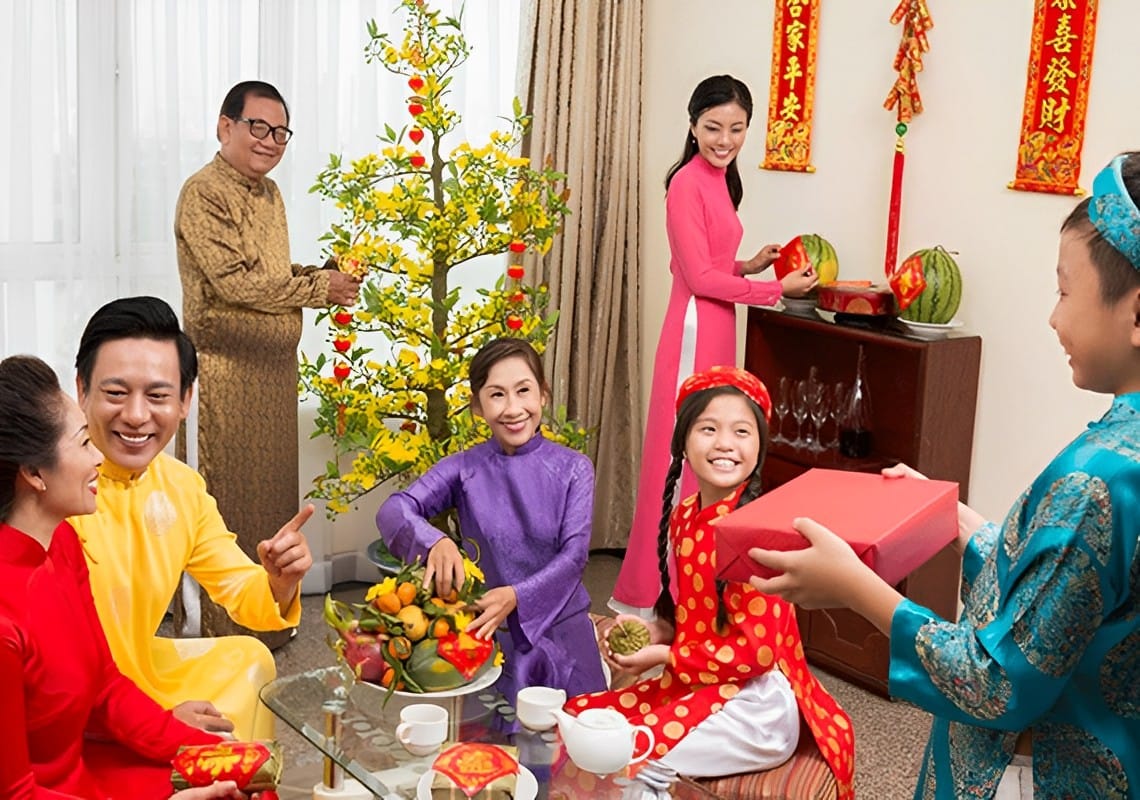
Families wearing Vietnamese traditional dress during Tet holiday celebrations at home.
2. Weddings
At Vietnamese weddings, the Áo Dài is a timeless symbol of grace and good fortune.
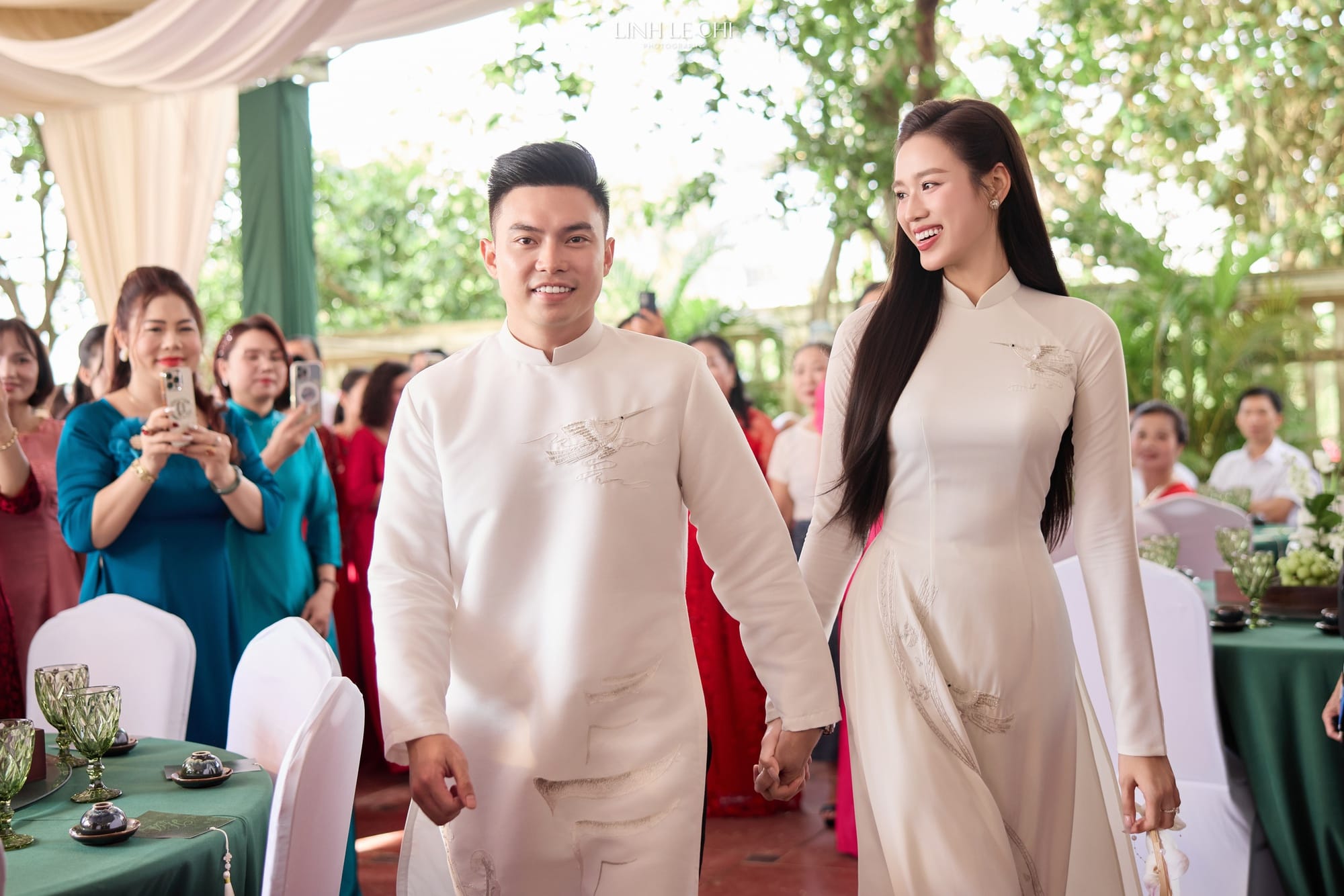
Wedding day in Vietnam with Bride & groom proudly wearing Áo Dài.
Brides often wear red or gold Áo Dài embroidered with phoenix or dragon motifs, while guests choose elegant versions in softer hues. The dress represents harmony, loyalty, and the start of a joyful union.
3. School and University Ceremonies
White Áo Dài is part of the traditional uniform for high school girls across Vietnam, symbolizing purity and youth.

Vietnamese bride posing in a Áo Dài embroidered with five star motifs.
During university or graduation ceremonies, students wear it with pride as a reminder of discipline, beauty, and cultural heritage that transcends generations.
4. Festivals and National Holidays
The Áo Dài often appears in parades, cultural festivals, and National Day celebrations. Participants wear colorful designs to express unity and patriotism. Whether performing folk dances or representing their region, Vietnamese people use the Áo Dài to showcase national pride and cultural diversity.
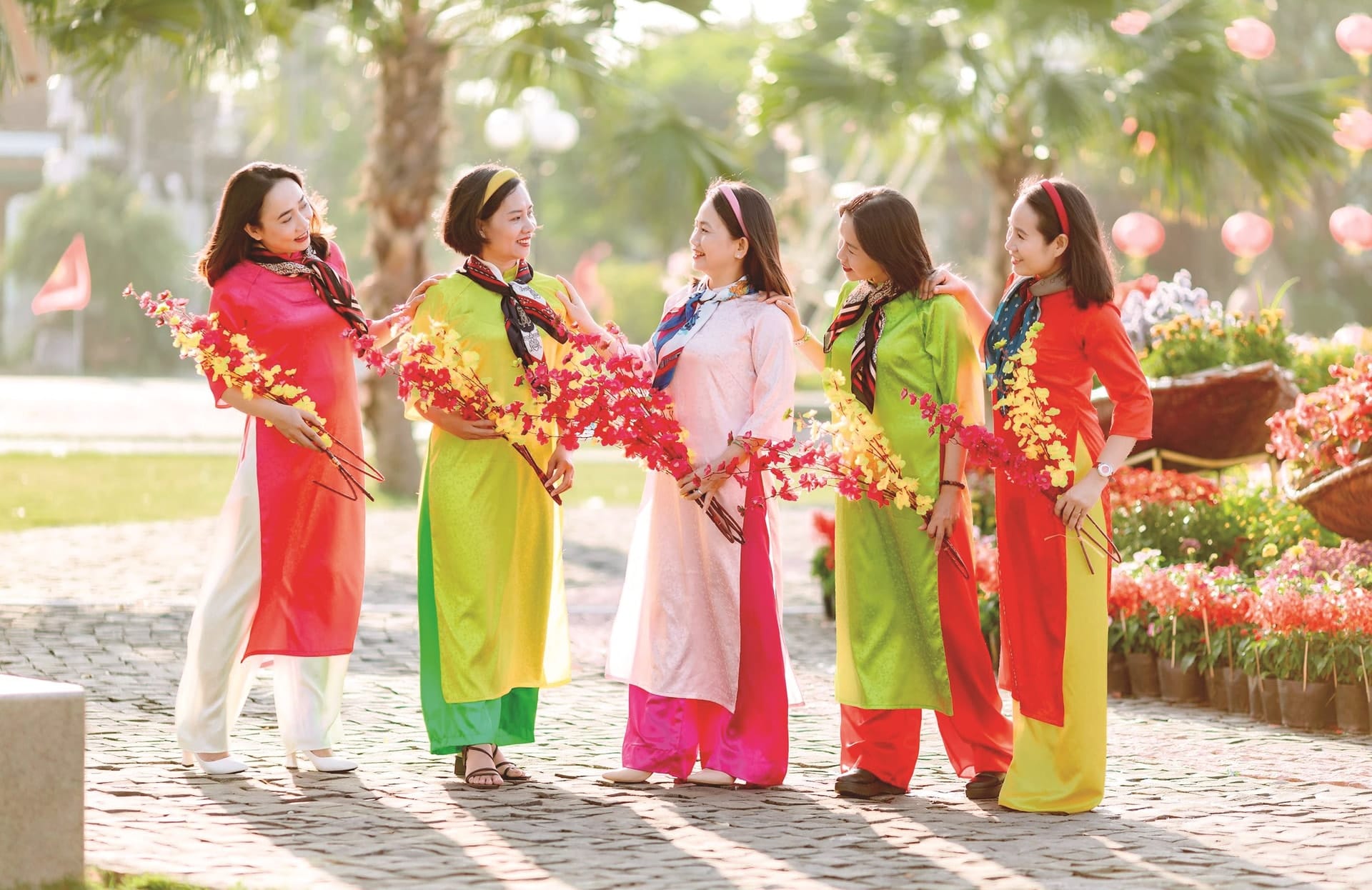
Modern interpretation of Áo Dài Nam blending tradition and contemporary fashion.
5. Professional and Diplomatic Events
In modern Vietnam, the Áo Dài is also worn by flight attendants, hotel staff, and diplomats. It conveys elegance, hospitality, and respect in formal settings. The dress blends professional polish with cultural authenticity, serving as both uniform and national symbol on the global stage.
Can tourists wear an Ao Dai?
Yes, absolutely! Tourists are warmly encouraged to wear the Áo Dài when visiting Vietnam. Many travelers enjoy trying it on for photos, cultural experiences, or special occasions such as festivals and temple visits. Wearing an Áo Dài is seen as a respectful way to appreciate Vietnamese culture, as long as it’s done modestly and appropriately.

Wearing the Áo Dài is a meaningful way to connect with Vietnam’s heritage
Several tailor shops, especially in Hanoi, Ninh Binh, Hue, and Hoi An, offer rental or custom-made Áo Dài services so visitors can experience the perfect fit and design. More than just dressing up, it’s a meaningful way to connect with Vietnam’s heritage and timeless elegance.
Traditional Vietnamese dresses of some ethnic groups
Vietnam’s traditional attire is far more diverse than the iconic áo dài. Across the country’s 54 officially recognized ethnic groups, each community has developed its own distinct dress style: a blend of artistry, geography, and centuries-old customs. These garments are not just worn for beauty; they tell stories of ancestry, beliefs, and local identity.

Beyond the Áo Dài, Vietnam is home to 54 ethnic groups, each with its own distinctive attire that embodies regional identity and craftsmanship
In the northern highlands, where the air is cool and misty, Hmong women wear handwoven hemp skirts dyed deep indigo, their pleats lined with colorful batik patterns created from beeswax and natural dyes. Their outfits sparkle with embroidery and silver ornaments, each motif symbolizing fertility, protection, or blessings from nature.
The Dao (Yao) people are equally recognizable by their bold red headscarves, indigo tunics, and embroidered hems featuring geometric and floral motifs. The coins sewn along collars and sleeves signify wealth and good fortune, while the bright red color represents happiness and strength.

Highlands women are known for their colorful pleated skirts and intricately embroidered jackets, often featuring patterns created from beeswax and natural dyes
Further west, Thai women wear graceful long skirts called sinh, paired with fitted blouses known as xửa cóm. The sinh’s hem is usually woven with fine brocade bands, representing the mountains and rivers that shape their homeland. On festive days or weddings, they complete the outfit with silver jewelry and a traditional hair bun, radiating both grace and pride.
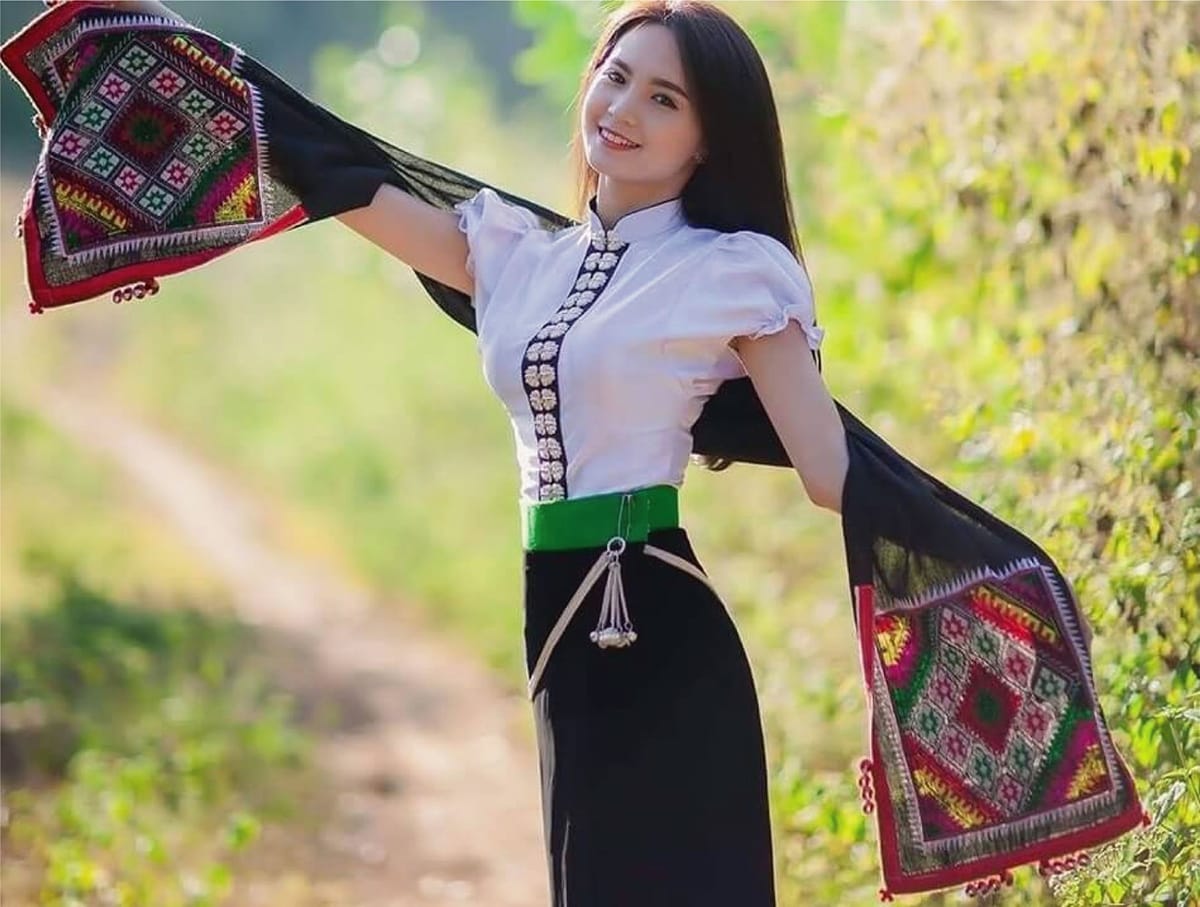
Thai people wear indigo tunics and bold red headscarves, with their embroidered hems often featuring geometric and floral motifs
In central and southern Vietnam, where the weather is warmer, lighter materials and looser silhouettes are common. The Cham people, descendants of the ancient Champa kingdom, wear elegant dresses made from soft fabrics, often in white or bright colors, with graceful headscarves. Their clothing reflects Hindu and Islamic influences and centuries of maritime trade.

The Cham people, descendants of the ancient Champa kingdom, wear elegant dresses often in white or bright colors, complemented by graceful headscarves
Meanwhile, in the Central Highlands, the Ede and Bahnar people wear darker, handwoven fabrics with red and white striped patterns. The minimalist designs reflect their deep respect for nature and harmony within the community, while the strong horizontal lines symbolize stability and connection to the earth.
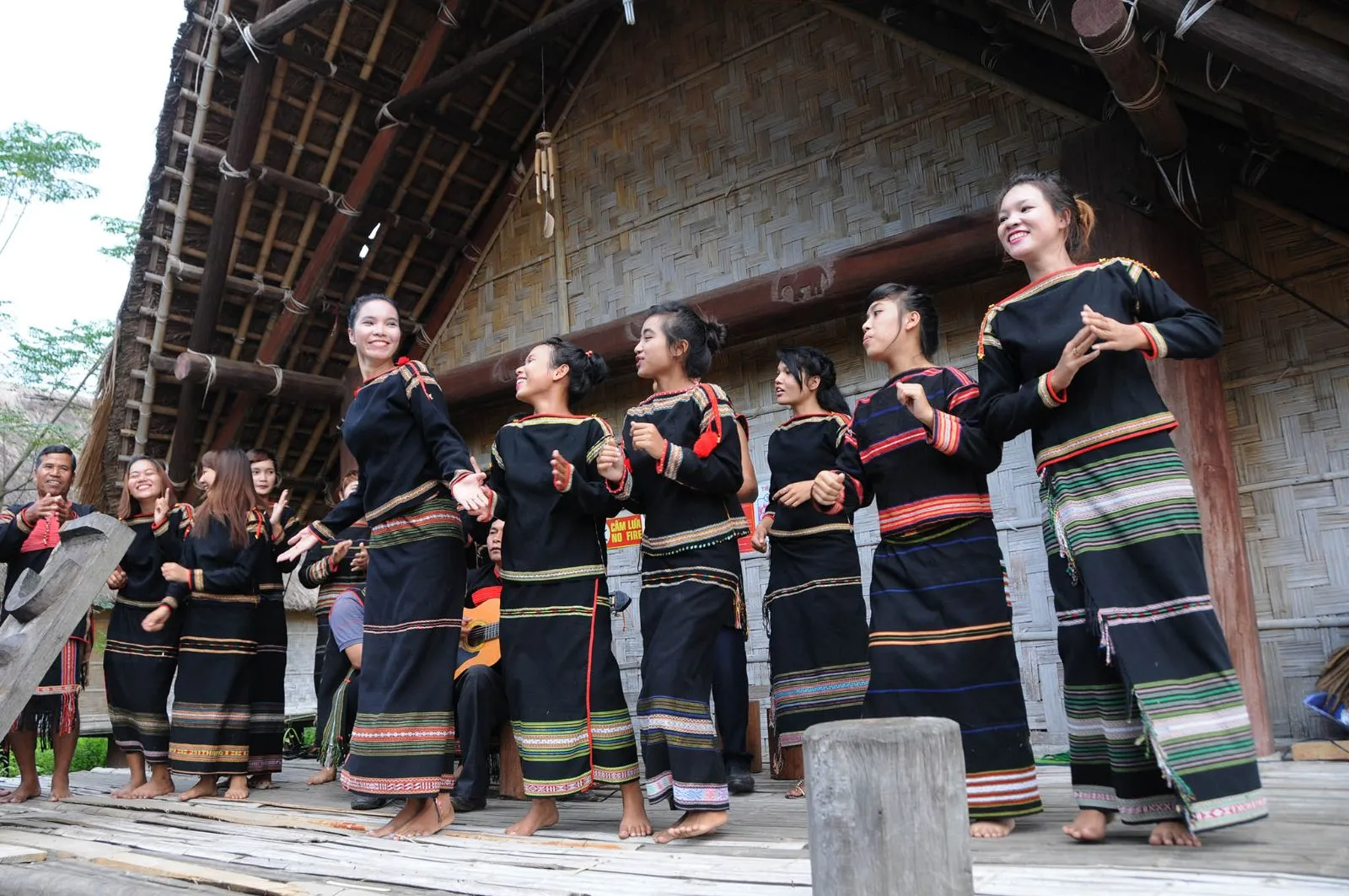
Ethnic Vietnamese women in colorful traditional costumes representing the diversity of Vietnam’s 54 ethnic groups.
Although modern fashion has reached even the most remote villages, traditional dress remains deeply significant. During New Year celebrations, harvest festivals, or weddings, ethnic communities proudly wear these garments to honor their ancestors and display local craftsmanship. Today, these clothes are also a source of inspiration for contemporary designers, who reinterpret traditional patterns and materials in modern silhouettes.
Vietnam’s ethnic costumes are more than heritage, but are living testaments to resilience and creativity, weaving together a vibrant picture of the nation’s cultural diversity and unity.
The Thread of Tradition: Van Lam Embroidery and the Vietnamese Ao Dai
A Century-Old Heritage: Van Lam Embroidery Village and the Traditional Vietnamese Dress
Nestled within the breathtaking scenic complex of Tam Cốc – Bích Động in Ninh Bình, the Van Lam Embroidery Village stands as a magnificent testament to Vietnam’s enduring craftsmanship. Recognized as one of the nation’s key traditional craft villages, Văn Lâm is one of the rare places where residents still earn their livelihood primarily through the meticulous art of embroidery and agriculture.
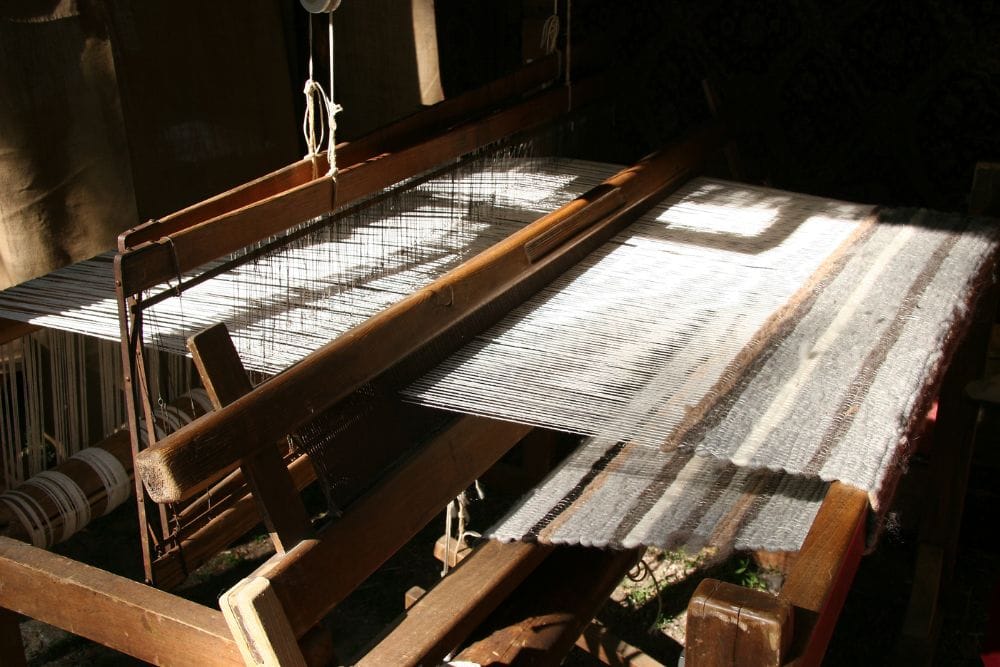
Handwoven fabrics and detailed brocade bands, showcase the depth of local craftsmanship and artistic heritage.
The village traces its embroidery tradition back to the Trần Dynasty, with legends crediting Trần Thị Dung, wife of a high-ranking official, with establishing the craft here. This historical depth gives every piece created in Văn Lâm a sense of timeless cultural significance.
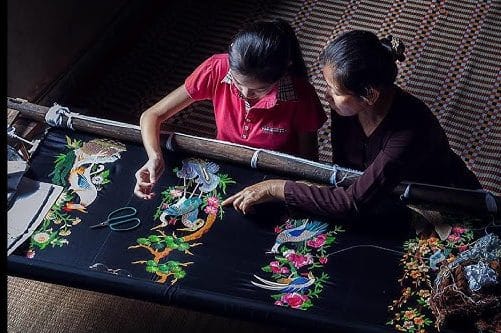
The delicate embroidery and use of soft silk fabrics on the Áo Dài often feature traditional patterns like lotuses or bamboo, reflecting refinement and virtue.
Today, the village remains a crucial cultural stop for tourists, offering a direct link to the artistry that embellishes the nation’s most iconic garment, the Traditional Vietnamese Dress. The artisans here tirelessly keep the passion alive, ensuring the exquisite hand-stitched artistry endures and continues to thrive in modern life.
The Artistry That Adorns the Vietnamese Ao Dai
The true value of Văn Lâm lies in the delicate artistry it contributes to high-end textiles, particularly the Vietnamese Ao Dai. For generations, the village’s skilled artisans have dedicated themselves to perfecting the craft, creating intricate embroidered products that meet both domestic and international demands. At the heart of the village, a temple dedicated to the embroidery craft stands as a reminder of its revered status.
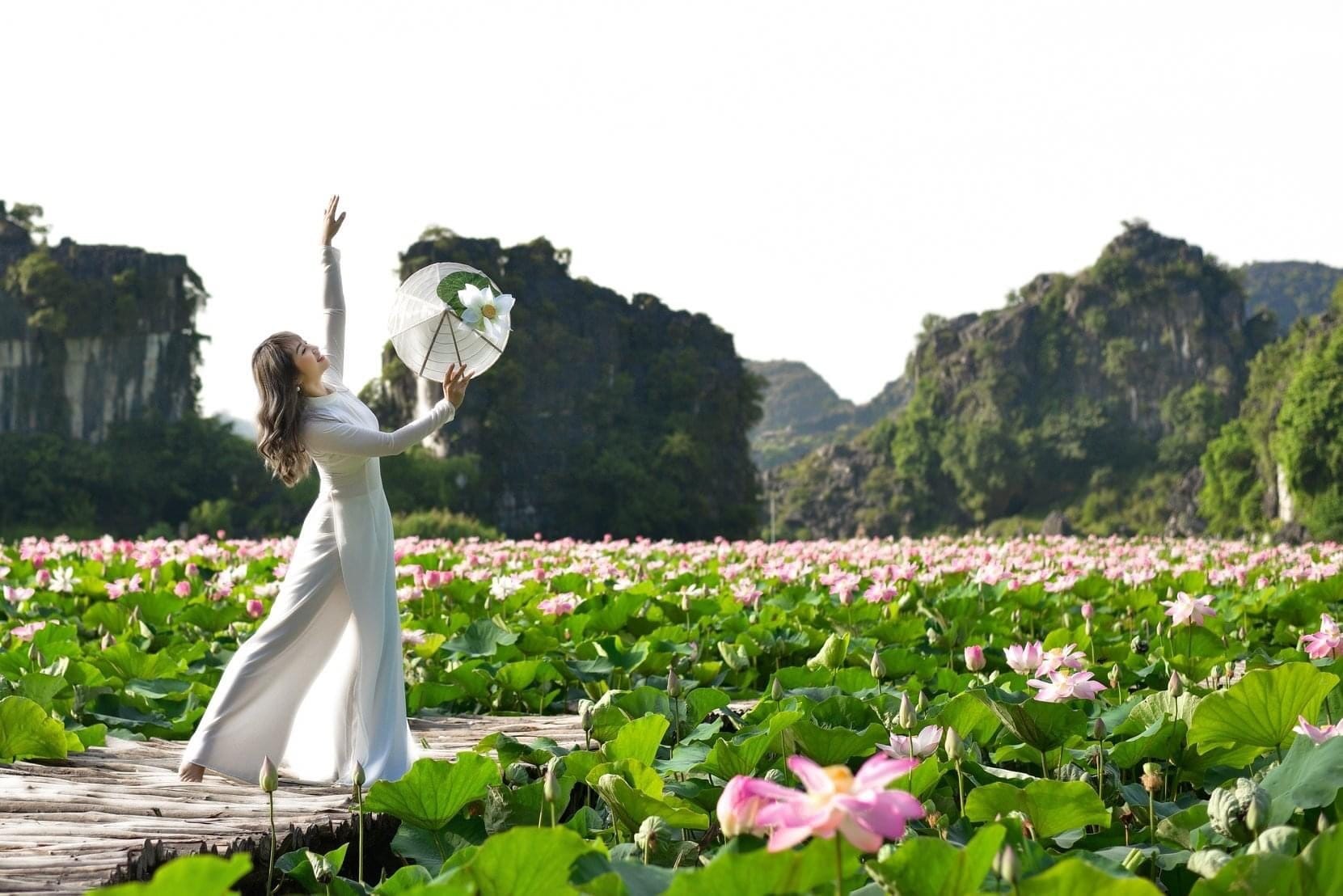
Guests wearing modern Ao Dai posing in Jiva Hoalu Retreat’s lotus garden.
Visitors to Văn Lâm have a unique opportunity to witness the entire creative process firsthand—from the initial meticulous steps to the final, detailed product. Observing the unwavering passion and skill of the artisans as they weave complex patterns and motifs will deepen any visitor’s appreciation for the traditional embroidery that transforms a simple length of silk into a masterpiece Vietnamese Ao Dai. This thriving craft not only preserves ancestral techniques but also honors the elegant beauty of Vietnam’s most iconic attire.
If you are looking for a serene place to stay while exploring the handicraft heritage of Ninh Binh, consider Jiva Hoalu Retreat. This luxury retreat is the ideal starting point, located just a short distance from Van Lam Embroidery Village, allowing you to easily experience the perfect blend of culture, tradition, and luxury right in the heart of the ancient capital of Hoa Lư.
Where Can I Buy Ao Dai in VietNam
When visiting Hanoi, exploring the vibrant street food scene is a must, but no cultural journey is complete without discovering the Traditional Vietnamese Dress—the elegant Áo Dài. For an experience that goes beyond sightseeing, foreign visitors are warmly encouraged to seek out the centuries-old traditional tailor shops nestled within the Old Quarter to have a custom-made Áo Dài. This is where the enduring grace of the national costume truly comes alive.
1. The Old Quarter (Hoàn Kiếm District) – Custom Tailoring and Ready-to-Wear
The Old Quarter is your primary destination for quality and speed.
Hàng Gai Street (Silk Street): This is the most famous area for textiles. You’ll find countless shops here specializing in silk and custom tailoring. Many tailor shops, like Thao Silk (often recommended), are located on this street and are excellent for custom-made Áo Dài that blend tradition with modern style.
Lương Văn Can Street: If you are in a rush and need a ready-to-wear Áo Dài immediately, this street has many shops stocking a wide variety of styles, designs, and materials. While quality can vary, it’s the perfect spot for a quick purchase.
Specialized Tailors: Look for highly-rated shops in or near the Old Quarter that focus exclusively on the Áo Dài.
Áo Dài Minh Đức (Multiple locations, including one often cited in the Đống Đa district) is highly regarded for its traditional designs and custom services.
Áo Dài Thanh Mai (Hai Bà Trưng District) is known for its diverse collections and also offers rental services, which is a great option for tourists.
Ready to Experience Jiva?
Immerse yourself in a stay where northern Vietnamese architecture meets world-class comfort. At Jiva Hoalu Retreat, each accommodation blends locally inspired décor with modern luxuries, offering a unique fusion of culture, tradition, and elegance. Whether you’re here for a romantic getaway, a family escape, or a tranquil retreat, Jiva promises unforgettable moments in the heart of Ninh Binh.
Contact Us:
📞 +84 933 006 886
📧 inquiry@jivahoaluretreat.com
🌐 https://jivahoaluretreat.com/
Book now! to enjoy super hot deals