


05 November, 2026
Introduction
Every autumn, as the full moon of the eighth lunar month rises, Vietnam glows in a warm, magical light. The Mid Autumn Festival in Vietnam, known locally as Tết Trung Thu, is one of the country’s most beloved cultural celebrations — a time for families to reunite, children to parade lanterns through the streets, and travelers to experience Vietnam’s most heartwarming festival.

Mid-autumn festival is the time when lotus paddy in Hang Mua at its peak
Unlike other celebrations tied to major religious events, this festival captures the spirit of joy, gratitude, and togetherness. From the busy streets of Hanoi and Hoi An’s glowing lanterns to the peaceful countryside of Ninh Binh, the Vietnamese Mid-Autumn Festival invites everyone — locals and visitors alike — to join in the laughter, flavors, and folklore that light up the moonlit night.
Whether you’re tasting traditional mooncakes in Vietnam, watching lion dances echo through ancient towns, or simply soaking in the glow of handmade lanterns, this is a celebration that beautifully reflects the country’s soul — a perfect blend of family, culture, and festivity.
When is the Mid-Autumn Festival in Vietnam?
The Mid-Autumn Festival in Vietnam is a celebration of the harvest season, the full moon, and the joy of reunion. Deeply rooted in Vietnamese culture for centuries, it is both a children’s festival and a moment of reflection for adults — a time when people give thanks for harmony, abundance, and family togetherness.
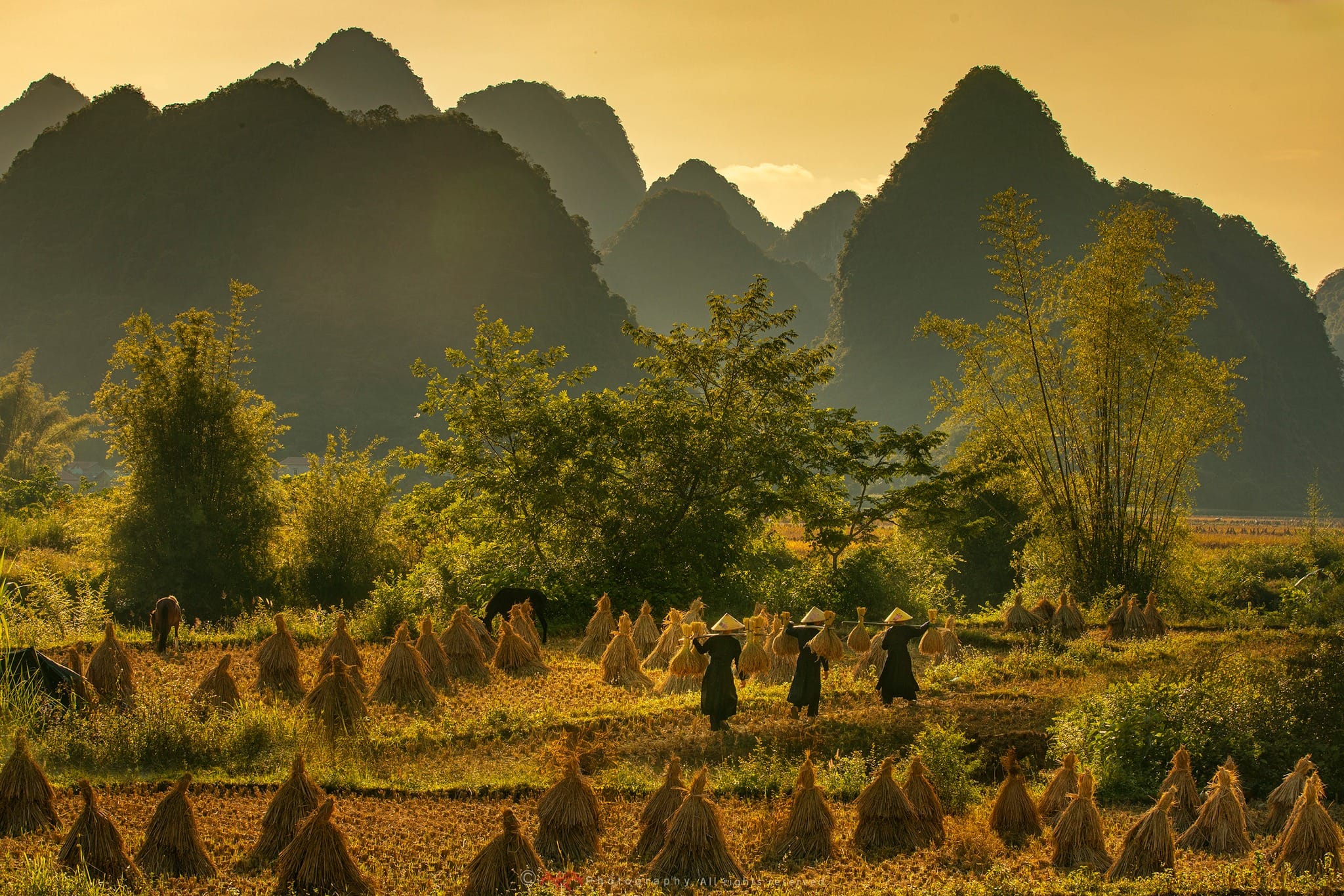
The Mid-Autumn Festival in Vietnam is a celebration of the harvest season
Across the country, streets shimmer with lanterns, shopfronts overflow with colorful mooncakes, and families gather to enjoy tea, fruit offerings, and joyful processions under the moonlight. Though often compared to the Lantern Festival in other Asian countries, Vietnam’s version has its own charm — a unique blend of folklore, family rituals, and community joy that makes it one of the most photogenic and meaningful festivals in Asia.
Why Do Vietnamese Celebrate the Mid-Autumn Festival?
The origins of the Mid-Autumn Festival in Vietnam date back more than a thousand years. Traditionally, it was a celebration to thank the Moon for a bountiful harvest. Over time, it evolved into a joyful day for children, symbolizing innocence, hope, and family harmony.
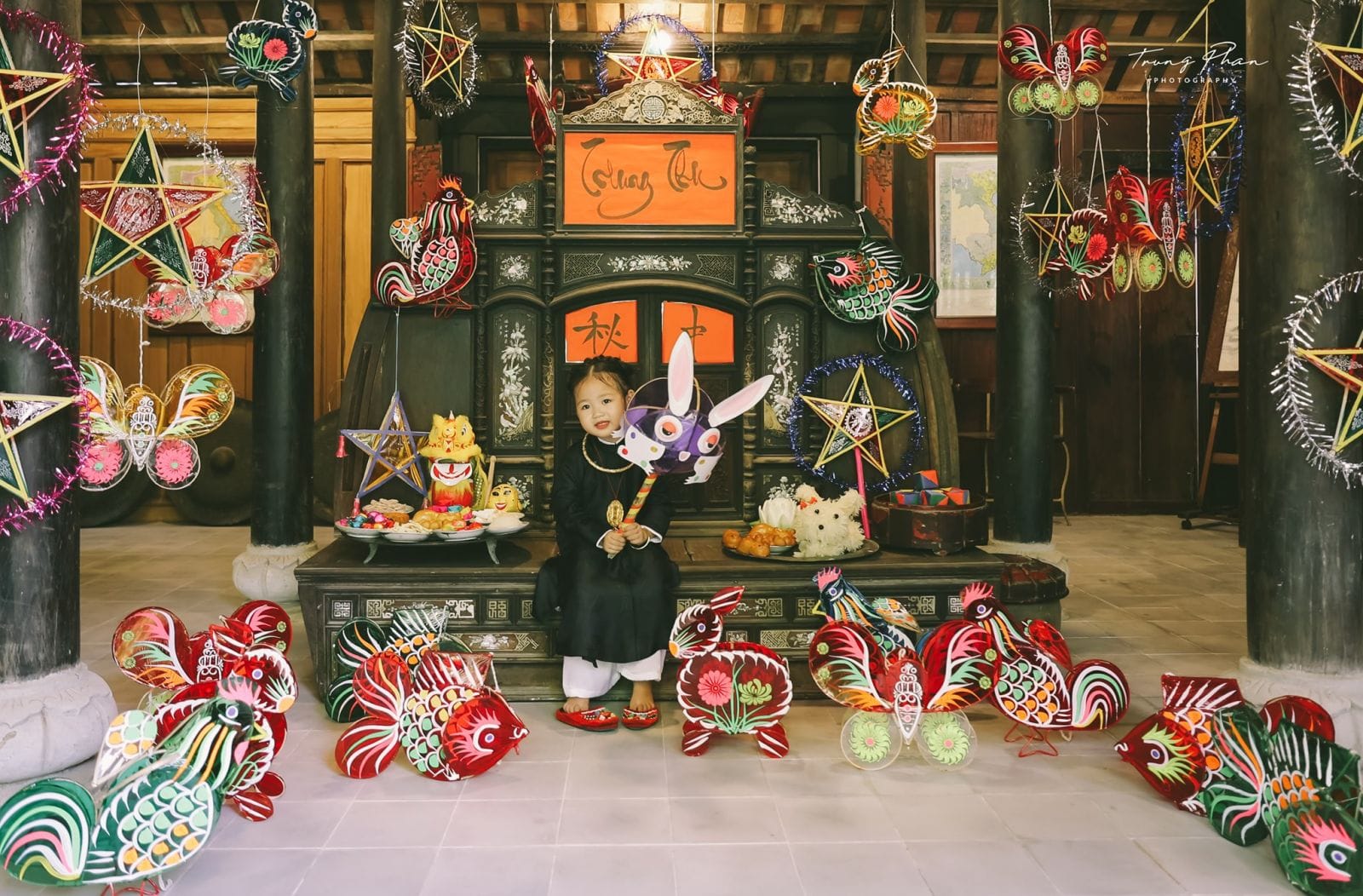
Children carrying star-shaped lanterns through old town alleys as night falls in Vietnam.
Parents use this festival to show love to their children — giving them star-shaped lanterns, masks, and sweet Vietnamese mooncakes. Many believe that under the bright, round moon, families become spiritually closer. It’s also a night of storytelling, where old legends of the Moon Lady (Hang Nga) and Uncle Cuoi come to life around flickering lanterns and laughter.
When Is the Mid-Autumn Festival Celebrated in Vietnam?
The Mid-Autumn Festival in Vietnam is celebrated on the 15th day of the 8th lunar month, which usually falls in September or early October on the Western calendar. The date changes yearly, aligning with the lunar cycle’s brightest full moon — a symbol of completeness and reunion in Vietnamese culture.
In 2025, the festival will fall on October 6, when cities and towns across Vietnam fill with lantern parades, music, and mooncake markets. Travelers visiting during this time will find every corner of the country — from Hanoi to Hoi An — alive with color, tradition, and community spirit.
Is the Mid-Autumn Festival a Public Holiday?
While the Mid-Autumn Festival in Vietnam is not an official public holiday, it’s widely celebrated nationwide. Schools, shops, and offices may remain open, but most families make time to gather for a shared meal and moon-viewing ceremony.
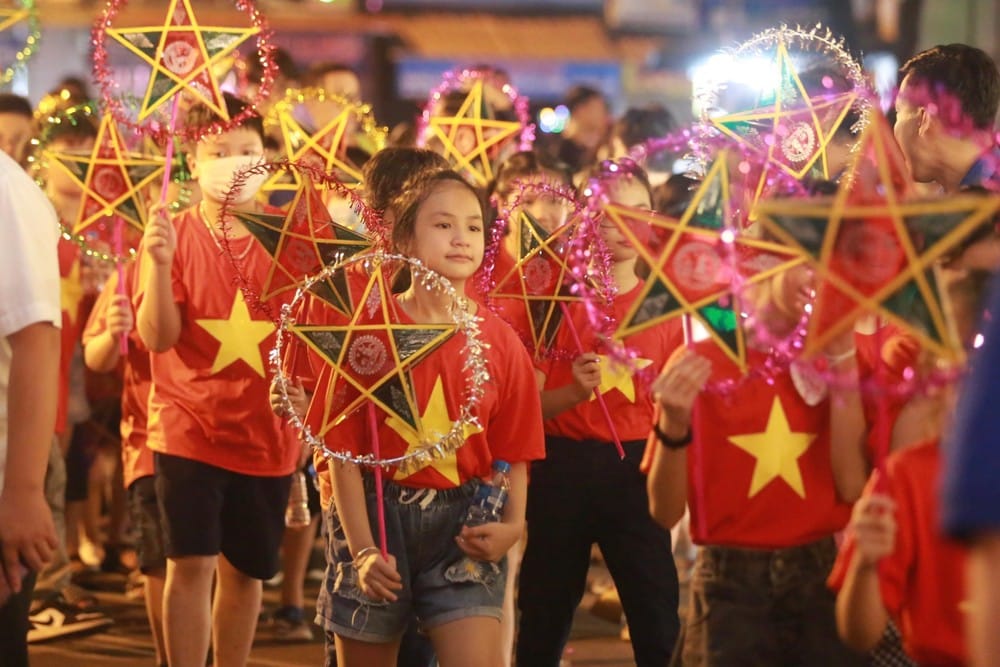
Lanterns glowing under the full moon during the Mid-Autumn Festival in Vietnam’s lively streets.
Many businesses organize cultural events or gift boxes of Vietnamese mooncakes to employees and partners, reflecting the festival’s theme of gratitude and generosity. For travelers, this is an ideal time to experience authentic Vietnamese traditions, as local communities welcome visitors to join the lantern processions, taste festive foods, and capture unforgettable moments under the golden full moon.
What Are the Legends Behind the Mid-Autumn Festival in Vietnam?
Behind the joy and color of the Mid-Autumn Festival in Vietnam lies a rich tapestry of ancient legends passed down through generations. These timeless tales explain why the full moon is so deeply cherished — and why children look to the sky each year, imagining the magical beings said to live upon it.
The festival is more than a night of lanterns and mooncakes; it’s a storybook brought to life, filled with wonder, morality, and lessons about love, gratitude, and harmony between heaven and earth.
The Moon Lady – Hang Nga’s Timeless Beauty
One of the most famous legends of the Mid-Autumn Festival in Vietnam tells of Hang Nga, the graceful Moon Lady. According to the tale, she once lived on Earth with her husband, Hau Nghe, a heroic archer who saved the world by shooting down nine scorching suns.
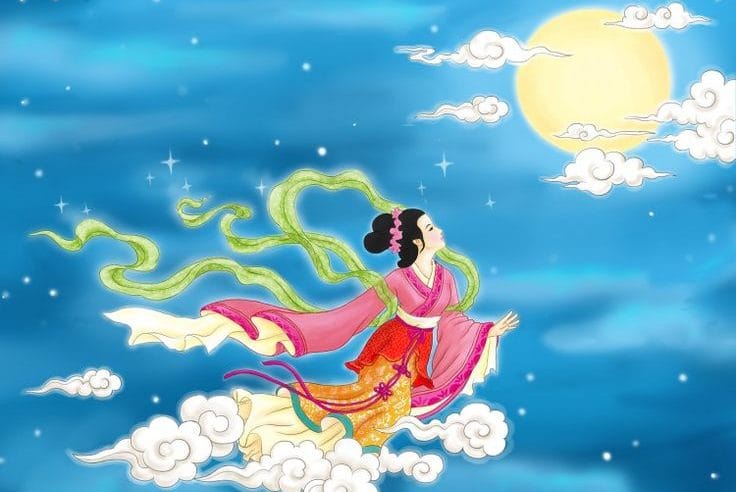
Artistic depiction of Chị Hằng flying to the moon in traditional folklore.
Hau Nghe was later rewarded with a magical elixir that granted eternal life. However, Hang Nga accidentally drank it and was lifted to the heavens, where she became the spirit of the moon. Each year, as the full moon shines brightest, Vietnamese families say that Hang Nga looks down from her celestial home, blessing children with happiness and peace.
During the festival, young girls often dress as the Moon Lady, symbolizing her elegance and compassion, while families make offerings of fruit and Vietnamese mooncakes to honor her. Her legend reminds everyone that even in separation, love and devotion endure — just as the moon always returns to full brightness.
Uncle Cuoi – The Man on the Banyan Tree
No story of the Mid-Autumn Festival in Vietnam would be complete without Uncle Cuoi, the kind-hearted but mischievous man who lives on the moon. His tale begins when Cuoi discovered a magical banyan tree with healing powers. One day, while he was away, his wife accidentally watered the tree with dirty water, causing it to uproot and float toward the sky.
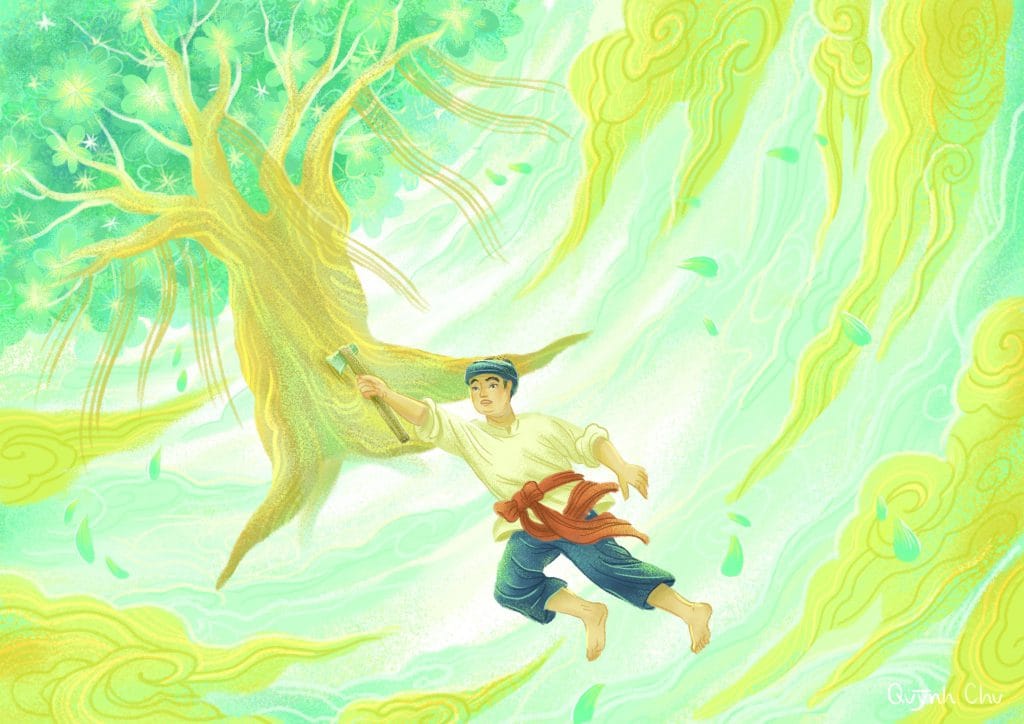
Illustration retelling the legend of Uncle Cuội and his magical banyan tree.
Cuoi clung to the tree’s roots as it soared higher and higher until both he and the tree landed on the moon — where he remains to this day. On every full moon, Vietnamese children look up to spot the shadow of the banyan tree and Uncle Cuoi sitting beneath it, smiling down on them.
In villages and cities alike, Vietnamese children celebrate the Mid-Autumn Festival by carrying lanterns shaped like Cuoi and his tree, reenacting his story through laughter, song, and storytelling. His legend captures the innocence and humor that make this festival especially meaningful for families.
The Symbolism of the Full Moon
For centuries, the full moon in Vietnamese culture has symbolized harmony, unity, and renewal. During the Mid-Autumn Festival in Vietnam, its perfect roundness mirrors the ideal of family togetherness — every household gathered under the same moonlight, no matter the distance.
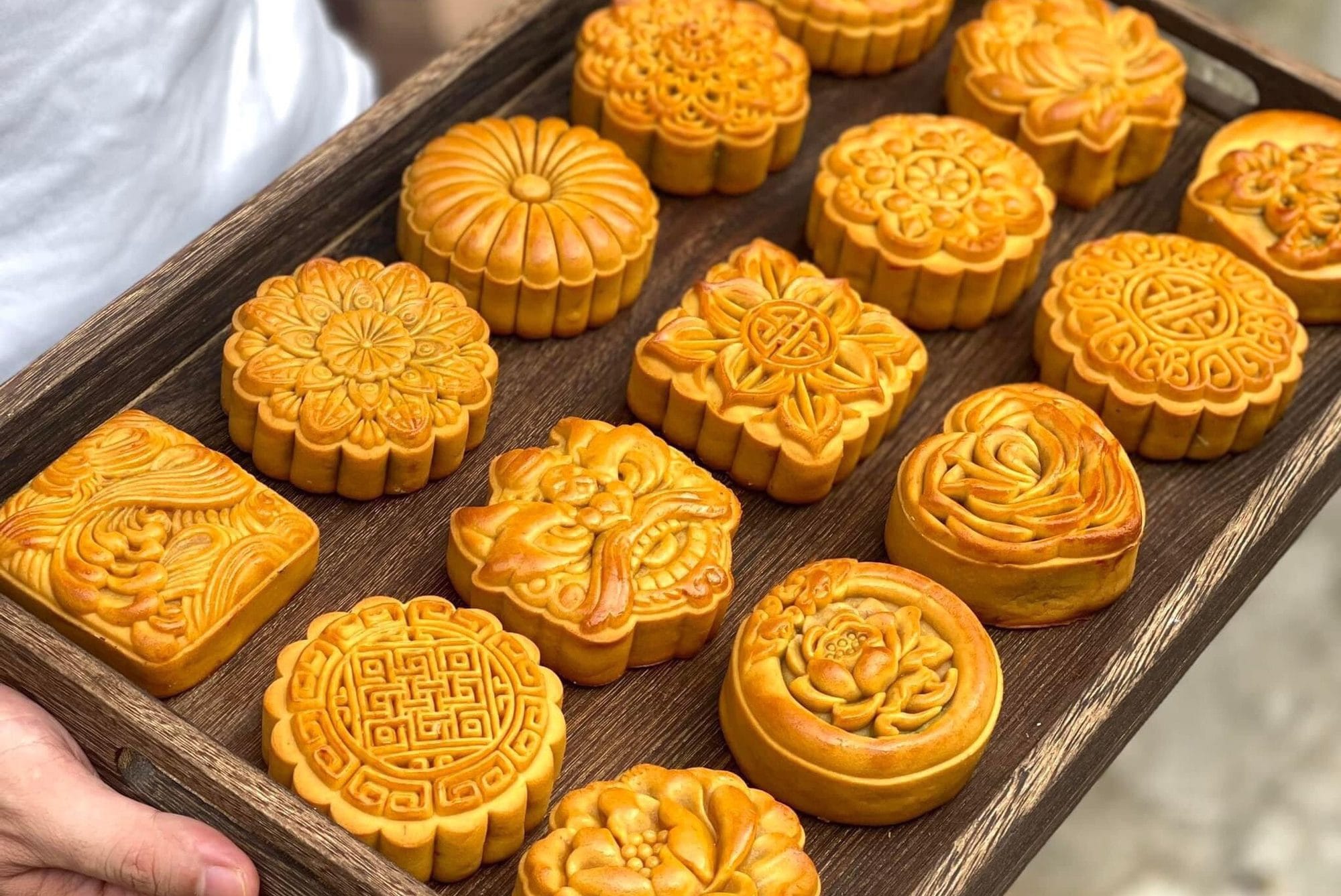
Bakers preparing mooncakes in family workshops across Vietnam before the festival
Traditionally, families prepare mooncakes, fruits, and tea to place on an altar facing the moon. After offering prayers for prosperity and health, everyone — from grandparents to little children — shares the treats together. The glowing moon becomes a silent witness to love, gratitude, and connection.
Travelers visiting Vietnam during this time often find themselves swept up in the same magic: watching lanterns float into the night sky, feeling the rhythm of lion dances echo through the streets, and realizing that the Vietnamese Mid-Autumn Festival is not just about stories — it’s about the universal joy of being together under one bright moon.
How do Vietnamese celebrate the Mid-Autumn Festival?
Today, the Mid-Autumn Festival in Vietnam is one of the most enchanting cultural celebrations of the year — a night when streets glow with lanterns, laughter fills the air, and families gather beneath the bright full moon. While rooted in ancient tradition, the modern festival beautifully blends old and new, offering visitors a vibrant glimpse into Vietnamese community life, creativity, and joy.
Assorted mooncakes with lotus seed and green tea fillings on traditional bamboo trays.
Across the country — from Hanoi’s Old Quarter to Hoi An’s riverside alleys — travelers can witness the same heartwarming scenes: children proudly carrying colorful lanterns, lion dancers leaping to the beat of drums, and families sharing mooncakes under the shimmering sky.
Lantern Parades – Lighting Up the Night
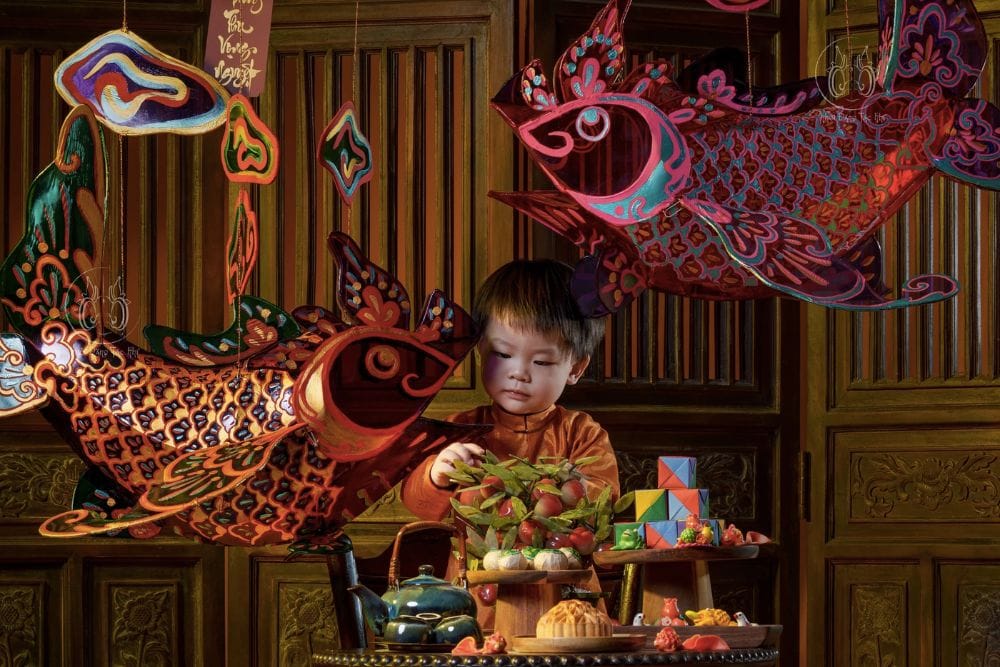
Lanterns are the soul of the Mid-Autumn Festival in Vietnam. As dusk falls, streets and courtyards come alive with glowing lanterns of every shape — stars, carp, rabbits, and full moons — each representing happiness and hope.
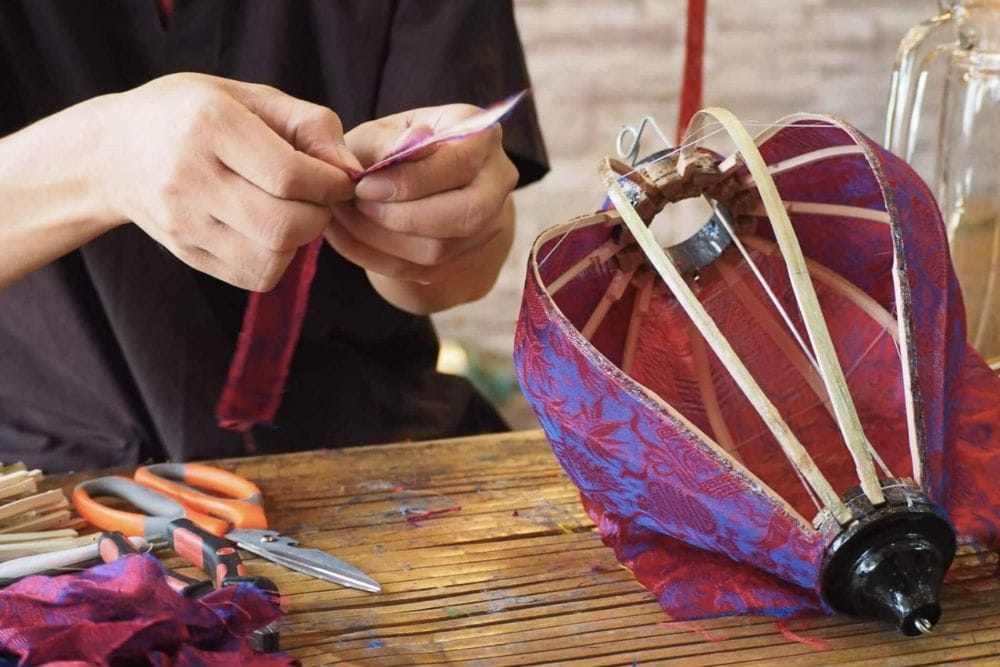
Handmade fabric lanterns crafted by local artisans for the Mid-Autumn Festival in Vietnam.
Children parade through villages and city squares, carrying handmade paper lanterns lit by candles or soft LED lights. Parents and teachers often help craft these lanterns from bamboo and silk, turning preparation into a creative family activity.
In major cities like Hanoi and Ho Chi Minh City, entire neighborhoods — such as Hàng Mã Street — become open-air lantern markets weeks before the festival. Travelers can join the parade, take photos of the kaleidoscopic glow, and even learn how to make their own lanterns in local workshops.
Lanterns symbolize brightness, guidance, and the promise of good fortune — reminding everyone that even in darkness, light can lead the way.
Mooncakes & Festive Foods – A Taste of Togetherness
No Mid-Autumn Festival in Vietnam is complete without mooncakes (bánh trung thu) — the festival’s most iconic treat. These round, richly flavored pastries are filled with lotus seed paste, salted egg yolk, or mung bean, symbolizing unity and completeness.
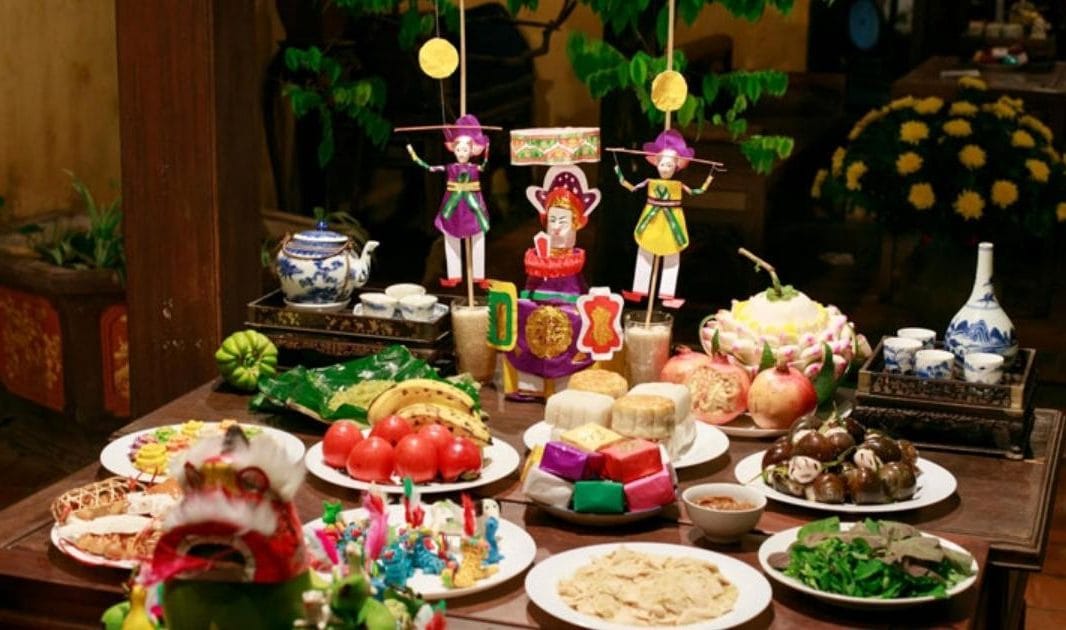
Tea, mooncakes and others finger food served together as a symbol of reunion and gratitude
Families gift mooncakes to friends, relatives, and colleagues as tokens of gratitude and respect. During the festival night, they’re shared under the full moon alongside green tea, pomelo, persimmon, and bananas — fruits that represent balance and harmony.
In recent years, innovative bakeries have introduced new flavors such as matcha, chocolate, and durian, appealing to younger generations and international visitors alike. Yet traditional handmade mooncakes from old Hanoi bakeries or small family shops in Hue remain the most beloved.
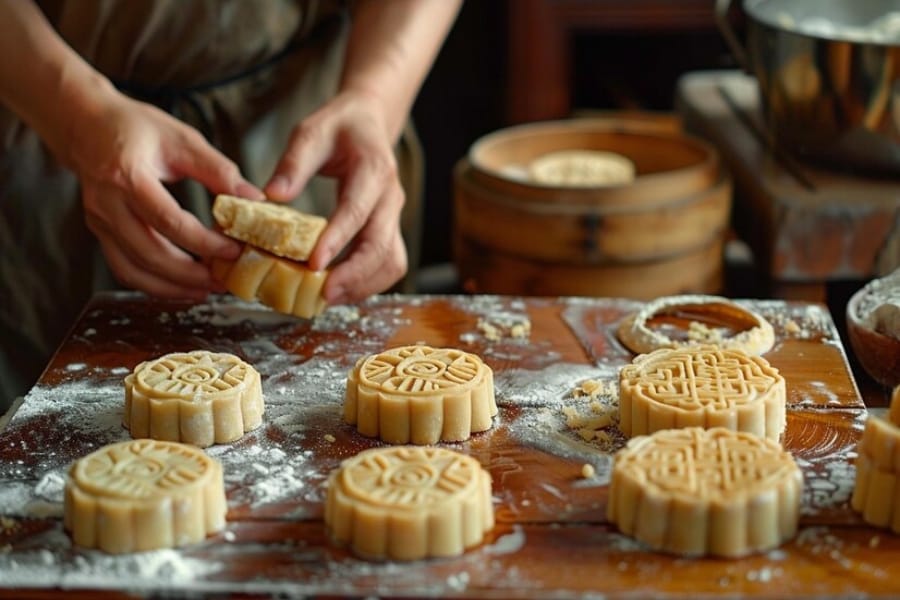
Some Family-run Bakery still win the top of mind when its comes to savory mooncake
Beyond sweets, the festival table often includes Vietnamese delicacies like sticky rice, boiled chicken, and fruit trays shaped into animals — adding a playful touch to this family-oriented feast.
Traditional Games & Lion Dances – The Rhythm of Joy
The Mid-Autumn Festival in Vietnam would not be complete without the pulsating rhythm of drums and the roar of lion dances (múa lân). These energetic performances, believed to bring luck and ward off evil, fill every street corner during the celebration.
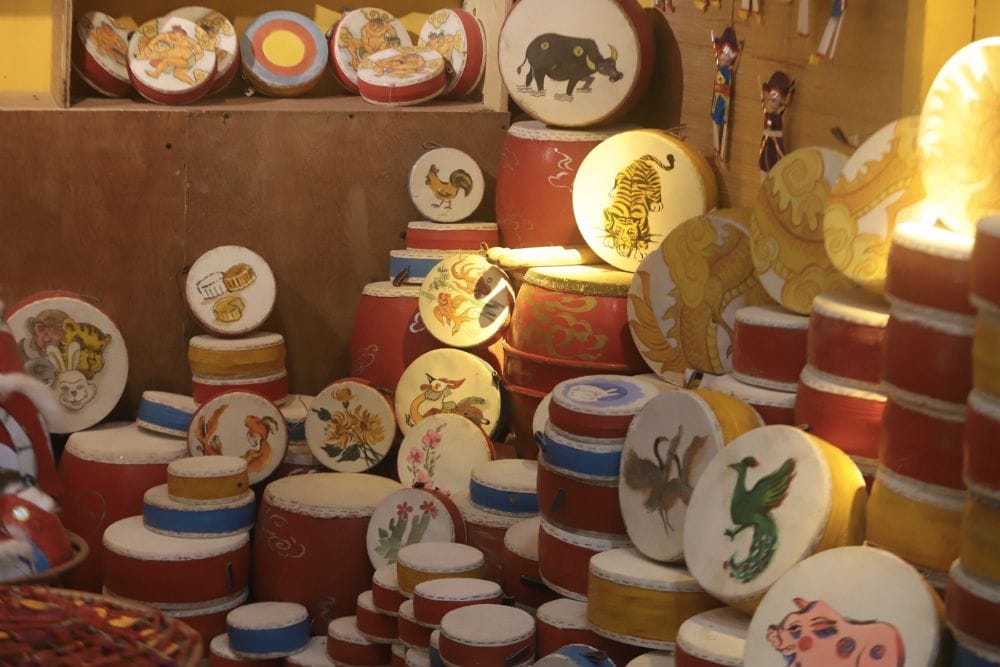
The round surface of drum represenitng the shape of full moon symbolizing reunion and completeness in Vietnamese culture.
Children follow the lion dancers through neighborhoods, cheering as the colorful creatures leap, spin, and bow before homes and shops. In many towns, you can even see dragon dances that stretch across entire streets, guided by skilled troupes performing acrobatic stunts.
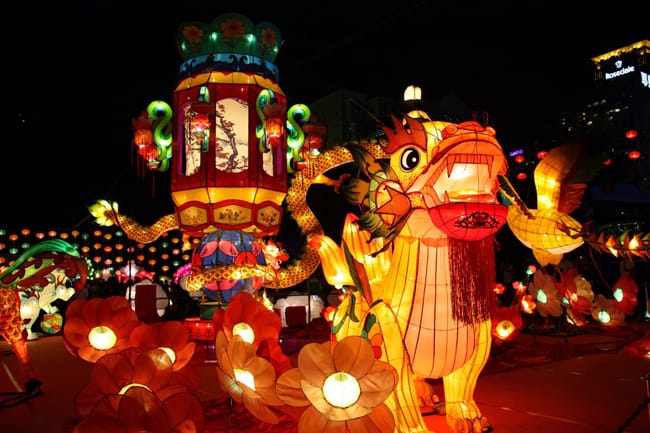
Lantern parades lighting up ancient towns across Vietnam during Mid-Autumn night.
Meanwhile, traditional Vietnamese folk games such as tug-of-war, blindfolded goat catching (bịt mắt bắt dê), and star-lantern races keep the festive spirit alive. Schools and community centers host contests for best lanterns or best lion dances, turning the night into a joyous competition of creativity and teamwork.
For visitors, joining these celebrations is a highlight — a chance to dance, laugh, and feel the heartbeat of Vietnamese culture under the moonlight.
Offer Prayers to the Earth God for Prosperity and Peace
During the Mid Autumn Festival in Vietnam, many families take time to worship “Ông Địa” – the God of Earth, a cheerful, round-bellied deity symbolizing wealth, peace, and protection. A small altar is often set up with fruits, mooncakes, and tea to express gratitude for a plentiful harvest and to pray for future prosperity.
This practice reflects the deep spiritual and agricultural roots of Vietnamese culture, where harmony between humans, nature, and the divine is highly valued. In traditional celebrations, Ông Địa often appears alongside the lion dance, joyfully guiding the performance and bringing good fortune to everyone. His presence reminds people that happiness and abundance come from both hard work and heartfelt appreciation of life’s blessings.
What Foods and Traditions Make the Mid-Autumn Festival in Vietnam Unique?
The Mid-Autumn Festival in Vietnam is more than a night of lanterns and laughter — it’s a deeply symbolic celebration of unity, harvest, and gratitude. Every tradition, from the food on the family altar to the way children parade under the moonlight, reflects centuries of cultural wisdom and a shared appreciation for life’s simple joys.
During this festival, Vietnamese families don’t just observe customs — they live them. The sounds of laughter, the scent of tea and mooncakes, and the sight of full fruit trays all come together to form a picture of peace and prosperity that has endured through generations.
Symbolic Fruits Banquet – The Language of the Harvest
At the heart of the Mid-Autumn Festival in Vietnam lies the mâm cỗ trung thu — a beautifully arranged tray of fruits and offerings that families display during the full moon. Each fruit carries a special meaning:
Pomelo represents family unity and good fortune.
Bananas cradle the fruit tray like open hands, symbolizing protection and care.
Persimmons shine in bright orange hues, reflecting warmth and happiness.
Custard apples and guavas bring sweetness and luck for the harvest season.
Parents often craft the fruit into playful animal shapes — lions, rabbits, or fish — to delight their children. In many regions, the tray is completed with a mooncake and a cup of fragrant green tea, shared among loved ones as an act of harmony and gratitude.
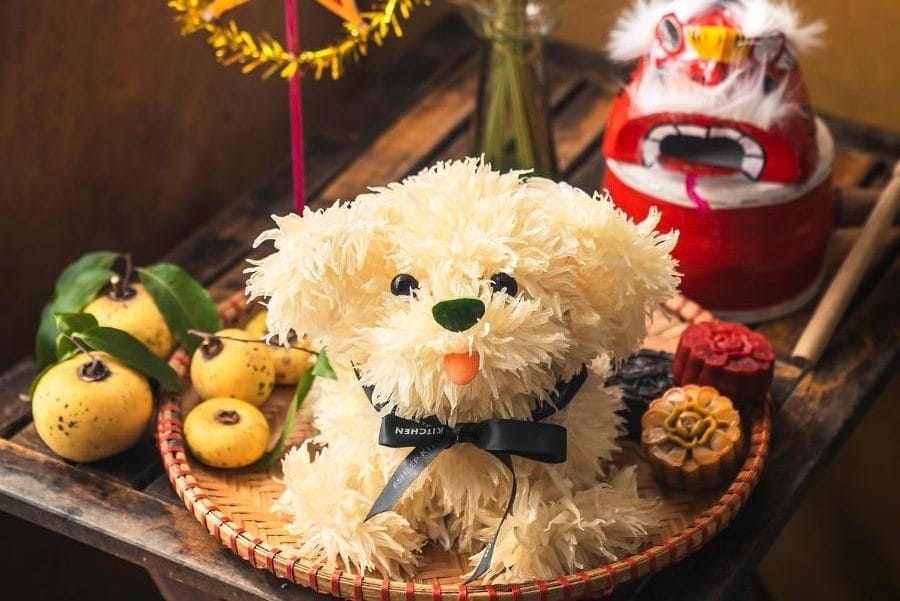
in traditional Hanoi family, Mothers teaching children how to prepare a poodle made of pomelo showing neat-handed skill
For visitors, joining a local family to prepare this festive fruit tray is one of the most memorable ways to connect with the cultural essence of the celebration.
Family Rituals – Togetherness Under the Full Moon
The Mid-Autumn Festival in Vietnam is, above all, a celebration of reunion. When the moon rises — round, bright, and complete — families gather to give thanks for the harvest and the health of their loved ones.
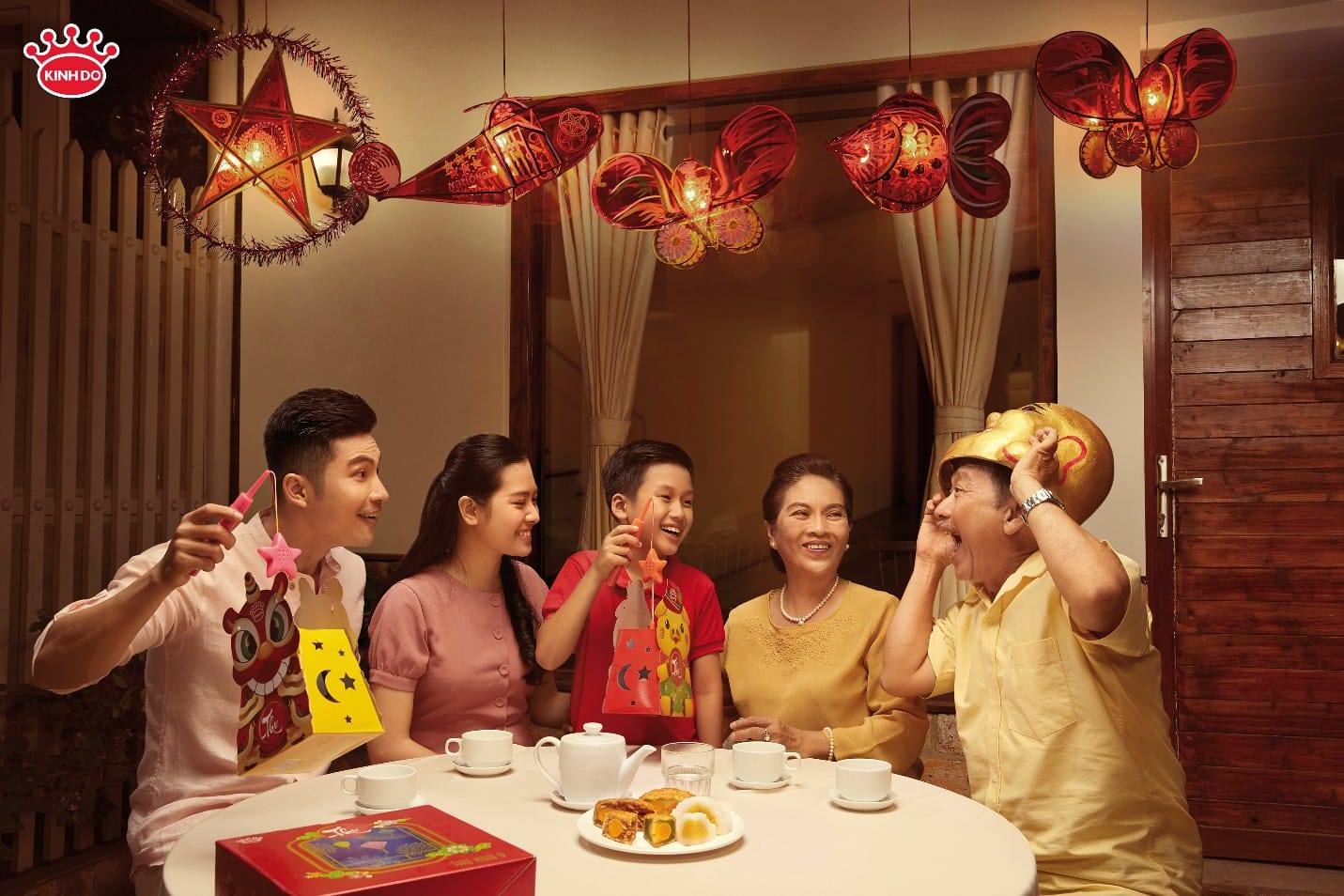
Generations gathered together enjoying mooncakes and storytelling
Before the feast begins, families set up an offering table outdoors or by a window, facing the moon. Candles are lit, incense burns softly, and children’s laughter fills the air as they wait for permission to enjoy the treats. This act symbolizes respect for ancestors, gratitude for abundance, and the wish for unity in the coming year.
As night deepens, stories are told — tales of the Moon Lady and Uncle Cuội — while parents share mooncakes and fruits with their children. For travelers, witnessing this intimate moment offers a glimpse into the Vietnamese heart: one that values family, balance, and spiritual connection as much as festivity.
Regional Variations – From North to South, A Festival of Many Flavors
Though celebrated nationwide, the Mid-Autumn Festival in Vietnam reveals fascinating regional differences in food and customs.
In Northern Vietnam, the atmosphere leans traditional — with star-shaped lanterns, sticky rice offerings, and classic baked mooncakes filled with lotus seed paste or salted egg yolk. Streets in Hanoi’s Old Quarter are packed with handmade lantern vendors and mooncake stalls glowing under yellow lights.
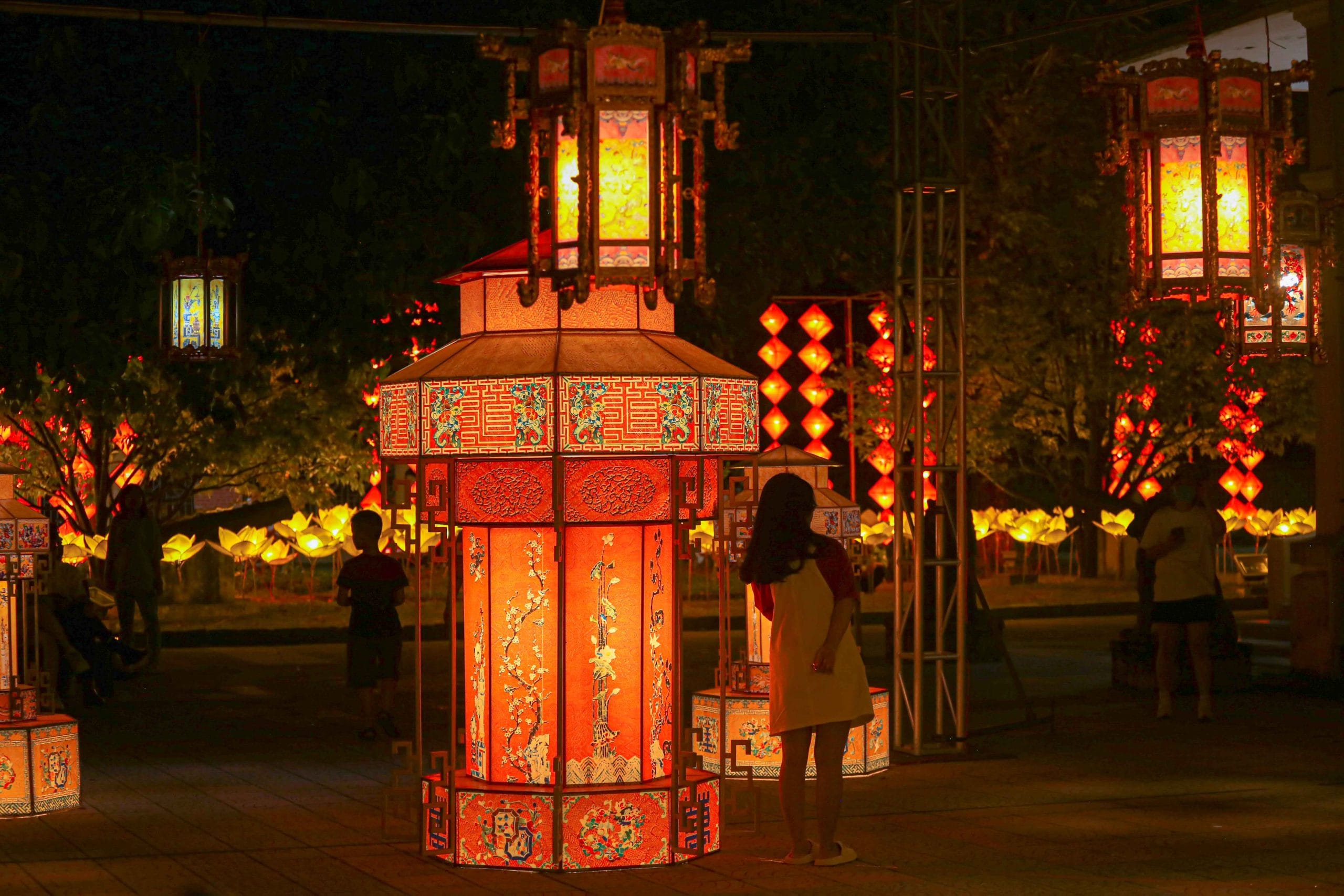
Lantern-lit streets inside forbidden city Hue showing a glance of royal festive atmosphere
Meanwhile, in Central Vietnam, the festival is known for its artistic flair. Families in Hue or Hoi An decorate boats and hold floating lantern festivals on the river, creating breathtaking scenes of color and reflection.
Down in Southern Vietnam, creativity shines through vibrant fillings like durian, green bean, and coconut in mooncakes. Parades are larger, lion dances more energetic, and the mood distinctly tropical and festive.
No matter where you celebrate, the warmth and hospitality of the Vietnamese people make the Mid-Autumn Festival in Vietnam an unforgettable experience — one that unites the country through joy, food, and the glow of the moon.
Where Are the Best Places to Experience the Mid-Autumn Festival in Vietnam?
Whether you’re drawn to glowing lantern streets, riverside festivals, or lively cultural parades, there’s no better time to experience Vietnam’s soul than during the Mid-Autumn Festival in Vietnam.
Each region adds its own local flavor — from Hanoi’s nostalgic charm to Hoi An’s magical rivers, Hue’s royal heritage, and Ho Chi Minh City’s vibrant energy. Here’s where travelers can truly feel the warmth and wonder of this beloved holiday.
Hanoi – The Heart of Vietnamese Lantern Traditions
If there’s one city that captures the authentic essence of the Mid-Autumn Festival in Vietnam, it’s Hanoi.
In the days leading up to the festival, the Old Quarter, especially Hàng Mã Street, transforms into a radiant display of color and sound.
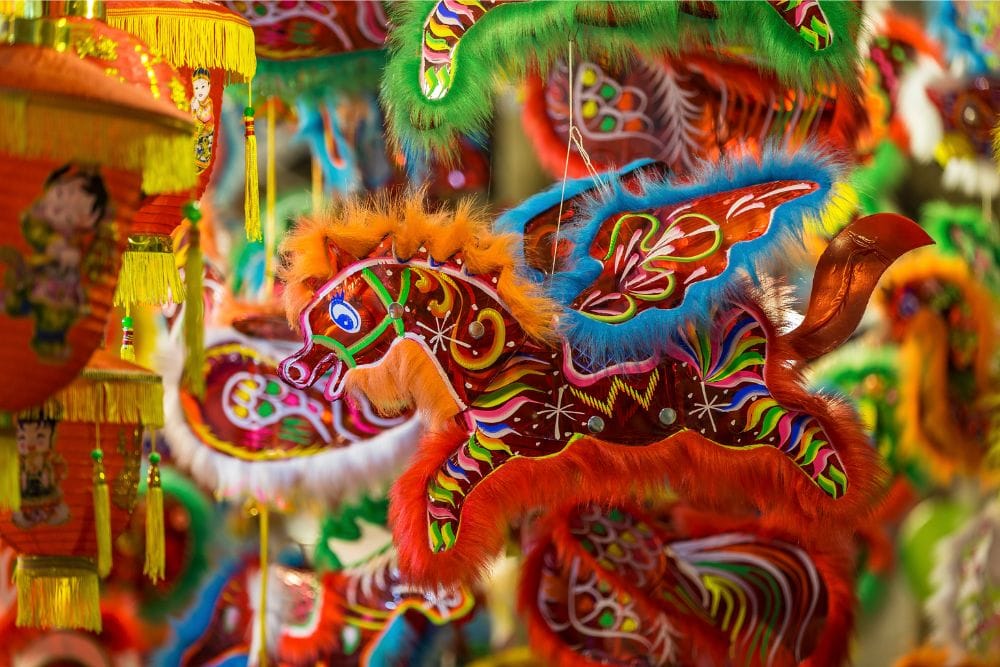
Hanoi’s Old Quarter illuminated with thousands of colorful lanterns.
Lanterns in the shapes of stars, carp, and rabbits dangle from every shopfront. Children’s laughter fills the air as families bargain for toys, masks, and mooncakes to take home.
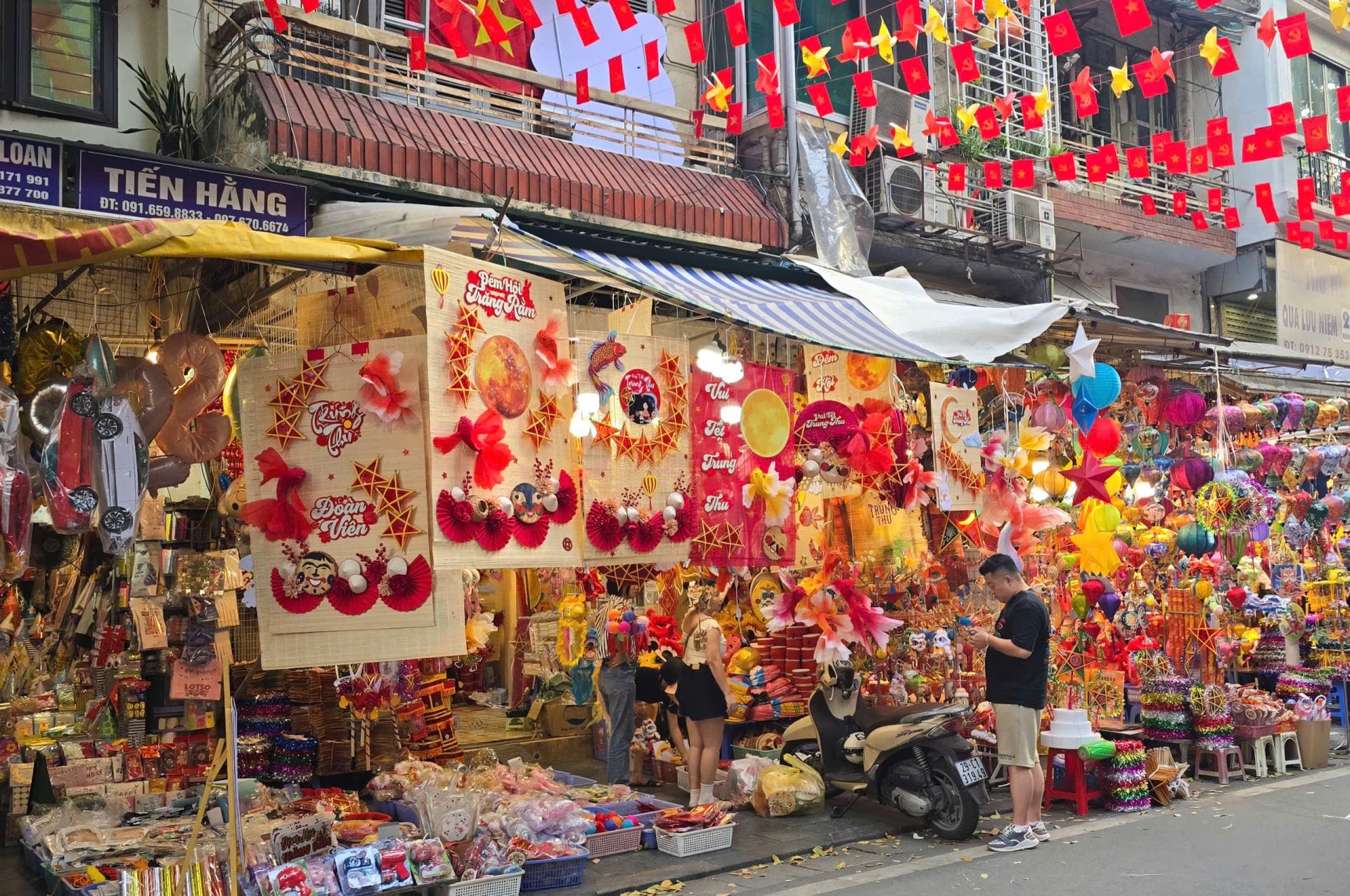
Hang Ma Street buzzing with families shopping for toys and decorations
Travelers can join locals in crafting paper lanterns, sampling freshly baked mooncakes, and photographing streets bathed in golden light.In the evening, Hoàn Kiếm Lake becomes a peaceful gathering spot where families share food and watch lion dances under the shimmering full moon — a true snapshot of traditional Vietnamese Mid-Autumn joy.
Hoa Lư Ancient Town – A Hidden Gem of Cultural Serenity
For travelers seeking a quieter, more authentic experience of the Mid-Autumn Festival in Vietnam, Hoa Lư Ancient Town in Ninh Binh Province offers a truly magical setting.
Surrounded by misty limestone mountains, ancient temples, and riverside villages, this historic capital transforms into a scene of gentle festivity and deep cultural reflection during the full-moon season.
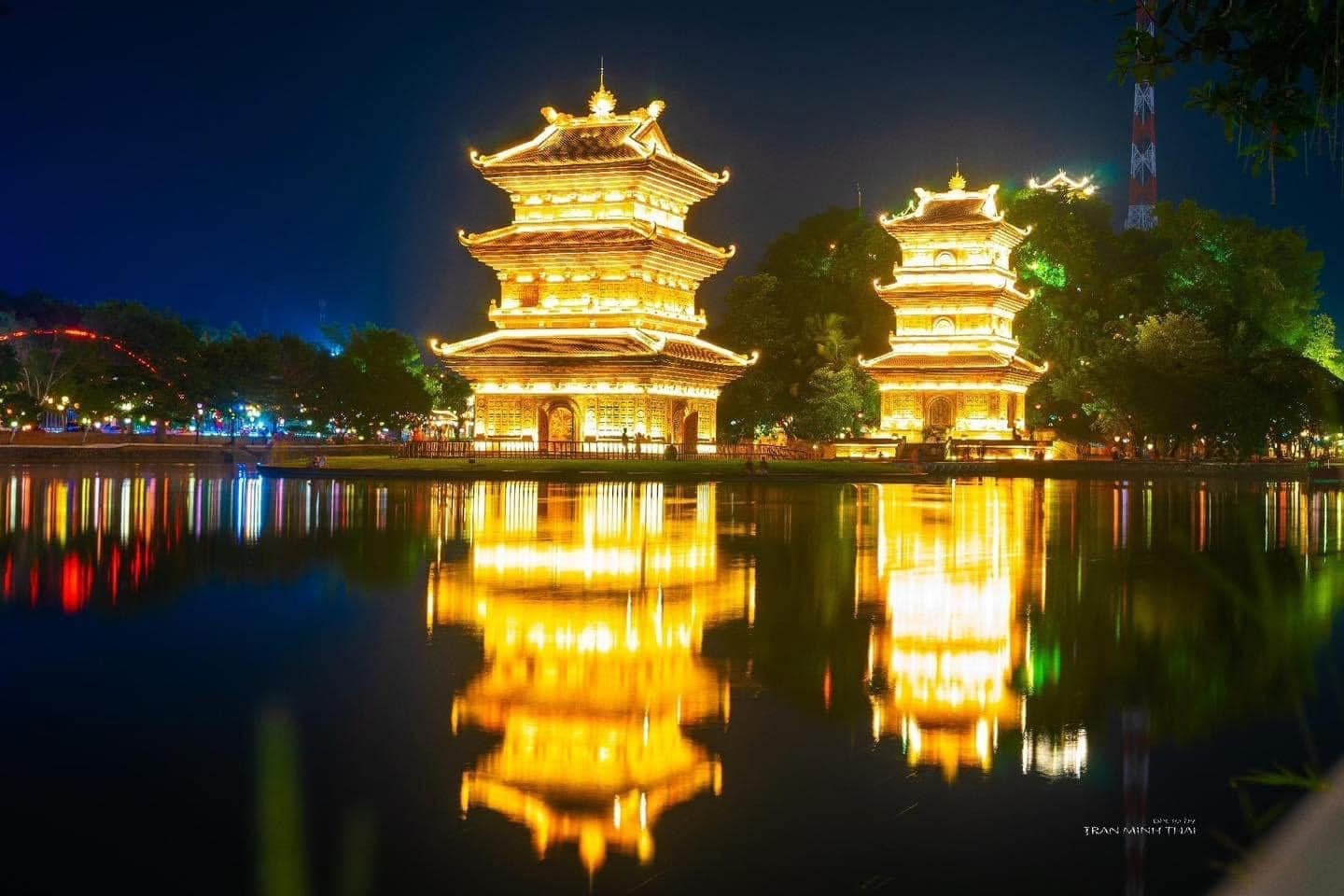
Temples of Hoa Lư glowing softly in the full-moon light.
As night falls, the town glows with soft yellow lanterns hanging along traditional tiled roofs and stone gates. Locals gather at small courtyards and village pagodas to light incense, share homemade mooncakes, and tell folk stories under the silver moonlight.
Unlike the bustling lantern streets of Hanoi or the dazzling displays in Ho Chi Minh City, Hoa Lư’s Mid-Autumn celebration is quiet, soulful, and deeply connected to Vietnam’s spiritual heritage.
A peaceful countryside festival atmosphere surrounded by limestone peaks.
Visitors staying nearby — at resorts like Jiva Hoa Lư Retreat or Tam Coc Garden Resort — can join local families for tea ceremonies, lantern workshops, or countryside processions featuring traditional music.
It’s an experience that captures the festival’s true spirit: gratitude, family connection, and the peaceful rhythm of rural Vietnamese life.
Hoi An – The City of Lanterns Comes Alive
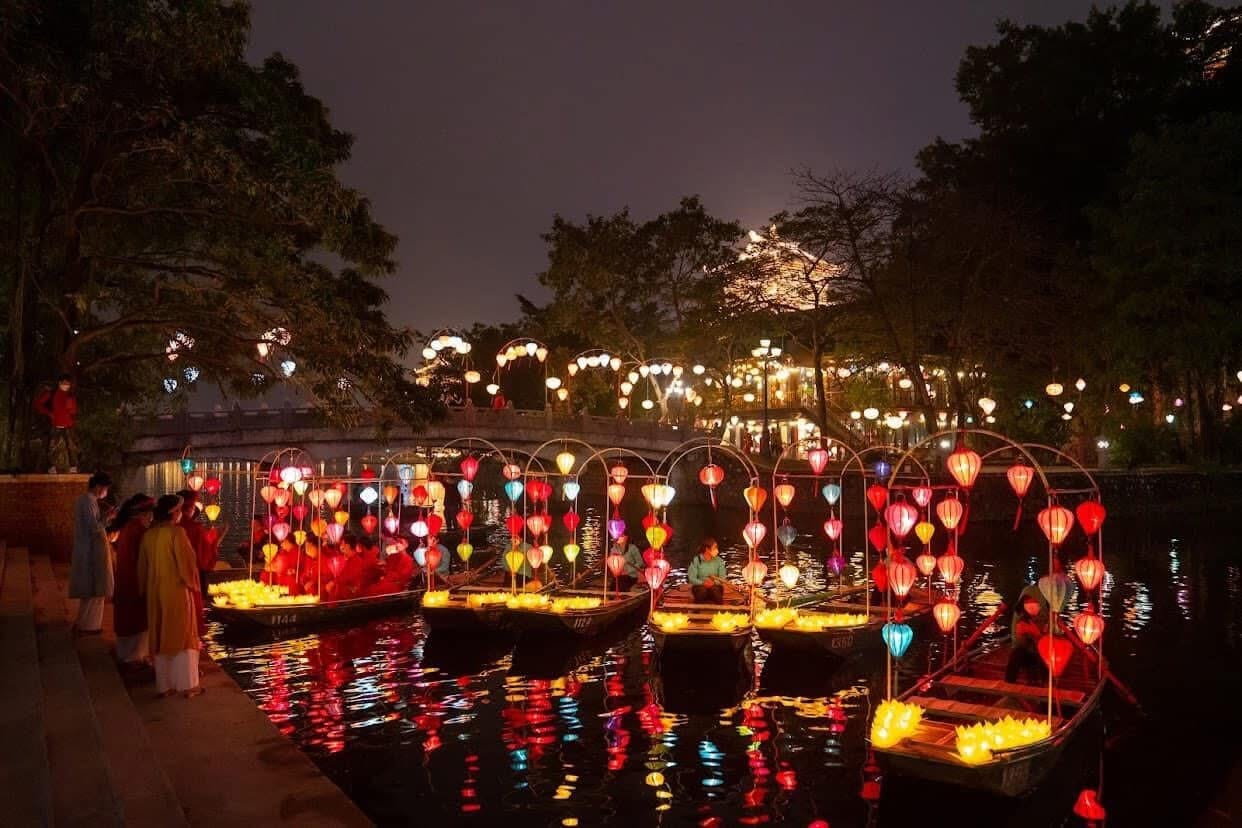
Already famous for its monthly Lantern Festival, Hoi An becomes even more magical during the Mid-Autumn Festival in Vietnam.When night falls, thousands of colorful silk lanterns float down the Thu Bồn River, casting reflections that dance across the ancient town’s yellow-walled streets. Locals and travelers alike light candles, make wishes, and release them into the water — a gesture symbolizing luck and happiness.
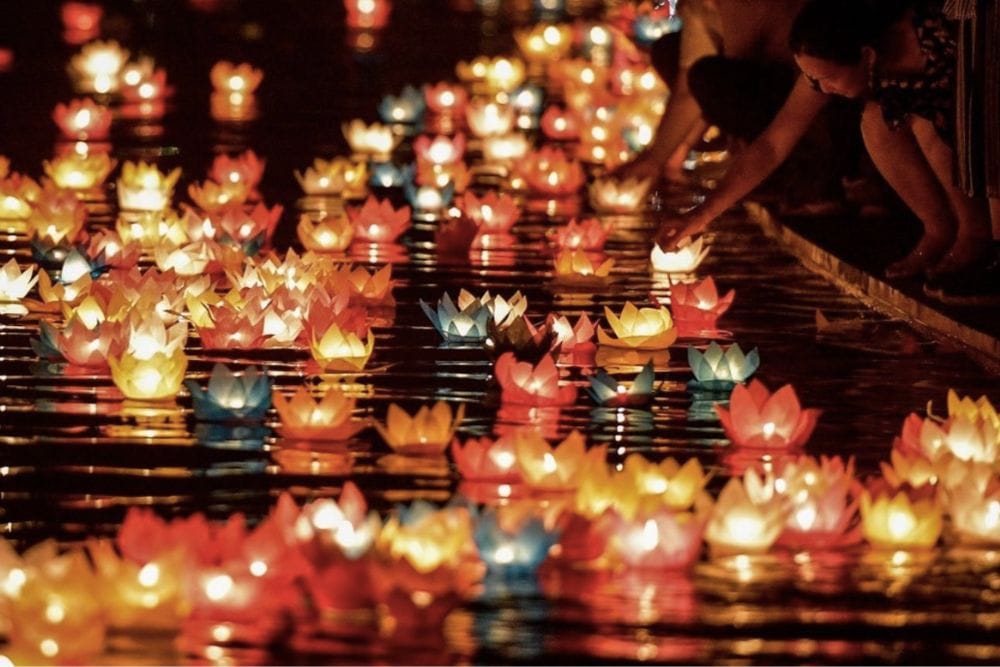
Hoi An’s Thu Bon River sparkling with floating lanterns during the festival night.
In Hoi An, the festival also celebrates community. Traditional games, folk performances, and calligraphy displays take place around An Hội Bridge and the Japanese Covered Bridge, while cafés and restaurants offer special mooncake menus paired with lotus tea.
For anyone seeking a romantic, dreamlike atmosphere, Hoi An’s Mid-Autumn night is pure enchantment.
Hue – A Royal Celebration Under the Moon
As Vietnam’s former imperial capital, Hue gives the Mid-Autumn Festival a touch of royal grace. The city’s cultural heritage blends seamlessly with festive excitement — from the historic Imperial Citadel to the poetic banks of the Perfume River.
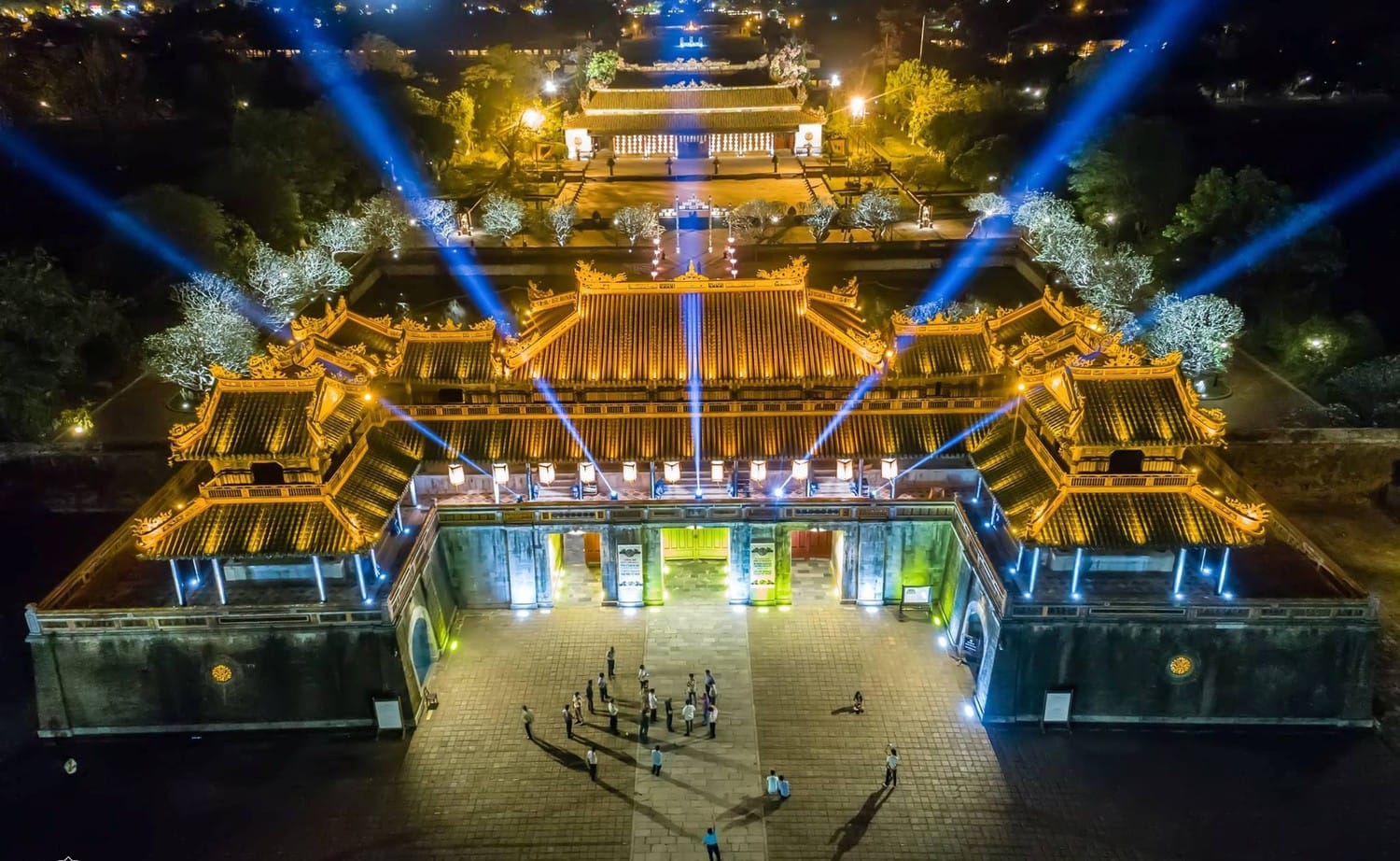
Hue’s imperial citadel hosting cultural shows and folk music under the moonlight.
Here, the festival emphasizes artistry and tradition. Local artisans create exquisite lanterns shaped like lotus flowers or imperial animals, while children parade through the ancient streets singing folk songs.
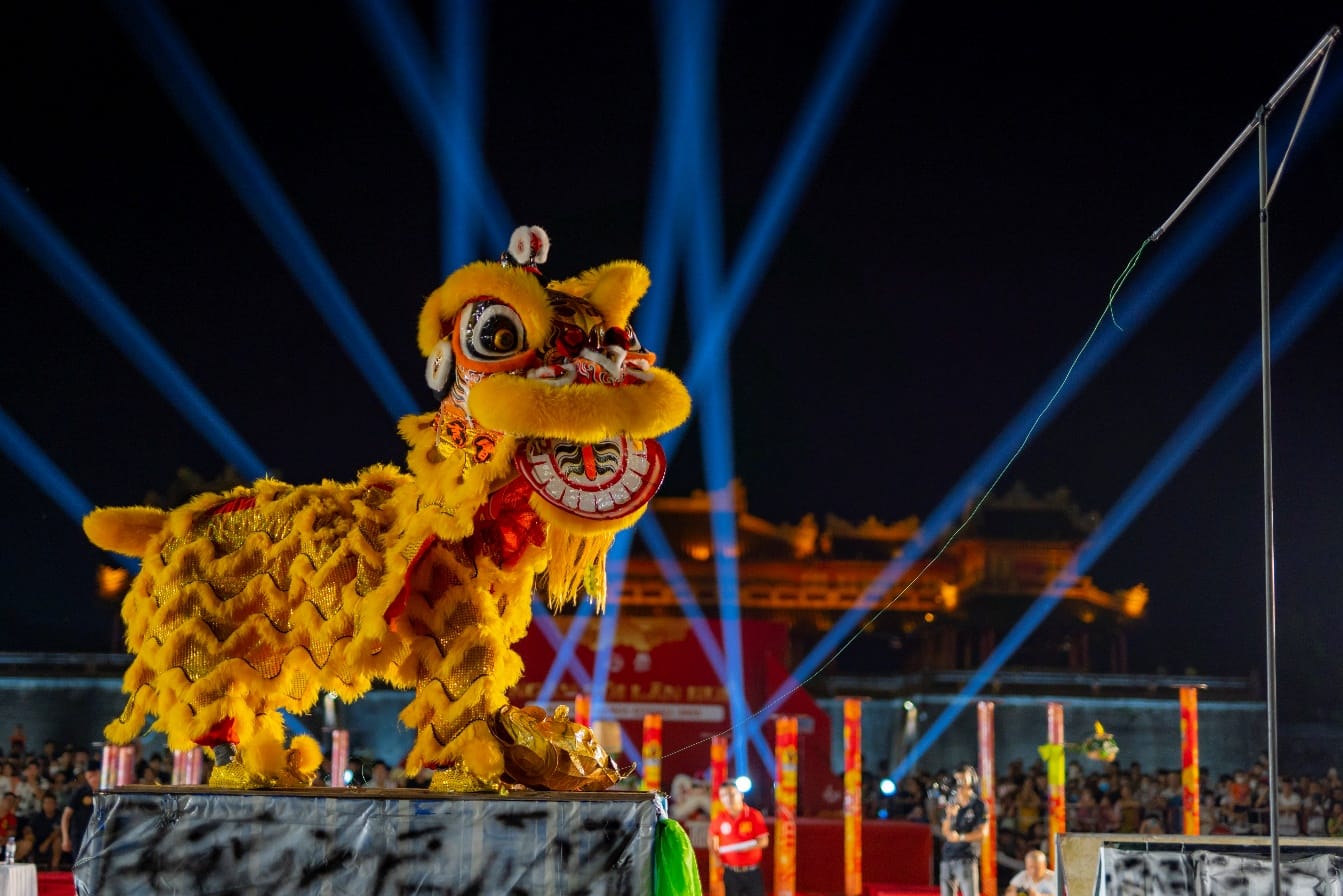
Performing lion dances in front of Ngọ Môn Gate
In the evening, visitors can watch elegant lion and unicorn dances performed in front of royal palaces or take a gentle boat ride down the Perfume River under the moonlight.
Hue’s tranquil beauty and deep cultural roots make it one of the most soulful places to celebrate the Mid-Autumn Festival in Vietnam.
Ho Chi Minh City – A Modern Festive Spectacle
In contrast to the quiet charm of the north, Ho Chi Minh City celebrates the Mid-Autumn Festival in Vietnam with modern vibrance and urban flair.
The city’s District 5, also known as Chinatown (Chợ Lớn), is the epicenter of festivities. Its streets burst with neon lights, drumming troupes, and mooncake shops that stay open late into the night.
Kids parade in lion masks while acrobatic dance teams perform to the beat of gongs and cymbals — an exhilarating display of Vietnamese community spirit.
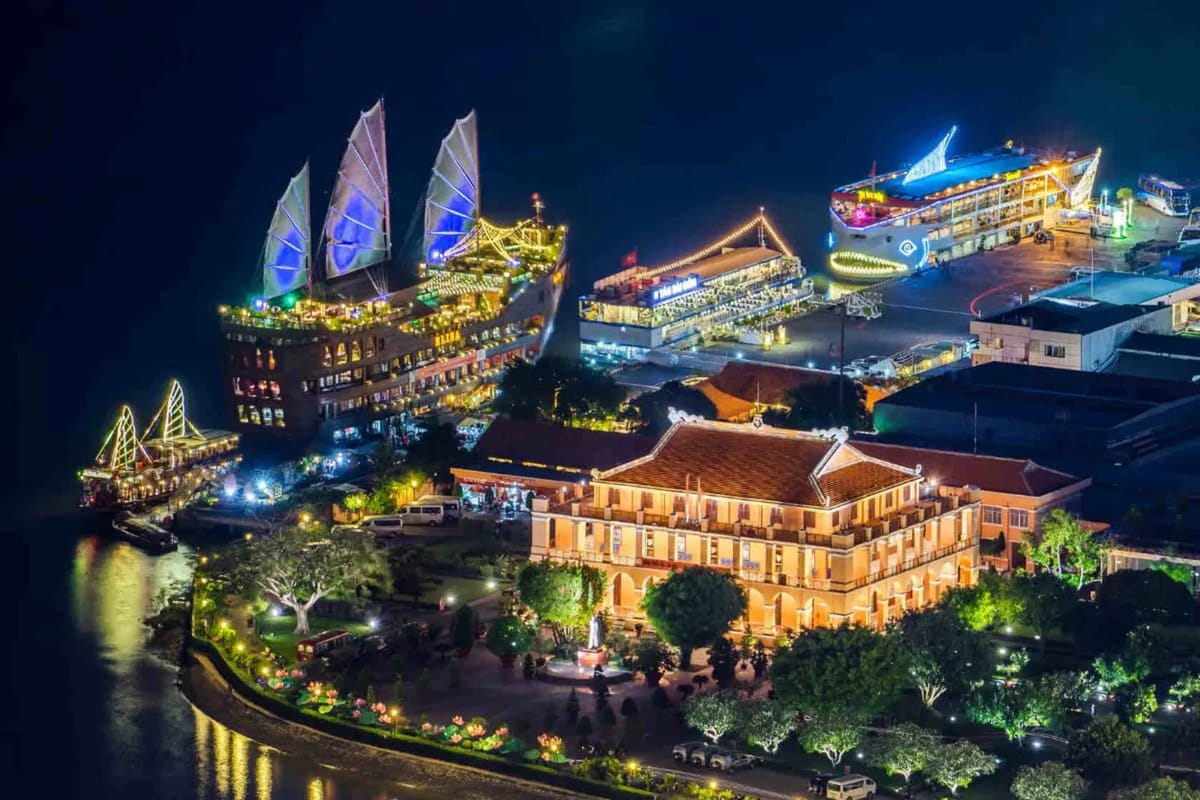
Lantern stalls lining Nhà Rồng dock with dragon and star designs.
Visitors can explore Lương Nhữ Học Street, where lanterns glow in every color imaginable, or sample the city’s unique southern-style mooncakes filled with durian, coconut, and mung beans.
The combination of tradition and cosmopolitan energy makes Ho Chi Minh City one of the most exciting destinations for travelers experiencing the Mid-Autumn Festival in Vietnam for the first time.
Travel Tips for Experiencing the Mid-Autumn Festival in Vietnam
To fully enjoy the Mid-Autumn Festival in Vietnam, plan your visit around the 15th day of the 8th lunar month, usually in September. Arrive a few days early to witness how local markets fill with mooncakes, lanterns, and festive toys.
Bring a camera to capture the glowing lanterns and vibrant street performances, but also take time to join locals in tasting mooncakes and watching lion dances.
Respect local customs when photographing children or family gatherings. Most importantly, walk slowly, observe, and feel the sense of connection that defines the Mid-Autumn Festival in Vietnam, a moment when culture, tradition, and joy come beautifully together.
Ready to Experience Jiva?
Immerse yourself in a stay where northern Vietnamese architecture meets world-class comfort. At Jiva Hoalu Retreat, each accommodation blends locally inspired décor with modern luxuries—offering a unique fusion of culture, tradition, and elegance. Whether you’re here for a romantic getaway, a family escape, or a tranquil retreat, Jiva promises unforgettable moments in the heart of Ninh Binh.
Contact Us:
📞 +84 933 006 886
📧 inquiry@jivahoaluretreat.com
🌐 https://jivahoaluretreat.com/
Book now! to enjoy super hot deals