EN
- VN
- FR
The weather and climate in Vietnam are shaped by its long, narrow geography stretching more than 1,600 kilometers from north to south. This unique shape, combined with mountains, plateaus, and over 3,000 kilometers of coastline, creates a remarkable diversity of climatic conditions. Unlike many destinations with relatively uniform seasons, Vietnam offers travelers a mix of tropical, subtropical, and highland weather patterns all within one country.
diverse weather and climate in Vietnam across north, central, and south.
Broadly, Vietnam’s climate is governed by the tropical monsoon system. The northeast monsoon brings cool, dry air to the north from November to March, creating crisp winters and mild springs. Meanwhile, the southwest monsoon dominates from May to October, carrying warmth and heavy rains to central and southern regions. This contrast results in a landscape where you might trek through misty mountains in Sapa, relax on sunny beaches in Da Nang, and experience tropical rains in Ho Chi Minh City—all in the same month.

Vietnam’s weather change from misty mountains to sunny beaches.
Average annual temperatures range between 22°C and 27°C. Lowland and coastal areas stay warm throughout the year, while the northern mountains can drop close to freezing in winter. Rainfall patterns also vary significantly: northern and southern regions receive the bulk of their rainfall during summer and early autumn, while central Vietnam often faces typhoons from September to November.
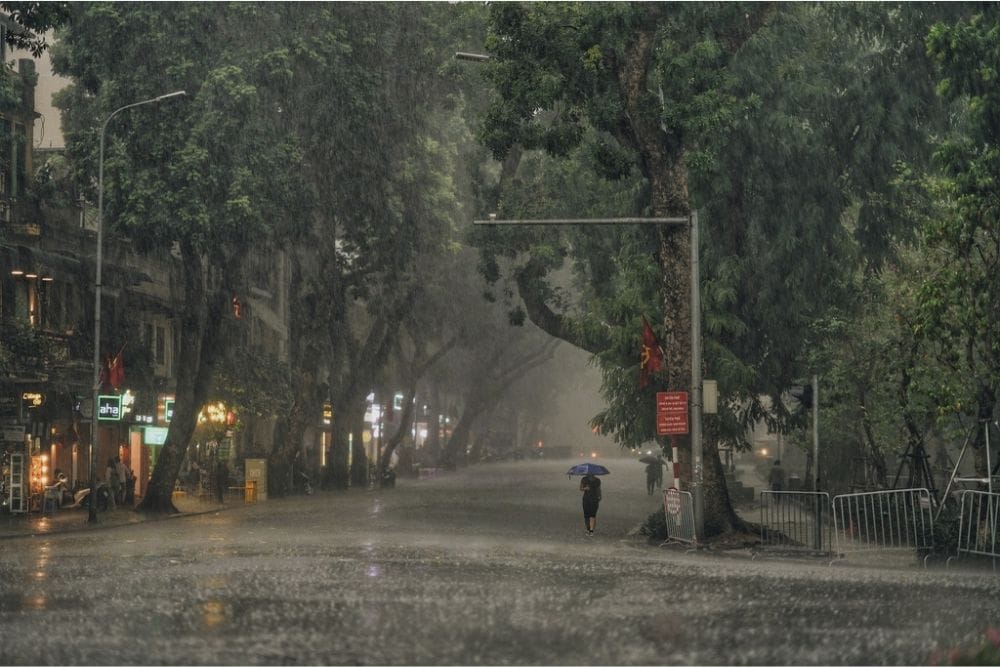
Monsoon clouds over Hanoi
For travelers, this means there is never a single “perfect” time to visit Vietnam, but rather different seasons for different experiences. If you want to know the most suitable months for your journey, you can check our guide on the Best Time to Visit Vietnam. Those planning a fall trip should also explore Vietnam in September, which showcases golden rice terraces and cultural festivals across the country. Meanwhile, if your itinerary includes Ninh Binh, the Ninh Binh Travel Guide will help you discover top attractions near Jiva Hoalu Retreat.
Because of its diverse geography, the weather and climate in Vietnam vary significantly from region to region. Understanding these differences is crucial for planning your journey, as the best time to visit Hanoi may not be the same as for Da Nang or Ho Chi Minh City. Below is a closer look at the four main climatic regions of the country.
Northern Vietnam, home to Hanoi, Ninh Binh, Ha Long Bay, and Sapa, experiences four distinct seasons. Winters (December–February) are cool, sometimes dropping close to 10°C in the Red River Delta and near freezing in mountain areas like Sapa or Ha Giang. Spring (March–April) brings mild weather and blooming flowers, while summers (May–August) are hot, humid, and rainy. Autumn (September–November) is considered the most beautiful season, with golden rice fields, cooler breezes, and cultural festivals.
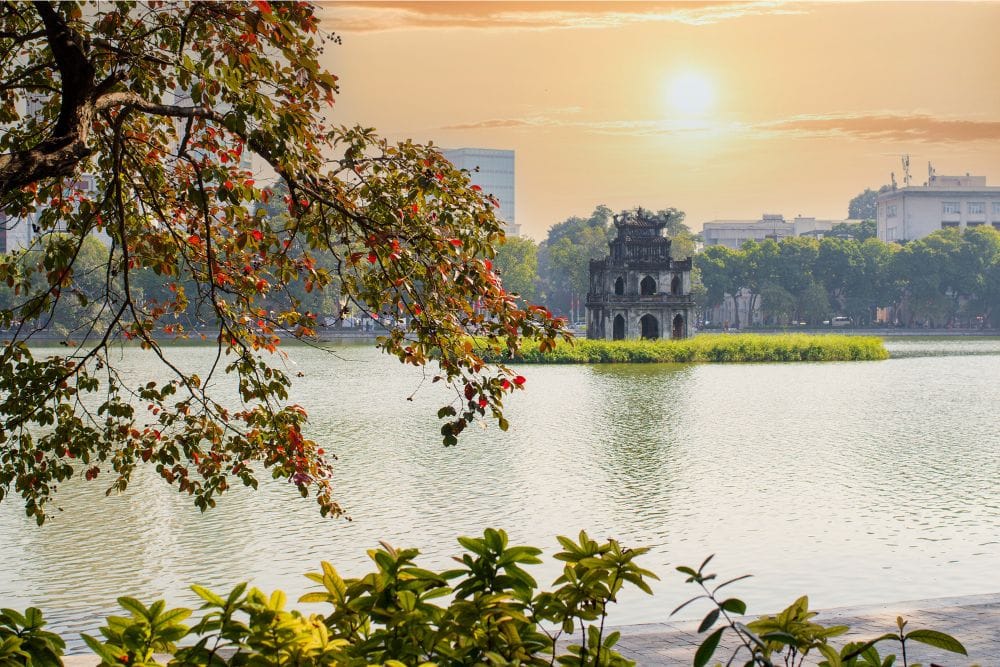
Foggy winter morning in Hanoi reflecting the cool season in northern Vietnam.
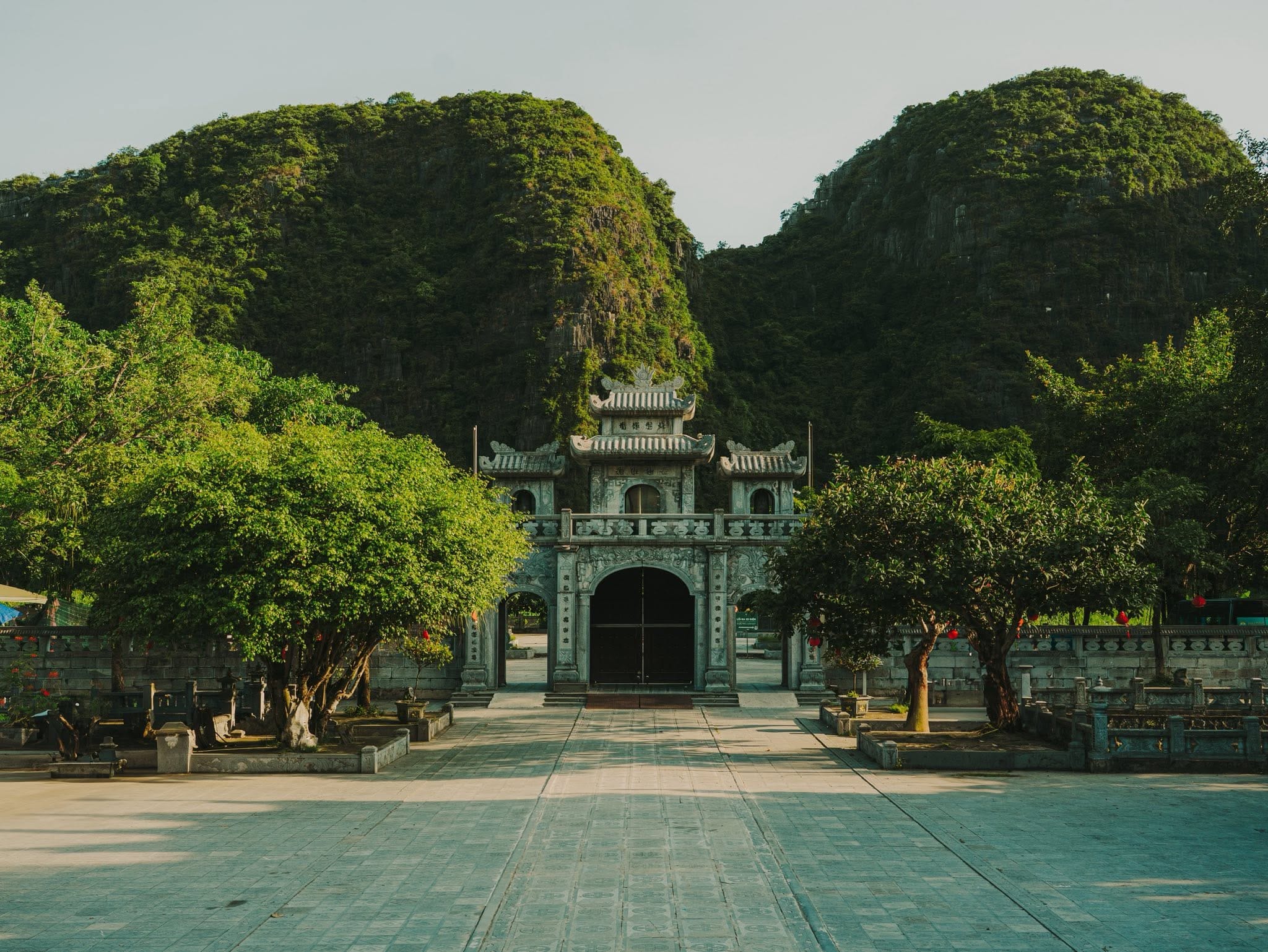
For travelers seeking detailed insights into autumn, our guide on Vietnam in September highlights rice harvests, pleasant temperatures, and vibrant celebrations. If your plan includes cultural exploration, the Ninh Binh Travel Guide is the perfect resource for discovering Hoa Lu and surrounding landscapes.
Central Vietnam, including Hue, Da Nang, and Hoi An, is known for its extremes. Summers (May–August) can be scorching, with temperatures reaching up to 40°C. The region is also prone to tropical storm and heavy rains, particularly from September to November, which can disrupt travel plans. However, from February to April, the weather is much more favorable, making it an excellent time to explore Hue’s imperial sites or relax on Da Nang’s beaches.

Sunny beach in Da Nang representing the warm, dry season in central Vietnam
If you’re considering when to travel, our Best Time to Visit Vietnam guide breaks down seasonal differences and helps you avoid the rainy months.
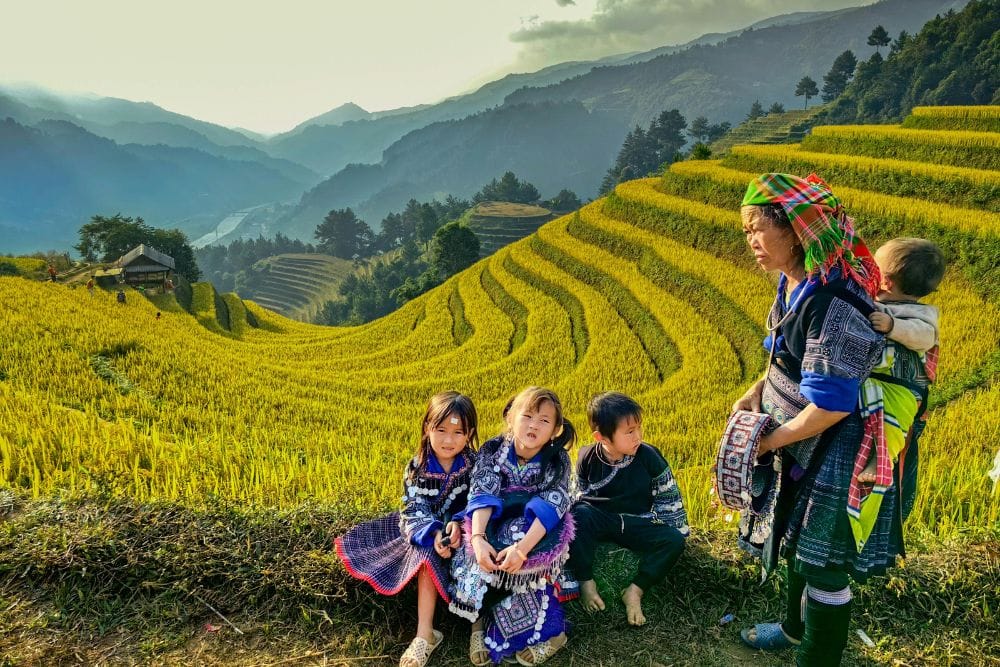
The Central Highlands, with Da Lat as its most famous destination, enjoys a milder climate due to its higher altitude. Average daytime temperatures range from 21°C to 23°C, making it a refreshing escape from the coastal heat. Winters (November–April) are dry and pleasant, perfect for outdoor activities like hiking and cycling, while summers (May–October) bring heavy rainfall and lush greenery.
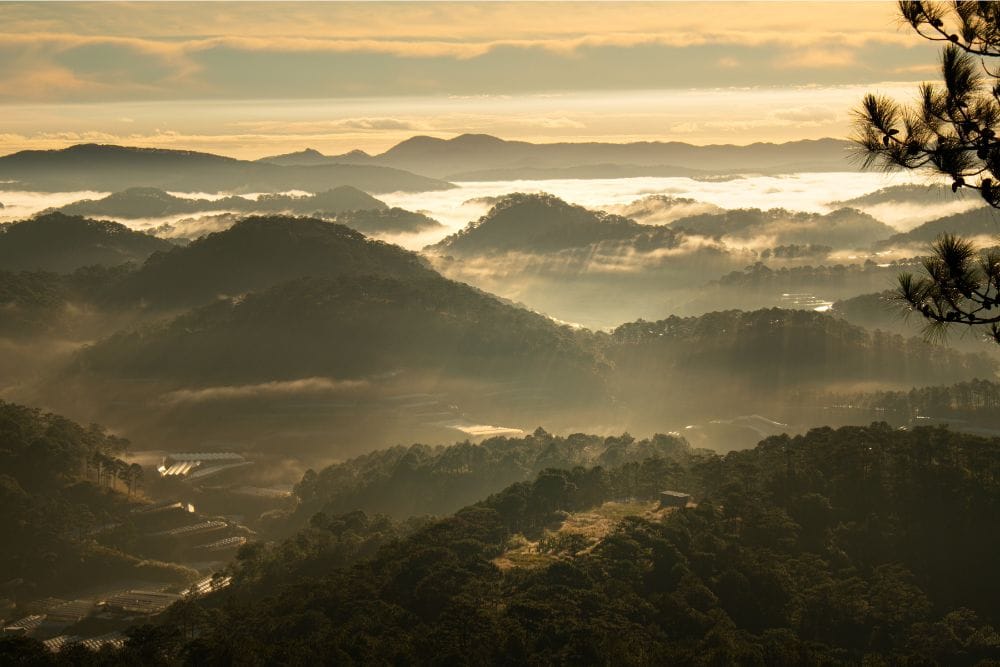
Cool weather and lush valleys representing the unique climate in Vietnam’s highlands.
This highland region is especially attractive for those who want to experience a different side of the weather and climate in Vietnam, with cool nights and a mix of cultural traditions from local ethnic groups.
Southern Vietnam, including Ho Chi Minh City and the Mekong Delta, has a tropical climate with two distinct seasons: dry (December–April) and wet (May–November). Temperatures are consistently warm year-round, averaging around 27°C. The dry season is perfect for city sightseeing, beach escapes, and cultural tours, while the rainy season brings afternoon downpours but also lush green landscapes.
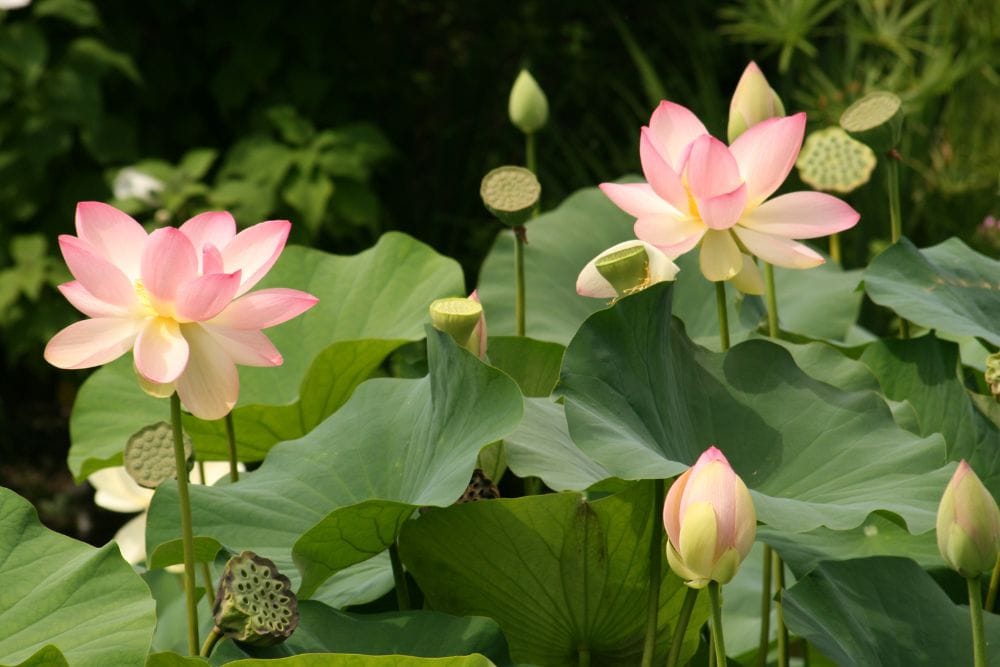
Lotus ponds in the Mekong Delta reflecting the seasonal charm of southern Vietnam’s climate
A unique highlight of the south is the “floating season” in the Mekong Delta during September and October. Rivers rise, lotus fields bloom, and floating markets are at their busiest—a once-in-a-lifetime experience for those traveling in autumn.
The weather and climate in Vietnam are defined not only by geography but also by its four travel seasons. Each season offers unique experiences, from flower blossoms in the north to beach days along the central coast and cultural festivals in the south. Here’s a detailed breakdown of what to expect in each season.
Spring is one of the most pleasant seasons across the country. Northern Vietnam, including Hanoi and Ninh Binh, enjoys mild weather with average temperatures around 18–23°C. This is also the season of blooming flowers and traditional festivals following Lunar New Year (Tet). Central Vietnam, from Hue to Da Nang, begins to dry out after winter rains, making it a great time for cultural exploration and beach trips. The south remains warm and dry, perfect for sightseeing in Ho Chi Minh City or cruising the Mekong Delta.

Cherry blossoms in mount area during the spring season in northern Vietnam.
If you’re looking for travel inspiration, our Best Time to Visit Vietnam guide explains why spring is ideal for both city breaks and countryside escapes.
Summer in Vietnam is hot and humid, especially in the north and central regions. Northern cities like Hanoi can reach 35–38°C with heavy afternoon rains. Central Vietnam, including Hoi An and Da Nang, is warm and sunny—ideal for beach holidays despite occasional hot spells. In the south, this period marks the beginning of the rainy season, though showers are usually brief and followed by clear skies.
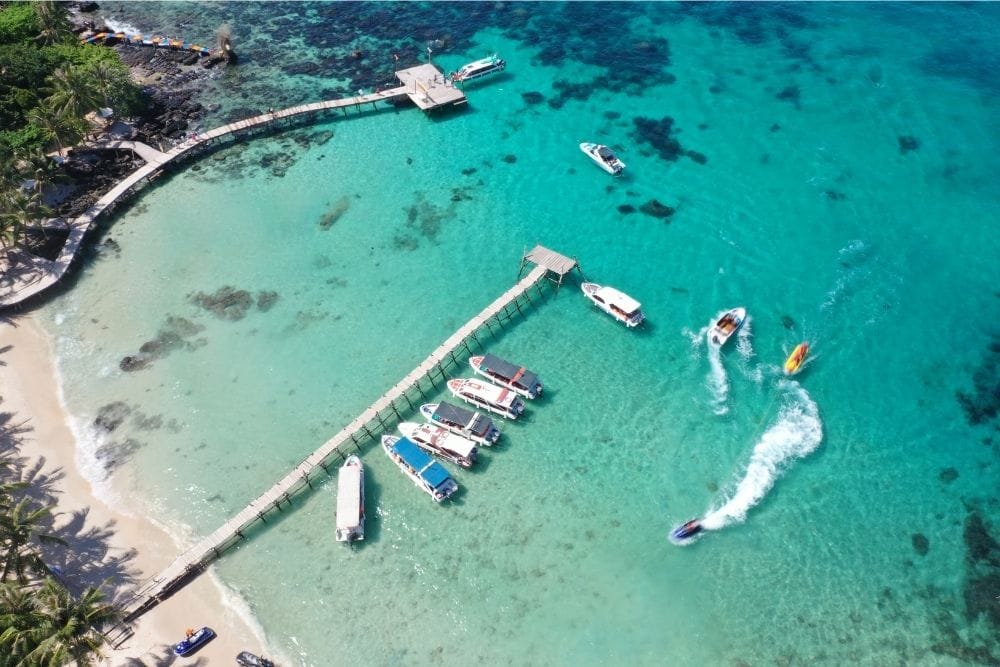
Sunny beach holidays in central Vietnam representing hot summer weather
Despite the heat, summer remains a popular time for domestic travel, particularly to coastal destinations. Those who prefer cooler climates may find the Central Highlands, such as Da Lat, a refreshing escape.
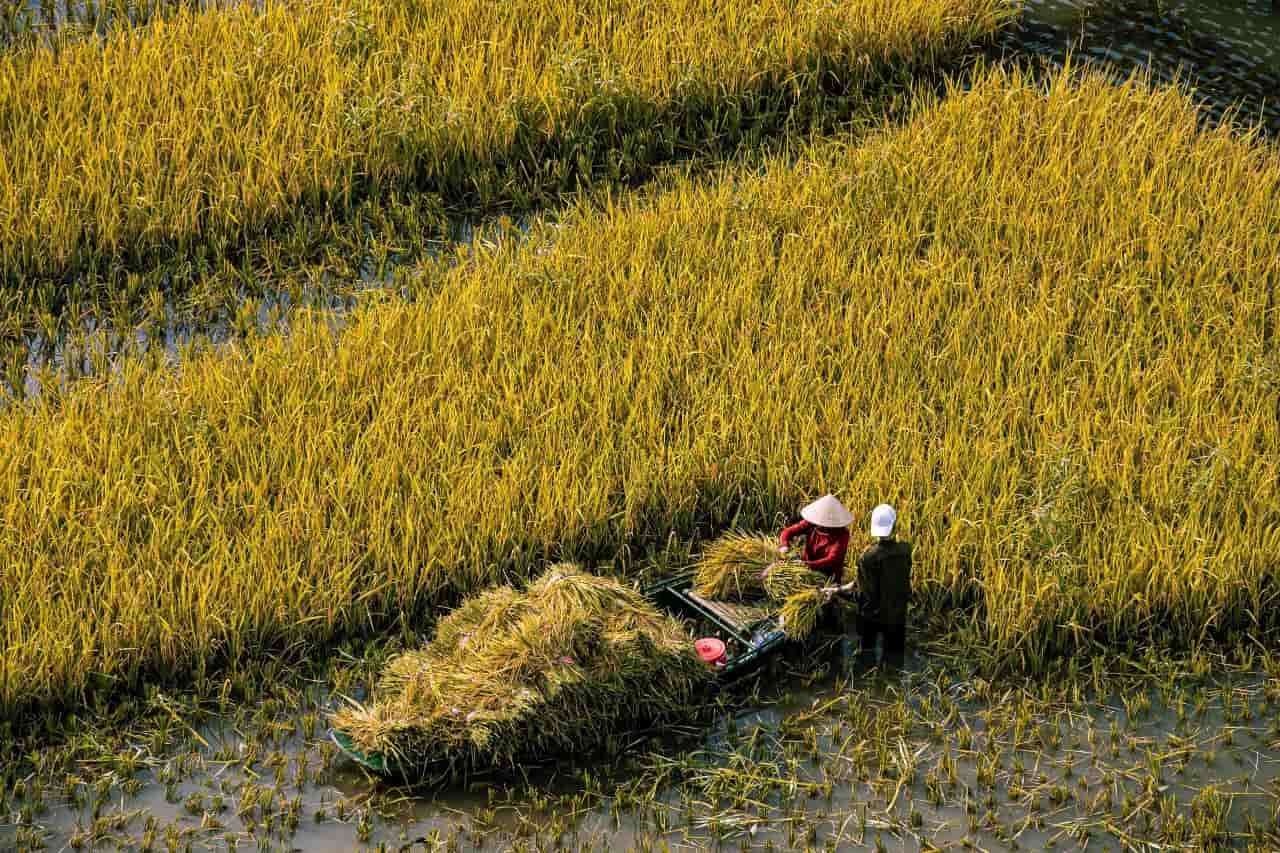
Autumn is widely regarded as the most beautiful time to experience the weather and climate in Vietnam. In the north, this is harvest season—Sapa, Ha Giang, and Ninh Binh are covered in golden rice terraces, and the air turns cool and crisp. Central Vietnam still sees occasional storms, but cities like Hue and Hoi An are less crowded and more atmospheric. In the south, the Mekong Delta enters its “floating season,” when rivers overflow and lotus ponds bloom, creating breathtaking scenery.
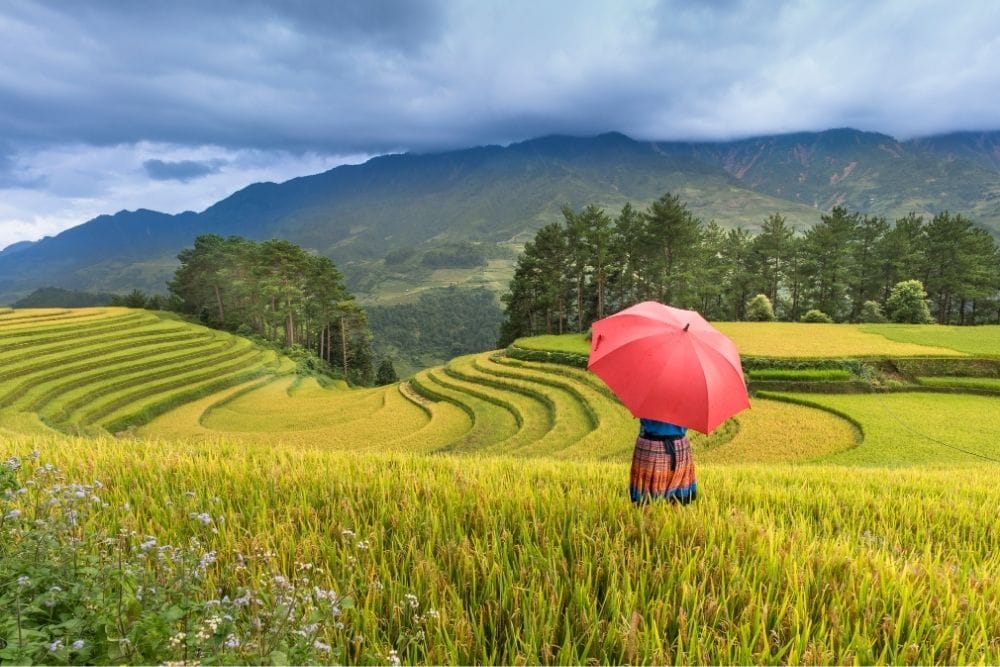
Golden rice fields in Ha Giang symbolizing autumn in northern Vietnam
Travelers who want more insights into this season should read our detailed guide on Vietnam in September, which highlights the best landscapes and festivals of the month. For cultural and natural attractions in the north, don’t miss the Ninh Binh Travel Guide with tips on exploring Hoa Lu, Bai Dinh, and Trang An.
Winter brings the sharpest contrasts in Vietnam’s climate. In the north, temperatures can drop below 10°C, and mountainous areas like Sapa sometimes see frost, making it a great season for adventurous trekkers. Hanoi, however, offers a more atmospheric charm with misty mornings and cozy evenings. Central Vietnam is cooler but still comfortable for cultural sightseeing in Hue or exploring Hoi An’s lantern-lit streets. The south enjoys its best weather, with warm, dry conditions—perfect for visiting Ho Chi Minh City, Phu Quoc, and the Mekong Delta.

Frost-covered mountains in Sapa representing winter in northern Vietnam
This season is also considered peak travel time, so booking accommodations early is recommended. For ideas on balancing regional differences, see our Best Time to Visit Vietnam guide.
Traveling across Vietnam requires flexibility and preparation, as the country’s diverse geography creates varying climates from one region to another. By keeping a few essential tips in mind, you can make the most of your journey, no matter the season.
Because the weather and climate in Vietnam can shift dramatically, especially between north and south, packing appropriately is crucial. Light cotton clothing works well for hot and humid days, while a light jacket is essential if you plan to visit Hanoi or Sapa in winter. Don’t forget a raincoat or umbrella during the rainy season, particularly if you travel between May and October.

Smart packing tips to adapt to seasonal changes in the weather and climate in Vietnam.
Vietnam’s weather is best enjoyed when you can balance time outdoors with indoor relaxation. If sudden rains disrupt your plans, take the opportunity to explore museums, local cafés, or cultural performances. This flexibility ensures that you enjoy the country regardless of seasonal changes.

exploring cultural museums when the weather and climate in Vietnam shift to sudden rain also a smart option
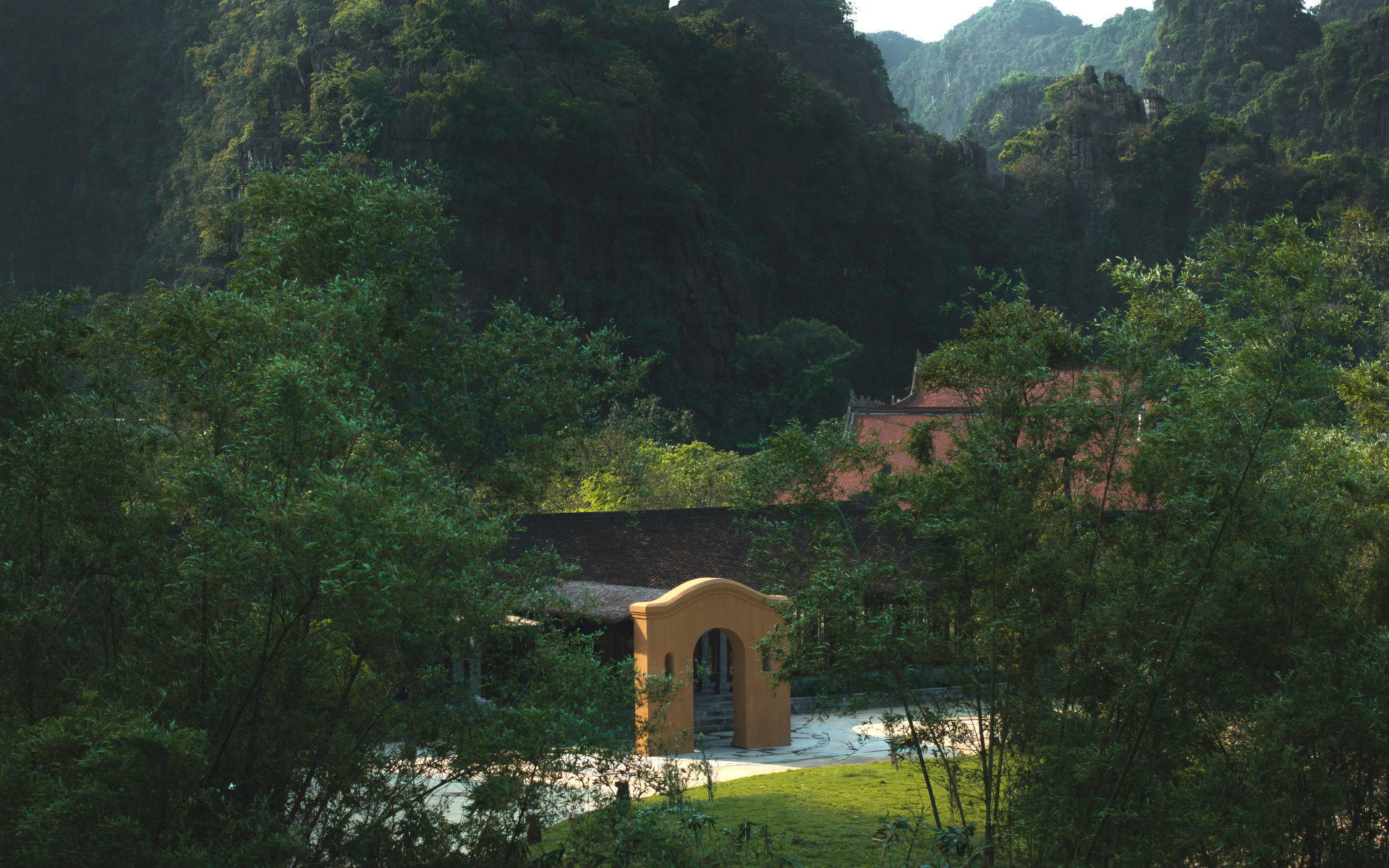
Where you stay can greatly influence how you experience Vietnam’s climate. In Ninh Binh, for example, Jiva Hoa Lư Retreat – A Perfect Choice for Vietnam Family Holiday ensures that families enjoy both comfort and convenience, no matter the season. Nestled within the UNESCO-listed Trang An Landscape Complex, Jiva offers the rare advantage of being close to cultural landmarks while still surrounded by serene limestone valleys.
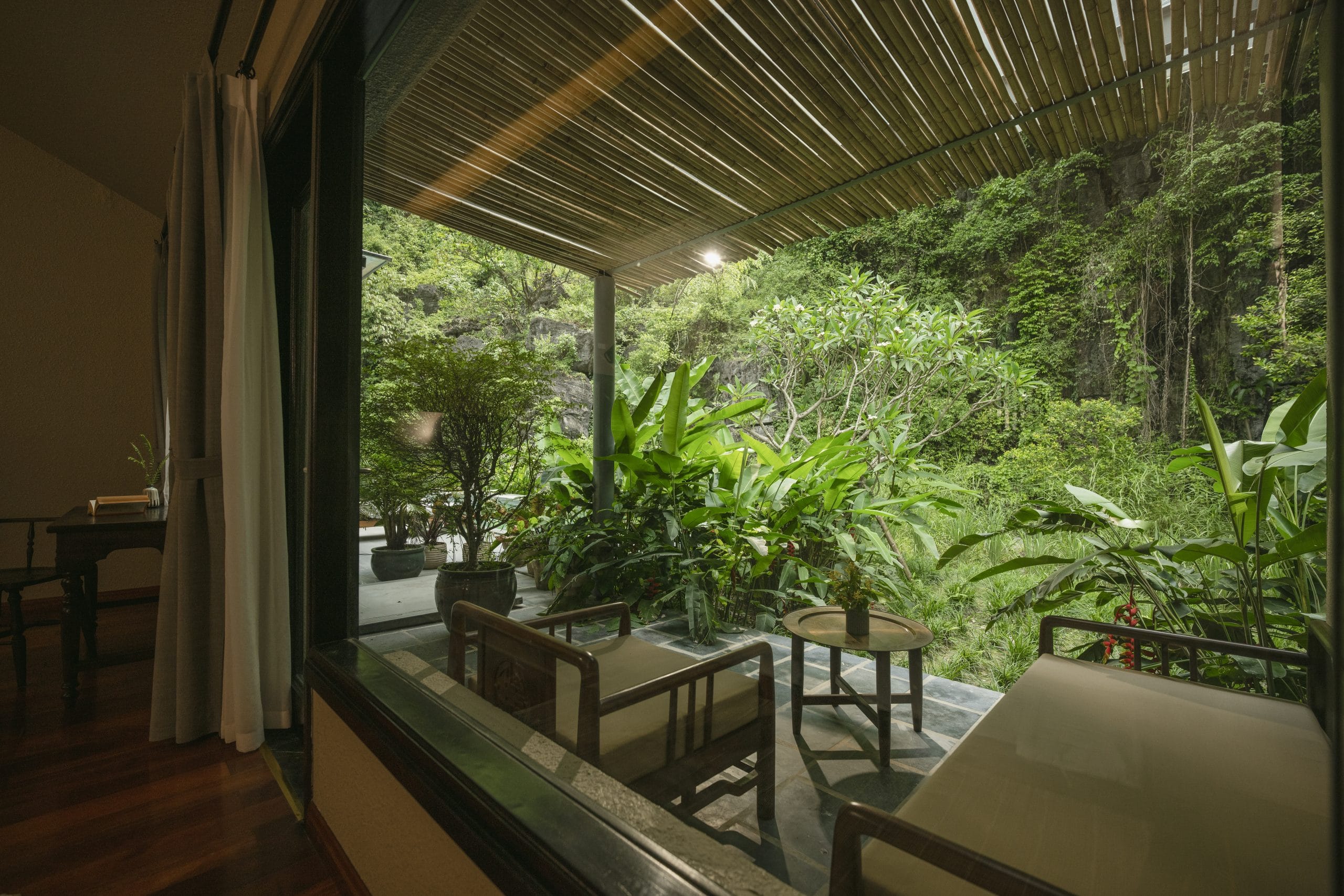
enjoying stay at Jiva Hoa Lư Retreat, designed for comfort in every season.
Parents can enjoy five-star facilities like a spa, gym, and bar, while children spend their time at the Kids Club or in the heated four-season pool—perfect for cooler or rainy days. For privacy, the Private Family Villa with Pool provides spacious accommodation where families can relax together, shielded from the unpredictability of the weather in Vietnam.
Instead of seeing seasonal rains or cooler weather as an obstacle, use it as a chance to dive into authentic experiences. At Jiva Hoa Lư Retreat, guests can learn traditional net-casting, cycle along quiet village roads, or attend a Xẩm performance—an ancient Vietnamese folk art. Even on misty or rainy days, these cultural activities provide meaningful ways for families to bond.
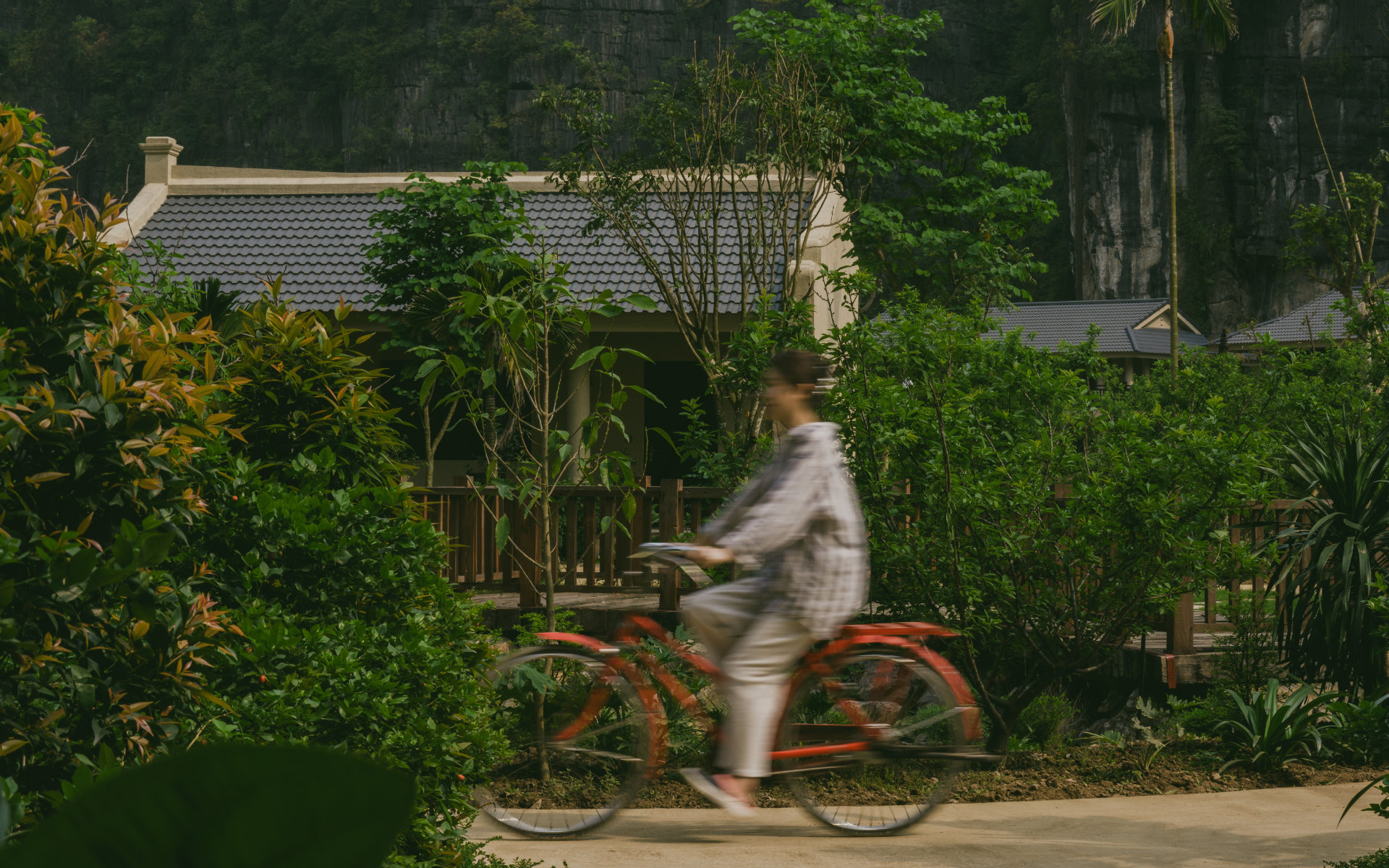
Tourists cycling through village paths in Ninh Binh, turning seasonal rains into memorable travel moments
Vietnam’s tropical climate allows lush vegetation to thrive, which means children and adults alike can connect with nature year-round. At Jiva, families are invited to explore organic gardens, pick seasonal fruits, and let children run barefoot in the grass. These simple yet joyful moments turn the natural environment into both a playground and a classroom.
connecting with Vietnam’s natural climate in Jiva’s garden
Immerse yourself in a stay where northern Vietnamese architecture meets world-class comfort. At Jiva Hoalu Retreat, each accommodation blends locally inspired décor with modern luxuries—offering a unique fusion of culture, tradition, and elegance. Whether you’re here for a romantic getaway, a family escape, or a tranquil retreat, Jiva promises unforgettable moments in the heart of Ninh Binh. Despite all weather and climate in Vietnam.
Contact Us:
📞 +84 933 006 886
📧 inquiry@jivahoaluretreat.com
🌐 https://jivahoaluretreat.com/
Book now! to enjoy super hot deals
Thank you for your reservation.
You will receive a confirmation from us momentarily
Thank you for reaching out. Your request has been received. Our team will respond within 24 hours.