


05 November, 2026
Vietnamese New Year, or Tết, is the most important celebration in Vietnam, marking renewal and happiness. From symbolic decorations like peach blossoms and kumquat trees to heartfelt traditions of family reunions and offerings, every detail reflects the Vietnamese spirit of gratitude, hope, and joy for a prosperous year ahead.
What is Vietnamese New Year (Tết)?
The Vietnamese New Year, which is usually called Lunar New Year Eve, is one of the most important public holidays in Vietnam. The Vietnamese New Year marks the end of a 4 season period, entering a fresh new beginning year, thus embodying hopes and happiness.
What is the root of Vietnamese New Year? According to some scholars, ancient Vietnamese celebrated the New Year in the Lunar Calendar, which has been calculated based on the movement of the moon and the sun.
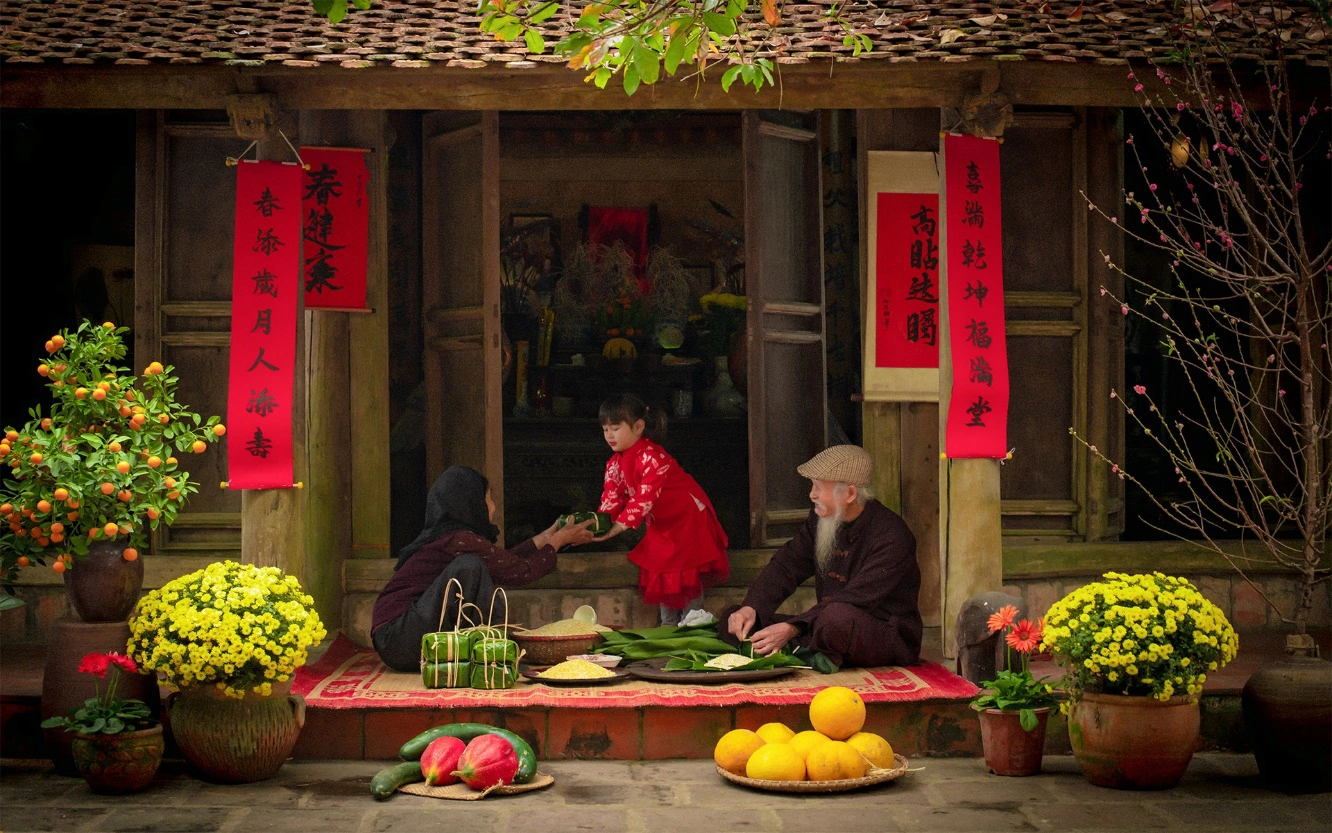
Tết, the most important celebration, marks a joyous new beginning and the welcoming of spring in Vietnam.
The new year starts on the first new moon after the sun crosses the Tropic of Capricorn, the final marker of the three signs of winter. The Vietnamese New Year opens springtime and always falls between late January and early February of the Gregorian Calendar.
Historian Trần Văn Giáp, in his 1963 article “The Origin of Tết Nguyên Đán in Vietnam” (introduced by the National Archives Center I), also analyzed that the word “Tết”, derived from the Chinese character “Tiết” (節), means “season” or “climate”, referring to the eight seasonal divisions (Bát tiết) and seasonal periods (khí tiết).
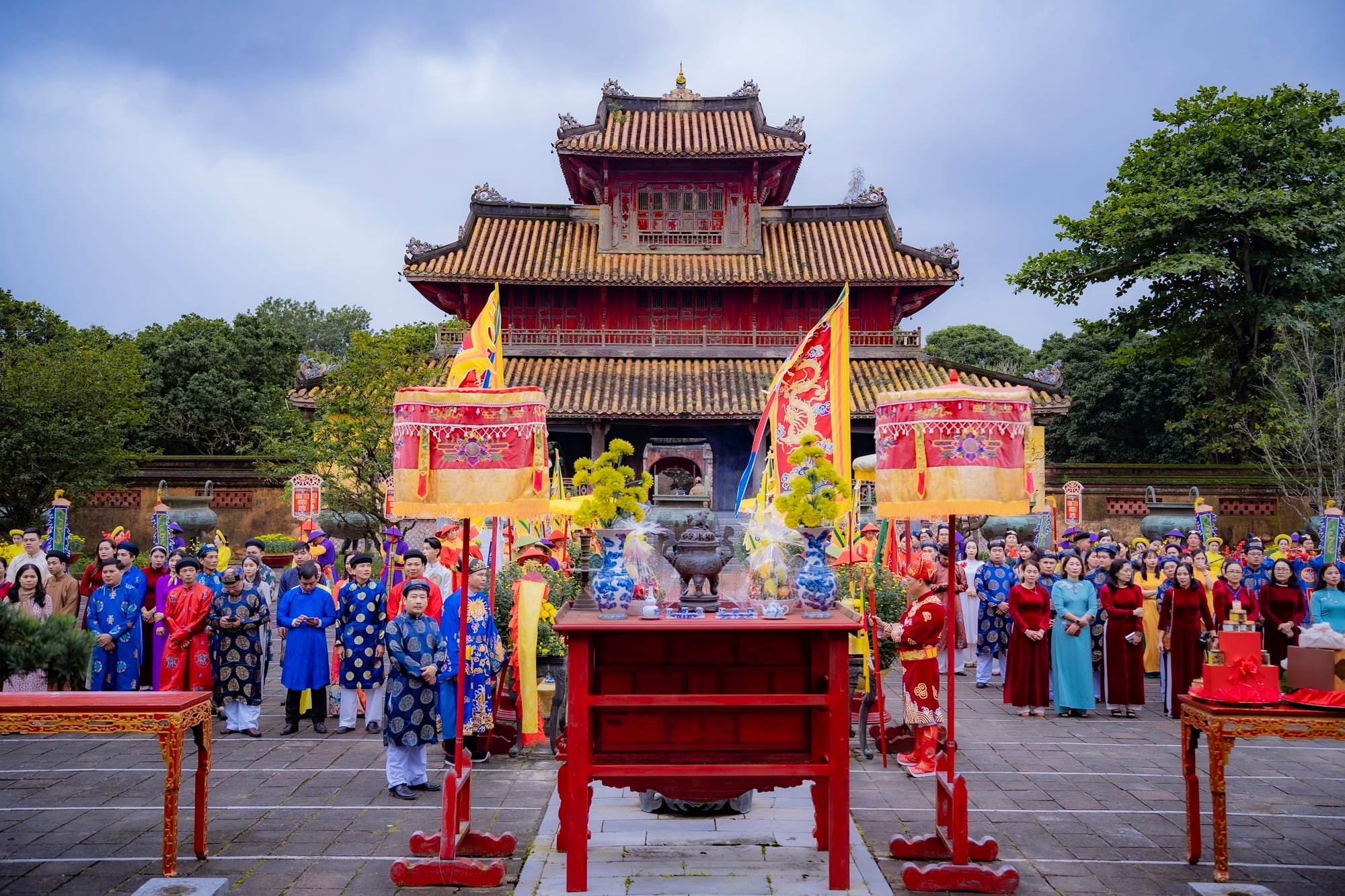
Known as “Tết Cả” or the Great Festival, Tết Nguyên Đán is a time for ceremonies, offerings, and essential family gatherings.
In Chinese, “Bát tiết” refers to the eight climatic divisions of the year: Lập Xuân, Xuân Phân, Lập Hạ, Hạ Chí, Lập Thu, Thu Phân, Lập Đông, and Đông Chí.
In Vietnam, however, “Tết” or “Tiết” means festive occasions. The Vietnamese Bát tiết are eight traditional festivals with rituals and celebrations: Nguyên Đán, Thượng Nguyên, Hàn Thực, Đoan Ngọ, Trung Nguyên, Trung Thu, Thường Tân, and Đông Chí.
Among them, Tết Nguyên Đán, the first festival of the year, is known as “Tết Cả” – the Great Festival, marked by ceremonies, offerings, and joyful family gatherings.
If you are planning to visit Vietnam to witness these beautiful Vietnamese New Year decorations, make sure to consult our guide on the Best Time to Travel to Vietnam.
Why do Vietnamese people decorate homes for New Year?
Vietnamese people decorate their homes for Tết, or the Vietnamese New Year, to welcome luck, prosperity, and happiness. Vietnamese New Year decorations are deeply symbolic: every color and object carries meaning.
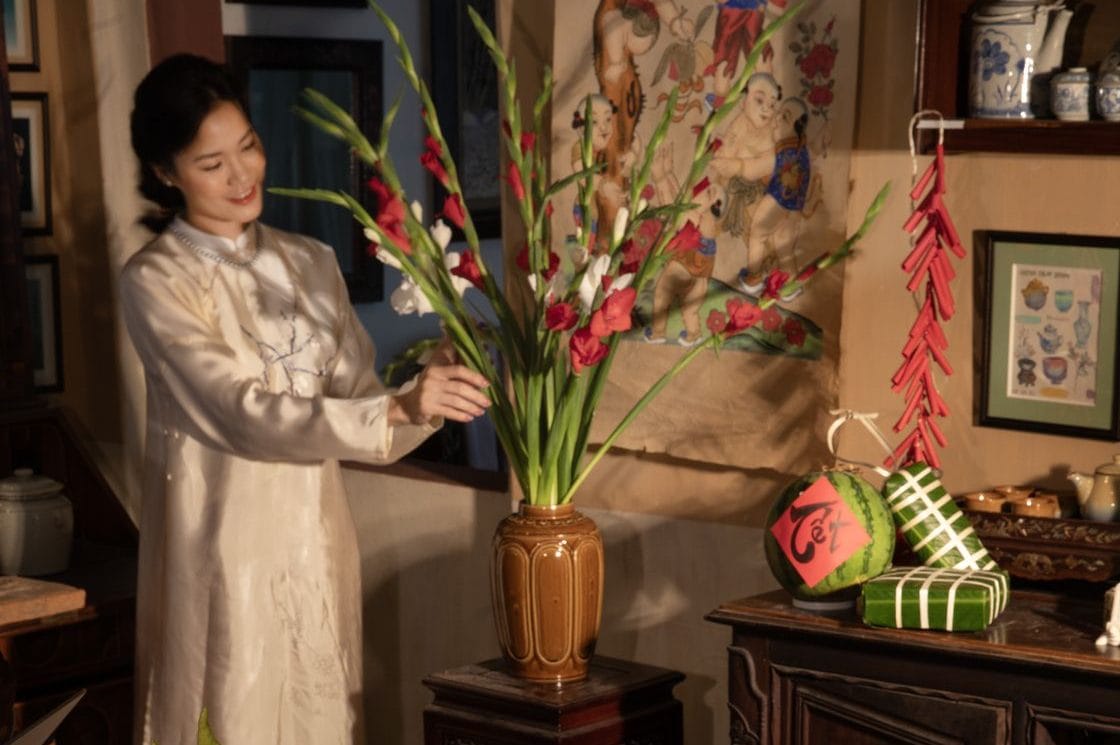
Historians note that “Tết” in Vietnam specifically refers to festive occasions and traditional seasonal rituals.
Families clean and decorate their homes for Tết with peach blossoms, seasonal flowers, and kumquat trees, representing renewal, wealth, and fertility. Red and gold Tết decorations such as lanterns, calligraphy scrolls, and banners invite good fortune and ward off bad luck.
These Vietnamese New Year decorations are not only for beauty but also to honor ancestors and express the hope for harmony, success, and happiness in the coming year.
Top 10 Vietnamese New Year Decorations You’ll See Everywhere
1. Peach Blossoms (Hoa Đào): The Northern Symbol of Renewal
For families in Northern Vietnam, the Peach Blossom (Hoa Đào) is the paramount Vietnamese New Year decoration, symbolizing renewal, vitality, and the beginning of spring. The flower’s signature delicate pink hue is believed to attract happiness and peace, making it an indispensable element of Tết traditions.
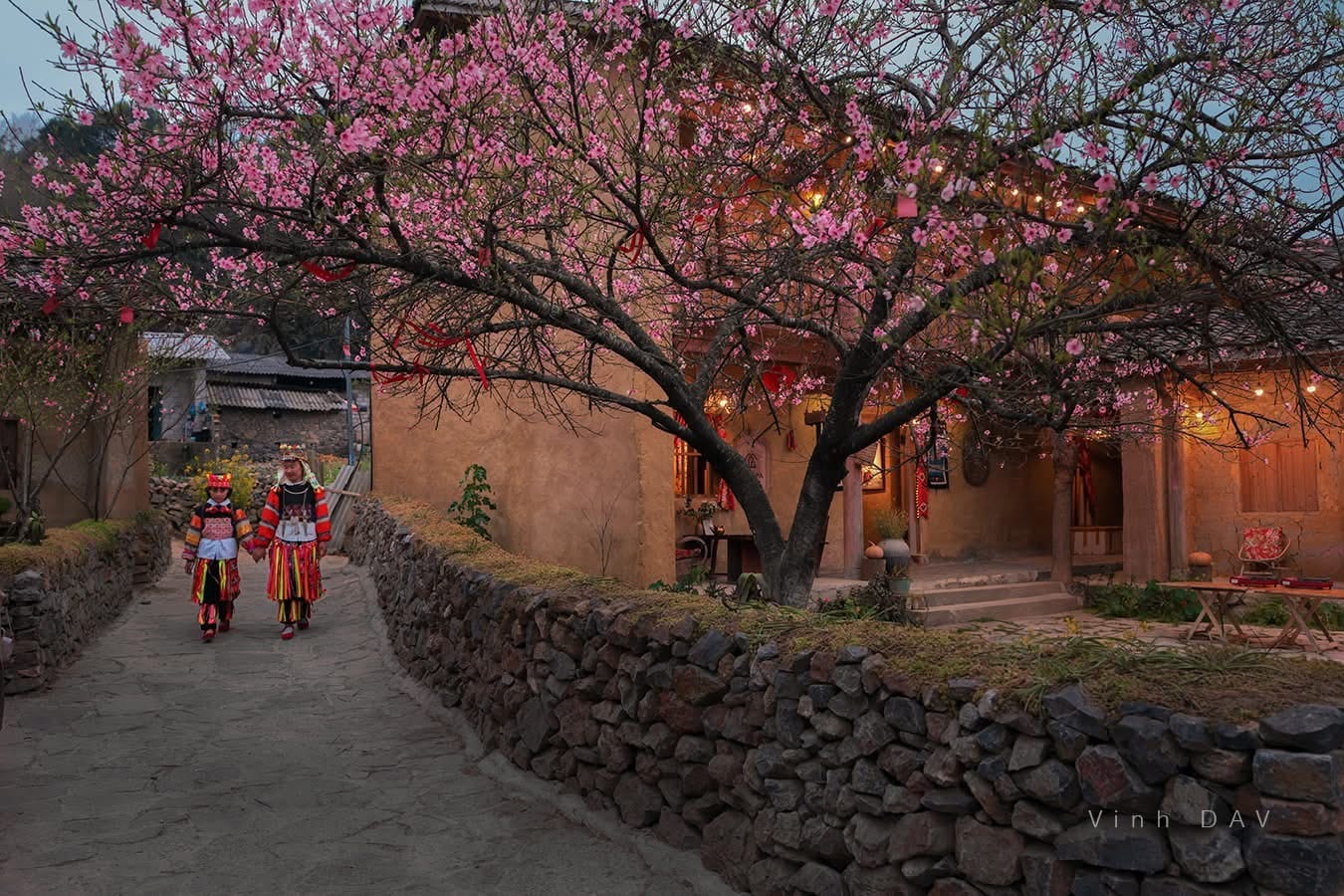
The Vietnamese New Year opens springtime, always falling between late January and early February on the Gregorian Calendar.
When families select a branch or a small tree, they look for strong, well-shaped growth, as each new bud and branch signifies incoming prosperity and good fortune for the home. Proudly displayed in the living room, the vibrant blossoms not only mark spring’s arrival but also serve as a beautiful, hopeful invitation, signaling to prosperity and good luck that the home is ready to embrace the new year with optimism and grace.
2. Ochna Flowers (Hoa Mai): The Golden Prosperity of the South
In striking contrast to the North’s pink peach blossoms, Southern Vietnam relies on the brilliant yellow Ochna Flowers (Hoa Mai) as their primary Vietnamese New Year decoration. The golden hue of the Hoa Mai is deeply symbolic, representing wealth, joy, and optimism. Each of the five petals is thought to embody prosperity, making the flower a potent symbol of success for the new year.
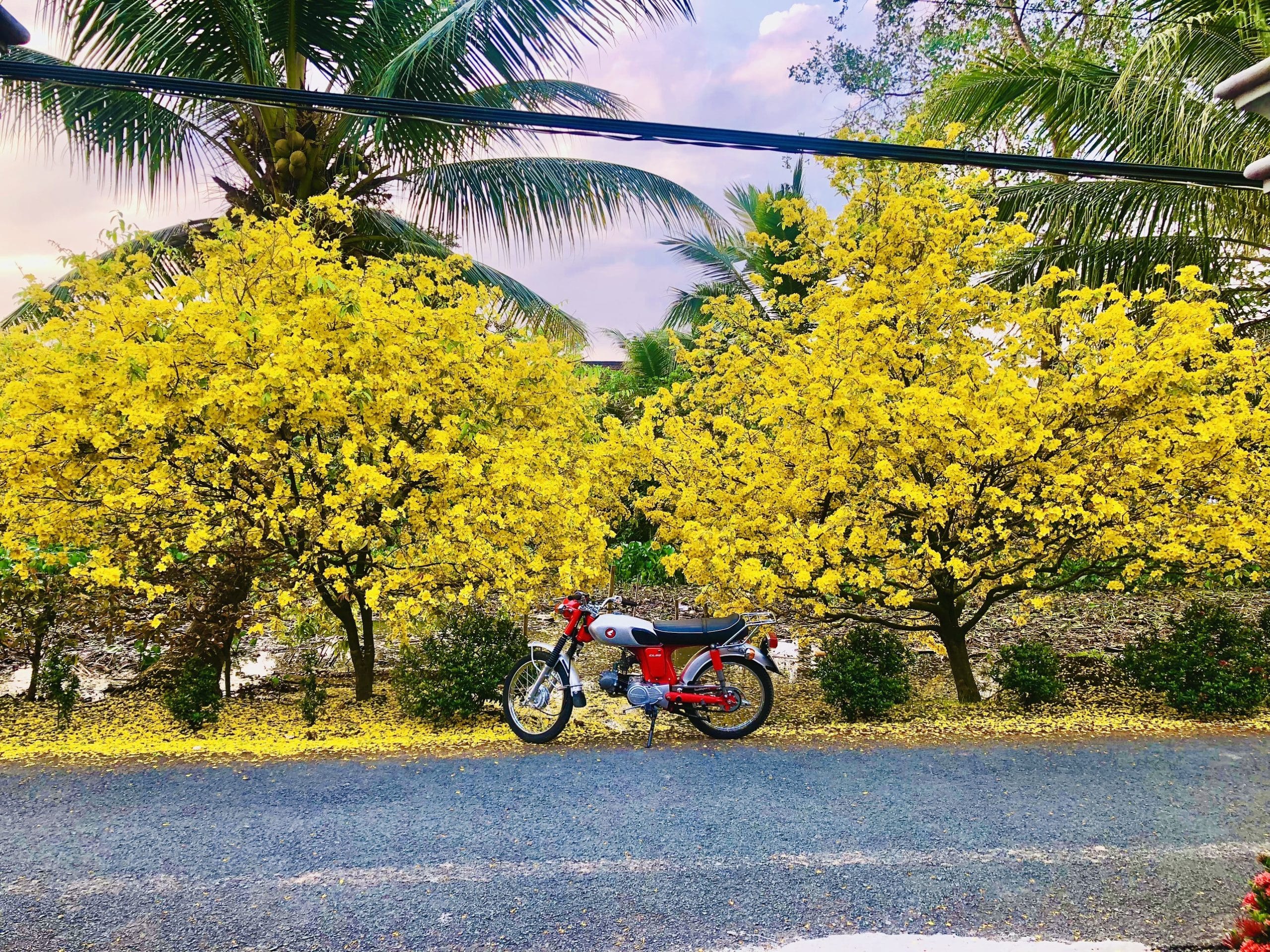
Southern families meticulously decorate their homes and ancestral altars with large Ochna trees, believing that the more numerous and vibrant the flowers, the greater the fortune and success they will experience. Displaying the Hoa Mai is a crucial Tết tradition, celebrating a bright beginning and offering visual wishes for financial success and an auspicious year ahead.
3. Kumquat Trees (Cây Quất): The Tree of Abundance and Luck
The Kumquat Tree (Cây Quất) is one of the most recognizable and widespread Vietnamese New Year decorations, symbolizing abundance, fertility, and lasting luck. A perfect kumquat tree is laden with bright green leaves, white flowers, and deep orange, round fruits, which symbolically resemble gold coins, reflecting prosperity.
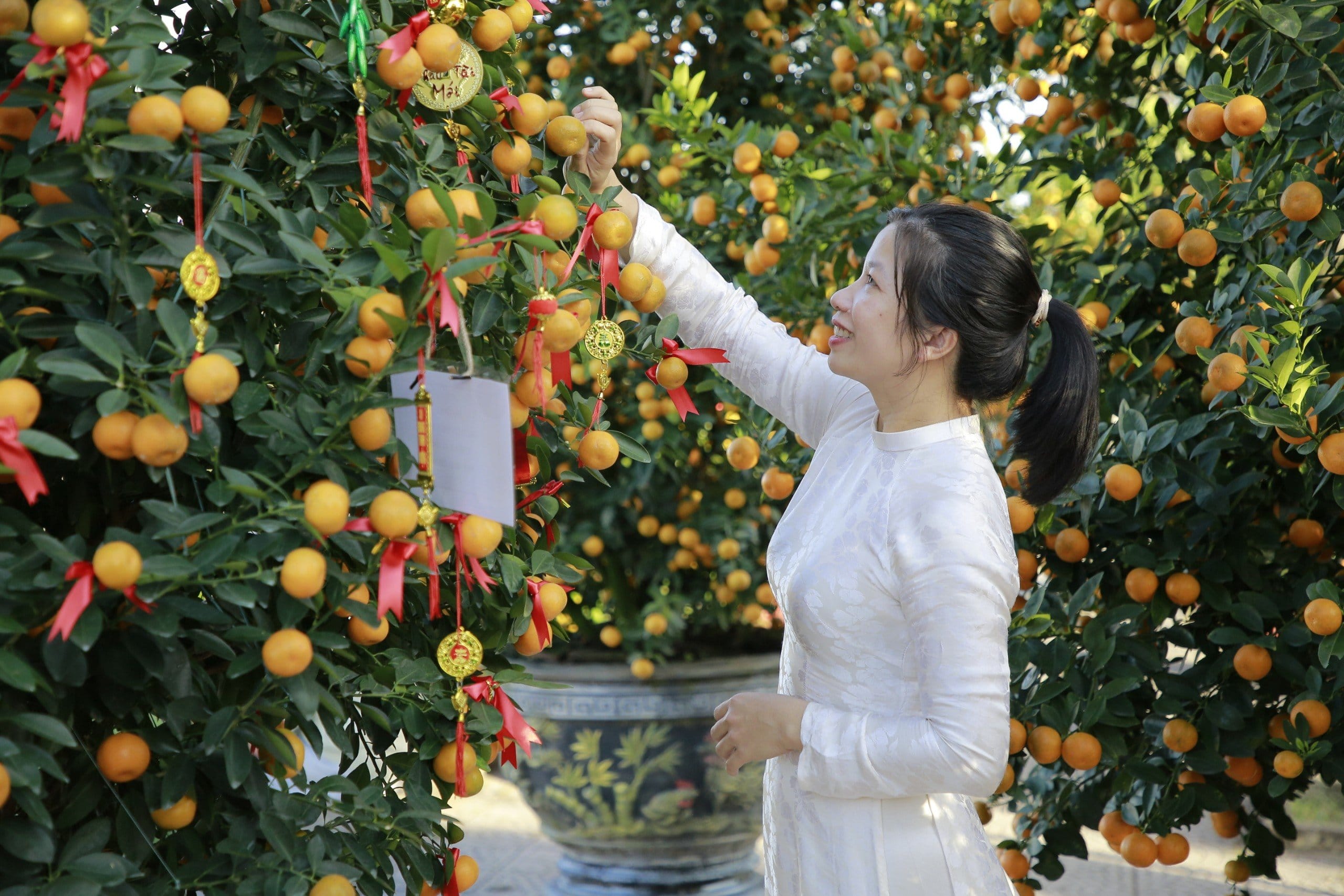
The Kumquat Tree is a widespread Vietnamese New Year decoration, with its bright orange fruits resembling gold coins, symbolizing wealth and luck.
Families carefully choose trees that exhibit a balance of all three elements—fruit, flowers, and leaves—to represent a perfect cycle of life, wealth, and health. Placing the Cây Quất near entrances or in the living room is a deeply rooted Tết tradition that signifies wealth and harmony. Furthermore, the popular belief holds that the more fruit the tree bears, the luckier and more bountiful the coming year will be for the household.
4. Red Envelopes (Bao Lì Xì): The Gifts of Good Fortune
The Red Envelope, or Bao Lì Xì, is perhaps the most joyous of all Vietnamese New Year decorations and traditions. These envelopes are filled with “lucky money” and ceremoniously gifted to children and elders on the first days of Tết. The color red itself is highly symbolic, representing joy, vitality, and powerful protection from evil spirits, ensuring a safe start to the year.
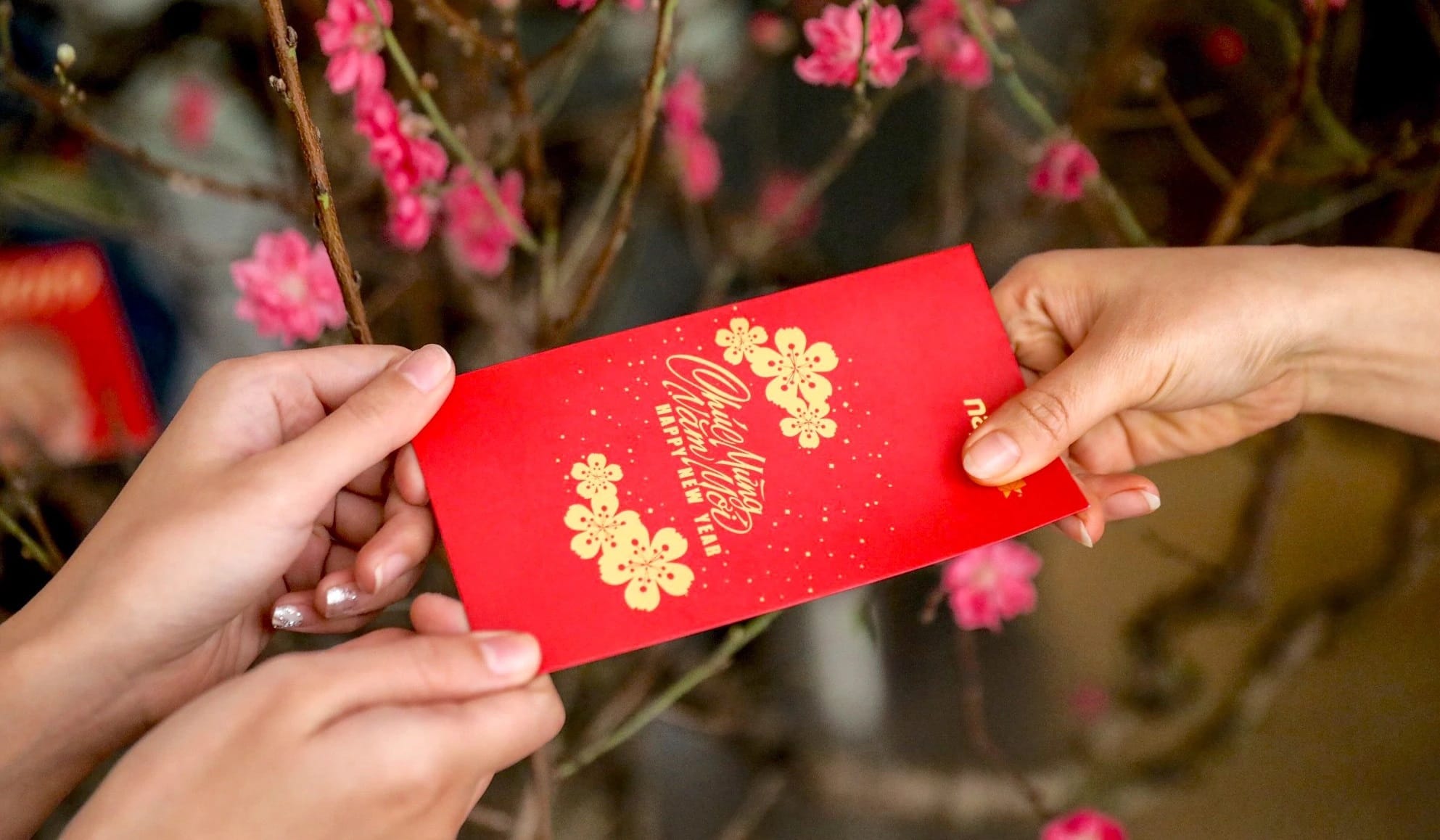
The Red Envelope (Bao Lì Xì) is the most joyous of Vietnamese New Year decorations and traditions, filled with “lucky money”.
Beyond the monetary value, the Lì Xì embodies profound wishes for the recipient, particularly focusing on health, longevity, and happiness for the elders, and encouragement and good fortune for the children. This simple exchange is a beautiful part of the Vietnamese New Year celebrations, serving as a tactile expression of love, respect, and high hopes for the entire family across generations.
5. Calligraphy Scrolls (Câu Đối Tết): Elegance in Philosophy
Calligraphy Scrolls (Câu Đối Tết) are elegant and thoughtful Vietnamese New Year decorations that combine high art with profound spiritual meaning. These scrolls are typically written in striking black or gold ink on vibrant red paper and are traditionally hung on either side of a doorway or altar.
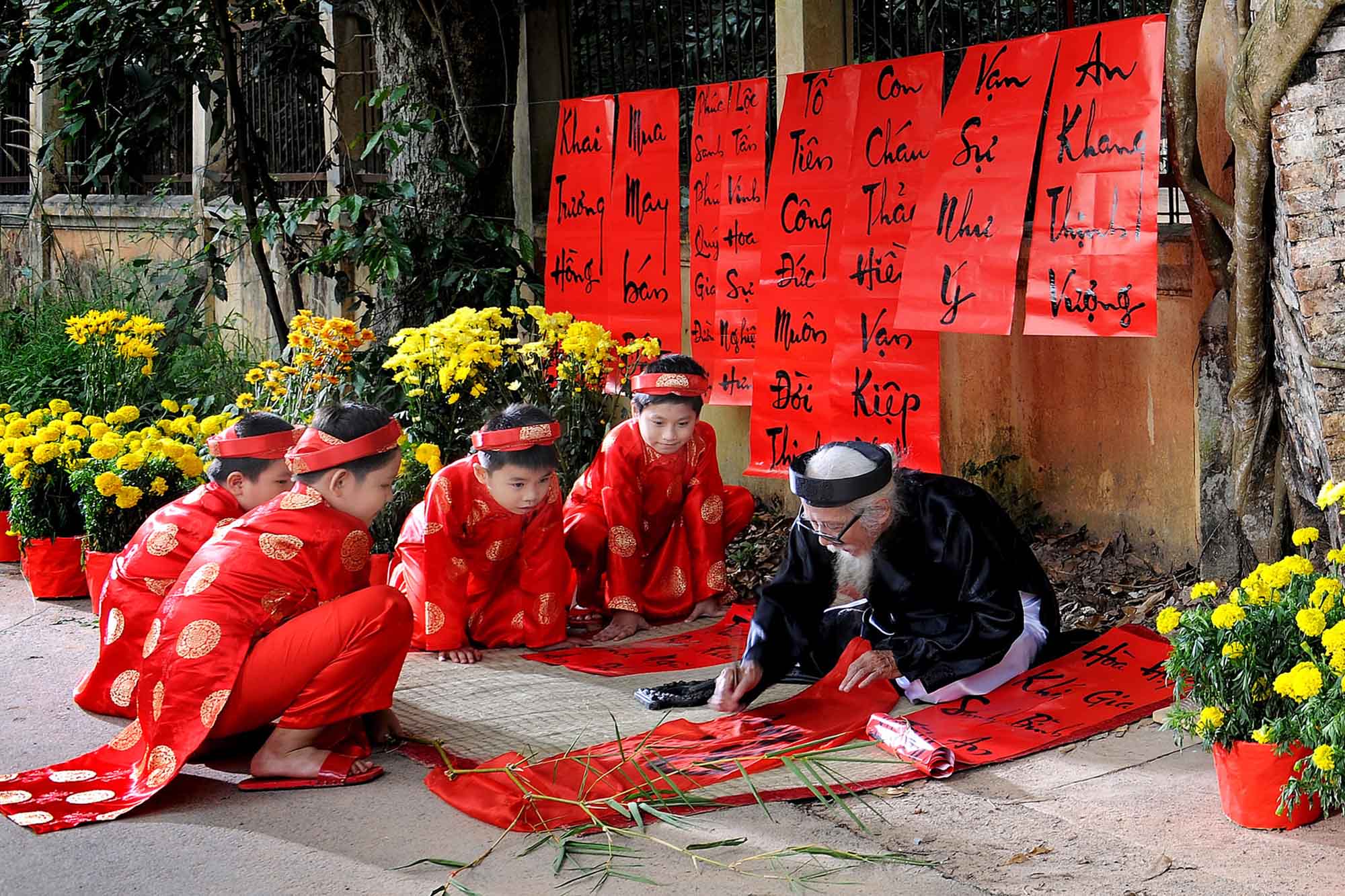
Elegant Calligraphy Scrolls (Câu Đối Tết) are thoughtful Vietnamese New Year decorations, conveying wishes like “Prosperity” and “Longevity”.
The messages conveyed are often philosophical, expressing deeply held values and wishes for the new year, such as “Peace,” “Prosperity,” “Longevity,” and “Harmony.” In a beautiful Tết tradition, the scrolls reflect the family’s character and cultural aspirations. By displaying them, homes are instantly imbued with a sense of classical elegance and intellectual tradition, making the scrolls a sophisticated focal point of any Vietnamese household during the holiday.
6. Lanterns and Red Banners: Lighting the Way to Good Luck
The use of bright lanterns and red banners is a visually stunning component of Vietnamese New Year decorations, creating a festive, warm, and hopeful atmosphere across cities and homes. The universal symbolism of the colors is key to this Tết tradition: red stands for good fortune, vitality, and protection, while gold accents signify wealth and joy.

Bright lanterns and red banners are visually stunning Vietnamese New Year decorations, creating a warm, festive, and hopeful atmosphere.
Hanging lanterns near doorways or in courtyards serves a dual purpose: they beautify the space and symbolically light the way for luck and happiness to enter the home. The collective sight of these illuminating decorations throughout the neighborhood signals the arrival of the Lunar New Year, bringing a collective sense of warmth, optimism, and anticipation to the entire community.
7. Bánh Chưng and Bánh Tét Displays: Earth and Ancestral Gratitude
The sacred sticky rice cakes, Bánh Chưng (in the North) and Bánh Tét (in the South), are arguably the most symbolic Vietnamese New Year decorations, representing the Earth and a deep gratitude towards ancestors. Wrapped tightly in banana or dong leaves, the square (Bánh Chưng) or cylindrical (Bánh Tét) shapes symbolize the harmonious relationship between Heaven and Earth.
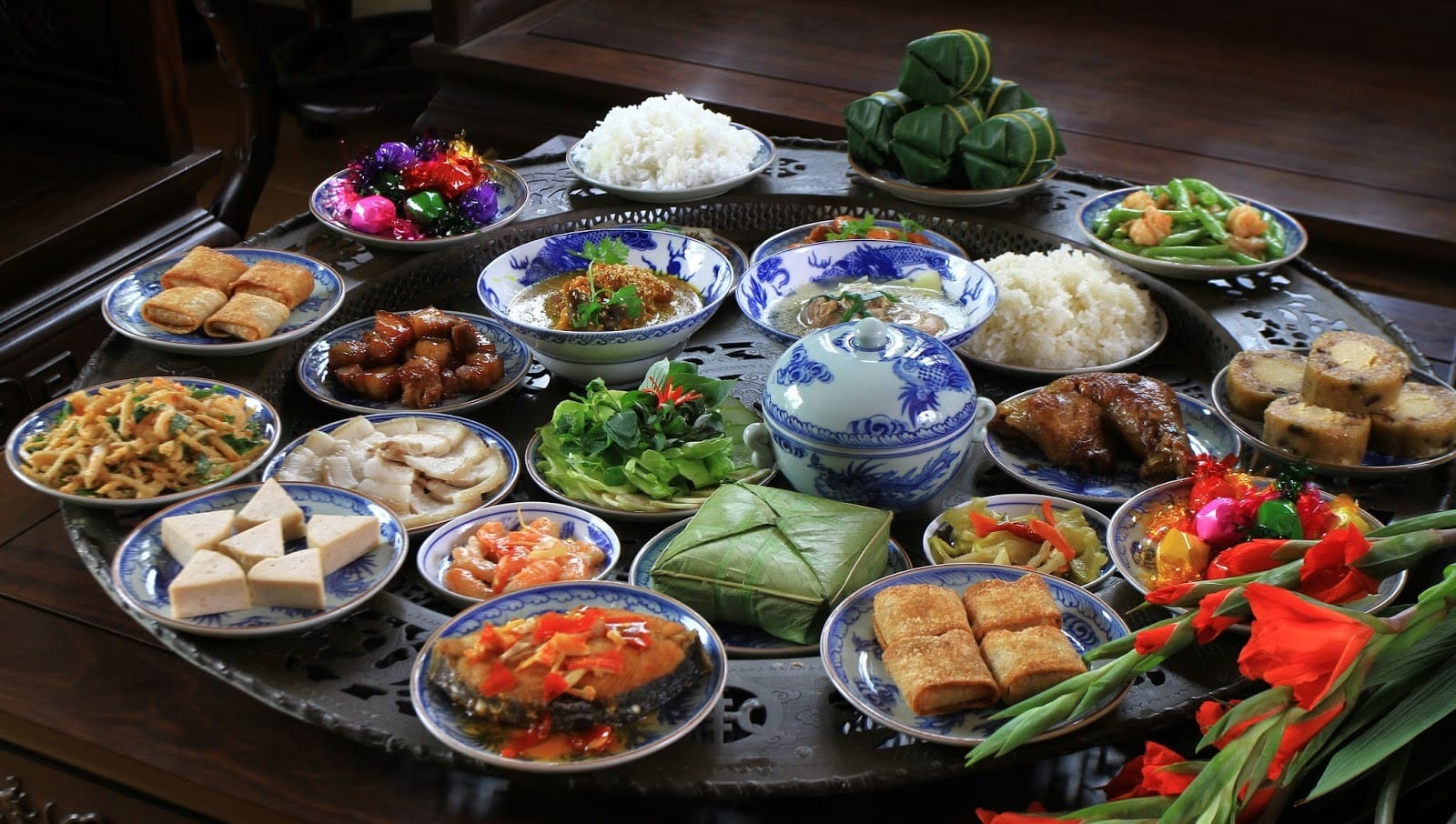
During Tết traditions, these cakes are meticulously displayed on ancestral altars as sacred offerings before being shared at the family reunion.
During Tết traditions, families meticulously display these cakes on their ancestral altars as sacred offerings before they are shared. Eating the Bánh Chưng or Bánh Tét during the family reunion feast represents the unity of the clan across generations and provides communal nourishment, serving as a powerful, edible symbol of harmony and cultural continuity.
8. Five-Fruit Tray (Mâm Ngũ Quả): A Balanced Offering
The Five-Fruit Tray (Mâm Ngũ Quả) is a central, meaningful element of Vietnamese New Year decorations, meticulously placed on the ancestral altar. This decorative arrangement reflects gratitude for the bounty of the past year and hope for a balanced, blessed year ahead.
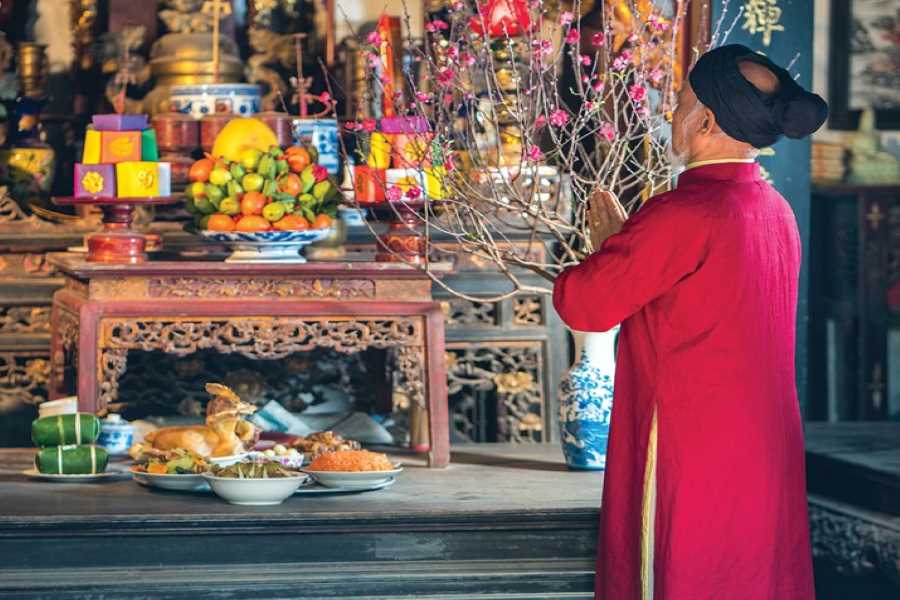
The Mâm Ngũ Quả is a central component of Vietnamese New Year decorations, reflecting gratitude for the past year’s bounty.
While the specific fruits vary widely by region, the collective arrangement always symbolizes five key wishes: health, longevity, peace, prosperity, and joy. For instance, in the South, fruit names are chosen to sound like prayers for a good future.
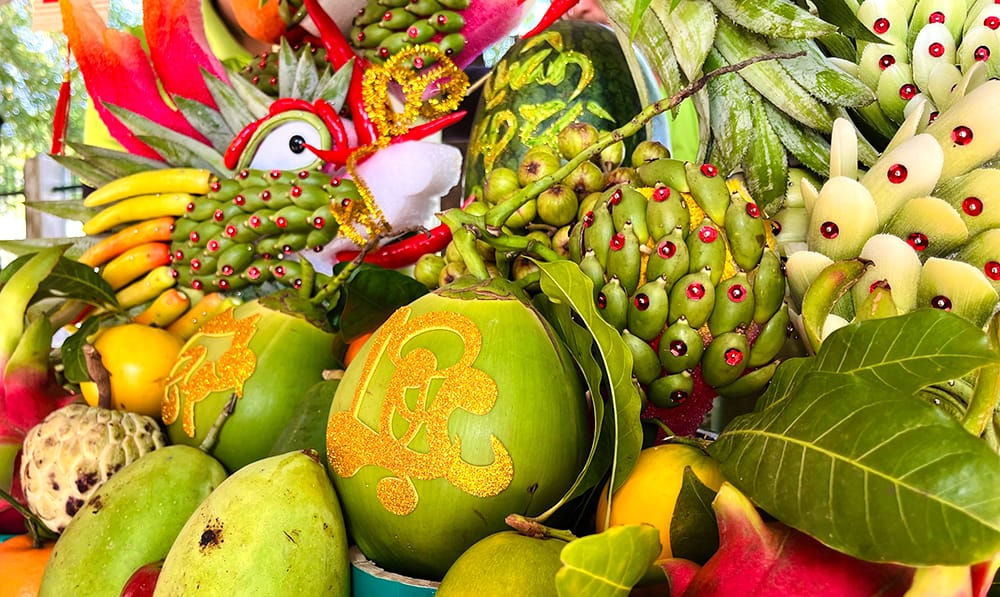
This decorative arrangement symbolizes five key wishes: health, longevity, peace, prosperity, and joy for the family.
This carefully constructed tray is a crucial Tết tradition that visually expresses the family’s deepest aspirations, making it a powerful testament to their spiritual beliefs and connection to their heritage.
9. Paper Crafts and Origami Decorations: Creativity and Joy
Paper crafts and simple origami are charming and creative Vietnamese New Year decorations that add a joyful, handmade touch to the celebrations. These colorful creations, which include intricately folded flowers, red fans, or symbolic golden carp, carry popular wishes for success, transformation, and happiness. This activity is more than just decorating; it is a valuable part of Tết traditions where families, especially children, gather to fold and craft together. This communal activity is essential for passing down cultural appreciation, fostering creativity, and celebrating the ingenuity of Vietnamese craftsmanship, ensuring the home is adorned with pieces made with love and personal meaning.
10. Incense and Ancestral Altars: The Heart of the Tết Home
The ancestral altar, adorned with fruits, candles, flowers, and incense, is the undeniable heart of every Vietnamese home during Tết. This sacred space serves as the most important focal point for Vietnamese New Year celebrations. Lighting incense is an ancient and profound Tết tradition that serves as a vital bridge, connecting the living descendants with their departed ancestors.
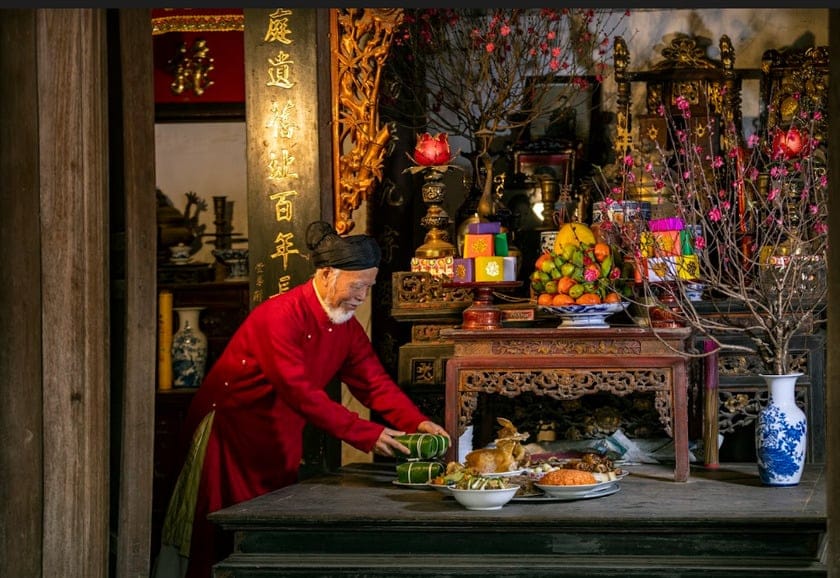
The ancestral altar, adorned with the Five-Fruit Tray and flowers, is the most important focal point of all Vietnamese New Year decorations.
This act of lighting the incense invites blessings, protection, and guidance for the coming year. The entire altar, from the careful arrangement of the Five-Fruit Tray to the fragrant rising smoke, embodies the deepest values of Vietnamese culture: respect, remembrance, spiritual connection, and the eternal unity of the family across generations.
11. narcissus bulb carving (củ thủy tiên)
Beyond the ubiquitous peach and apricot blossoms, the Narcissus (Thủy Tiên) flower holds a distinct place among Hanoi’s most elegant Vietnamese New Year decorations. Enjoying these plants during Tết has been a refined hobby dating back to the 1940s and 1950s, when the rare and expensive bulbs were affordable only to the city’s wealthy elite.
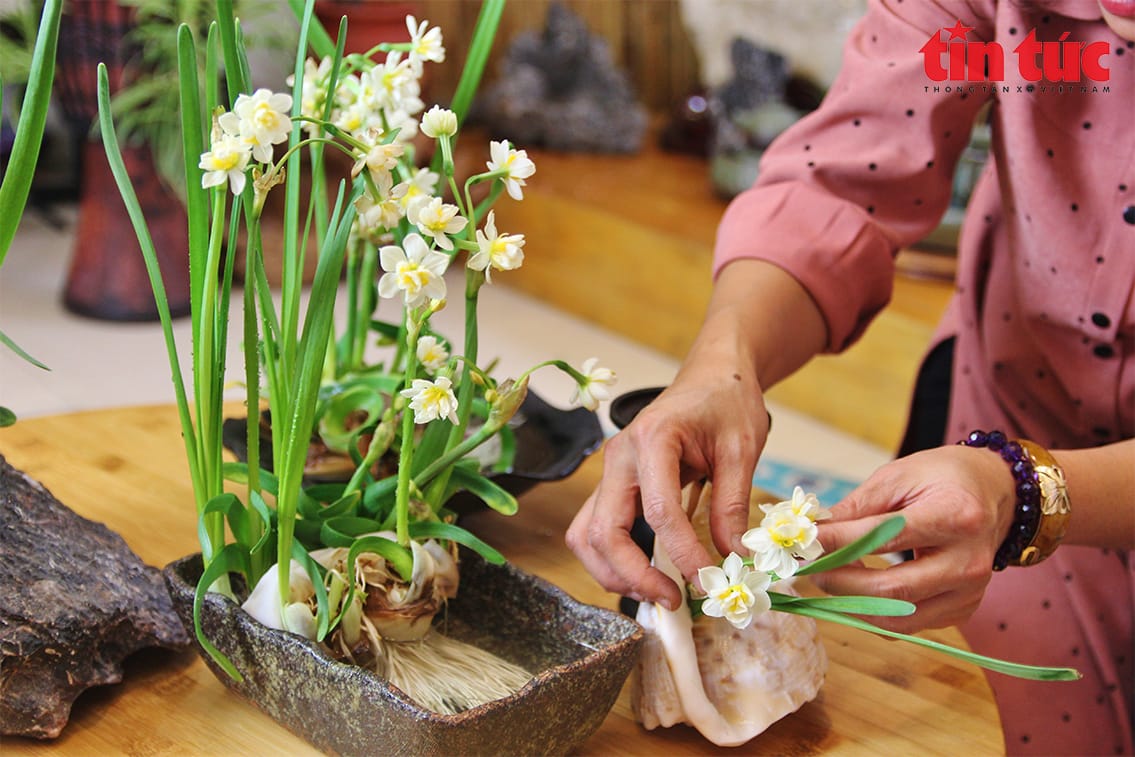
A highly refined hobby, the art of bulb carving requires precise skill and creativity to achieve perfect bloom exactly on Tết.
The true essence lies in the difficult art of bulb carving. This meticulous process requires immense passion, precise skill, ample time, and creativity to ensure the flower is in perfect, full bloom exactly on the first days of the Lunar New Year.
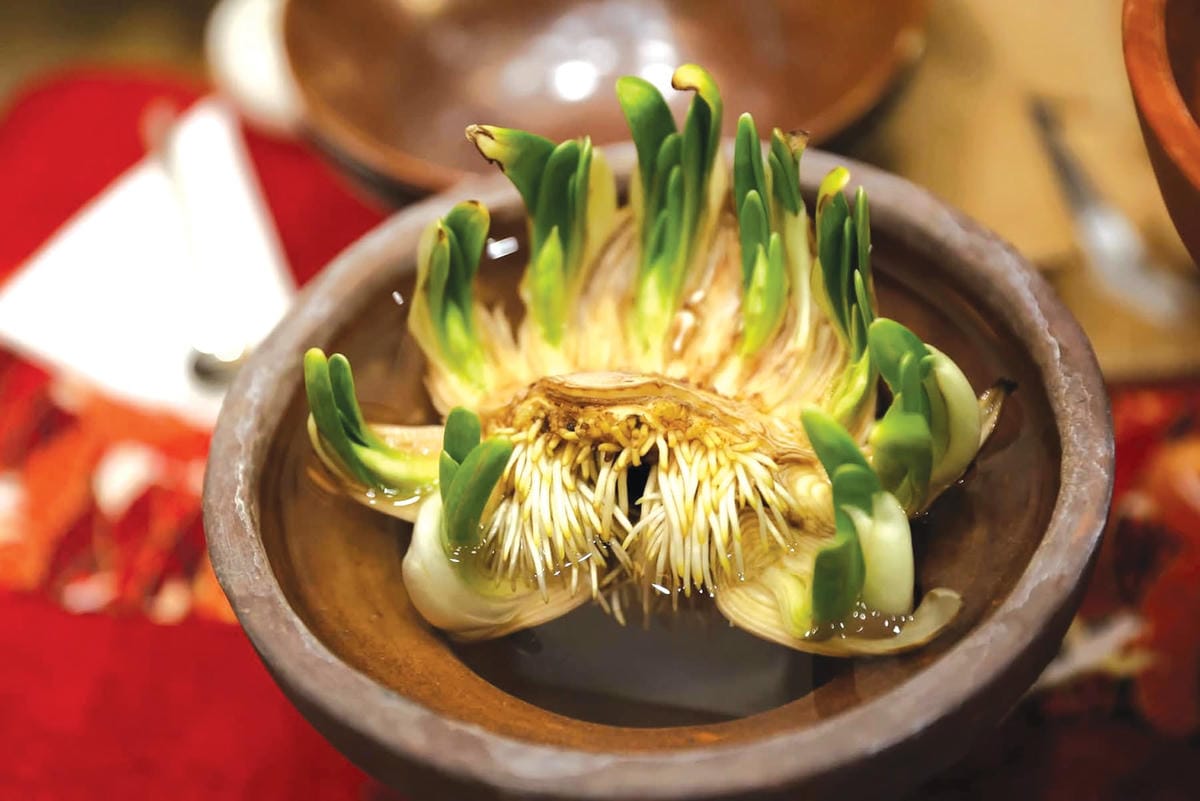
The masterfully carved Narcissus is cherished for its five features of perfection, including its pure white root and sweet scent.
A masterfully carved Narcissus is cherished for embodying five distinct features of perfection: its pure white root, growing in the water like a miniature waterfall; its strong green leaves; its simple, elegant flowers; the perfectly shaped layout of the vase; and its signature pure, sweet scent. It remains a beautiful symbol of purification and grace for the holiday.
How to Decorate Your Home for Vietnamese New Year (Step-by-step Guide)
Preparing your home for Tết, the Vietnamese New Year, is both a joyful and meaningful tradition. The process reflects the desire to welcome luck, happiness, and renewal into the family.
Step 1: Clean and declutter your home.
This ritual, called “dọn dẹp đón Tết”, symbolizes removing bad luck and making space for positive energy.
Step 2: Refresh your living spaces.
Replace old items, repaint walls if needed, and arrange furniture to create a bright, welcoming atmosphere.
Step 3: Add flowers and plants.
Choose peach blossoms, ochna flowers, or kumquat trees to represent prosperity and growth.
Step 4: Hang red and gold decorations.
Place calligraphy scrolls, lanterns, and banners near doorways, as these colors attract good fortune and joy.
Step 5: Prepare the ancestral altar.
Clean the altar carefully, offer fruits, bánh chưng, and incense to honor ancestors and invite blessings.
Step 6: Set the festive mood.
Use red cushions, candles, and traditional music to create warmth and celebration.
Decorating for Vietnamese New Year is not just about beauty. It’s a heartfelt way to connect with heritage, show gratitude, and embrace the optimism of a brand-new year.
If you’re interested in the core flavors that define the entire country, discover authentic traditional Vietnamese foods from North, Central, and South Vietnam.
What to do on Vietnamese New Year?
Celebrate Family Reunions
Tết is first and foremost the ultimate family holiday, transcending all other celebrations. The most sacred tradition requires Vietnamese people to return to their ancestral homes, strengthening family bonds and honoring their roots. These joyous gatherings center around sharing the traditional sticky rice cakes—bánh chưng or bánh tét—and recounting stories from the past year.
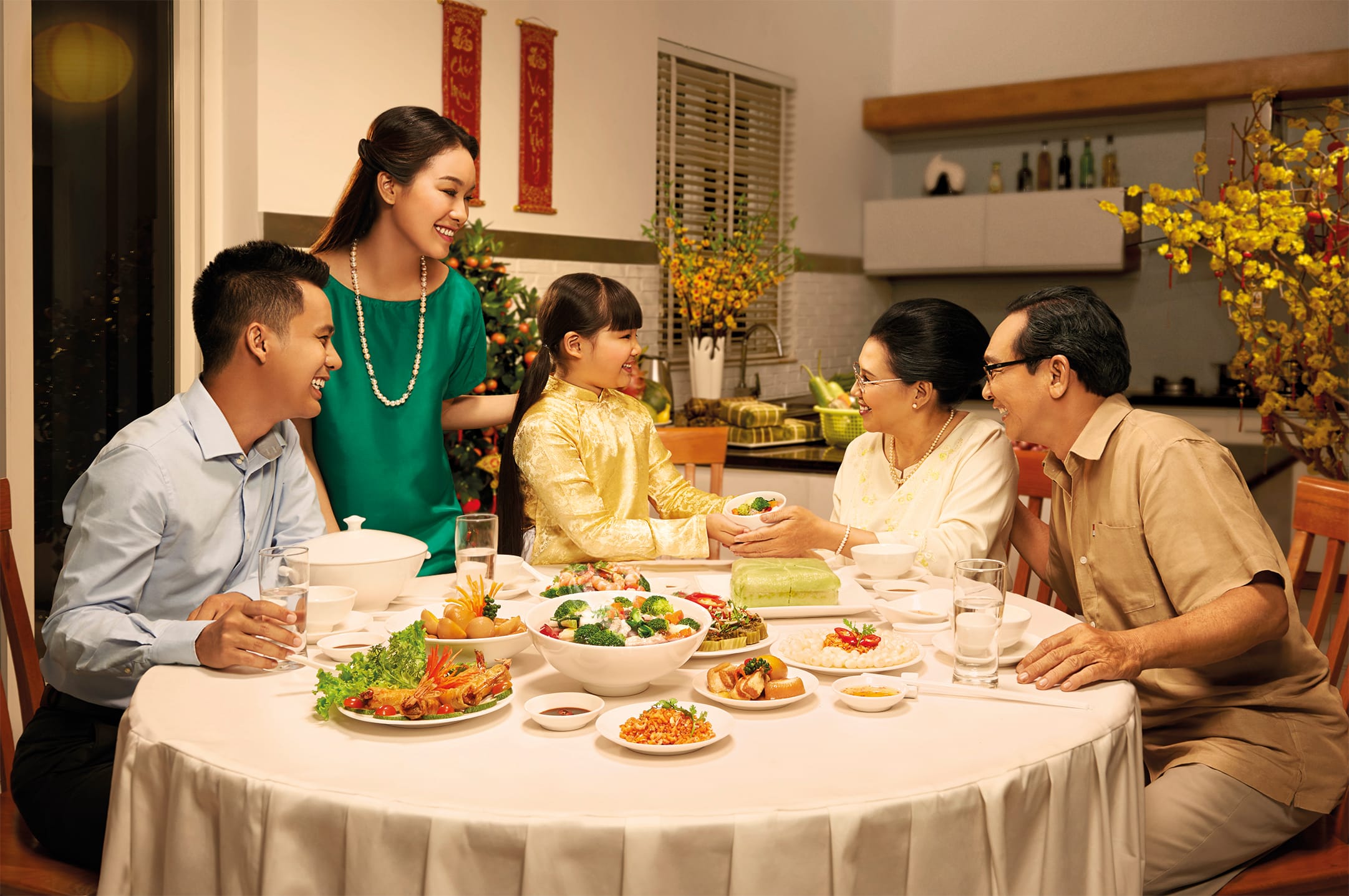
The sacred sticky rice cakes, Bánh Chưng (square) and Bánh Tét (cylindrical), symbolize the harmonious relationship between Heaven and Earth.
This collective feast, surrounded by beautiful Vietnamese New Year decorations like the Kumquat tree, reaffirms familial unity and ensures that the core values and traditions of the clan are passed down to the next generation in an atmosphere of warmth and nostalgia.
Honor Ancestors and Light Incense
Spiritual observance is fundamental to Tết traditions. Before the Lunar New Year officially begins, families engage in the solemn ritual of visiting and cleaning ancestral graves, a profound gesture of gratitude and remembrance.
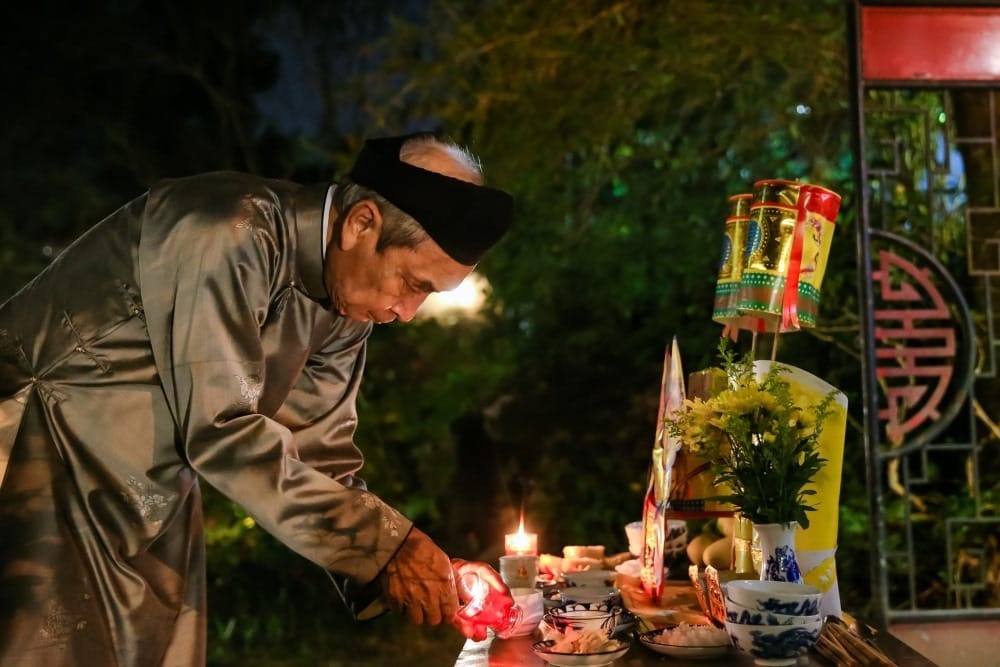
The entire altar embodies the core Vietnamese values of respect, remembrance, spiritual connection, and eternal family unity.
This practice is followed by another key ritual performed at home: lighting incense on the beautifully prepared ancestral altars, which serve as the spiritual heart of the home and are often adorned with Vietnamese New Year decorations like the Five-Fruit Tray. Through the smoke of the incense, families invite their ancestors’ spirits to celebrate with them, seeking blessings of peace, prosperity, and protection for the household throughout the year.
The Joyful Exchange of Red Envelopes (Lì Xì)
One of the most anticipated and joyful Tết traditions is the exchange of Red Envelopes (Lì Xì). Filled with lucky money, these bright red packets are essential Vietnamese New Year decorations themselves, symbolizing joy, energy, and protection. Elders present lì xì to children and younger relatives, conveying sincere wishes for health, happiness, and success in the coming year. This ritual is more than just a monetary gift; it is a lively, loving gesture that spreads good fortune and reinforces generational respect within the family, marking a cheerful beginning to the year.
Explore Scenic Attractions and Find Renewal
The extended holiday break provides the perfect opportunity for many Vietnamese families to embark on trips and find renewal at scenic attractions. Exploring majestic landscapes like Hạ Long Bay, the Imperial City of Huế, or the spectacular karst formations of Tràng An symbolizes starting the new year with fresh experiences and beautiful memories.
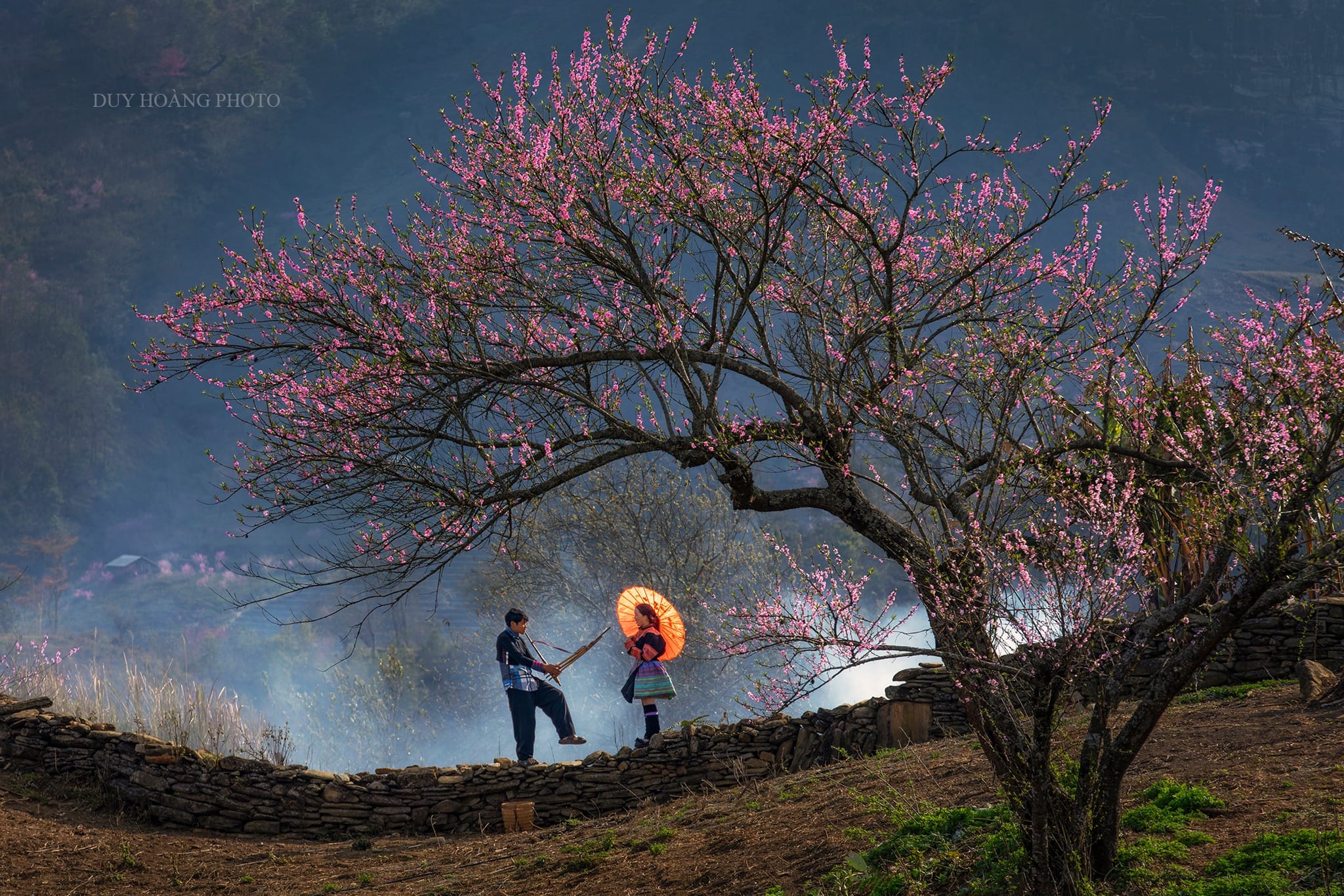
The Peach Blossom’s vibrant hue is believed to attract happiness and peace, making it essential to Tết traditions.
If you are seeking serenity, consider beginning your new year with a tranquil escape: Book your stay at Jiva, a heritage retreat nestled in the UNESCO core zone of Tràng An, to begin your new year in serenity! This practice of travel brings an added layer of excitement and optimism to the Vietnamese New Year celebrations.
For travelers seeking a serene escape after the holidays, plan your Ninh Binh Day Tour from Hanoi with our curated itinerary
Participate in Festive Community Activities
Across Vietnam, the festive atmosphere is palpable as communities come alive with vibrant activities. Streets and temples host lively festivals, offering a chance to witness traditional lion dances, explore bustling flower markets filled with Vietnamese New Year decorations, and participate in exciting folk games.
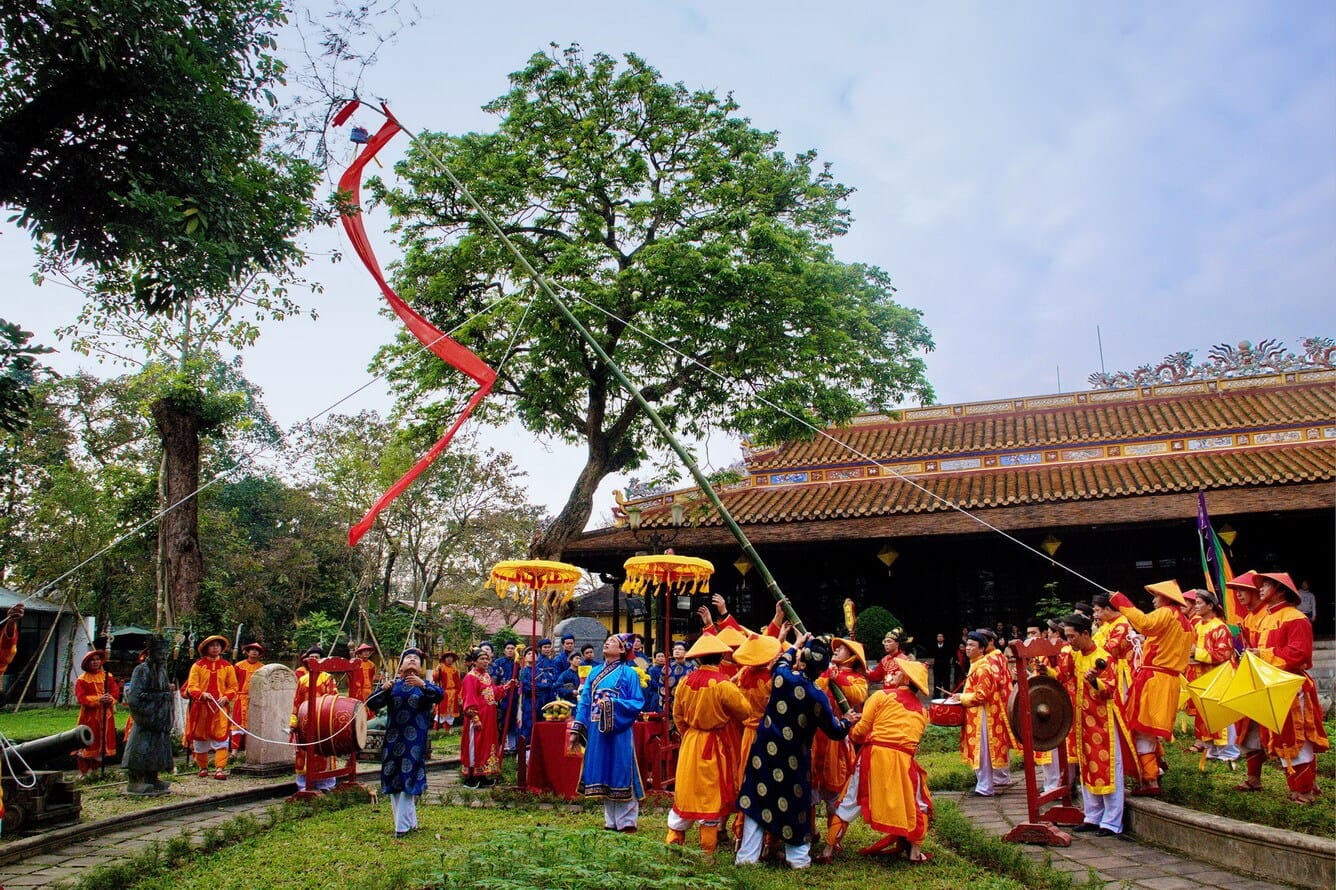
Every color and object chosen for the celebrations is deeply symbolic, inviting specific blessings for the household.
Joining these public Tết traditions allows everyone, locals and visitors alike, to immerse themselves in the joyful community spirit. This collective celebration, fueled by energy and optimism, is the perfect way to welcome a year filled with good fortune and memorable cultural experiences.
Traditional Village making Vietnamese new year decoration
Dong Ho: The Traditional Folk Painting Village (Bac Ninh)
The village of Dong Ho is one of the most historically significant sources of Vietnamese New Year decorations, specializing in woodblock folk paintings that capture the peace and simplicity of rural life. Originating around the 16th century , these paintings reached their peak popularity in the 19th century.
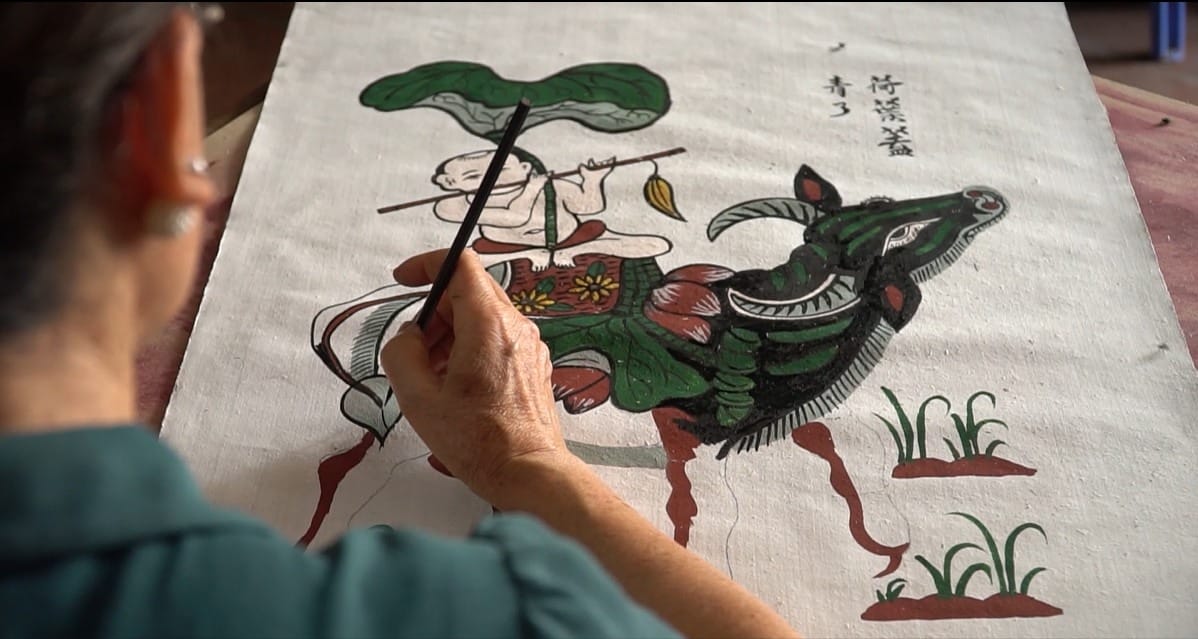
The unique quality of the paintings lies in their material: the paper is crafted by hand from dó tree bark, coated with a glittering powder made from crushed scallop shells. Furthermore, the vivid colors used are entirely sourced from nature. For example, black is derived from charred bamboo leaves, green from indigo leaves, and red from ochre soil.
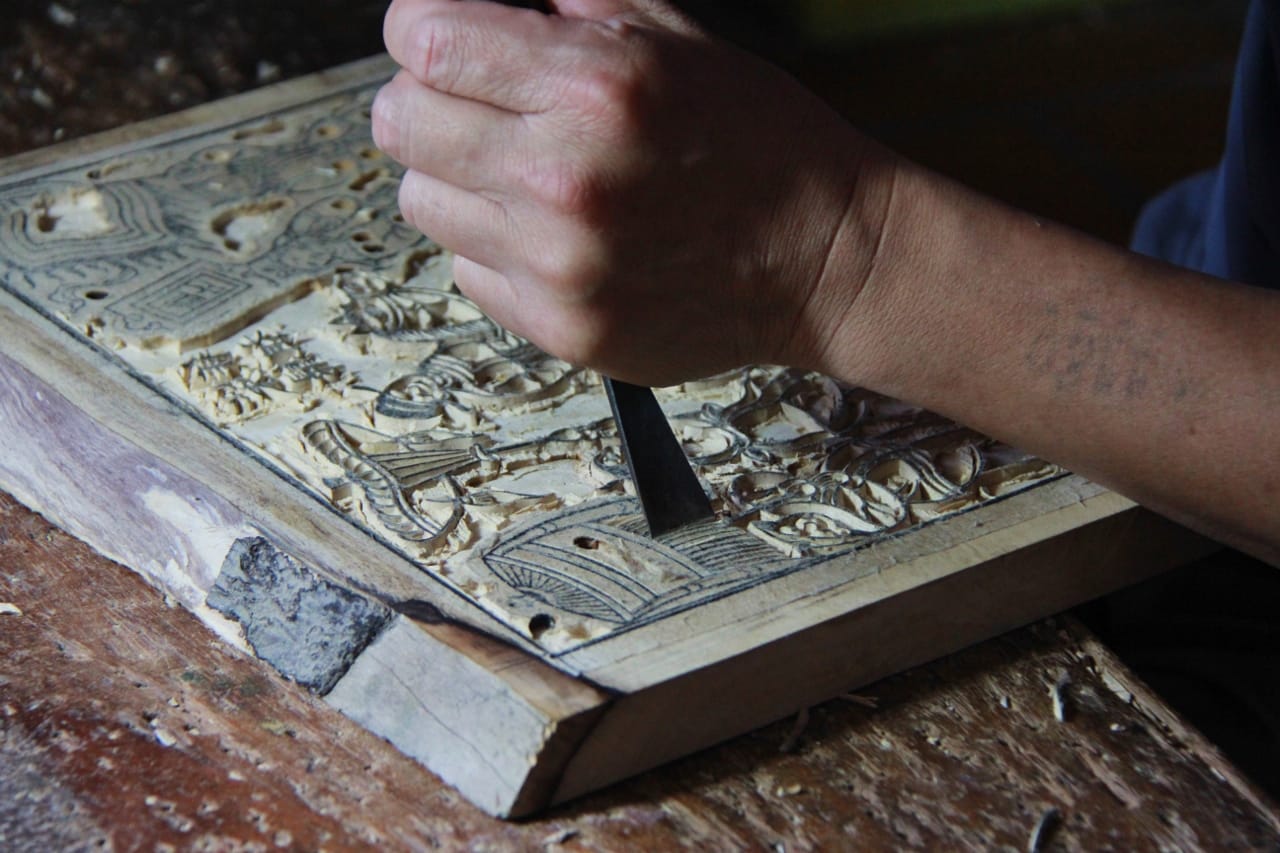
This traditional process involves using a separate woodblock for each color (usually four basic, unmixed colors) to print the image. Dong Ho paintings remain an indispensable part of Tết traditions, adorning homes with wishes for happiness, prosperity, and reflection of the pure, simple country atmosphere.
Hang Trong: The Sophisticated City Folk Painting Village (Hanoi)
In contrast to Dong Ho’s rustic appeal, Hang Trong folk paintings were historically made to satisfy the demands of Hanoi’s city dwellers and merchant class. Emerging around the late 18th or early 19th century and flourishing until the early 20th century , these artworks showcase a sophisticated fusion of themes, combining Buddhist and Confucian philosophy with scenes from daily cultural life.
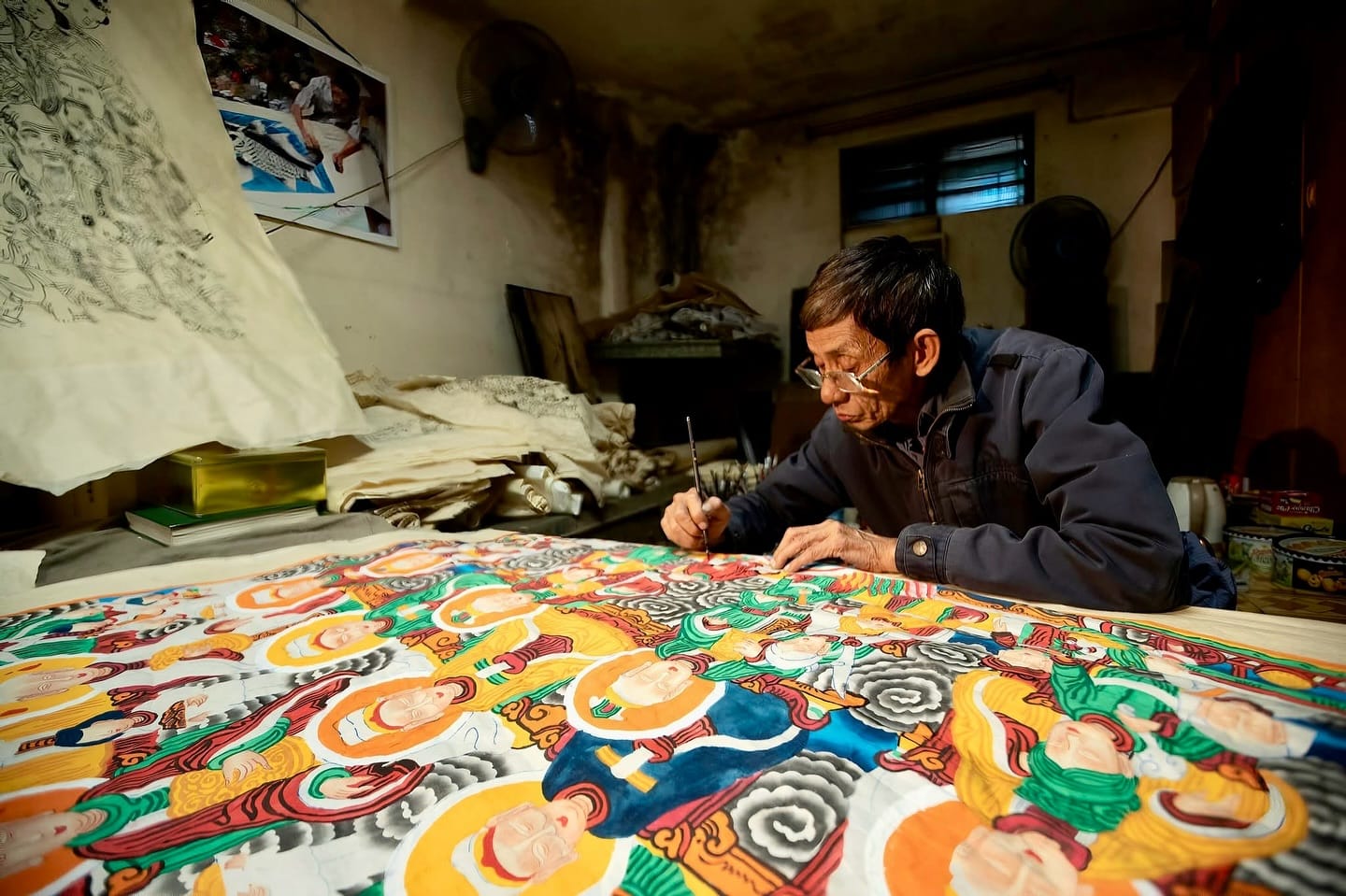
The process of creating these Vietnamese New Year decorations is intricate: after the initial woodblock print , the artisan carefully hand-paints the colors, which can take three to four days to complete. This meticulous, multi-step process results in lines that are highly praised for their delicate, soft, and slender quality.
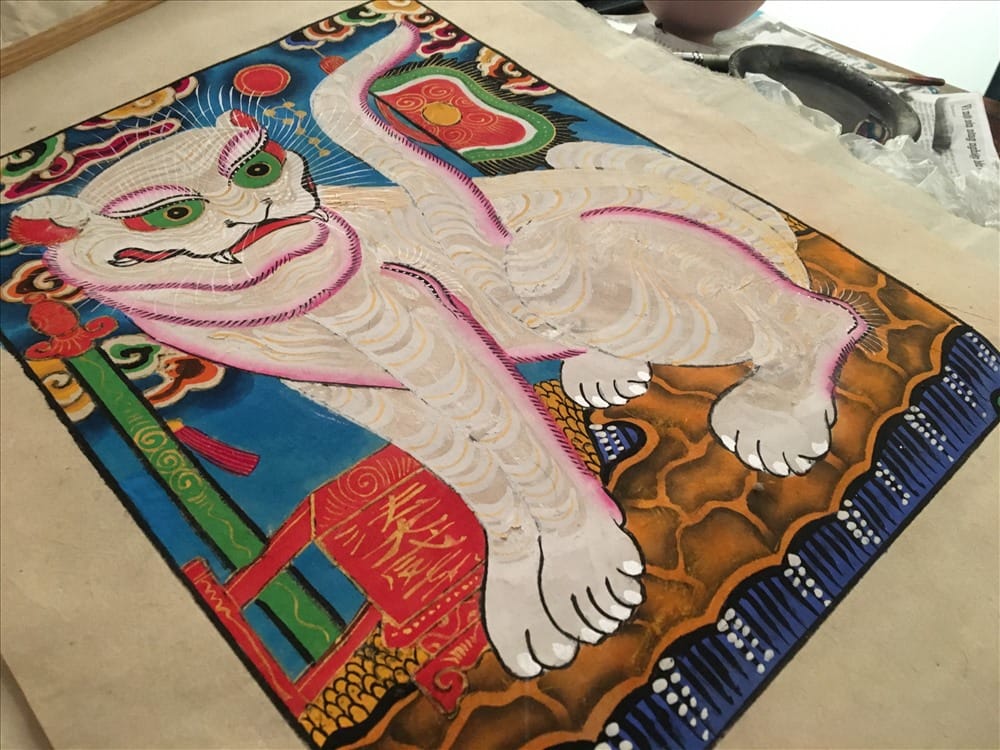
Traditionally, the paintings were framed with vertical scroll rods, ready to be hung on city walls. Hang Trong paintings, which originally featured subjects related to worship and the Tết holiday, are highly valued for their artistic quality and historical representation of Hanoi’s refined urban culture.
Quang Phu Cau: The Vibrant Incense Village (Hanoi)
A must-see destination in Hanoi, Quang Phu Cau Incense Village has a history spanning hundreds of years. This village is a visual spectacle, particularly in the lead-up to Tết, where the bright, sun-dried bundles of incense sticks—predominantly red, but also green and yellow—create a striking, colorful landscape.
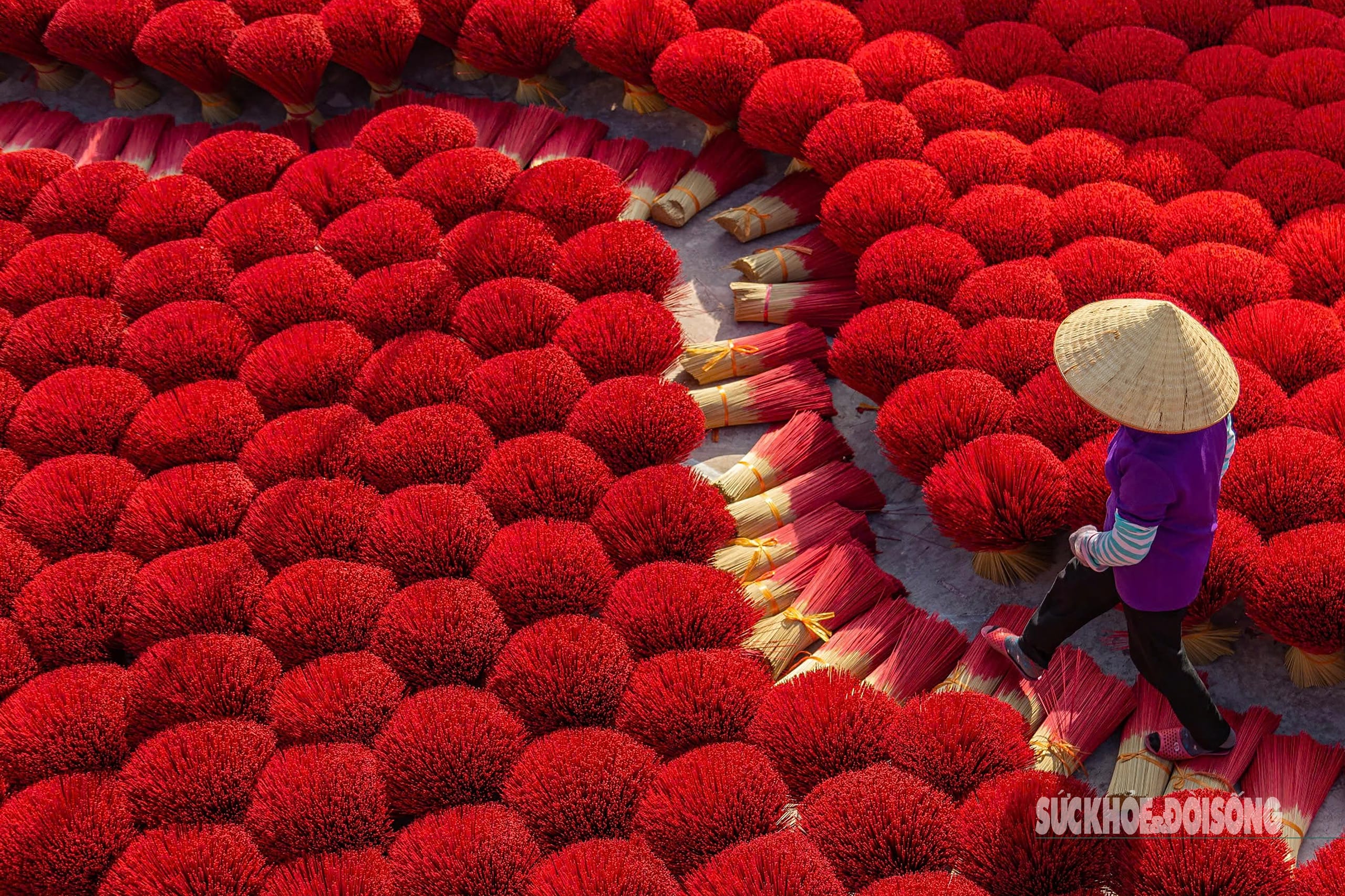
This incredible use of space sees small alleyways, courtyards, and communal grounds filled with these symbolic Vietnamese New Year decorations. The process is highly valued by the local artisans , who diligently work on splitting bamboo, dyeing the sticks, and packaging the finished product. Despite incorporating modern machinery into production, the villagers maintain their traditional heritage by strictly adhering to using high-quality herbal raw materials.
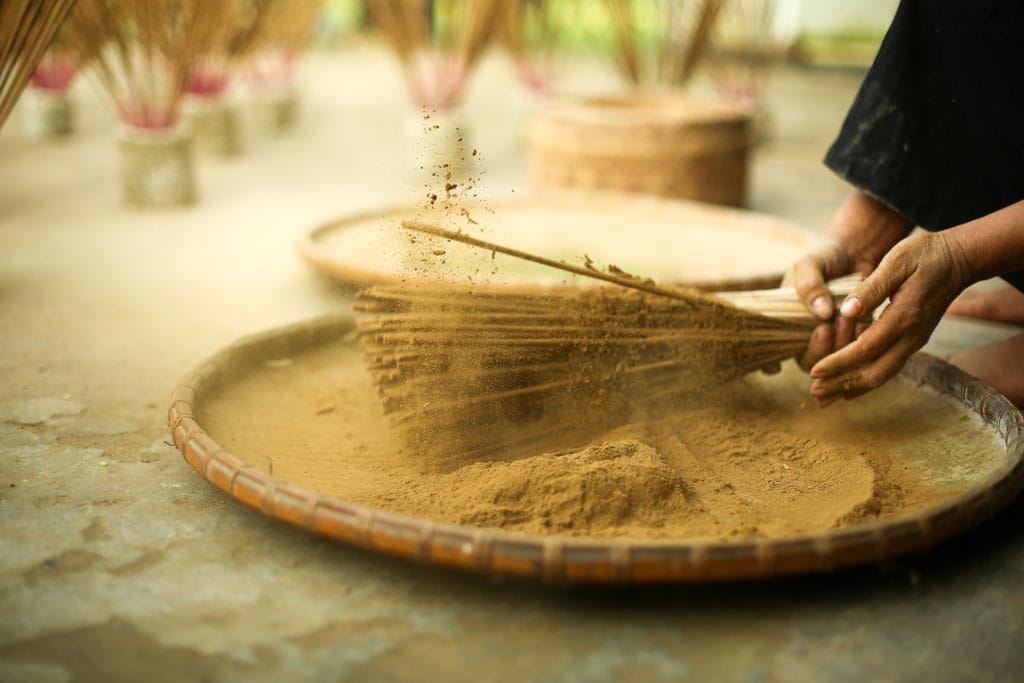
These herbs are mixed with secret formulas to ensure the incense burns beautifully, is long-lasting, and maintains its fragrant, appealing scent. This dedication ensures that the village remains a crucial provider of ritual crafts for Vietnamese New Year celebrations.
Nhat Tan: The Famous Year-Round Flower Village (Hanoi)
Nhat Tan Flower Village is celebrated as Hanoi’s most famous flower hub, providing a continuous supply of color for the capital. Though flowers are available year-round, Nhat Tan takes on special significance as the source of many Vietnamese New Year decorations.
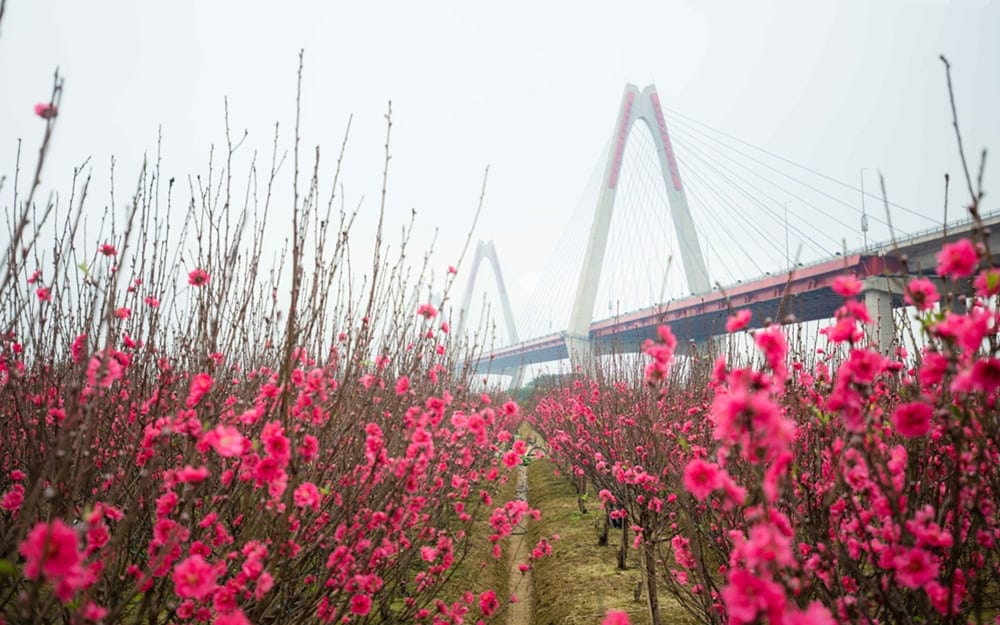
Hanoi’s flower markets are famed for their beautiful displays of Peach Blossoms
The village is popular with tourists and photo enthusiasts , who flock to capture the ethereal scene of delicate, pure blossoms unfolding from the morning mist into the bright sunlight. During the winter months, the village is particularly famous for its beautiful White Daisy flowers (cúc họa mi).
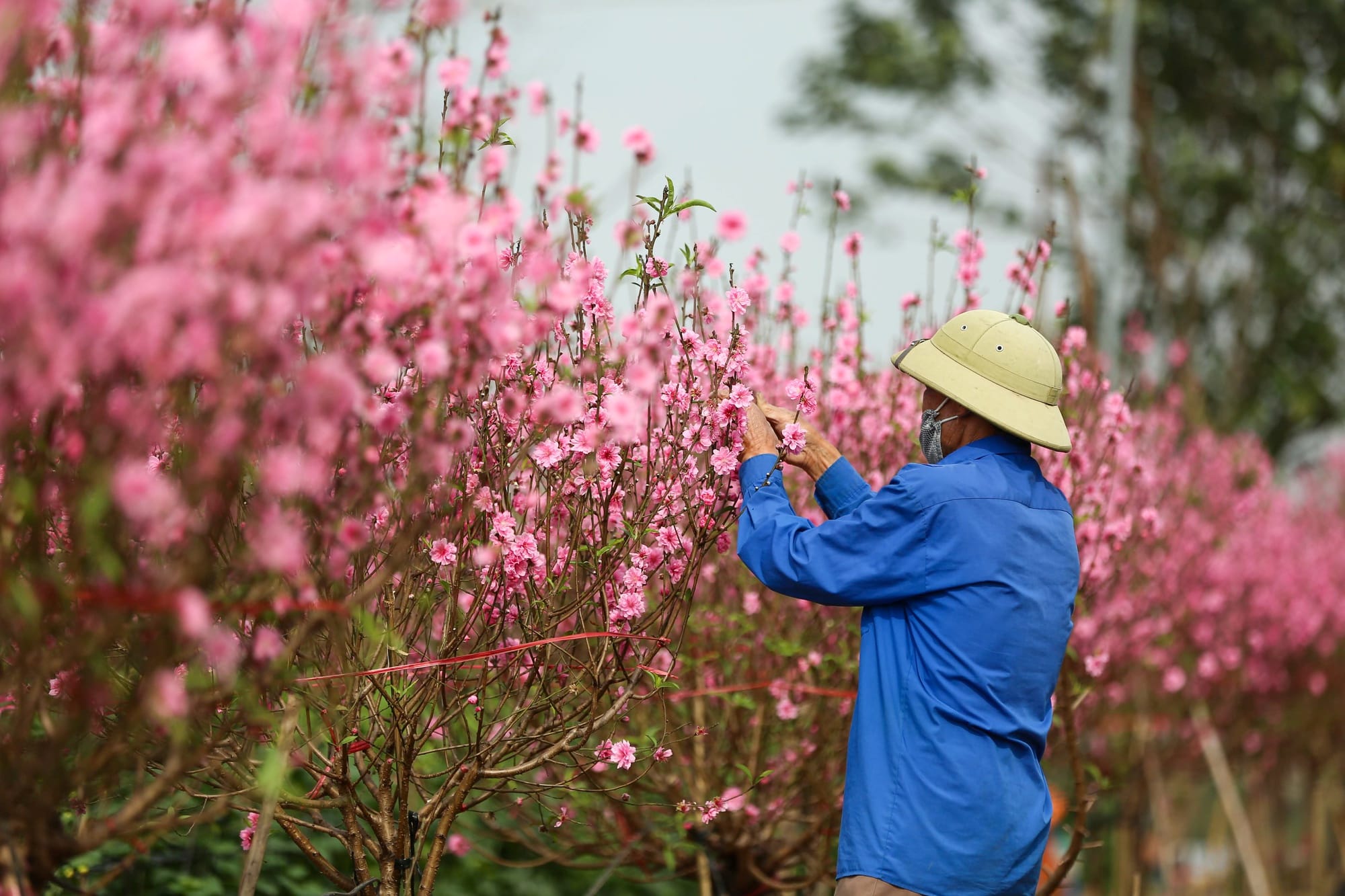
Choosing a branch with strong, well-shaped growth signifies incoming prosperity and good fortune for the home.
As Tết approaches, the village transforms into a dazzling array of colors, with different seasonal blooms preparing to decorate homes, symbolizing fresh beginnings and good fortune for the upcoming year. Its reputation and picturesque setting make it an unmissable destination for those seeking the perfect floral Tết decorations regardless of the season.
Thanh Tien: The Paper Flower Village (Hue)
The Thanh Tien Paper Flowers Village in Huế is a unique craft center that has been creating essential Vietnamese New Year decorations for over 300 years. This tradition originated from the need to find an alternative to fresh flowers for worship, as the harsh climate of Central Vietnam made preservation difficult.
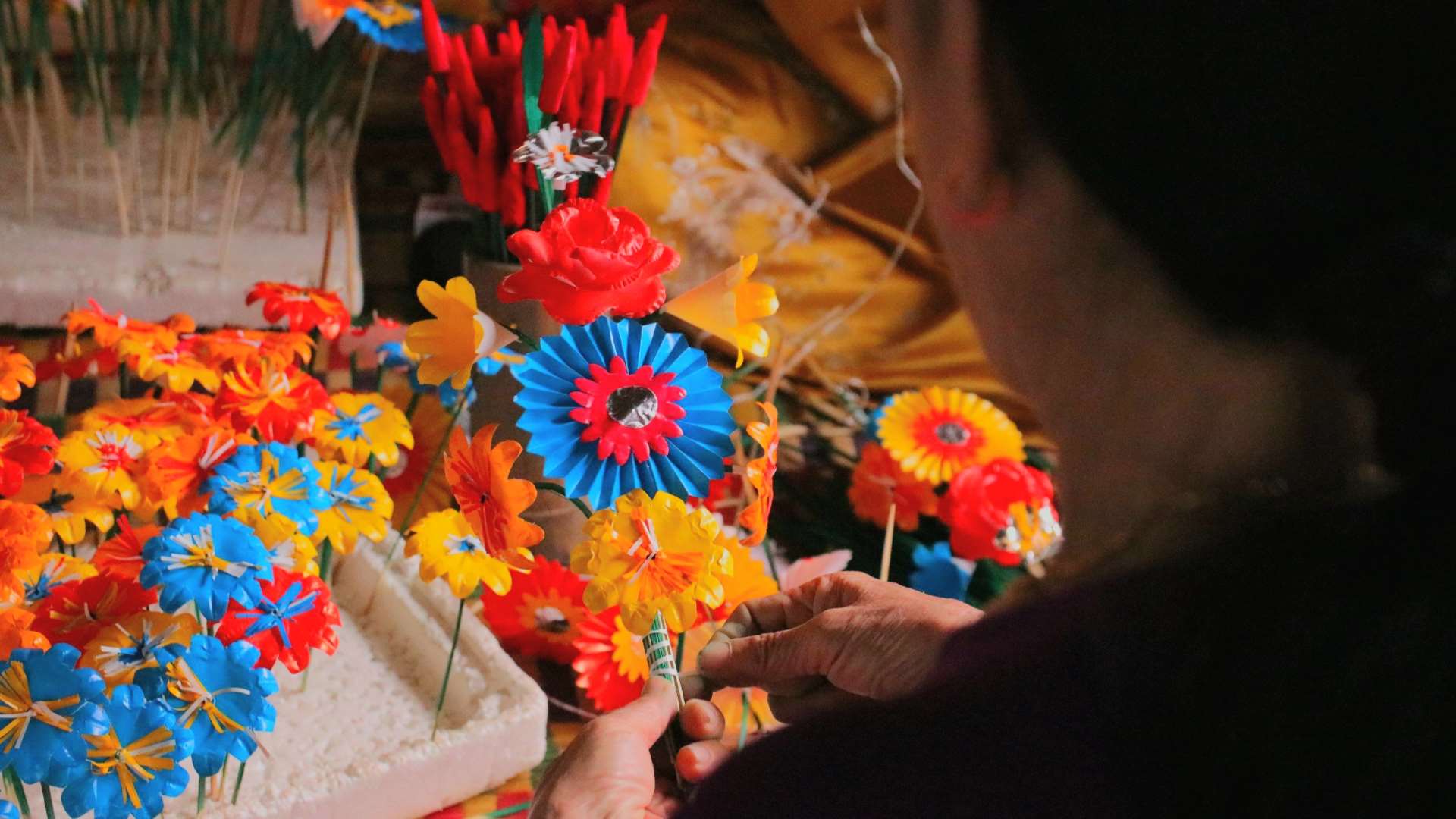
the quintessential symbol in Vietnamese New Year decorations.
As a result, villagers skillfully mimic natural flowers using paper in various colors, creating surprisingly vivid and cheerful arrangements. The craft is rooted deeply in folk beliefs , with the flowers being placed in prominent ceremonial spots during the year.
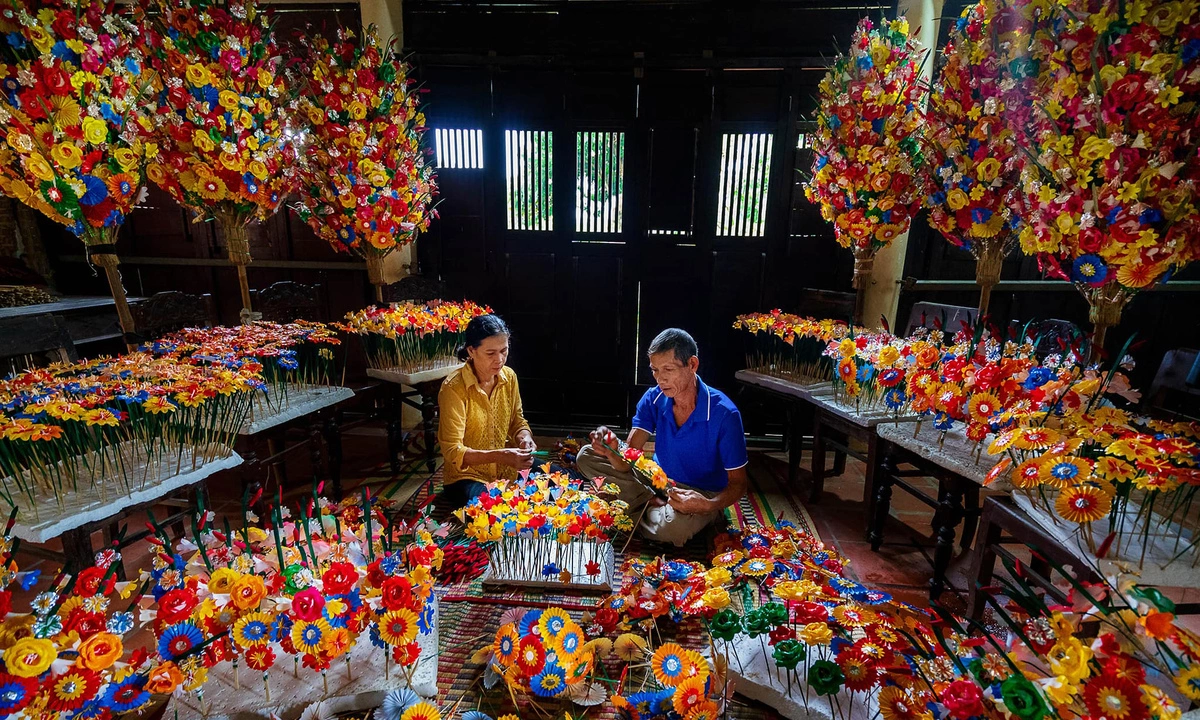
This street becomes the central hub for the most extravagant and creative displays of Vietnamese New Year decorations in center Vietnam.
Crucially, the old paper flowers are replaced with new ones every Tết Nguyên Đán (Lunar New Year). Thanh Tien is especially renowned for its intricate paper Lotus flowers.
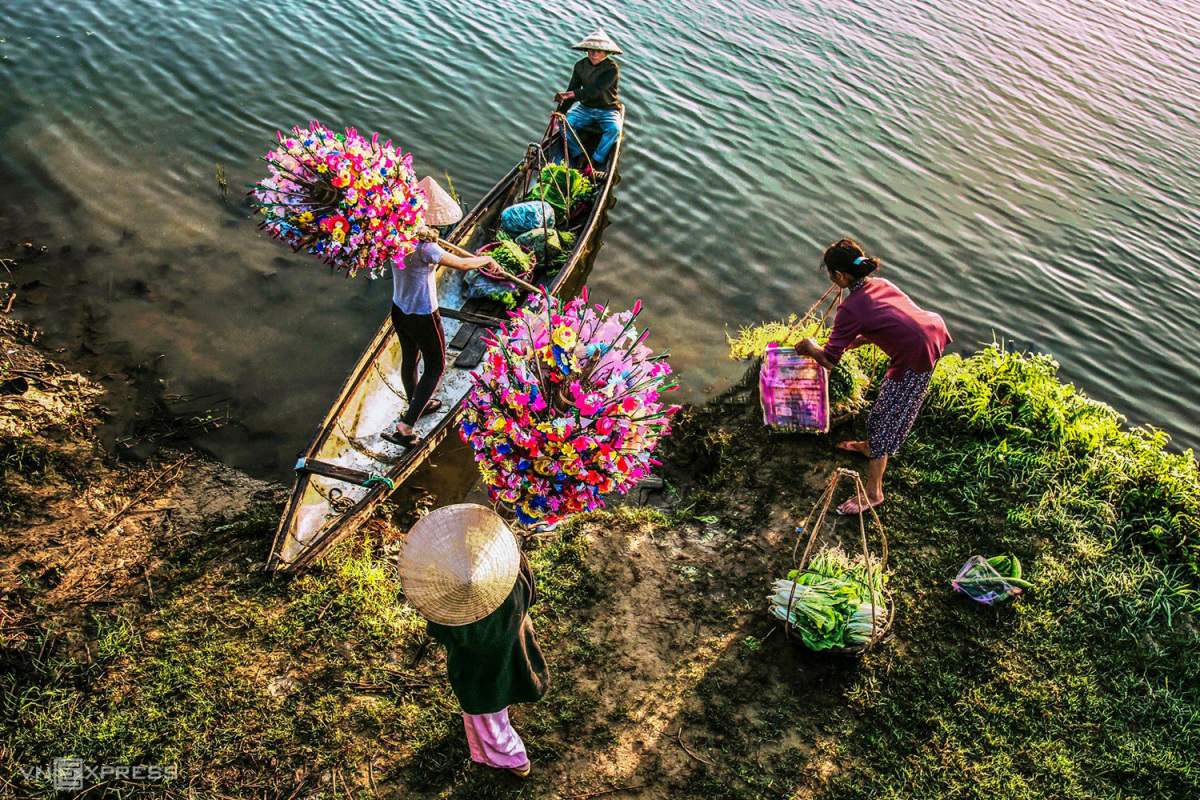
The bustling atmosphere of the market, filled with the vivid colors of blossoms, captures the unique spirit of Tết in center Vietnam.
Every year, the village becomes busy with production to meet the spiritual demands of Hue’s locals, ensuring this unique form of Tết decoration continues to enrich the region’s cultural and spiritual heritage.
Thuy Xuan: The Incense Village (Hue)
Nestled just 7km southwest of Hue City Center, at the foot of Vọng Cảnh Hill and along the gentle Hương River, lies the tranquil Thuy Xuan Incense Village. This village plays a crucial role in Tết traditions by supplying the fragrant, ceremonial incense that is essential for ancestral worship.
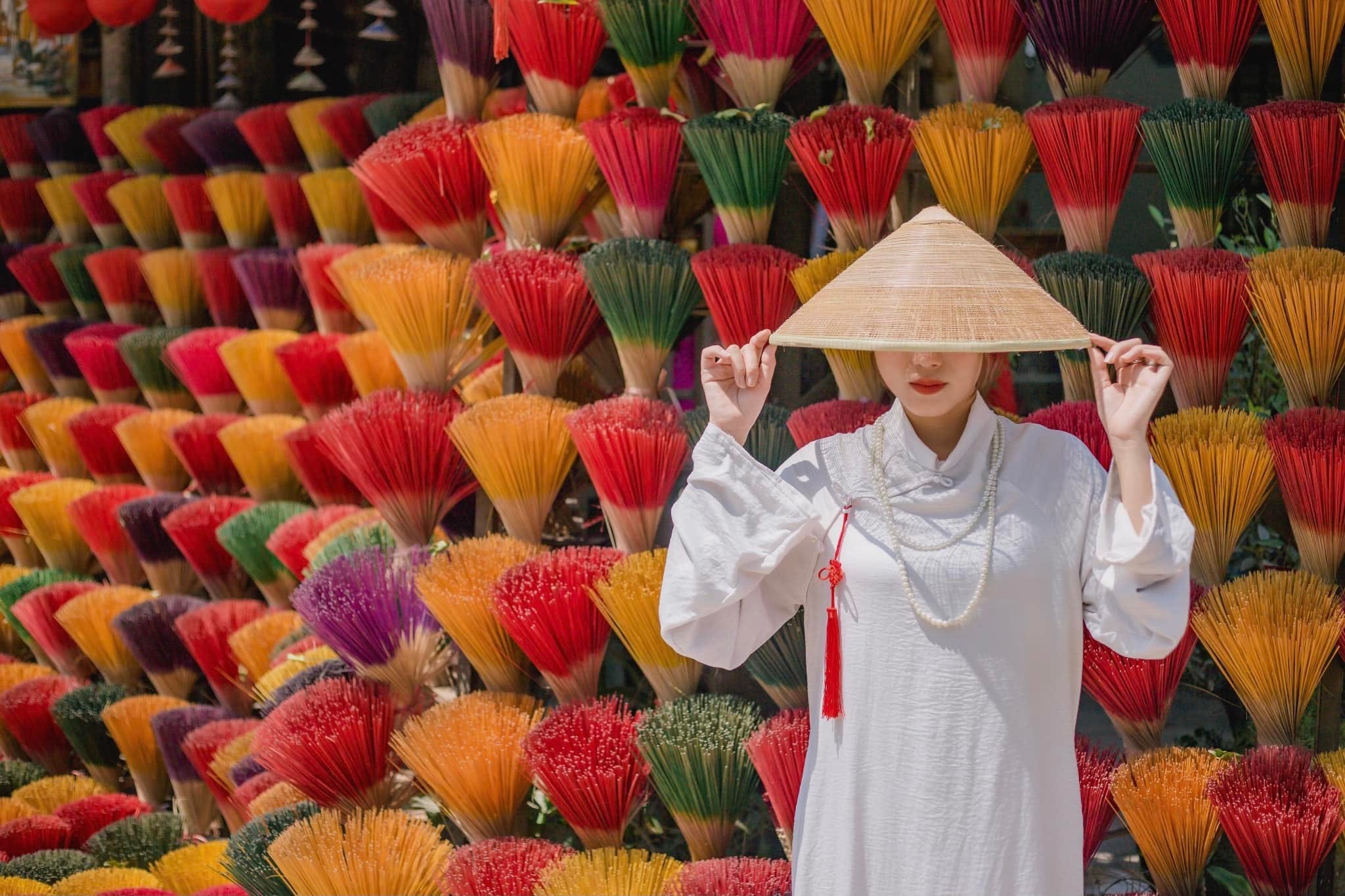
stunning photo opportunities that embody the joy and energy of a Southern Tết.
As the Lunar New Year approaches, the artisans, often affectionately called ‘dì nghệ nhân’ (artisan aunts), become particularly enthusiastic, producing their incense sticks day and night. This intensive production schedule sometimes begins as early as the start of October to ensure there is an adequate supply for people across the entire country.

Bundles of incense sticks, often dyed red or pink, are a quintessential Vietnamese New Year decoration, symbolizing the connection between the living and the spiritual world.
Like other craft villages, the sheer quantity of brightly colored incense bundles drying in the open air creates a stunning visual spectacle. Thuy Xuan is vital for providing one of the most spiritually significant Vietnamese New Year decorations, ensuring that families across Vietnam can welcome the new year with the appropriate rituals and beautiful, aromatic smoke
Kitchen God Terracotta Statue Village (Hue)
Located in the area historically known as Địa Linh, this village is the source of one of the most specific and spiritually important Vietnamese New Year decorations: the Kitchen God (Ông Táo) terracotta statues.
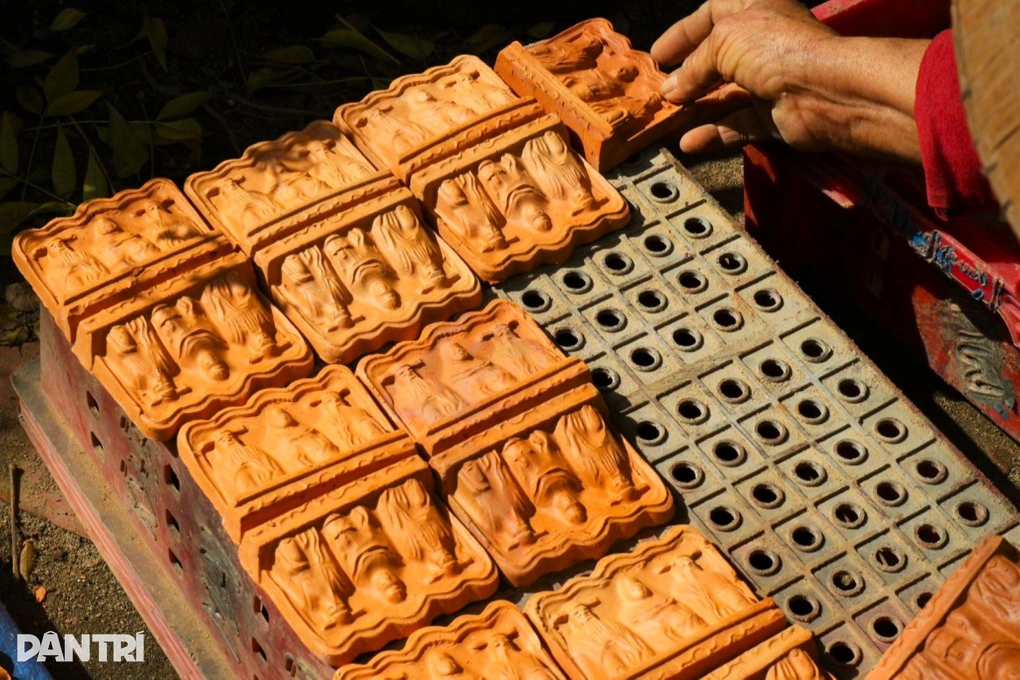
he detailed craftsmanship of traditional items, highlights the care taken in preparing for the New Year.
The craft originated in this area because of the high quality and abundance of local clay. In Vietnamese folk belief, the Kitchen God oversees household matters. The tradition dictates that on the morning of the 23rd day of the 12th Lunar Month, families offer a feast to send the ‘old’ Kitchen God off to Heaven to report on the year’s events, before welcoming a ‘new’ statue back into the home.
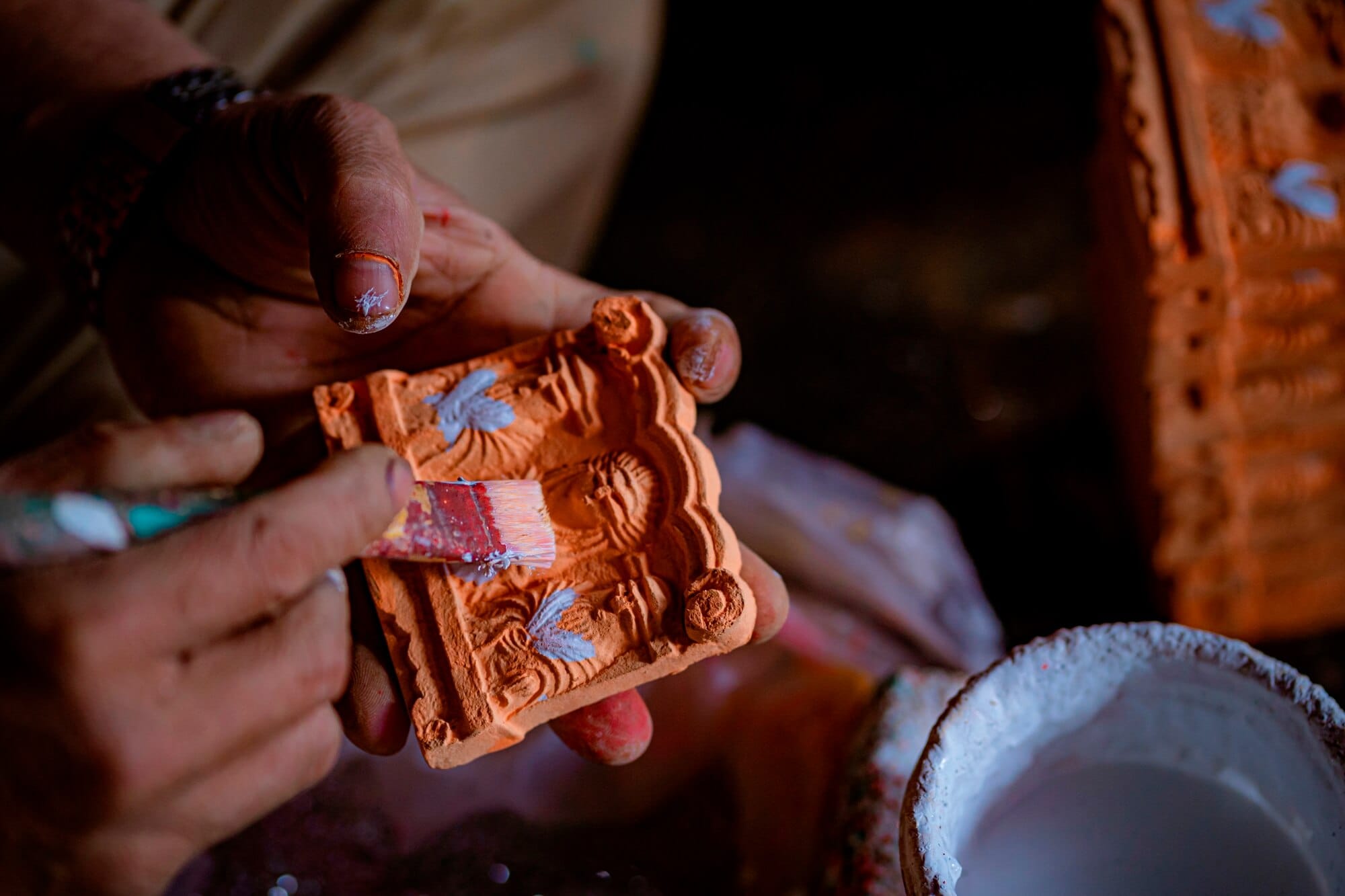
This massive statue supplier is a vital part of the new year Traditions
These statues, which maintain the region’s spiritual culture , come in various forms, most notably those that are vibrantly colored and sprinkled with shiny gold dust. More simple versions are often finished with a reddish-brown coat. The continuation of this unique craft ensures that this essential element of the Vietnamese New Year decorations remains available for the annual ritual.
Sa Dec: The Century-Old Flower Village (Dong Thap)
Deep in the Mekong Delta, Sa Dec Flower Village in Đồng Tháp Province is one of the largest and most impressive sources of Vietnamese New Year decorations in Southern Vietnam. Formed at the end of the 19th century , this village, originally known as Tân Quy Đông, has a history spanning over a hundred years. While tourists can visit and take photographs year-round , the village is at its most beautiful during the Spring season leading up to Tết.
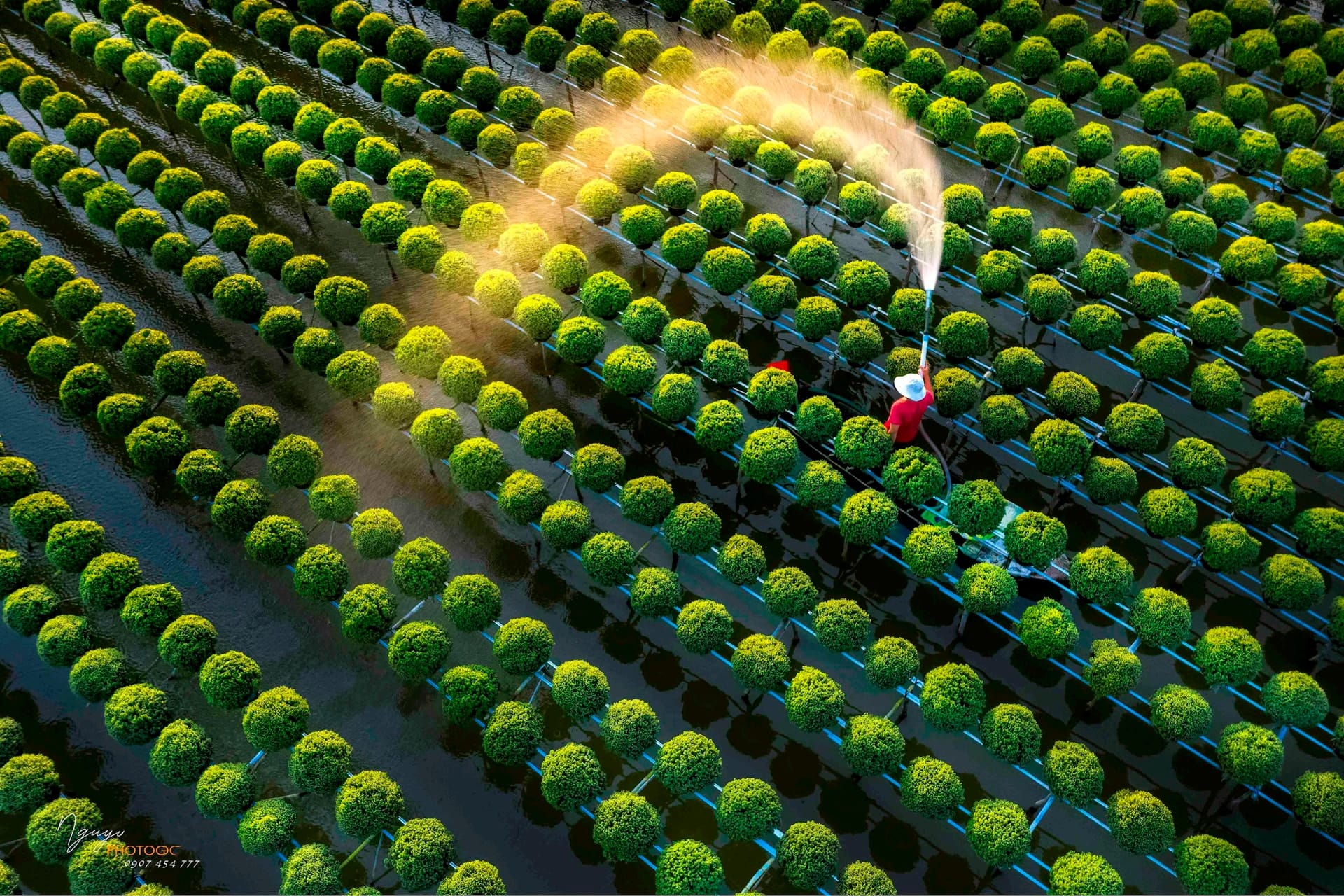
The village reaches its “Golden Time” during Tết, with thousands of flowers blooming simultaneously, creating a beautiful spectacle of color and scent.
During this “Golden Hour,” the cool, clean air enhances the vibrant colors of the potted flowers and bonsai, all bursting with life. Visitors should plan their trip for early morning or late afternoon (between 5-8 am or 4-5:30 pm) for the best lighting. However, it is crucial to note that to secure the best floral Tết decorations, visitors must complete their shopping and sightseeing before the 23rd day of the 12th Lunar Month, as most nurseries ship their flowers to other cities after this date.
Thoi Nhut: The Major Flower Supplier (Can Tho)
Also known as Bà Bộ Flower Village , Thới Nhựt Flower Village in Cần Thơ is one of the five most famous flower villages in the city and a massive supplier of Vietnamese New Year decorations to the entire Western region. Located just 3km from Cần Thơ city center , the village is a prime destination for both locals and tourists seeking beautiful flowers and stunning photo opportunities. Although open all year , the village reaches its peak appeal during the Tết period.
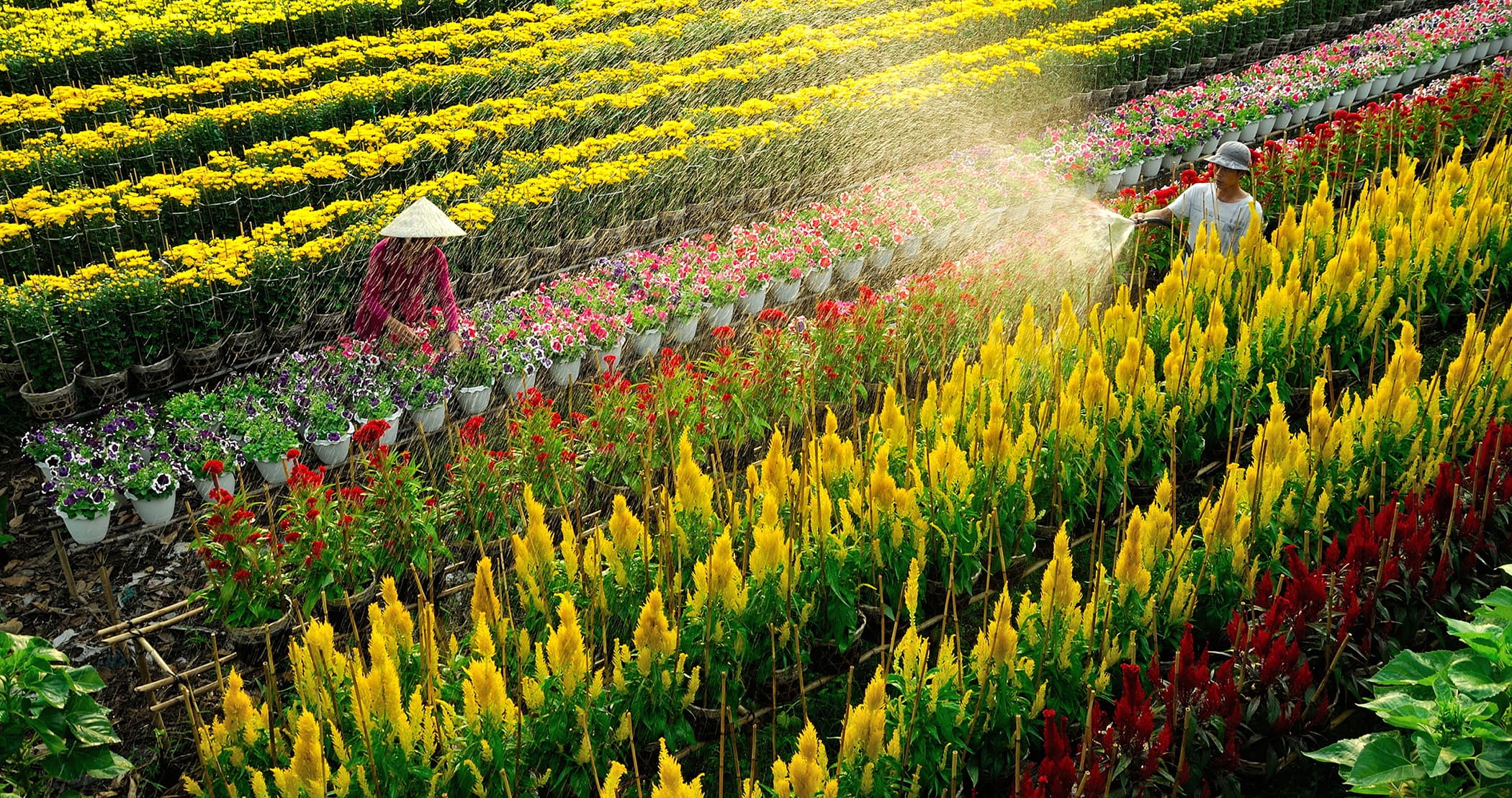
Thới Nhựt is one of the most famous flower villages in the Mekong Delta, acting as a massive supplier of Vietnamese New Year decorations to the region.
This is the “Golden Time” when thousands of flowers bloom simultaneously, creating a beautiful spectacle of color and scent. The intense planting and harvesting activities during this season offer visitors a unique chance to experience the village’s agricultural energy and capture unique moments during the joyous beginning of the new year. Thới Nhựt is a vital part of the Mekong Delta’s Tết traditions, ensuring homes are fully adorned with fresh flowers for the holiday.
Ready to Experience Jiva?
Immerse yourself in a stay where northern Vietnamese architecture meets world-class comfort. At Jiva Hoalu Retreat, each accommodation blends locally inspired décor with modern luxuries, offering a unique fusion of culture, tradition, and elegance. Whether you’re here for a romantic getaway, a family escape, or a tranquil retreat, Jiva promises unforgettable moments in the heart of Ninh Binh.
Contact Us:
📞 +84 933 006 886
📧 inquiry@jivahoaluretreat.com
🌐 https://jivahoaluretreat.com/
Book now! to enjoy super hot deals