EN
- VN
- FR
Bai Dinh Pagoda in Ninh Binh is Vietnam’s largest spiritual complex, renowned for its record-breaking architecture, serene mountain setting, and rich cultural heritage. From ancient halls and giant Buddha statues to stunning Arhat corridors and sacred caves, the pagoda offers a unique journey into history, spirituality, and breathtaking natural beauty.
Bai Dinh Pagoda is the largest spiritual complex in Vietnam, often hailed as the largest pagoda in Southeast Asia. This monumental site, located in Ninh Binh Province, is renowned for its immense scale, record-breaking architecture, and stunning mountainous setting.
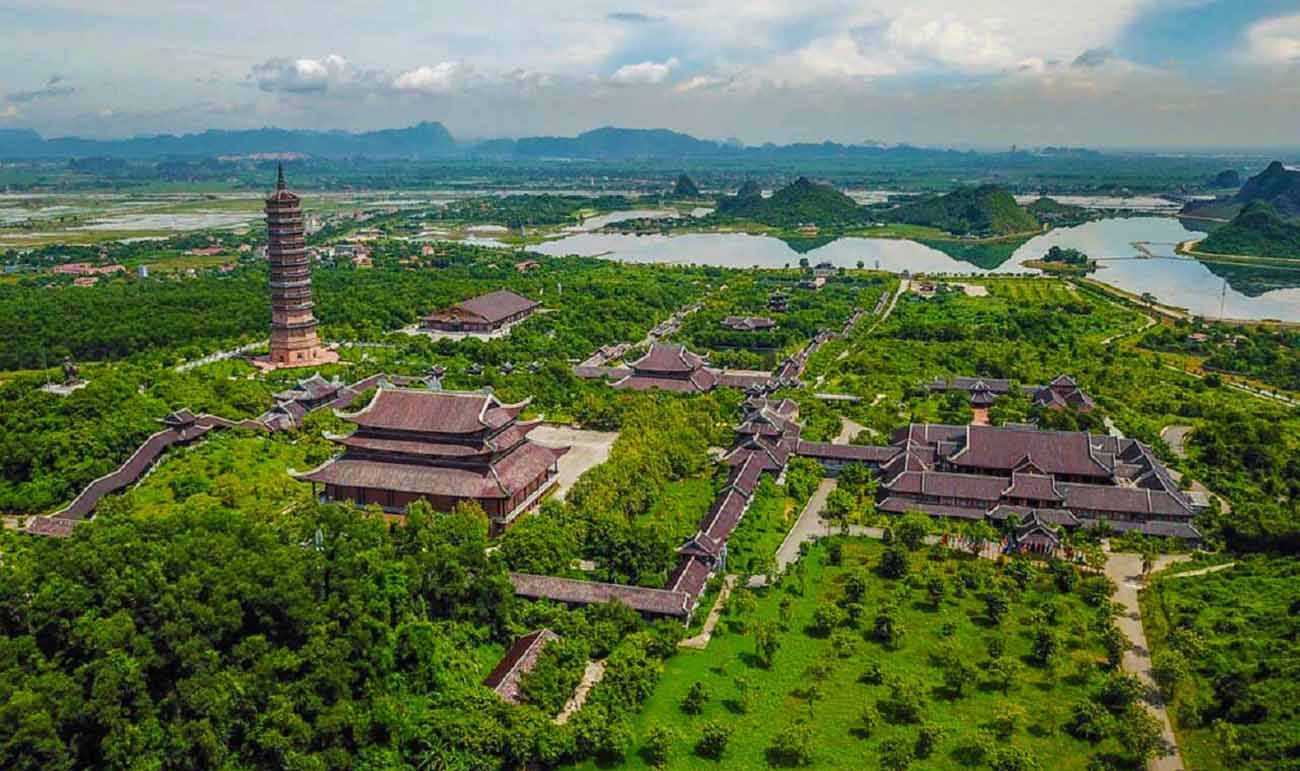
The massive scale of the new complex, showcasing its towering structures against the backdrop of the Ninh Binh mountains.
The Bai Dinh complex comprises two distinct but connected areas: the Ancient Pagoda (Chùa Cổ), which dates back to 1136 and was founded by the revered National Master Nguyễn Minh Không, and the New Pagoda (Chùa Mới), which began its massive expansion in 2003, covering a total area exceeding 1000 hectares.

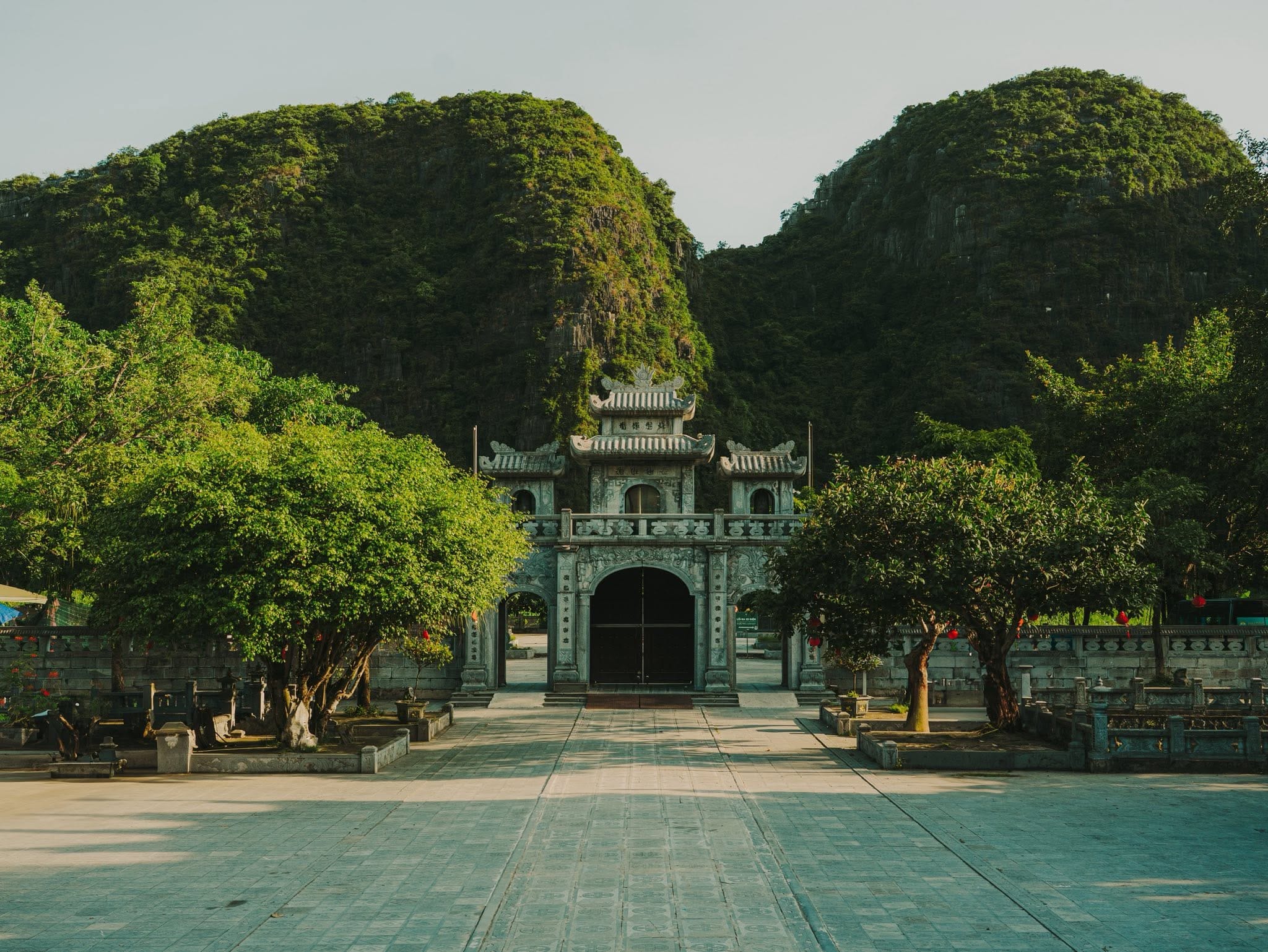
Sunlight filters through the Tam Quan Gate early in the morning, emphasizing the recommended visiting time.
It serves as a premier pilgrimage and tourist destination, attracting devotees and travelers keen to explore Vietnam’s profound Buddhist cultural heritage and experience the tranquility and majesty of the unique Ninh Binh landscape.
Bai Dinh Pagoda is located in Gia Sinh Commune, Gia Vien District, about 20 kilometers northwest of Ninh Binh City. Nestled within the Trang An Scenic Landscape Complex, a UNESCO World Heritage Site, it sits among limestone mountains and peaceful valleys.

The serene blend of the ancient and new architecture at Bai Dinh Pagoda, Vietnam’s spiritual heart.
The pagoda’s elevated hillside position gives visitors beautiful views of the surrounding countryside, making it an impressive spiritual and natural landmark.
Traveling to Bai Dinh Pagoda is relatively straightforward due to its clear signage and accessibility near major roads. From Hanoi, the journey typically takes around 1.5 to 2 hours by private car, shuttle bus, or motorbike.
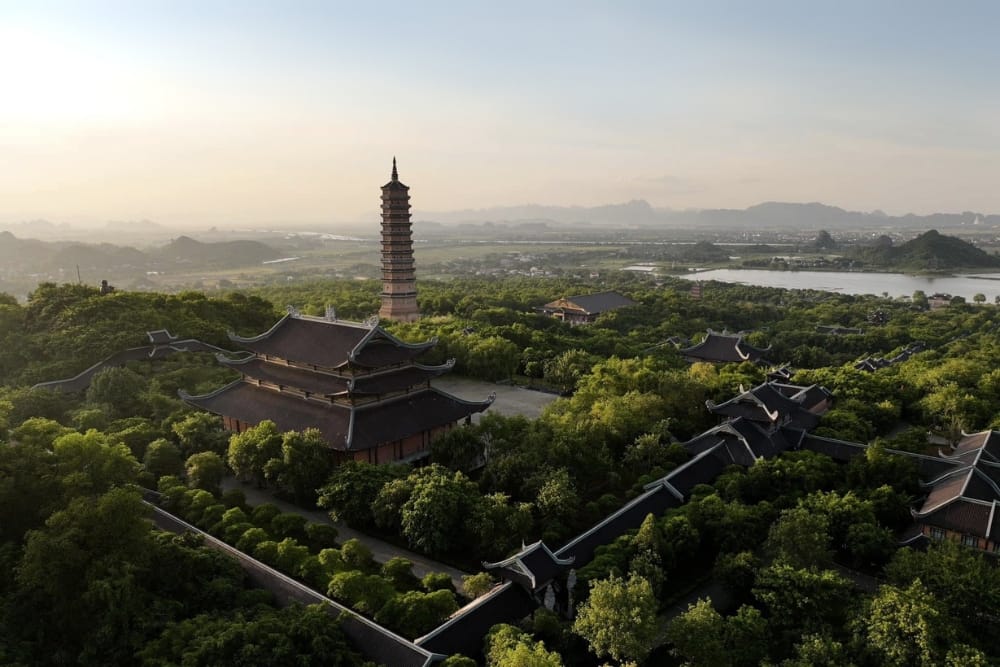
Limestone karsts and lush green valleys surround the pagoda complex, illustrating the Trang An UNESCO setting.
If traveling from Ninh Binh City, the pagoda is a short 20–30 minute drive. Upon arrival, most visitors are strongly advised to utilize the electric buggy service from the main parking area to the core spiritual complex.
This service, which has a nominal fee, is highly recommended as the complex covers over 1000 hectares, making walking the entire distance time-consuming and exhausting.

An aerial shot showing Bai Dinh Pagoda nestled within the stunning Trang An Scenic Landscape Complex.
Most visitors arrive via taxi or rented motorbike, then take an electric buggy from the entrance to the main complex. Roads are easy to navigate, and signage is clear throughout the route.
Bai Dinh Pagoda maintains consistent operating hours, opening daily from 6:00 AM to 7:00 PM. Due to the massive, sprawling scale of the entire complex, visitors should plan to allocate at least 3 to 4 hours to properly explore all the key temples, halls, and the famous Arhat Corridor.
The best time of day to begin the visit is early in the morning, which offers a cooler and more serene atmosphere, ideal for walking and climbing the many steps.

A wide shot of the complex showcasing the pagoda illuminated at dusk, before the 7:00 PM closing time.
It is important to note that the complex experiences its heaviest visitor traffic during the annual Bai Dinh Festival, which officially commences on the 6th day of the first lunar month and continues throughout the spring season.
Entrance to Bai Dinh Pagoda is completely free, allowing visitors to explore the entire complex without purchasing a ticket. However, several services within the area have separate fees. Motorbike parking costs 15,000 VND per vehicle, while car parking is 40,000 VND per vehicle. The electric buggy ride is priced at 30,000 VND per person per way. A Trang An boat tour costs 150,000 VND per person.
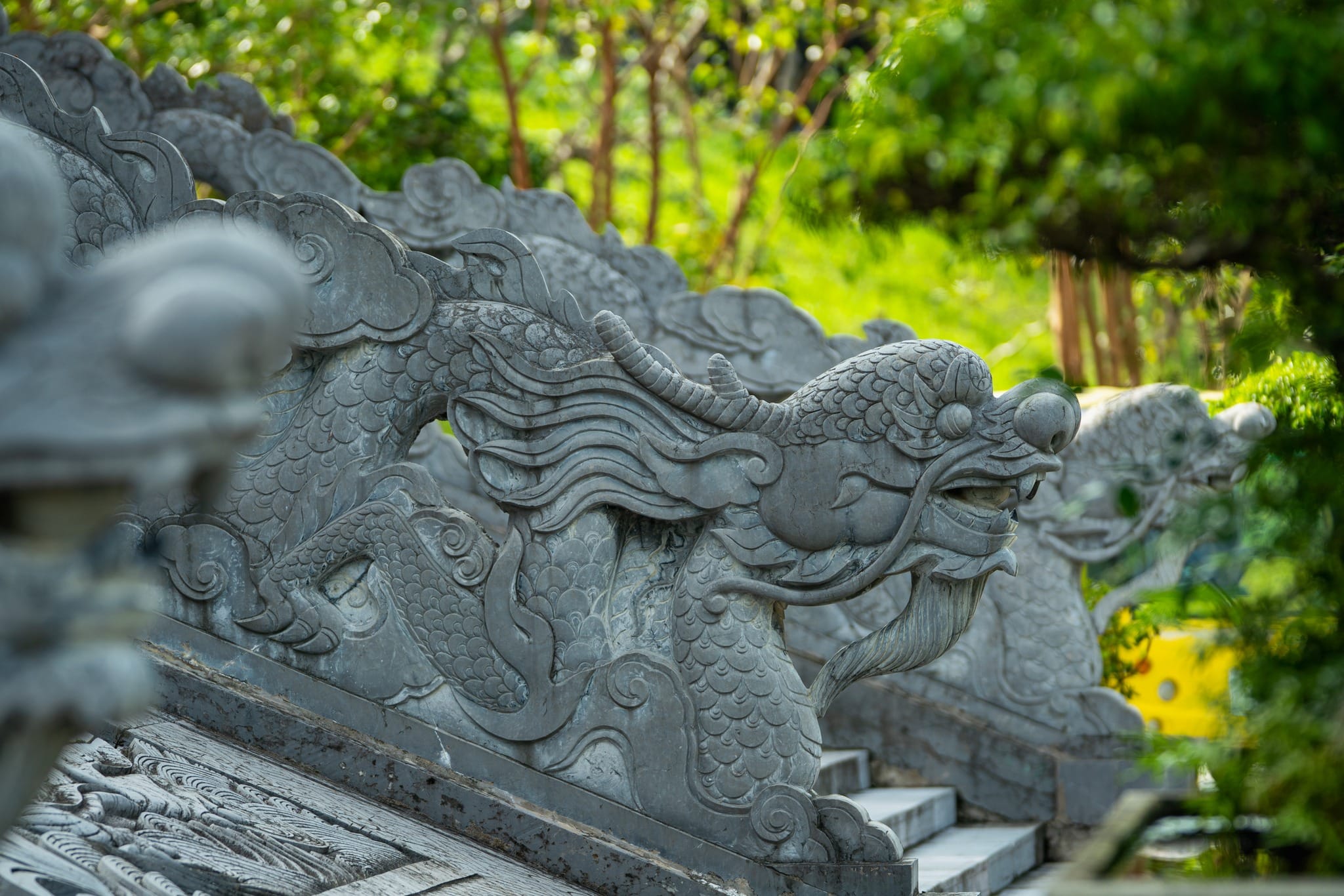
Intricate traditional carvings adorning the impressive Three Internal Gates
Tickets to the Stupa (Bao Thap) are 50,000 VND per visitor, with children under one meter admitted free of charge. Tour guide services range from 300,000 to 500,000 VND per tour. Additionally, restroom use costs 2,000 VND per time.
The optimal time to visit Bai Dinh Pagoda is during the early spring months, coinciding with the Lunar New Year (Tết) and the ensuing festival season, which runs from the 6th day of the first lunar month until the end of the third lunar month.

An image capturing the peaceful, elevated position of the pagoda, offering expansive views of Ninh Binh.
During this period, the weather is warm and pleasant, and visitors can fully immerse themselves in the vibrant cultural atmosphere of the Bai Dinh Festival, participating in prayers for peace and good fortune.

For travelers who prefer a quieter sightseeing experience with minimal crowds, the period between April and September is highly recommended, as the weather is typically dry and ideal for exploring the complex’s immense scale and architectural achievements.
Buddhism has been present in Vietnam for centuries and has grown strongly over time, leaving behind many remarkable architectural and spiritual landmarks. Among them, Bai Dinh Pagoda is one of the most significant.
The enormous 100-meter Bao Thien Stupa, holding the record for the highest stupa in Asia.
More than 1,000 years ago, the ancient capital of Hoa Lu was home to three successive dynasties: the Dinh, the Early Le, and the Ly. All three regarded Buddhism as the national religion, leading to the construction of numerous temples throughout Ninh Binh. Bai Dinh Pagoda was built on the Truong Yen range within the Trang An mountains, a location believed in folklore to embody sacred energy — a land that “gives birth to Kings, Saints, and Heroes.”
This was where Emperor Dinh Tien Hoang once held ceremonies to pray for favorable weather, and later where King Quang Trung performed a flag-raising ritual to inspire his soldiers before marching to Thang Long to defeat the Qing army.

The lush green landscape and peaceful water features surrounding the massive architectural structures
Although the pagoda originated during the Dinh and Early Le periods, many artifacts and architectural details at Bai Dinh still reflect the distinctive style of the Ly dynasty. Over the centuries, it has become an important spiritual site and a major center for Buddhism, Taoism, and Mother Goddess worship in Vietnam.
In 1997, Bai Dinh Pagoda was officially recognized as a national historical, cultural, and revolutionary relic. Today, it welcomes a large number of visitors and Buddhist devotees from across the country each year.
A sign clearly indicating that the general entrance to Bai Dinh Pagoda is free, while the Stupa requires a separate ticket.
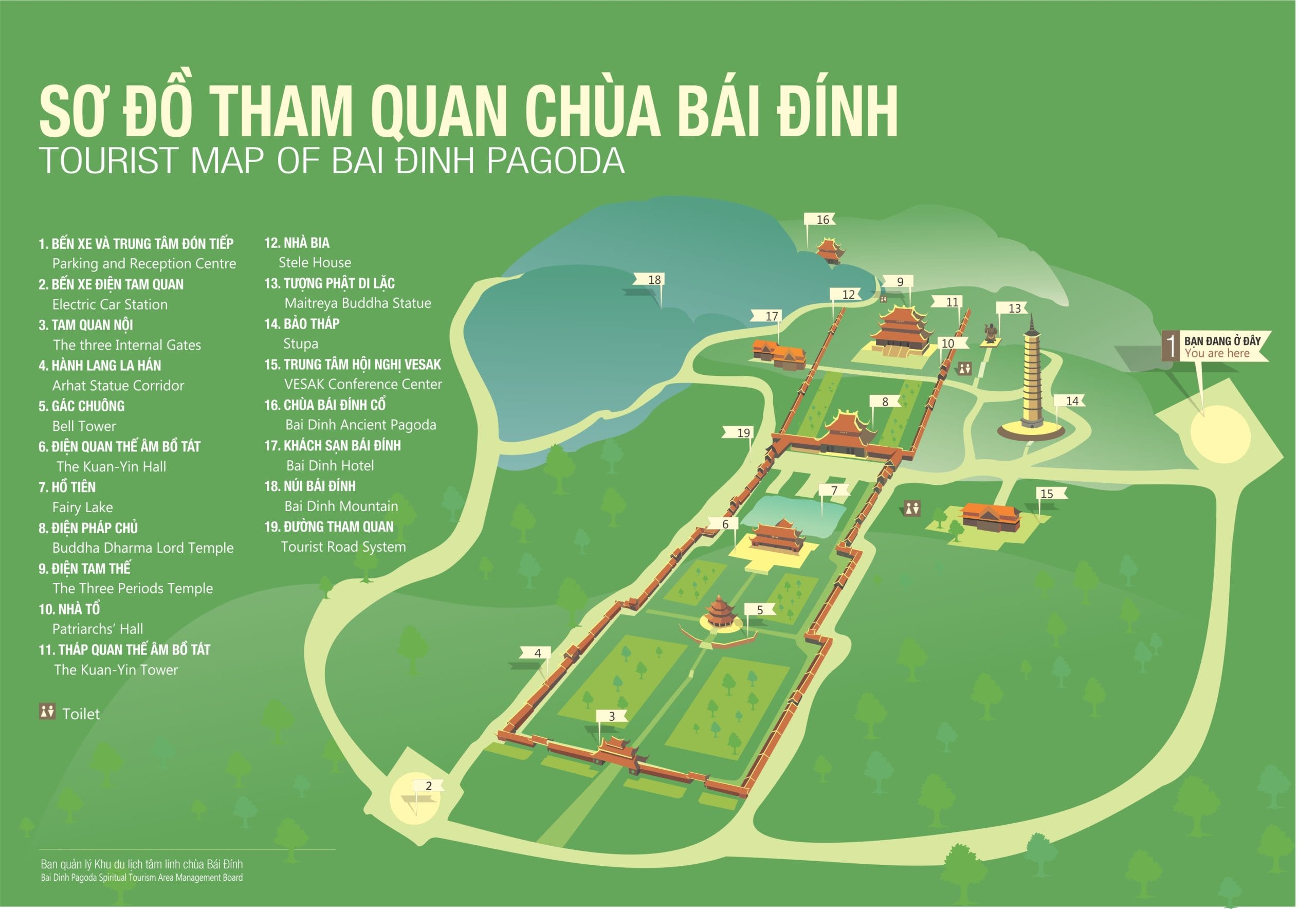
The Buddha Dharma Lord Temple stands as one of the most important halls within the Bai Dinh Pagoda complex, honoring the Buddha and the spiritual principles he taught. Inside, visitors will find an impressive large Buddha statue set within a tranquil and solemn space.
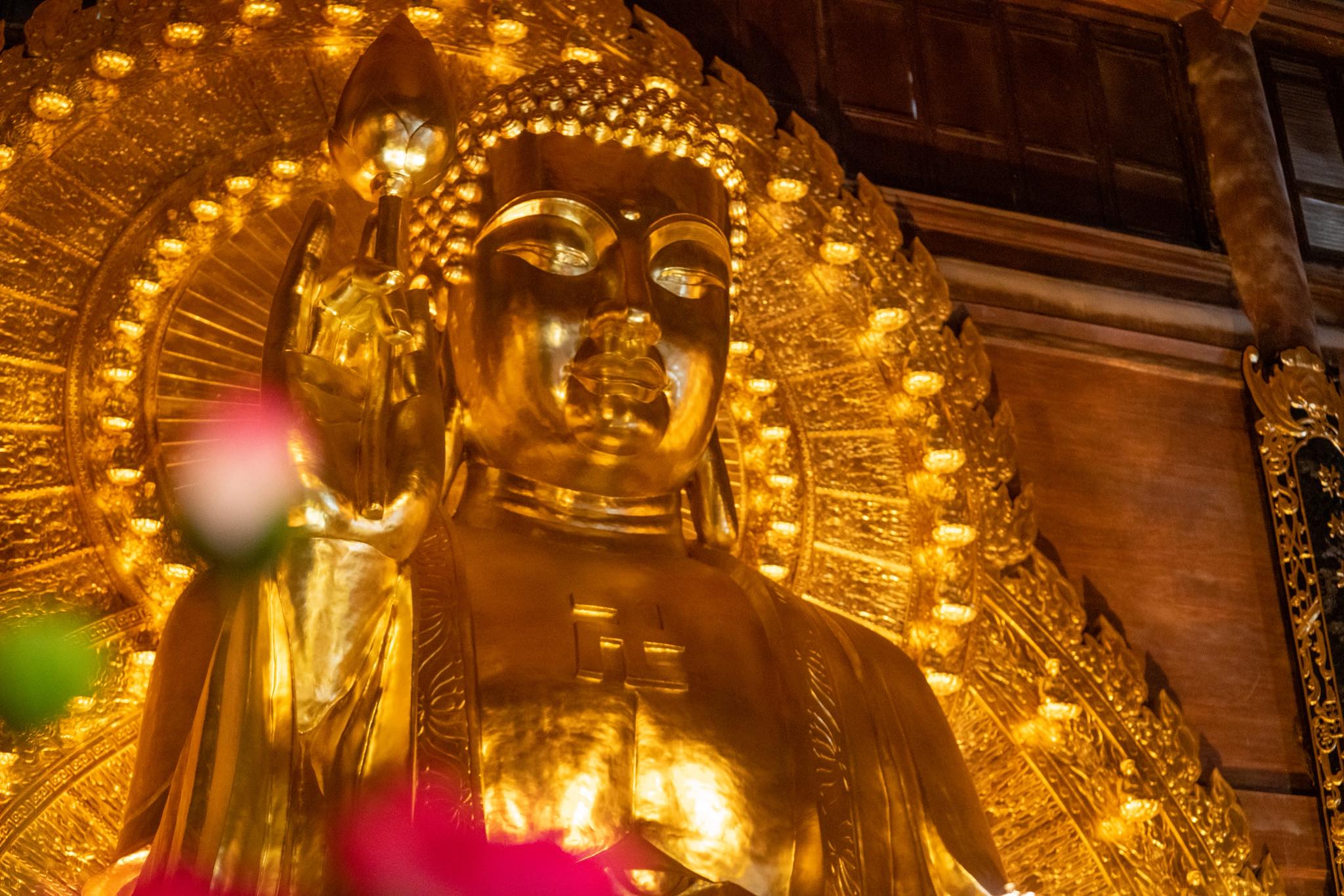
The central spiritual focus of Bai Dinh Pagoda: The Main Hall of the Dharma, honoring the Buddha
Many people visit this temple to pray, contemplate Buddhist teachings, or simply take a quiet moment to meditate. It serves as a key spiritual point for those wishing to connect more deeply with Buddhist philosophy and daily practice.
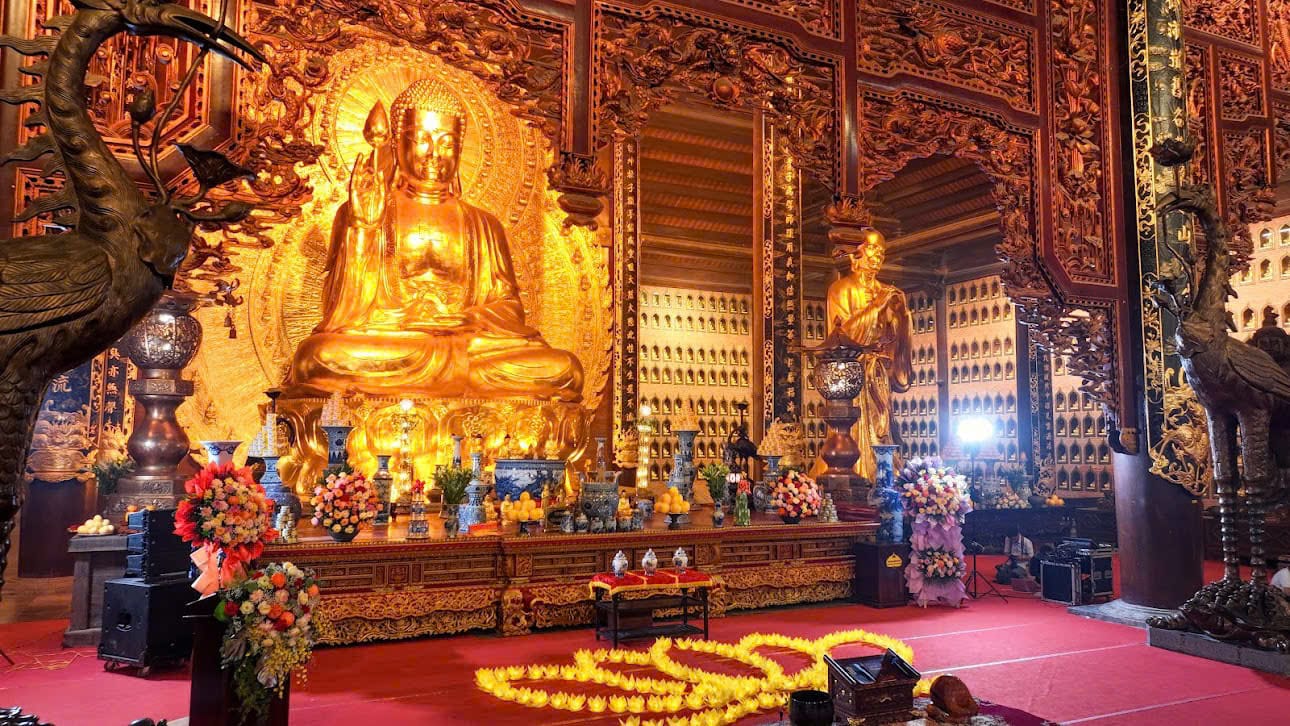
The impressive 100-ton gilded bronze Shakyamuni Buddha statue, the largest of its kind in Vietnam
The Kuan-Yin Hall is a tranquil sanctuary devoted to Kuan-Yin, the Bodhisattva of Compassion in Buddhist tradition. Inside, graceful statues and intricate carvings of Kuan-Yin create a gentle, contemplative atmosphere filled with reverence.
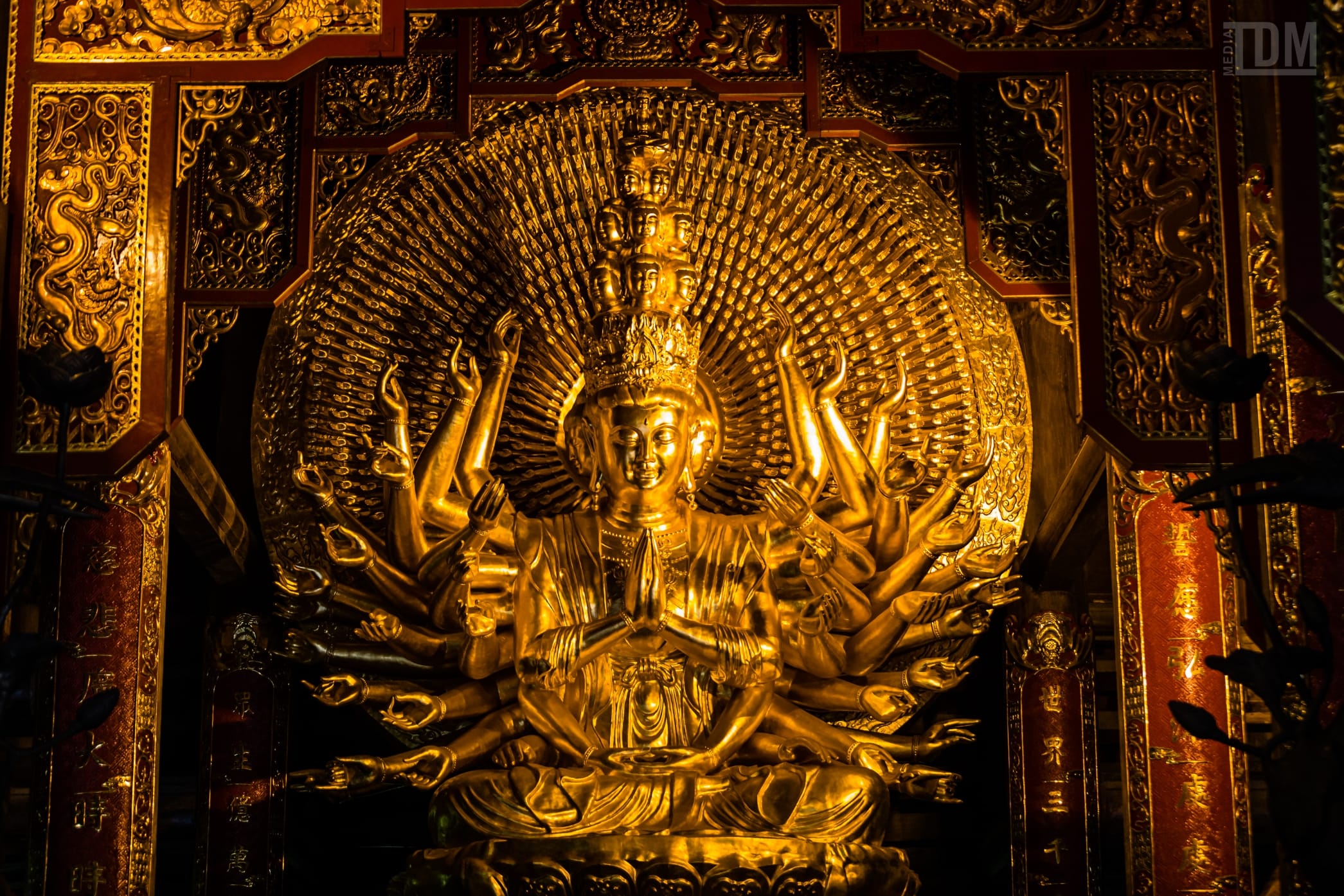
The massive 90-ton, 10-meter high bronze Kuan-Yin statue
The hall’s soothing energy and spiritual depth make it a meaningful stop for visitors looking to find inner calm, emotional strength, and the compassionate guidance associated with Kuan-Yin.

The Kuan-Yin Hall at Bai Dinh Pagoda houses the largest gilded bronze Kuan-Yin statue in Vietnam
The Temple of Saint Nguyen is an important and respected part of the historic Bai Dinh Pagoda complex, honoring Saint Nguyen, a figure celebrated for his role in promoting Buddhism in Vietnam.

Pilgrims pay respects to Saint Nguyen for health and tranquility
Inside, the temple exudes a calm and contemplative atmosphere, with detailed wooden carvings and sculptures illustrating episodes from his life and teachings. Visitors and pilgrims alike come to this temple to pay their respects and seek blessings for health, prosperity, and tranquility.
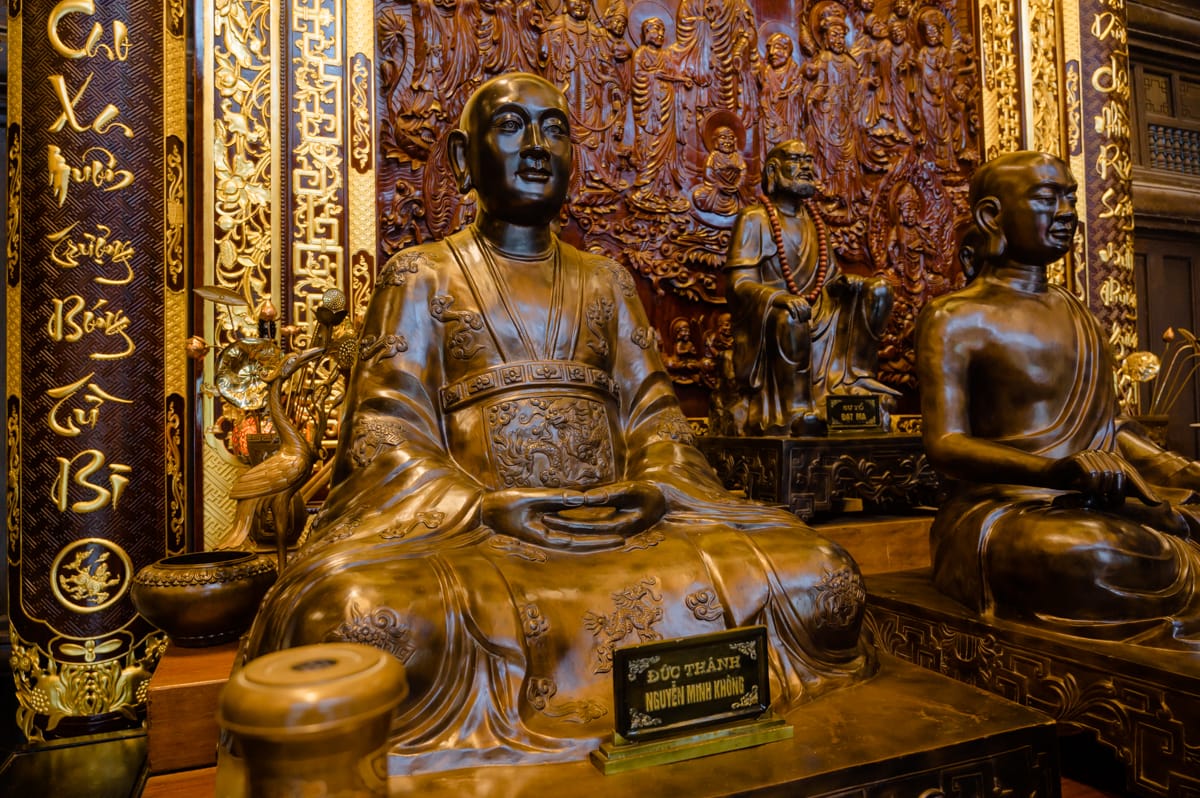
The Temple of Saint Nguyen at Bai Dinh Pagoda honors the founder of the ancient site, Nguyễn Minh Không
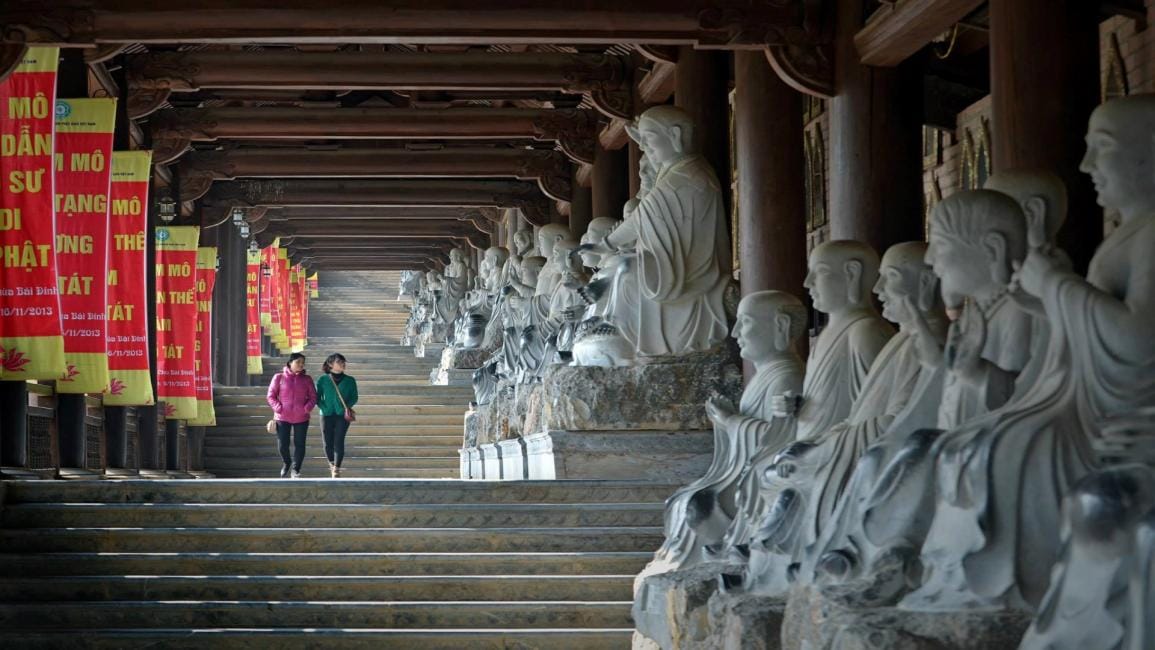
The endless expanse of the 1,700-meter Arhat Corridor, featuring 500 hand-carved stone statues.
Stretching almost 3 kilometers, the Arhat Corridor at Bai Dinh Pagoda is the longest of its kind in Asia. Built entirely from wood, the walkway features 22 steps, each measuring 1.35 meters in height.
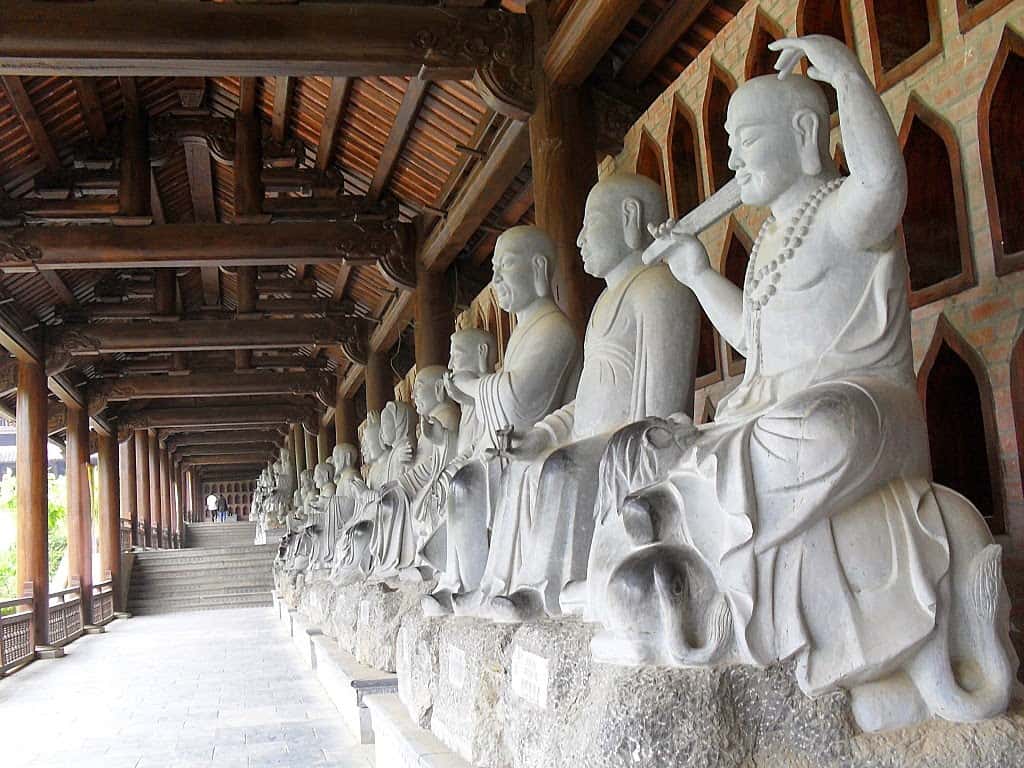
The endless, awe-inspiring Arhat Corridor, stretching 1,700 meters and featuring 500 unique monolithic stone statues, a must-see in Ninh Binh.
Along the corridor stand 500 monolithic Arhat statues, ranging from 1.5 to 2 meters tall, each intricately carved with unique expressions and poses that reflect the Arhats’ diverse personalities and spiritual achievements.

These remarkable statues were created by skilled artisans from Ninh Vân Village, a community renowned for its stone carving craftsmanship. Every figure demonstrates the exceptional artistry and dedication of these master craftsmen.
Perched on the left side near the top of the mountain slope, Dark Cave can be reached by climbing over 300 stone steps. The cave consists of seven chambers of different sizes, linked by narrow rock passages. Some chambers have flat ceilings, while others are adorned with hanging stalactites.
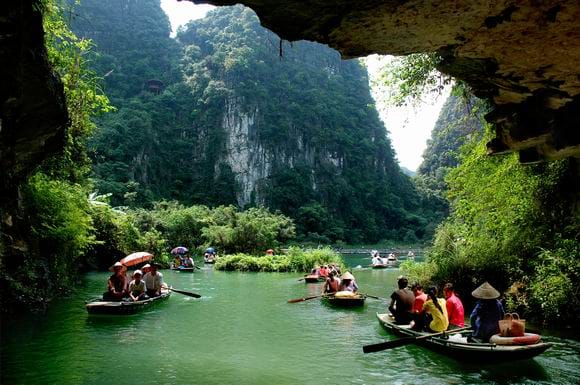
Inside Dark Cave, where the Mother Goddesses are honored, reflecting the deep local spiritual devotion
Dark Cave is dedicated to the worship of the Mother Goddesses and Fairies, reflecting the deep local devotion to these deities. A highlight of the cave is the Ngoc Tuyen Well, or Pearl Well, which is believed to be around 1,000 years old. Its moon-shaped structure reaches a depth of approximately six meters and is surrounded by stone railings.
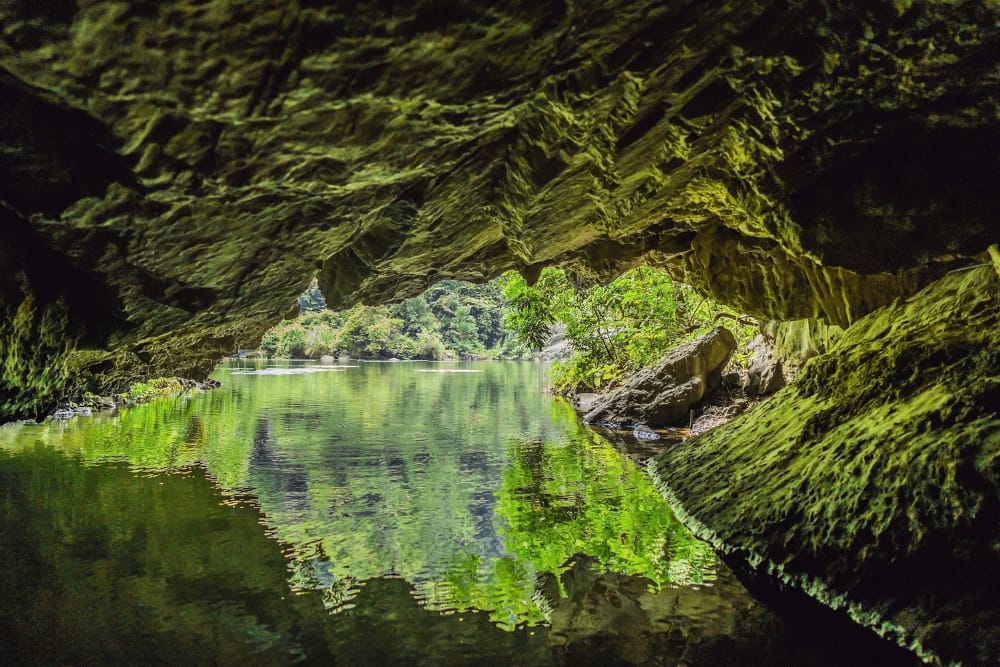
Exploring the unique spiritual atmosphere of the caves at Bai Dinh Pagoda
On the right side of the mountain top, Bright Cave is accessible via the same stone steps leading to Dark Cave. Measuring roughly 25 meters in length and 15 meters in width, the cave was established by National Teacher Nguyen Minh Khong between 1096 and 1106.

The sacred Bright Cave, established by National Teacher Nguyen Minh Khong, dedicated to the Three Jewels of Buddhism
Bright Cave is devoted to the worship of the Three Jewels of Buddhism: the Buddha, the Dharma (teachings), and the Sangha (community). The main altar is flanked by two guardian statues, Khuyen Thien and Trung Ac, creating a serene space for meditation and reflection on Buddhist principles.
The Three Periods Temple symbolizes the three fundamental phases of time in Buddhism: the past, the present, and the future. Each area within the temple is dedicated to one of these stages, featuring statues and artwork that portray significant events in Buddhist tradition.
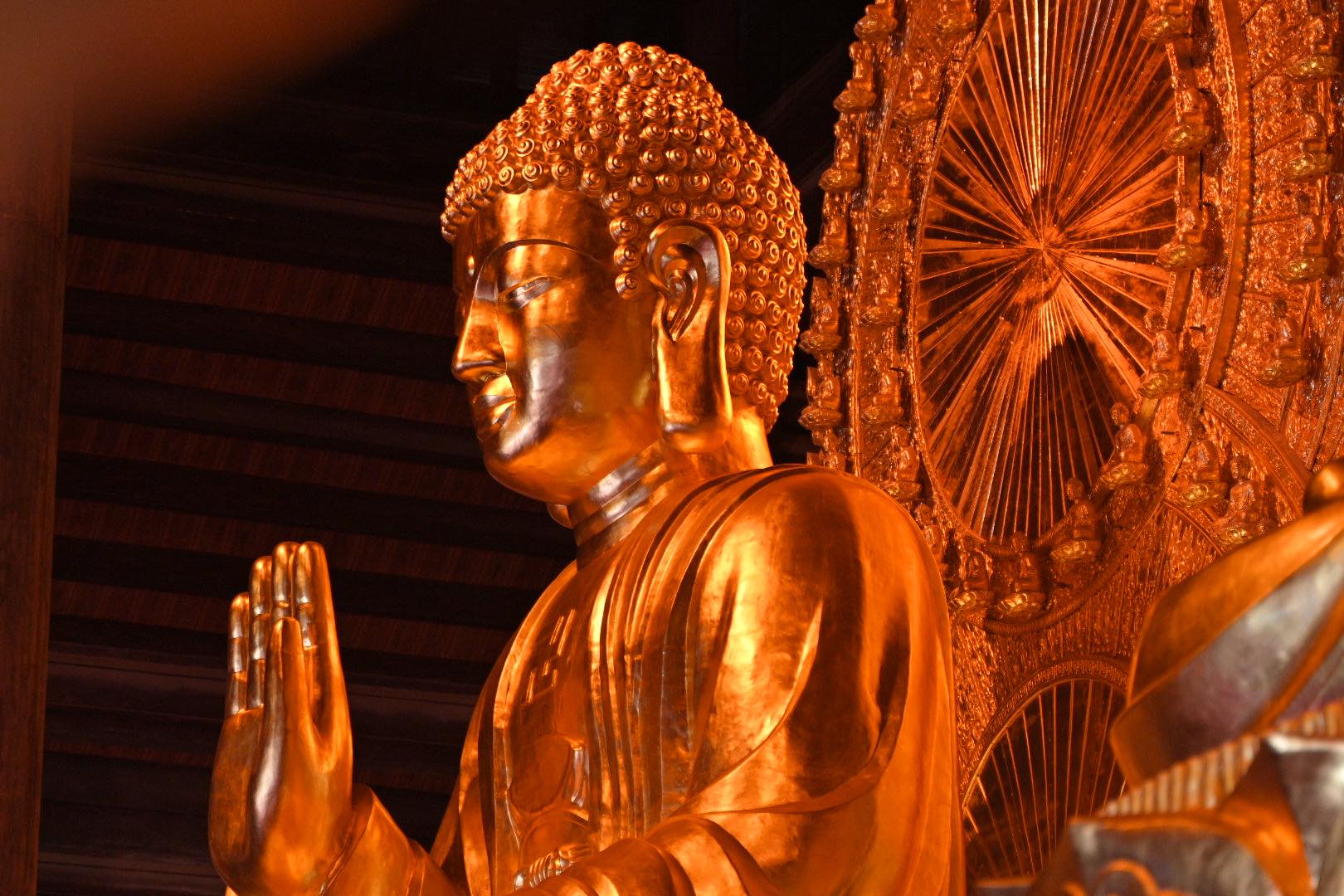
Contemplating the flow of time and existence within the symbolic Three Periods Temple
The temple invites visitors to contemplate the transient nature of life and the ongoing cycle of existence. It offers a meaningful space for personal reflection, helping travelers consider their own spiritual path and the flow of time. As such, it is one of the most thoughtful and symbolic stops within the Bai Dinh Pagoda complex.
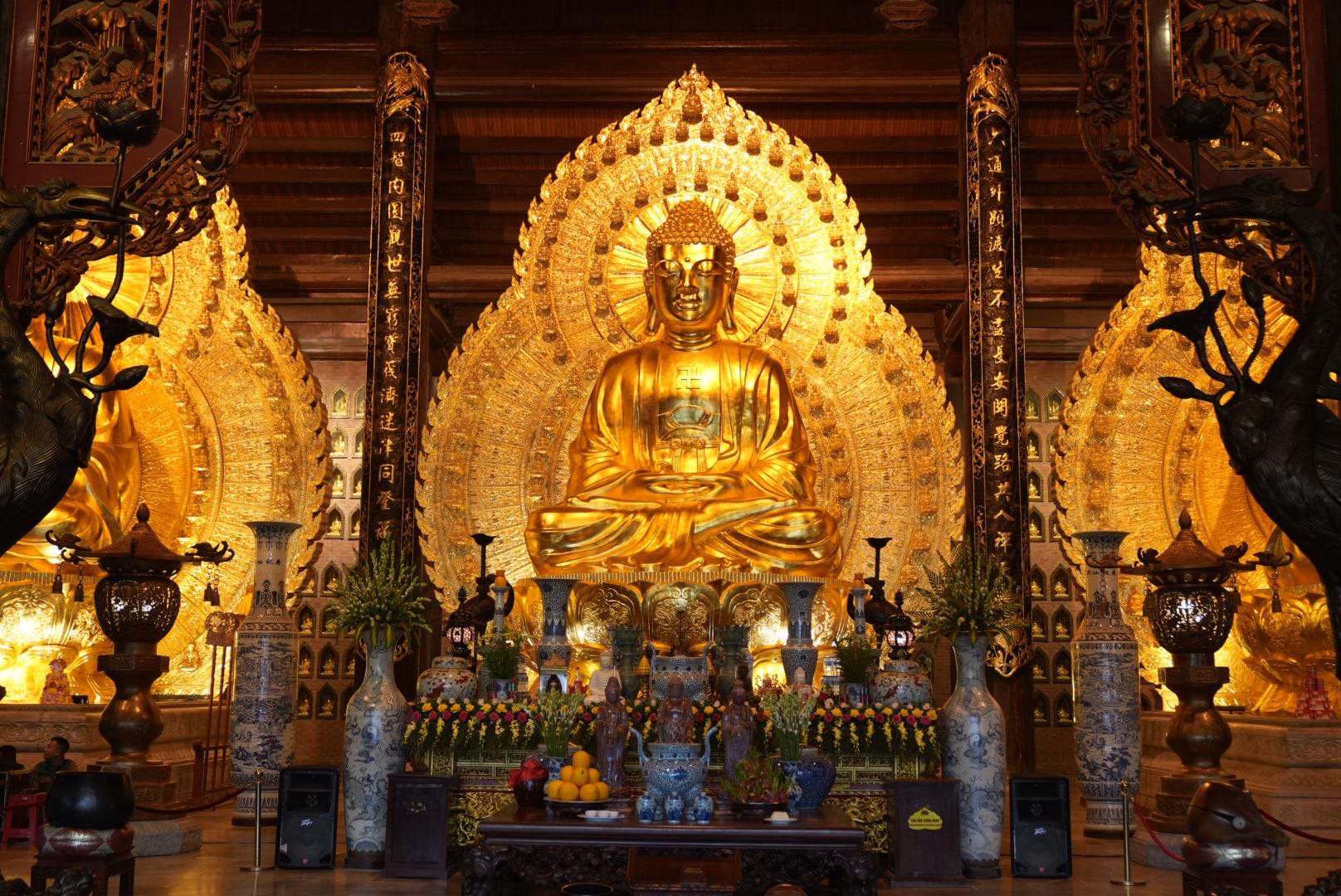
The immense grandeur of the Tam Thế Hall, one of the key structures of the new pagoda area.
Ngoc Well, or the Sacred Well, is a highly revered spiritual site within the Bai Dinh Pagoda complex. Local belief holds that its waters possess healing properties, capable of cleansing both body and spirit.
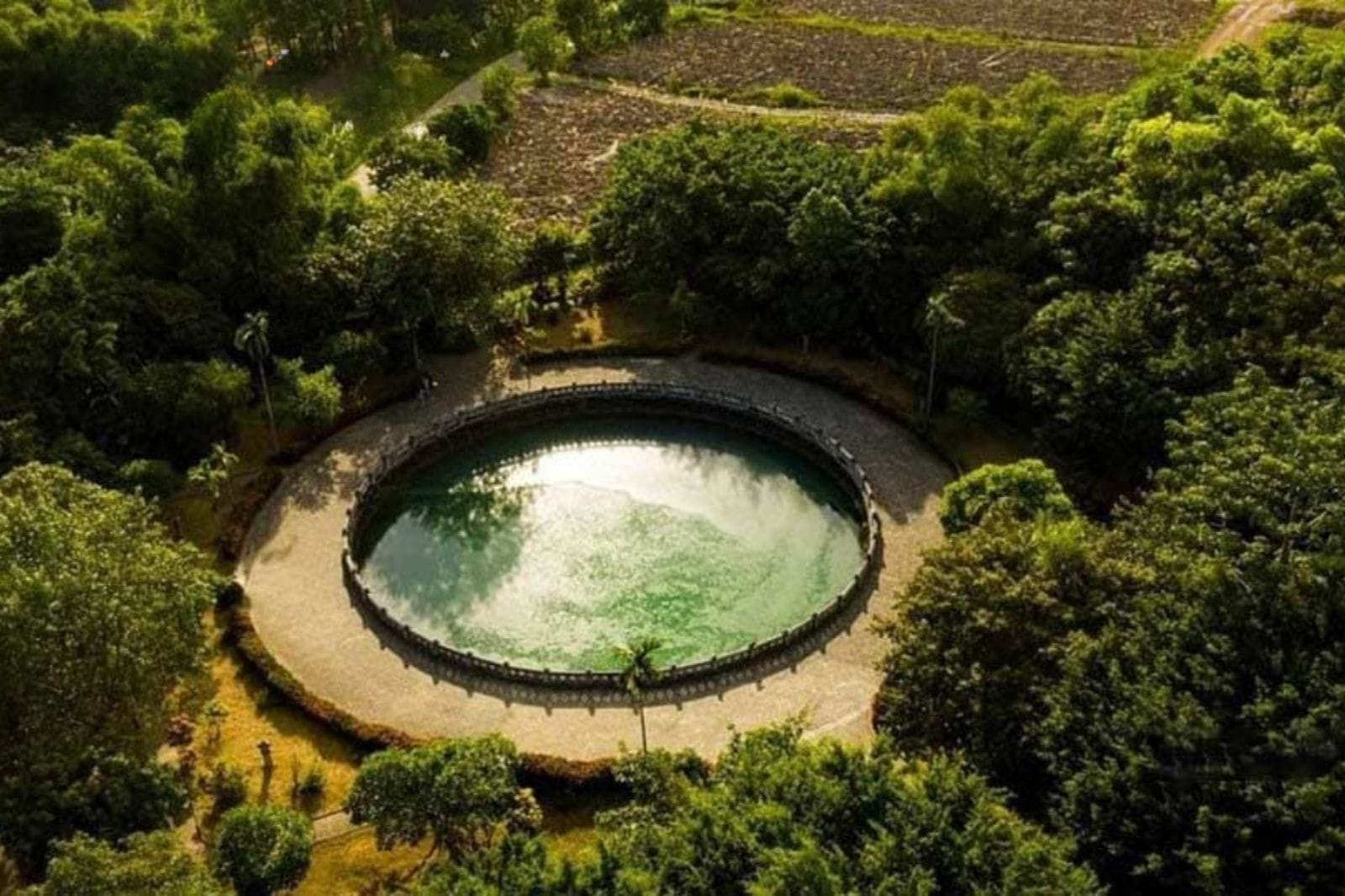
The immense Ngoc Well (Jade Well), featuring a diameter of 30 meters and confirmed as the largest pagoda well in Vietnam.
Nestled in a quiet, green corner of the pagoda, the well provides a serene environment ideal for meditation and contemplation. Pilgrims frequently visit to collect its water and offer prayers, trusting that these acts will bring them blessings, protection, and good fortune.
The Three Internal Gates form the majestic entrance to the Bai Dinh Pagoda complex, each embodying a core principle of Buddhist philosophy. Together, they symbolize the harmony of Heaven, Earth, and Humanity, creating a sacred path for all who enter.
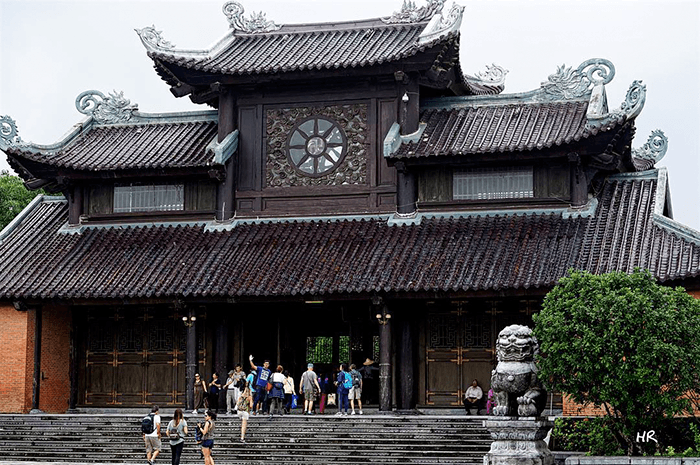
The majestic entrance marking the transition from the ordinary world into the spiritual space
Passing through these gates marks a transition from the ordinary world into a spiritual space, encouraging visitors to prepare for a deeper connection with the divine. Their impressive size, intricate traditional carvings, and elegant design make them a memorable and striking introduction to the pagoda.
The Bell Tower at Bai Dinh Pagoda is an impressive structure that contains one of Vietnam’s largest bronze bells. Weighing several tons, the bell produces a resonant sound believed to summon devotees for prayer and meditation.
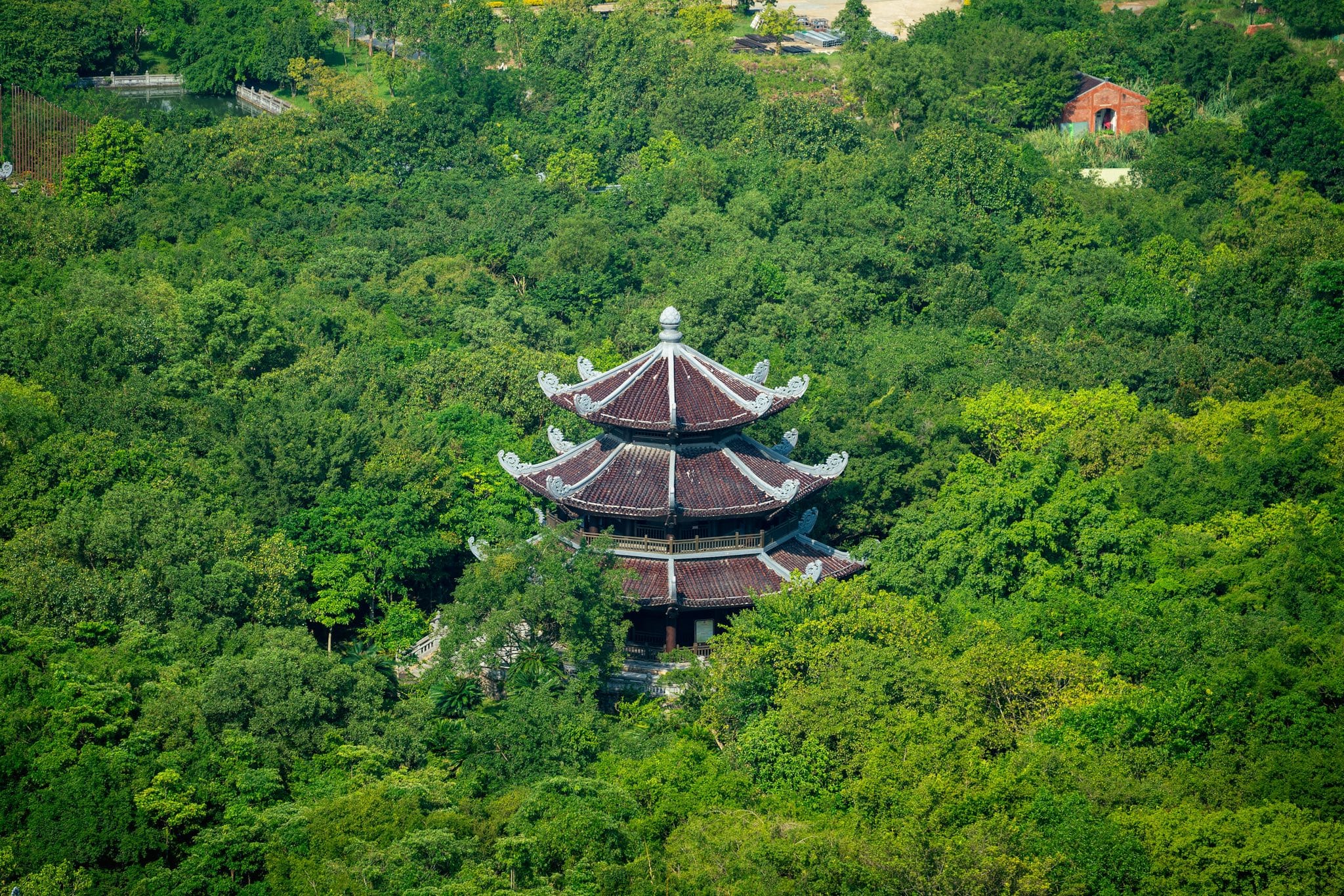
The architectural elegance of the three-tiered, octagonal Bell Tower
Visitors can ascend the tower to enjoy sweeping views of the entire pagoda complex and the surrounding mountain landscape. Beyond its religious purpose, the Bell Tower and its massive bell symbolize the spiritual significance and majestic scale of Bai Dinh Pagoda.
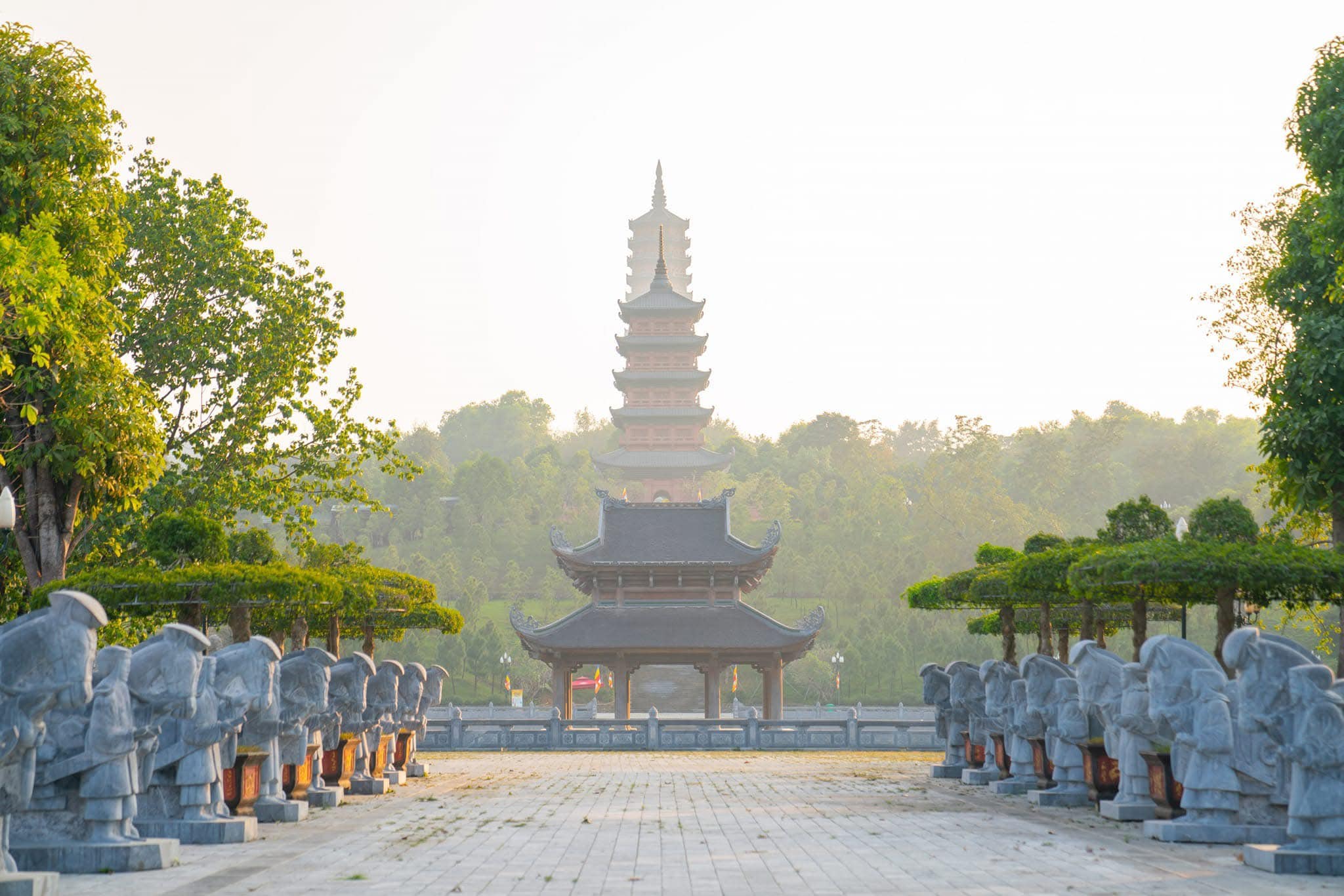
The Stupa at Bai Dinh Pagoda is an elegant architectural landmark that houses sacred Buddhist relics and objects.
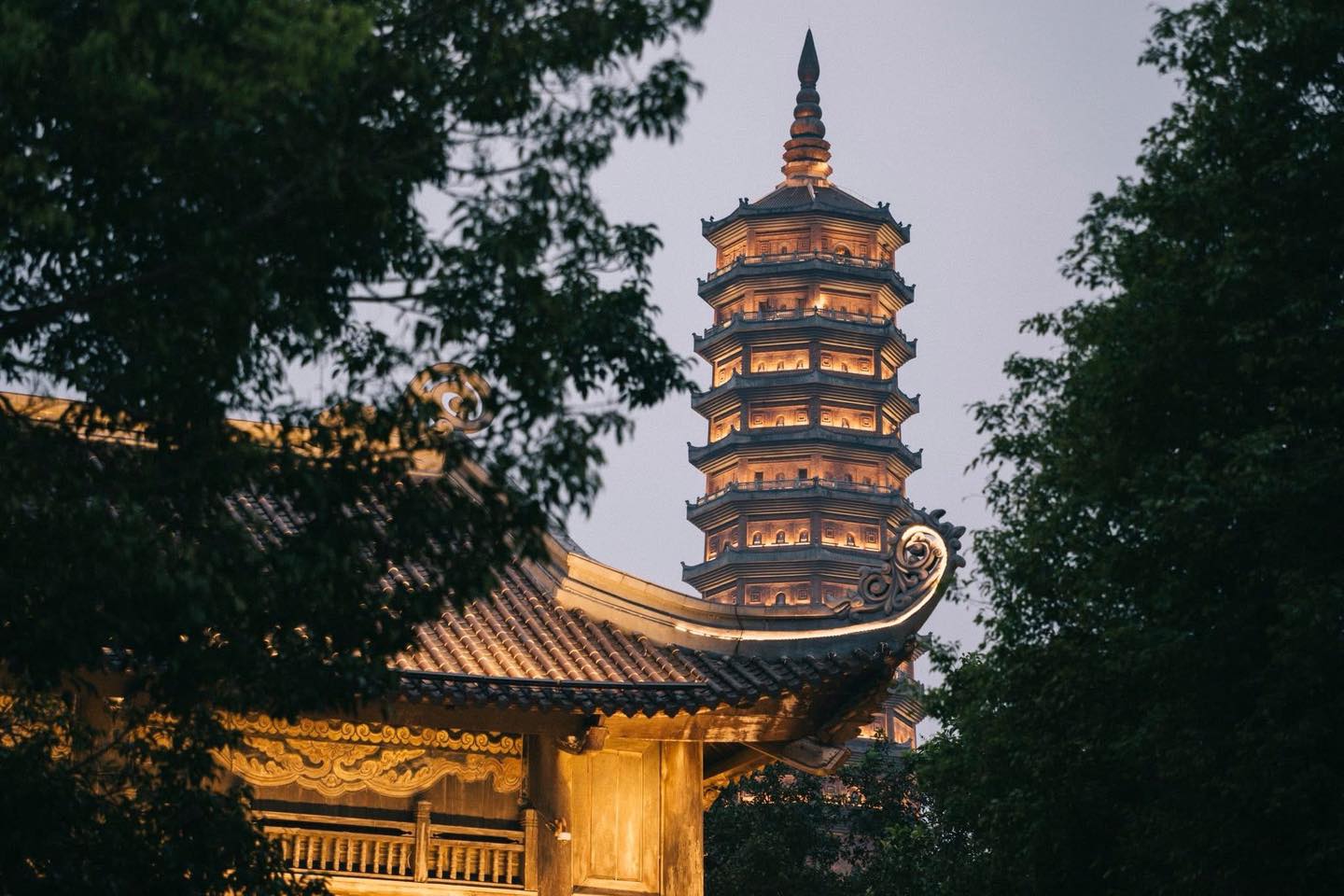
The majestic Bao Thien Stupa, soaring 100 meters high, symbolizing enlightenment and housing the relics of the Buddha.
Its tall, conical design serves as both a striking centerpiece of the pagoda complex and a symbol of enlightenment and the path to spiritual awakening. Visitors often stop by the Stupa to meditate or light incense, hoping to receive blessings for peace, prosperity, and spiritual guidance.
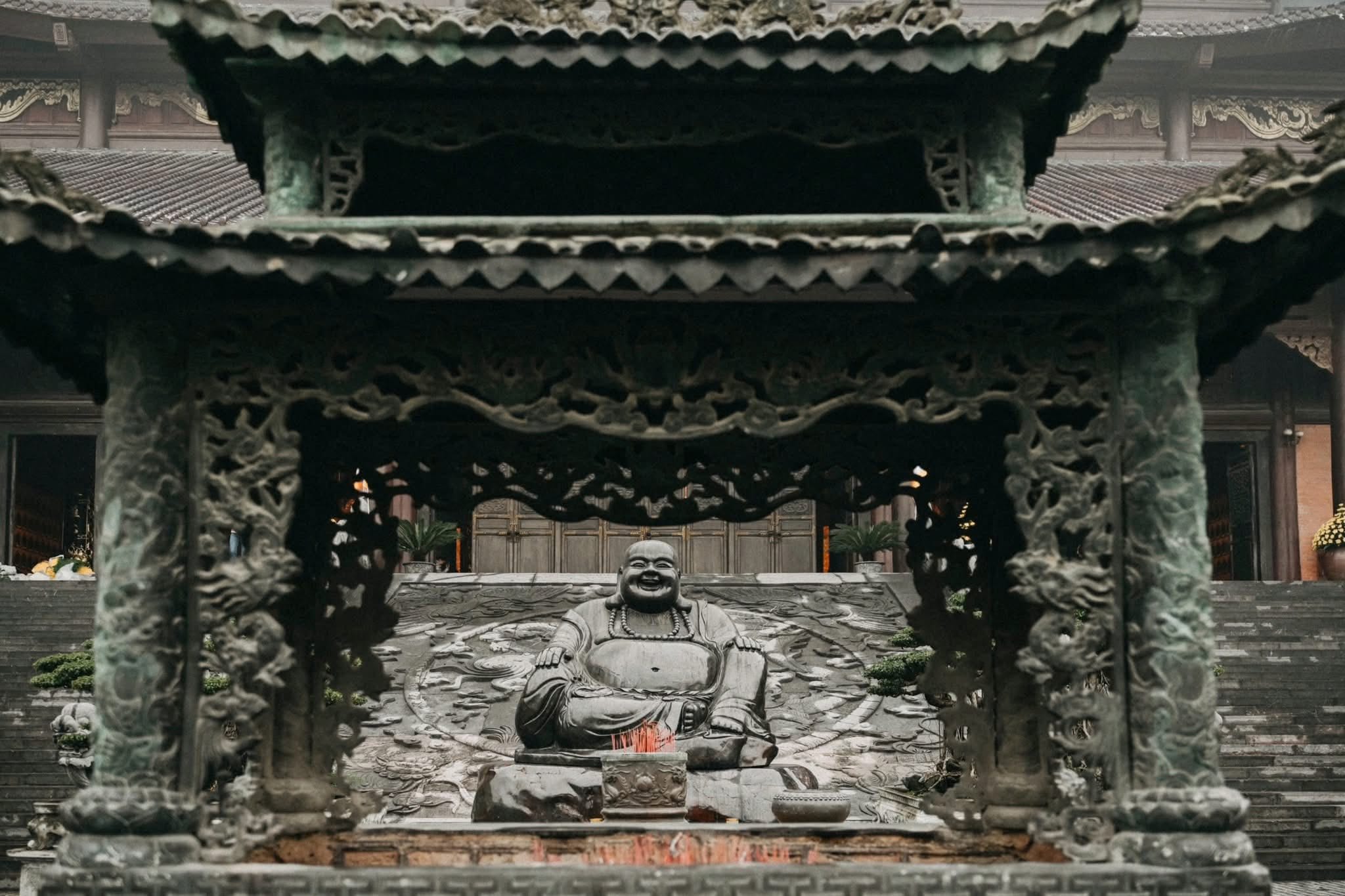
The Maitreya Buddha Statue is a striking landmark of Bai Dinh Pagoda, representing hope, peace, and the promise of future enlightenment.
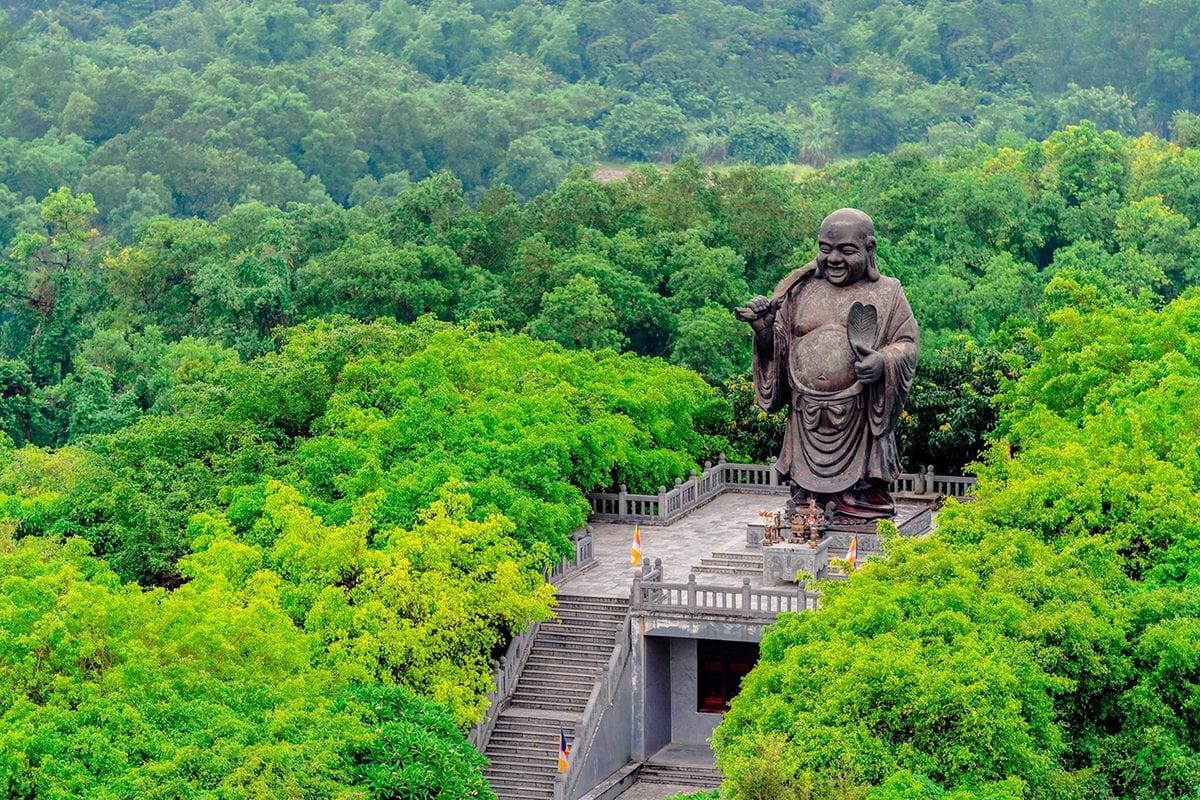
The massive bronze Maitreya Buddha statue at Bai Dinh Pagoda, recognized as the largest in Southeast Asia.
As one of the largest statues in Southeast Asia, it depicts Maitreya, the Buddha of the future, who is believed to bring joy and harmony to the world. The statue is housed in a grand hall, surrounded by intricate carvings and sculptures, creating a truly awe-inspiring and spiritually uplifting experience for visitors.
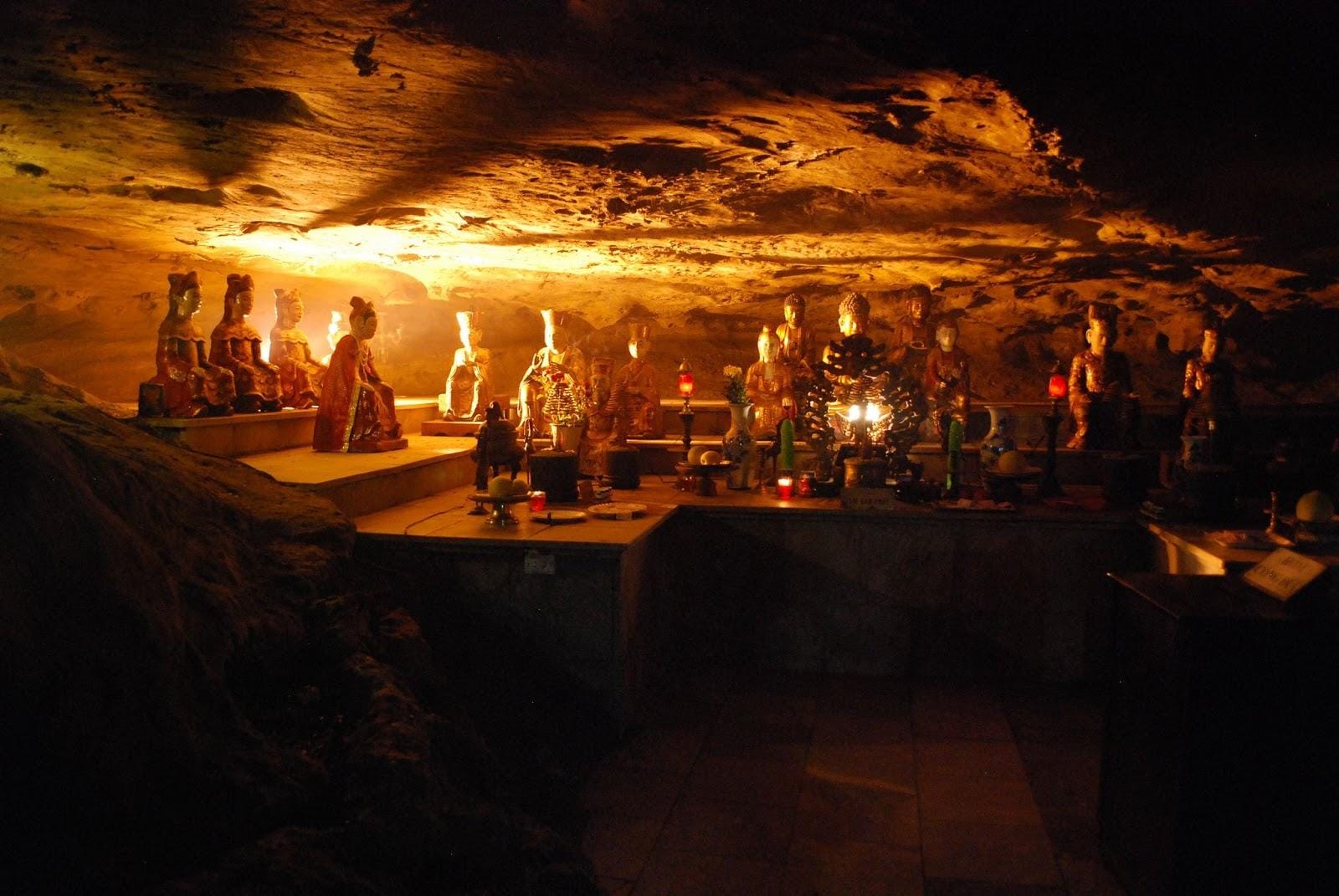
The serene altar inside the Ancestor Worship Cave, honoring the legendary National Master Nguyễn Minh Không.
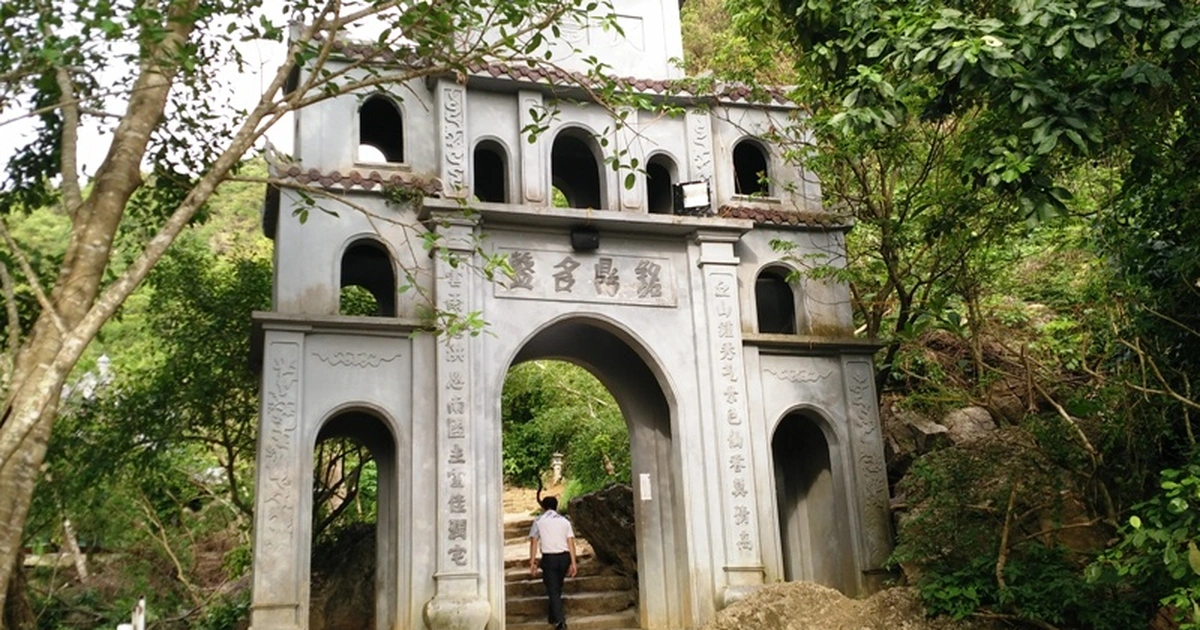
The beautifully manicured pathway leading up to the main halls of Bai Dinh Pagoda, ideal for photography.

A tranquil corner of the sacred Bai Dinh Pagoda Ancient Area, preserving the original 12th-century spiritual site.
Nearby Bai Dinh Pagoda, visitors can explore several notable attractions. Just a short drive away is Trang An Scenic Landscape Complex, famous for its limestone karst peaks, winding rivers, and boat tours through caves.
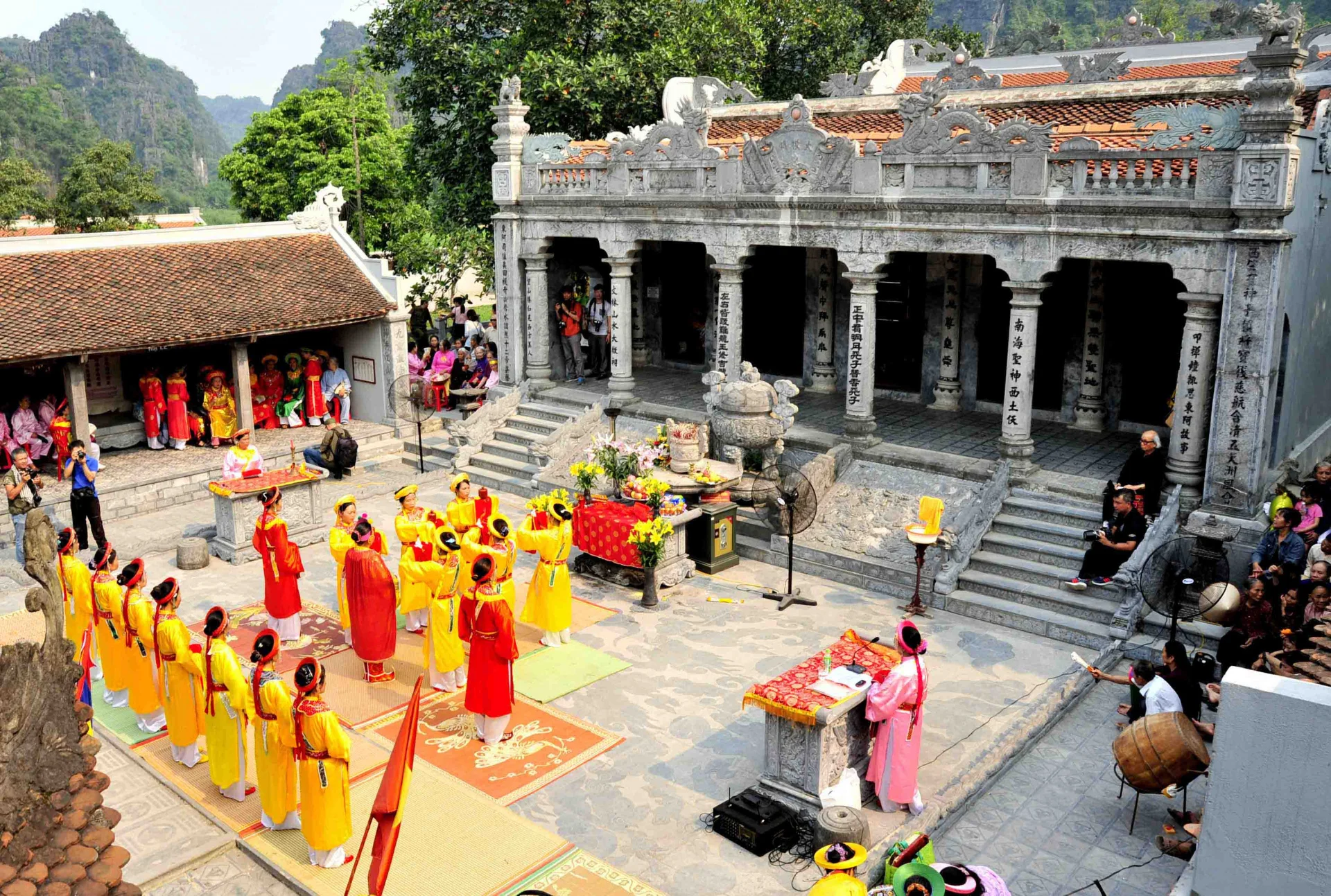
A scene of the vibrant spring festival, showcasing pilgrims and colorful decorations during the busiest time of year.
Tam Coc is another must-see, often called the “Halong Bay on land,” where travelers can enjoy serene river trips past rice paddies and towering cliffs. For those interested in history and culture, Hoa Lu Ancient Capital offers ancient temples and relics from Vietnam’s early dynasties. Additionally, the tranquil Thai Vi Temple provides a peaceful retreat, showcasing traditional architecture and honoring local deities.
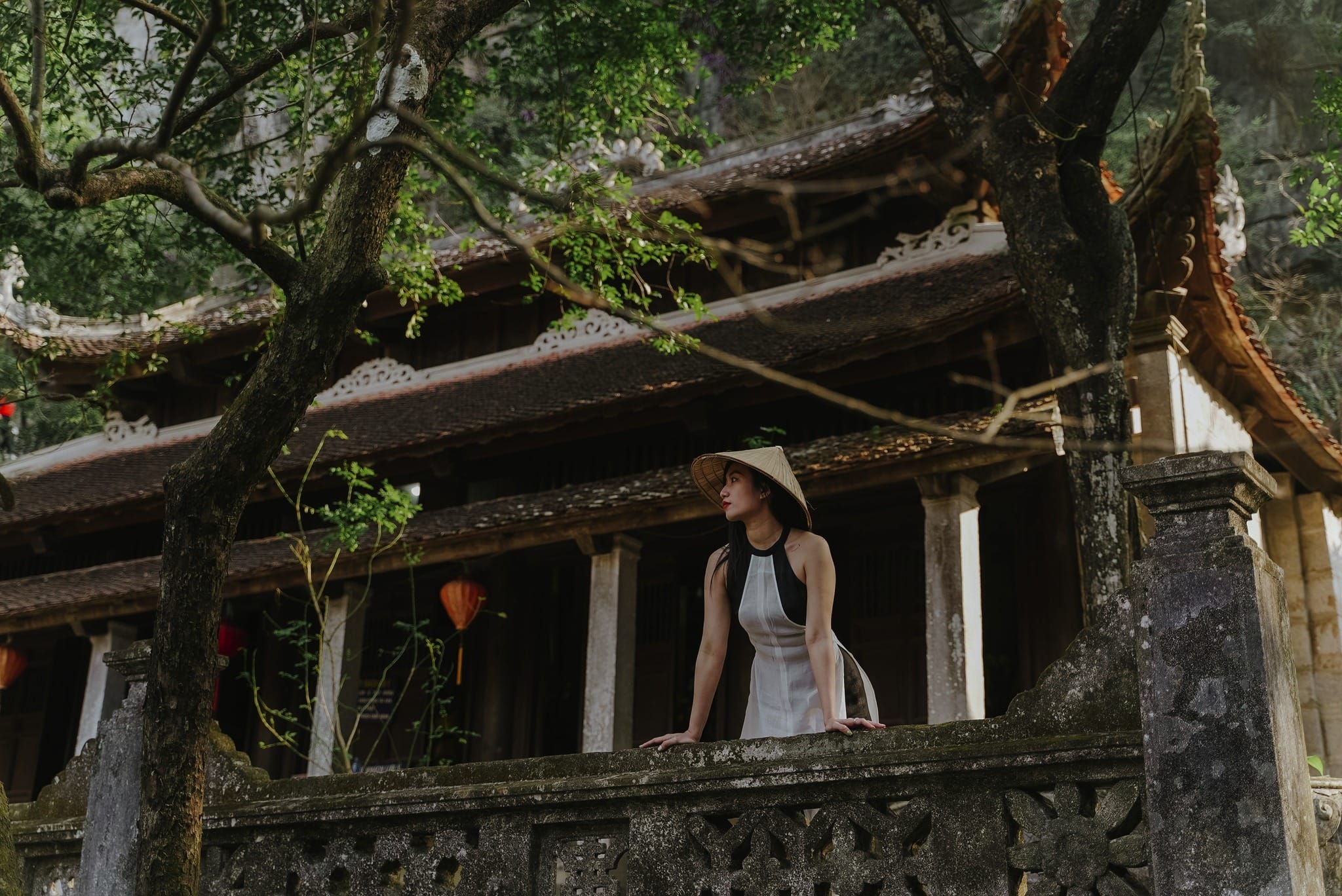
Exploring the natural beauty of Tam Coc (often called “Halong Bay on land”), a perfect complement to the spiritual journey at Bai Dinh Pagoda.
Nature enthusiasts can visit Mua Caves, climb the 500 steps to the panoramic viewpoint, and take in breathtaking views of the surrounding valley. Each of these sites provides a unique complement to the spiritual and cultural experience of Bai Dinh Pagoda.
To maximize your visit to this massive spiritual complex, it is highly recommended to arrive early in the morning to enjoy the serene atmosphere before the crowds arrive and to take advantage of the cooler temperatures. Starting early allows you ample time to explore the vast grounds before the peak hours, making the experience more contemplative and less rushed.
Given the sheer size of the complex, which exceeds 1000 hectares, and the necessity of navigating numerous steps and long corridors, visitors must wear comfortable walking shoes suitable for extensive walking. Appropriate footwear is crucial for safely and comfortably traversing the site.
As Bai Dinh Pagoda is a sacred religious site, it is essential to dress respectfully and modestly when entering the temples, halls, and especially the sacred cave areas. Covering your shoulders and knees demonstrates respect for the cultural and spiritual significance of the complex.
Due to the vast distances between the ancient and new pagodas, utilizing the electric buggy service is strongly advised for easier access to all the main areas. This service saves valuable time and energy, which is crucial when exploring a site of this scale.
Plan to allocate a minimum of 3 to 4 hours to fully explore the famous Arhat Corridor , the gigantic halls, and the towering Bao Thien Stupa. Rushing through the complex will prevent you from fully appreciating its architectural and spiritual depth.
Enhance your Ninh Binh experience by combining your visit with nearby world-class attractions within the Trang An Scenic Landscape Complex , such as the boat rides at Trang An or Tam Coc , or the opportunity for panoramic views from Mua Caves.

A serene image of the pool and mountain view at Jiva Hoalu Retreat, emphasizing tranquility and luxury.
After an inspiring yet physically demanding day exploring the colossal Bai Dinh Pagoda and the surrounding Trang An heritage site, a tranquil and luxurious retreat is the perfect conclusion.
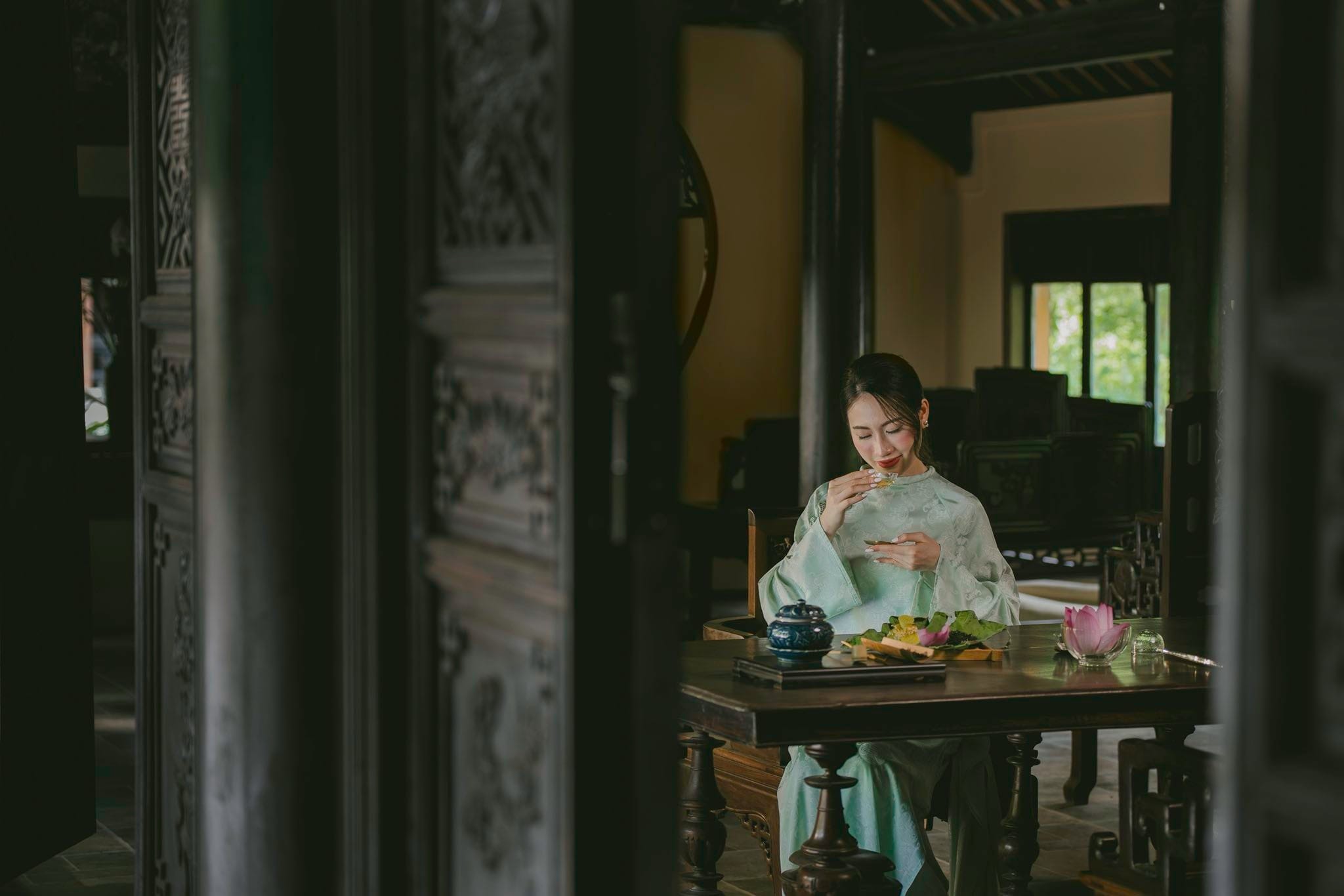
We highly recommend unwinding at Jiva Hoalu Retreat, which offers an immersive stay where authentic Northern Vietnamese traditional architecture seamlessly blends with world-class, modern comfort.
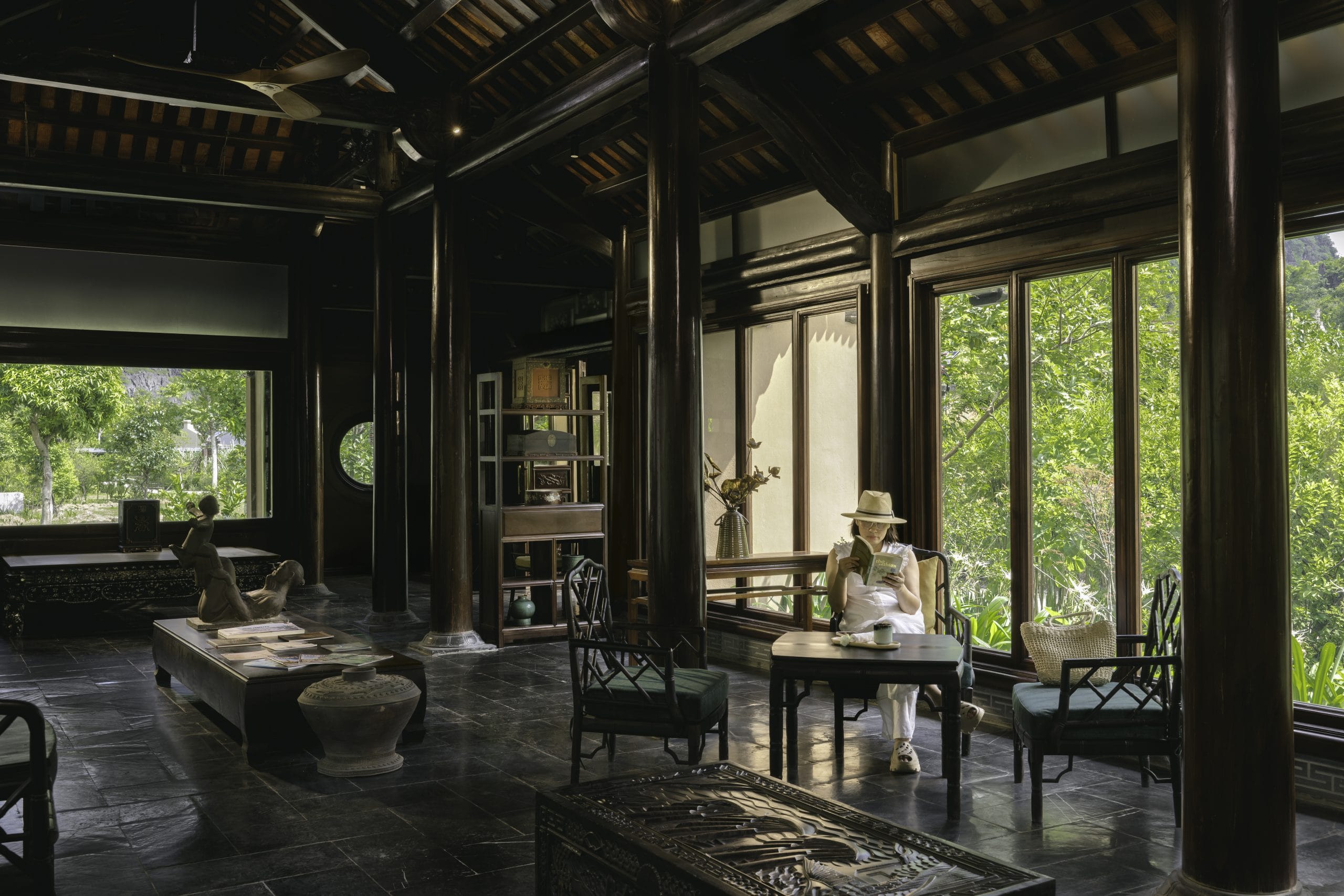
Each accommodation at Jiva Hoalu is meticulously designed, fusing locally inspired décor with contemporary luxuries to create a unique blend of culture, tradition, and elegance.
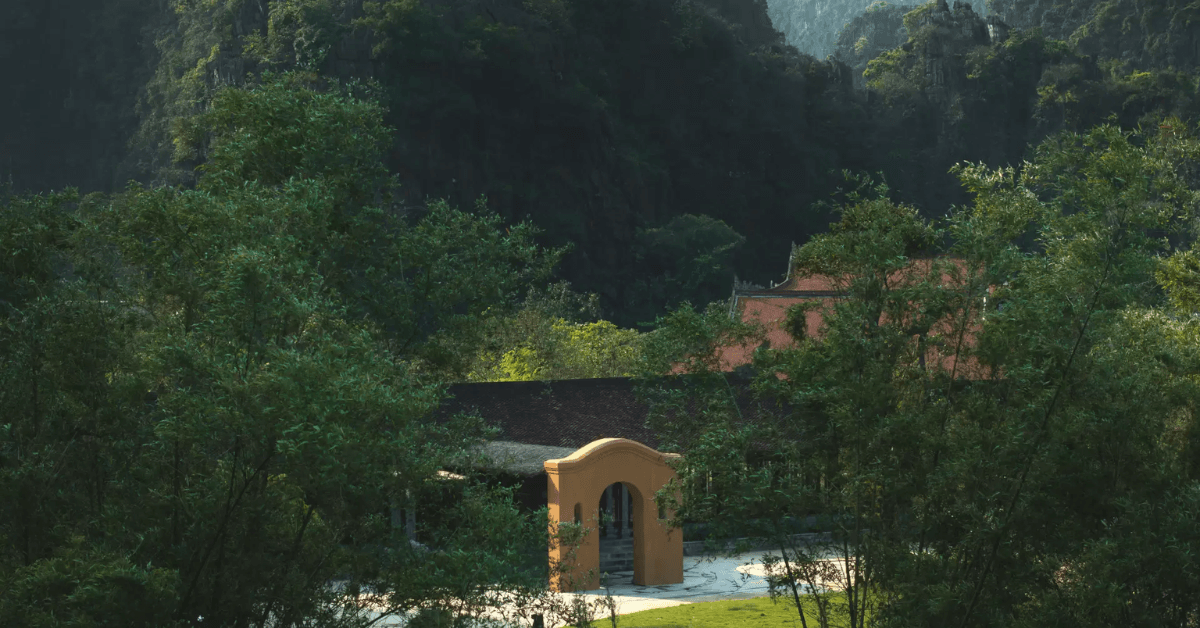
The peaceful sanctuary of Jiva Hoalu, a perfect resting point after a long day exploring Bai Dinh Pagoda and Ninh Binh.
Whether you are seeking a romantic getaway, a family escape, or a peaceful sanctuary to reflect on your spiritual journey through Ninh Binh, Jiva Hoalu promises an unforgettable and restorative experience in the heart of this scenic province.

Interior shot of a room at Jiva Hoalu, showcasing the blend of traditional Vietnamese architecture and modern comfort.
Discover more about Ninh Binh’s attractions and top tours to plan your perfect trip to this scenic province here.
Immerse yourself in a stay where northern Vietnamese architecture meets world-class comfort. At Jiva Hoalu Retreat, each accommodation blends locally inspired décor with modern luxuries, offering a unique fusion of culture, tradition, and elegance. Whether you’re here for a romantic getaway, a family escape, or a tranquil retreat, Jiva promises unforgettable moments in the heart of Ninh Binh.
Contact Us:
📞 +84 933 006 886
📧 inquiry@jivahoaluretreat.com
🌐 https://jivahoaluretreat.com/
Thank you for your reservation.
You will receive a confirmation from us momentarily
Thank you for reaching out. Your request has been received. Our team will respond within 24 hours.