


05 November, 2026
For travelers seeking to understand the deep spiritual soul of Northern Vietnam, Bai Dinh Pagoda Ninh Binh is an unmissable landmark. Spanning over 500 hectares, this is not just a place of worship but a monumental architectural achievement that holds numerous national and regional records. Nestled on the slopes of Ba Rau Mountain, the complex offers a profound sense of peace, where the grand scale of Buddhist devotion meets the timeless beauty of the Ninh Binh landscape.
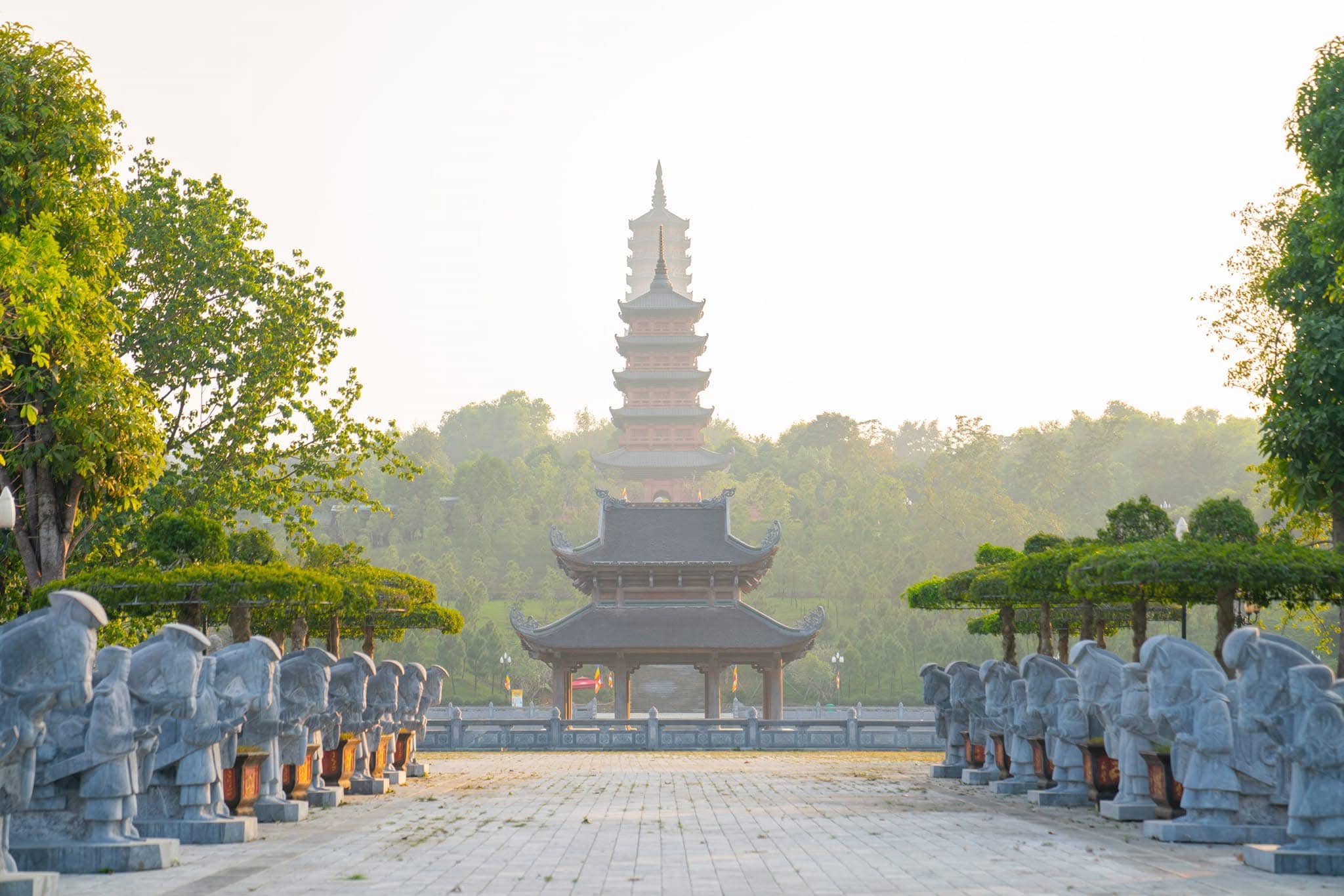
Finding a moment of “Zen-like” tranquility amidst the majestic architecture of the northern heritage zone.
Whether you are a couple seeking a serene cultural walk or an international traveler fascinated by Eastern philosophy, a visit to this Ninh Binh pagoda provides a transformative experience. From the majestic bronze statues to the longest Arhat corridor in Asia, every corner of Bai Dinh Temple tells a story of heritage, faith, and artistic mastery.
Where Is Bai Dinh Pagoda?
Locating Bai Dinh Pagoda Ninh Binh is the first step in planning your spiritual pilgrimage. This massive complex is situated in Gia Sinh Commune, Gia Vien District, nestled within the transition zone of the UNESCO-listed Trang An Scenic Landscape Complex.

Discovering the breathtaking scale of Bai Dinh Pagoda Ninh Binh, the largest Buddhist complex in Southeast Asia.
Its location is a masterpiece of Feng Shui, with the ancient pagoda leaning against the slopes of Ba Rau Mountain and facing the serene Hoang Long River.
Accessibility from Major Hubs
From Hanoi: The bai dinh pagoda is approximately 100 kilometers south of Hanoi. For international travelers, this means a comfortable 2-hour drive via the high-speed expressway, making it feasible for both a dedicated day trip or a stopover on a longer Northern Vietnam circuit.
From Tam Coc & Trang An: If you are staying at a Ninh Binh luxury stay near the boat piers, you are only about 15–20 kilometers away. A short 30-minute drive through scenic country roads will lead you directly to the grand entrance of the temple.
Why Is Bai Dinh Pagoda So Famous?
The global reputation of Bai Dinh Pagoda Ninh Binh stems from a rare combination of historical depth, record-breaking scale, and masterclass craftsmanship. It is not merely a temple but a “Living Museum of Buddhism” in Vietnam. For international travelers and couples, its fame lies in the sense of awe that only a complex of this magnitude can inspire.

A grand panoramic view of the temple’s tiered roofs nestled against the emerald hills of the ancient capital.
A Record-Breaking Spiritual Complex
Bai Dinh Temple is widely recognized as the largest Buddhist complex in Vietnam and one of the most significant in Southeast Asia. Its fame is cemented by a series of staggering records:
Exploring the record-breaking architectural details that make Bai Dinh Temple a masterpiece of Vietnamese craftsmanship.
The largest bronze Bell in Vietnam: Weighing 36 tons and housed in a majestic octagonal bell tower.
The tallest Buddhist Stupa in Southeast Asia: The 100-meter-high Bao Thien Stupa.
The largest collection of Arhat statues: 500 stone statues lining the longest corridor in Asia. These milestones make this Ninh Binh pagoda a must-visit destination for anyone looking to witness the pinnacle of modern Buddhist architecture.
The Seamless Blend of Ancient and Modern Heritage
What makes this pagoda Ninh Binh attraction truly unique is the coexistence of the Ancient Bai Dinh Pagoda (dating back over 1,000 years) and the grand New Bai Dinh Pagoda (built in 2003).
Witnessing the seamless blend of traditional imperial design and modern spiritual grandiosity.
While the ancient site is nestled within a quiet cave filled with history, the new complex represents the revival of Vietnamese craftsmanship, using local materials like green stone from Ninh Van and ironwood from across the country. This bridge between eras offers visitors a complete look at Vietnam’s spiritual evolution.
A Hub for Major Cultural and Spiritual Events
Bai Dinh Pagoda has gained international fame as a host for major global events, most notably the United Nations Day of Vesak. This has elevated the status of Bai Dinh Temple from a local place of worship to a world-class center for peace and cultural exchange. For couples, visiting during these times—or even during the quiet off-peak months—provides a chance to be part of a legacy that resonates far beyond the borders of Vietnam.
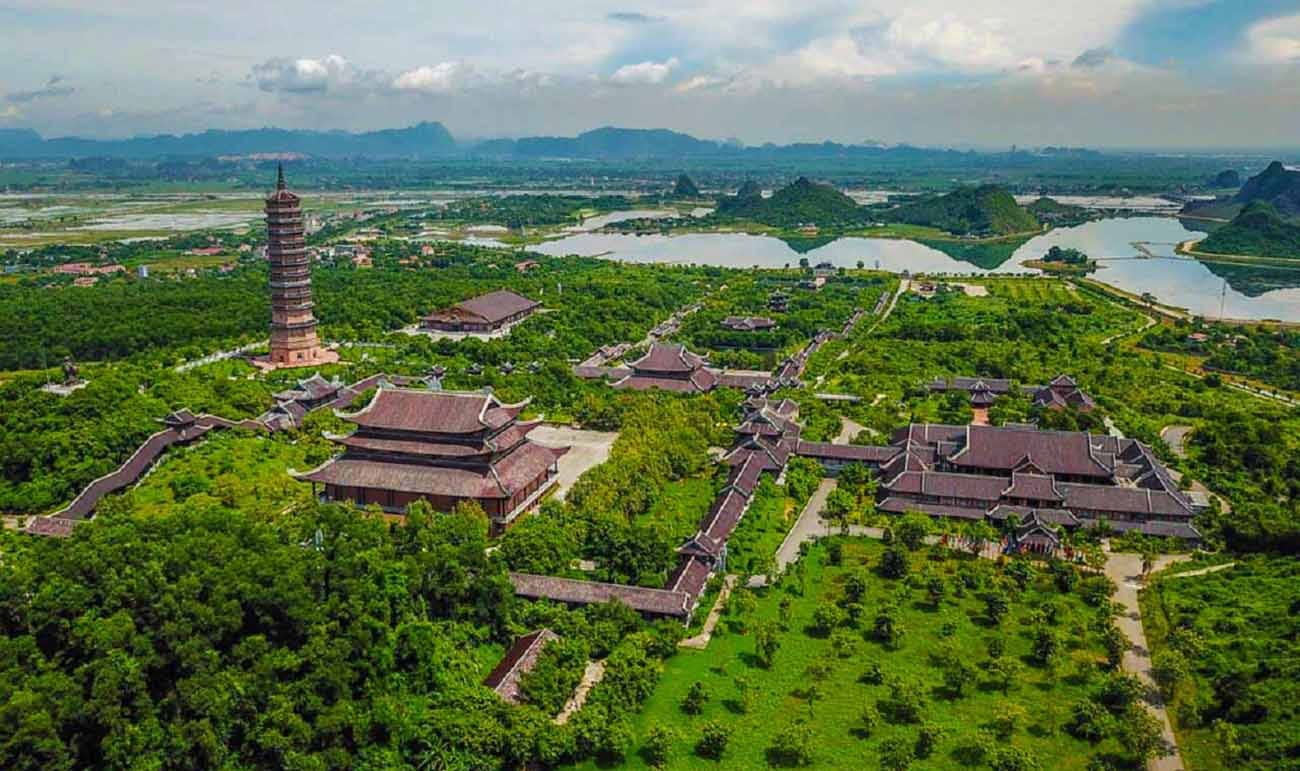
The rhythmic beauty of dark wood and white stone corridors stretching across the 500-hectare complex.
Another reason for its popularity is its location near the UNESCO-listed Trang An Scenic Landscape Complex. Surrounded by limestone mountains and lush valleys, the pagoda provides not only a spiritual journey but also breathtaking scenery, making it a must-visit stop in any Ninh Binh itinerary.
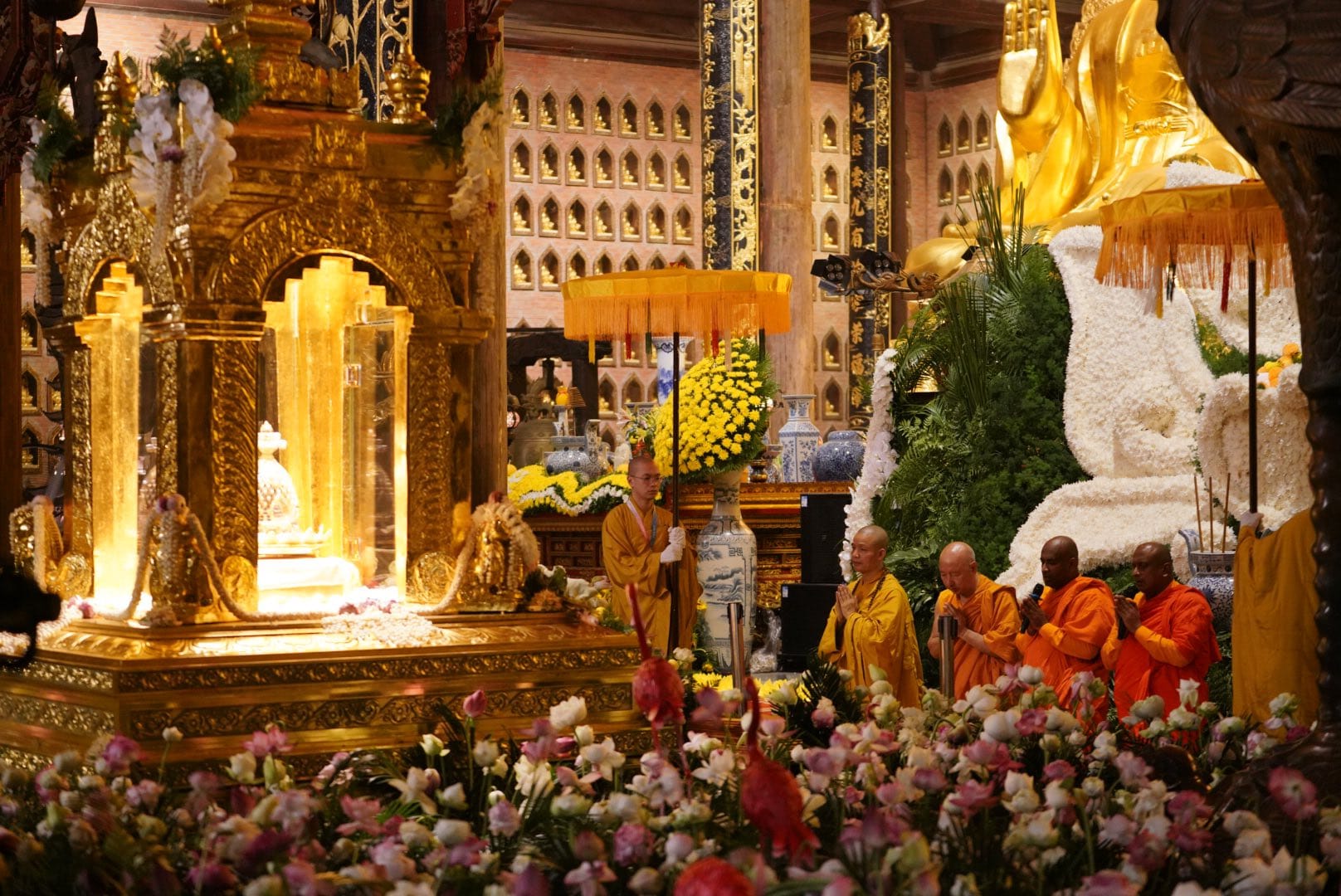
A world-class center for cultural exchange and spiritual peace in Northern Vietnam.
For a more complete experience, you can combine your visit with this detailed guide: Ninh Binh 2 Day Itinerary: A Relaxed Guide for First-Time Visitors, which helps you plan a well-paced trip across the region.
A Brief History of Bai Dinh Pagoda
The history of Bai Dinh Pagoda Ninh Binh is a profound journey through time, connecting the ancient foundations of Vietnamese Buddhism with a grand modern revival. The complex serves as a living chronicle, where every stone and statue tells a story of national pride and spiritual devotion.
The Ancient Roots (Cổ tự nghìn năm)
The story of Bai Dinh Temple begins over a thousand years ago. The original ancient pagoda was founded during the Dinh Dynasty and significantly developed under the Ly Dynasty.
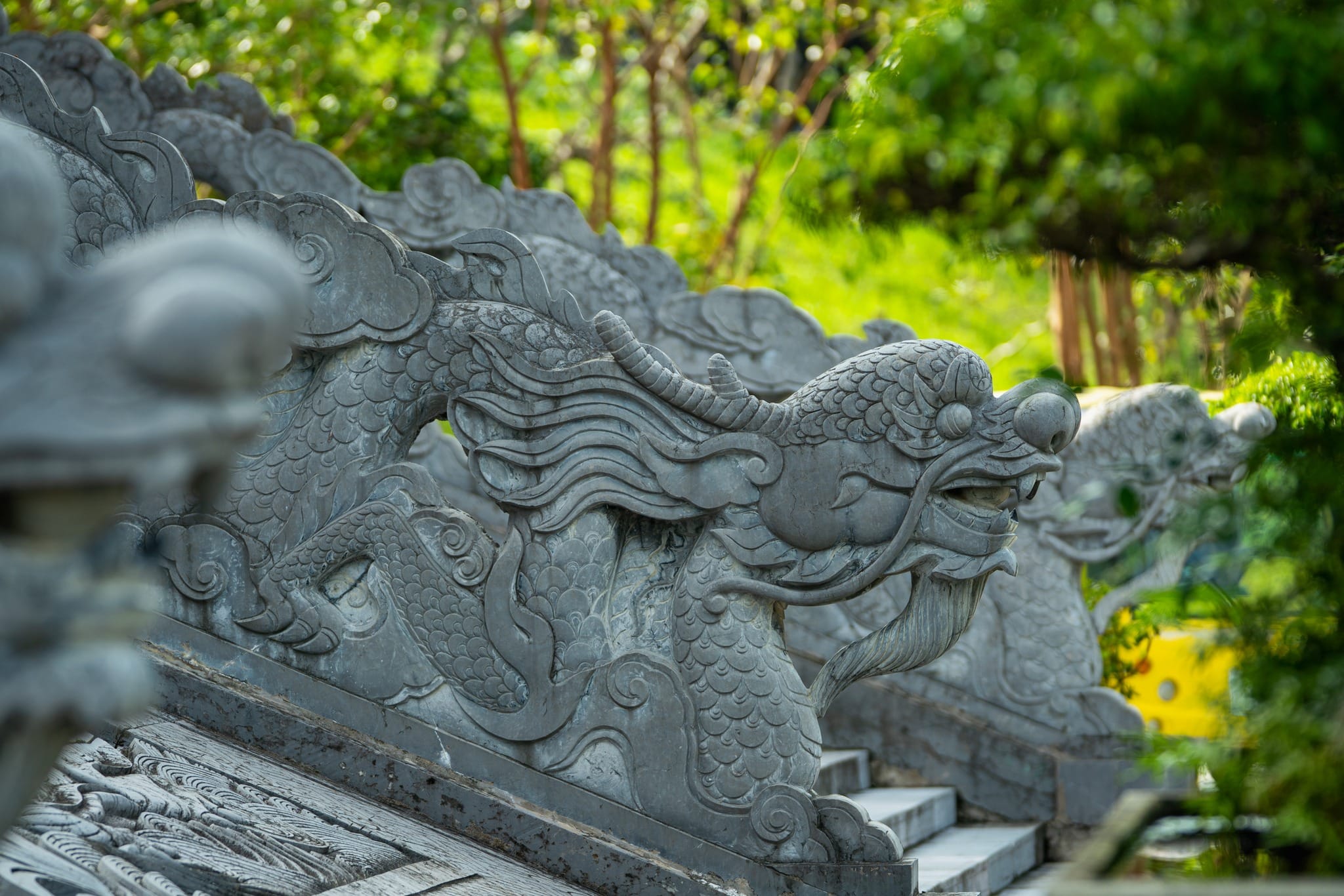
The scenic entrance to the complex, strategically positioned between the mountains and the Hoang Long River.
Nestled in a quiet mountain cave about 800 meters from the new complex, this sacred site was where Emperor Dinh Tien Hoang once erected an altar to pray for favorable weather.
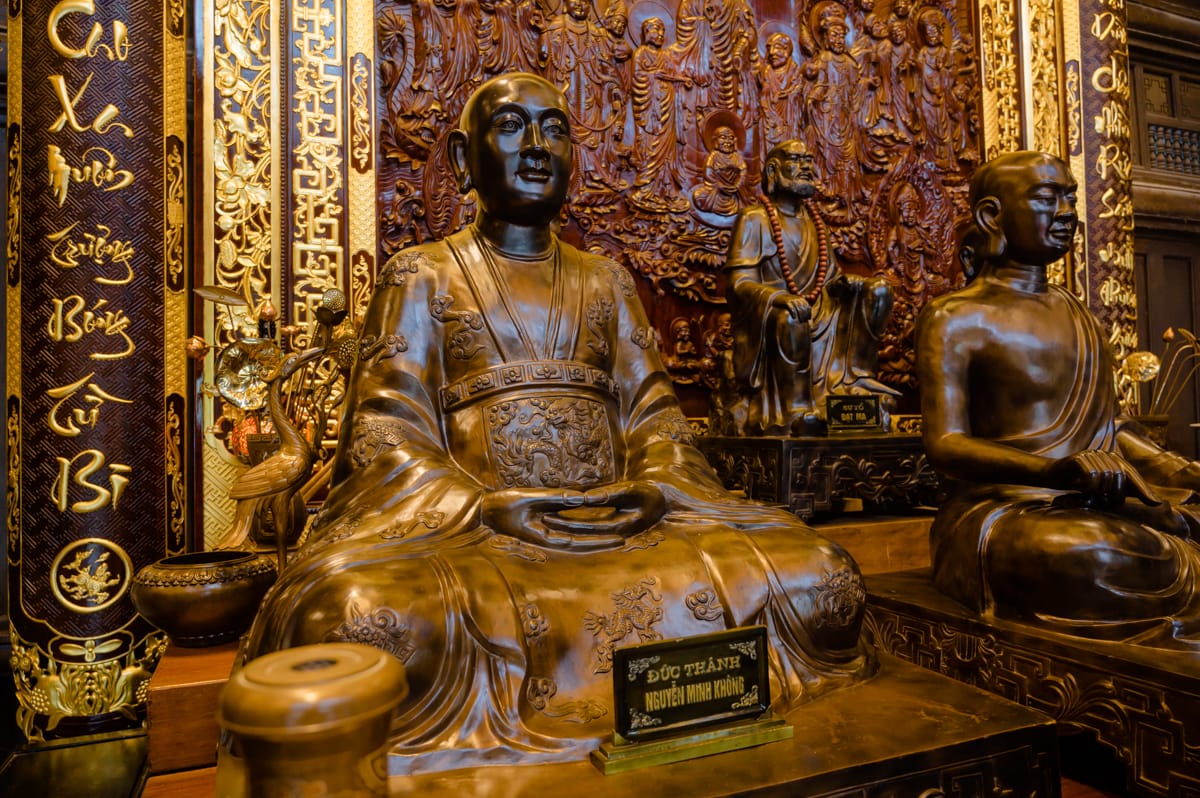
A tribute to the Zen Master Nguyen Minh Khong and the royal history of the Dinh and Ly Dynasties.
It is also famously known as the place where the Zen Master Nguyen Minh Khong practiced meditation and sought rare medicinal herbs to cure the King’s illness.
The Modern Revival (Sự phục hưng đương đại)
In 2003, a monumental project was launched to expand and build the New Bai Dinh Pagoda. This expansion was designed not just to create a massive spiritual center, but to showcase the pinnacle of traditional Vietnamese craftsmanship.

Observing the harmonious evolution from an intimate cave grotto to a grand modern Ninh Binh pagoda.
By using local green stone from Ninh Van and ironwood, the new complex was built to reflect the architectural spirit of the Ly Dynasty while operating on a record-breaking modern scale. This transformation has turned the Ninh Binh pagoda into a symbol of Vietnam’s cultural and religious resurgence in the 21st century.
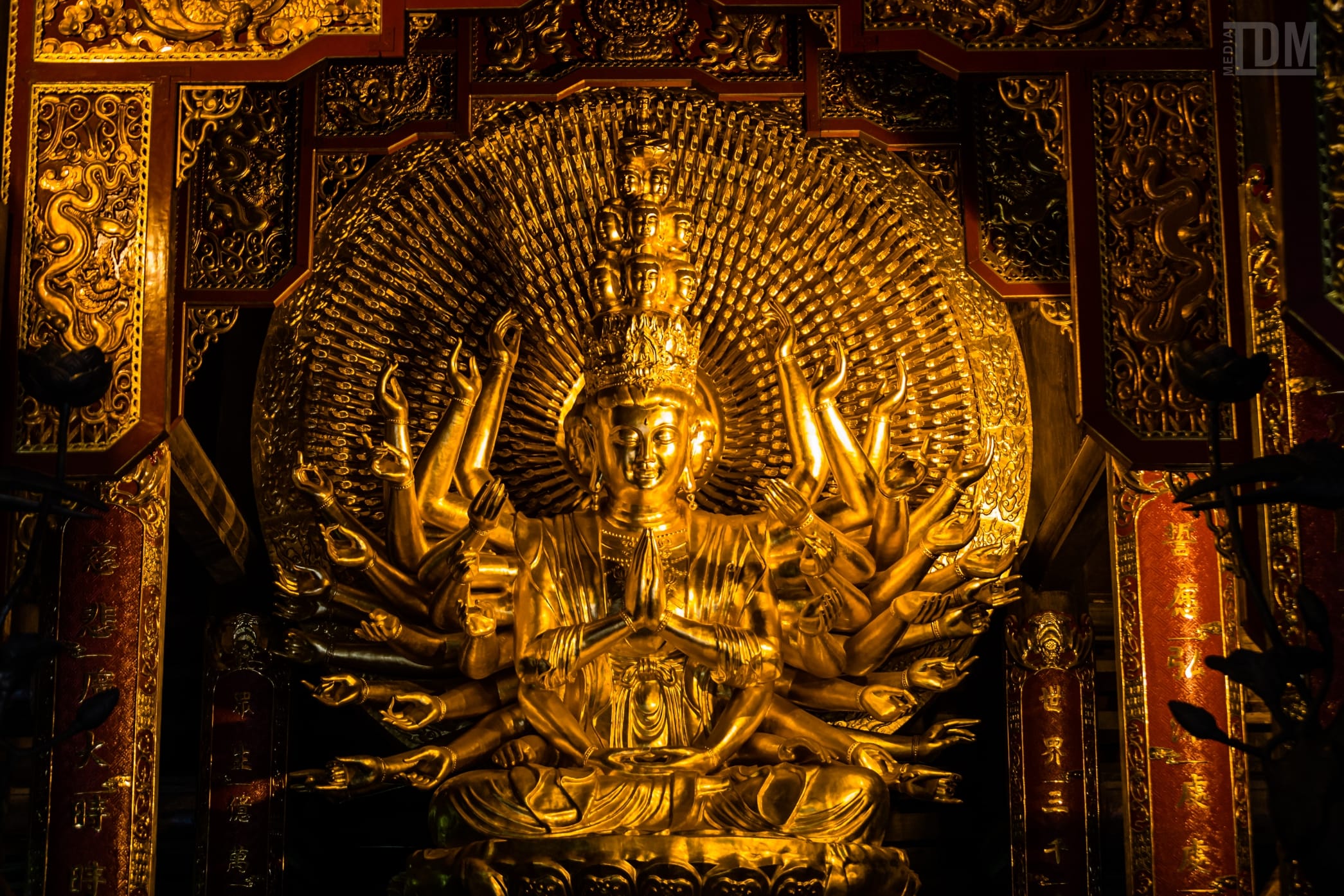
Curating your must-visit list of the iconic landmarks within the Bai Dinh Pagoda Ninh Binh complex.
A Legacy within the Heritage Zone

The perfect romantic backdrop where spiritual devotion meets the timeless beauty of Vietnam’s landscape.
Today, the history of Bai Dinh Pagoda Ninh Binh is inextricably linked with the Trang An Scenic Landscape Complex, a UNESCO-listed heritage site. Its development has been carefully managed to preserve the harmony between human-made wonders and the natural karst environment.
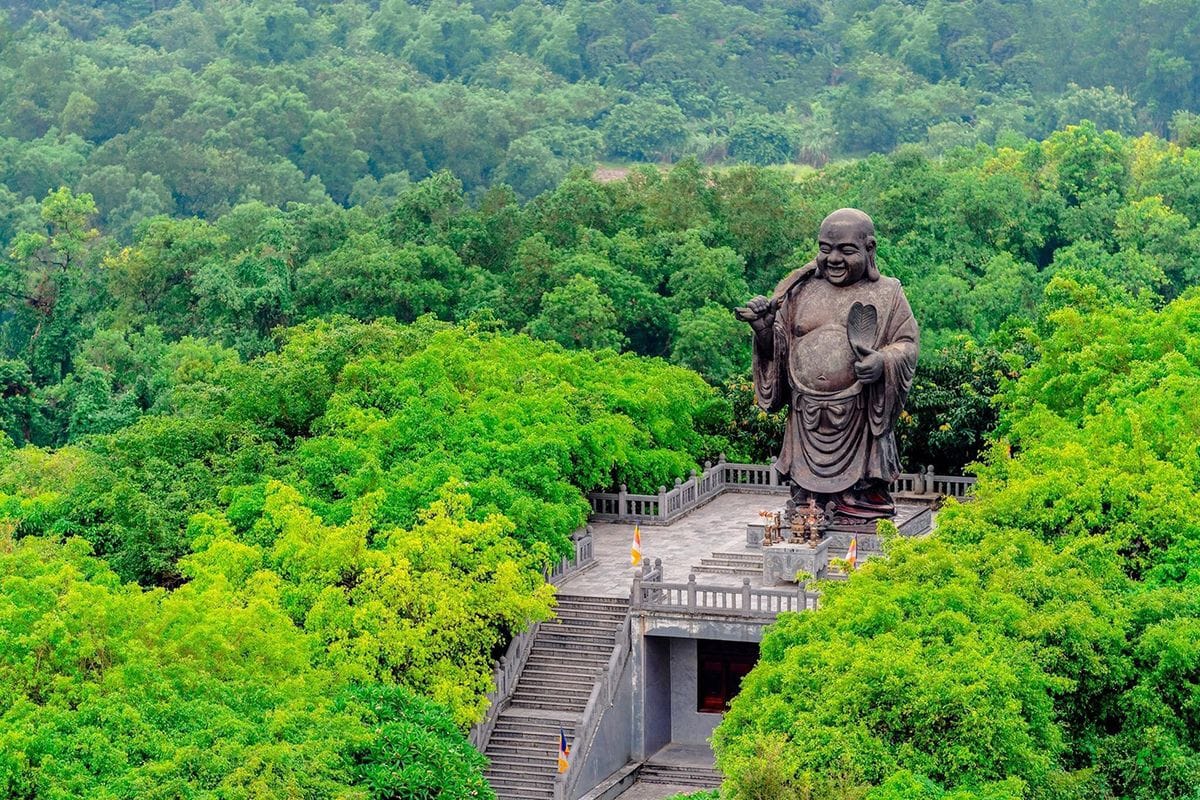
Witnessing the seamless blend of traditional imperial design and modern spiritual grandiosity.
For international travelers, the history of this pagoda Ninh Binh offers a unique window into how Vietnam honors its imperial past while building a majestic future for global pilgrims and curious explorers alike.
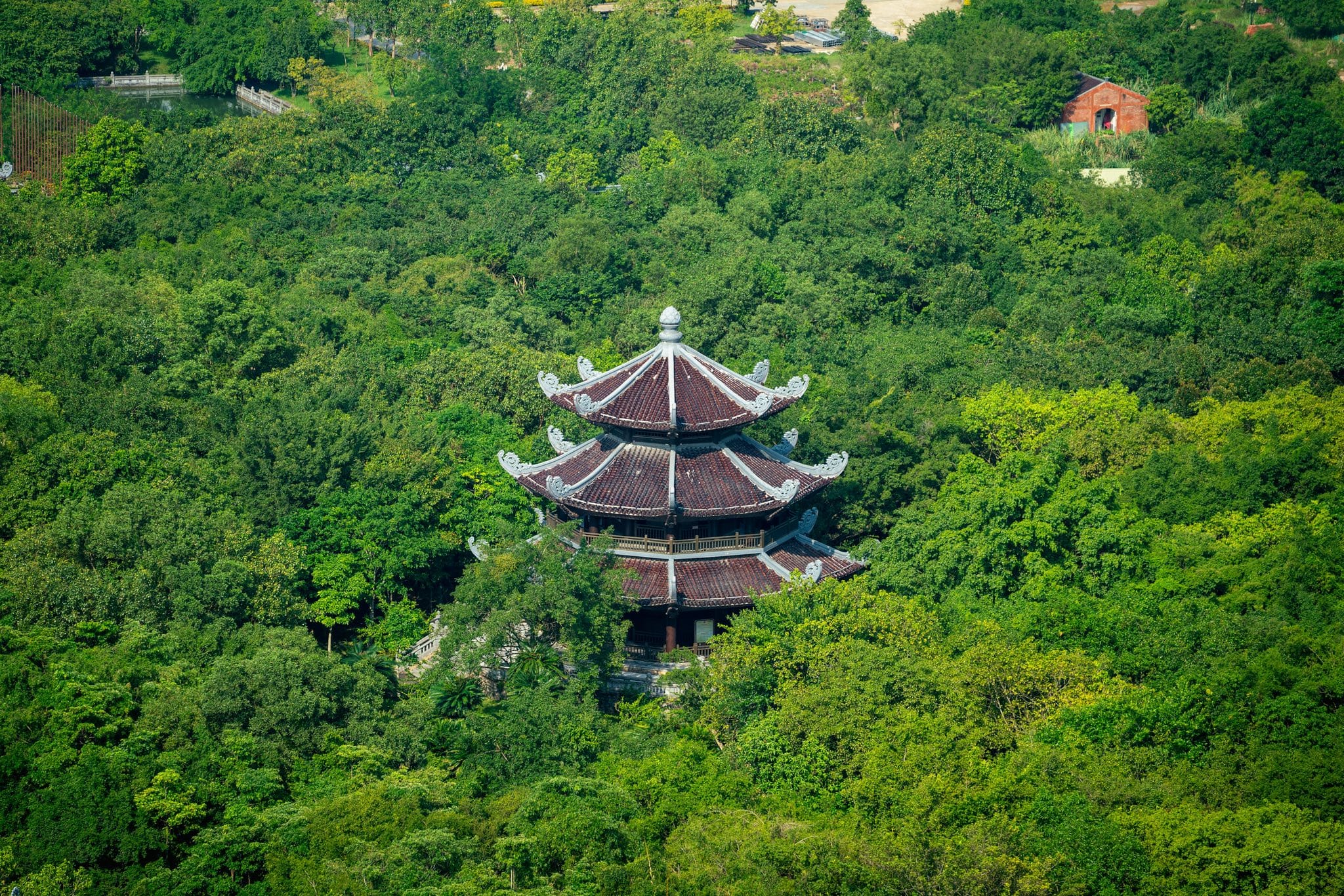
Observing the harmonious evolution from an intimate cave grotto to a grand modern Ninh Binh pagoda.
Top Things to See at Bai Dinh Pagoda
The grandeur of Bai Dinh Pagoda Ninh Binh is not only found in its vast acreage but in its collection of record-breaking structures that showcase the pinnacle of Vietnamese Buddhist artistry. Each site within the complex is a masterpiece where traditional craftsmanship meets profound spiritual symbolism.
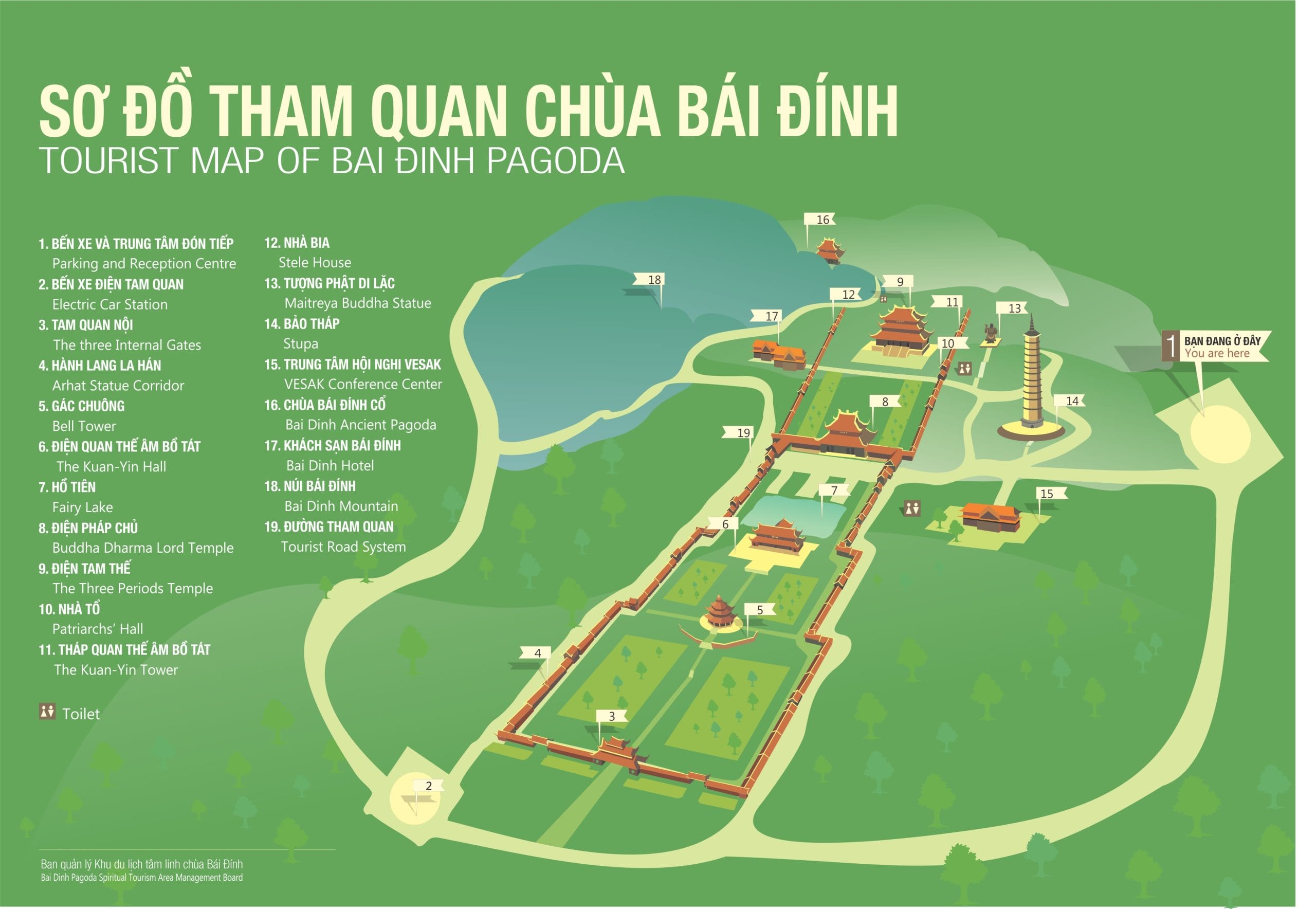
Mapping the convenient journey to Bai Dinh Pagoda Ninh Binh from the nearby heritage hubs of Tam Coc and Trang An.
Arhat Corridor (La Han Hall)
The Arhat Corridor is often the first feature to leave a lasting impression on visitors. Stretching nearly 3 kilometers, it is officially recognized as the longest Arhat corridor in Asia. This stunning walkway houses 500 unique Arhat statues, each meticulously carved from solid blue stone by the master artisans of the famous Ninh Van stone village.
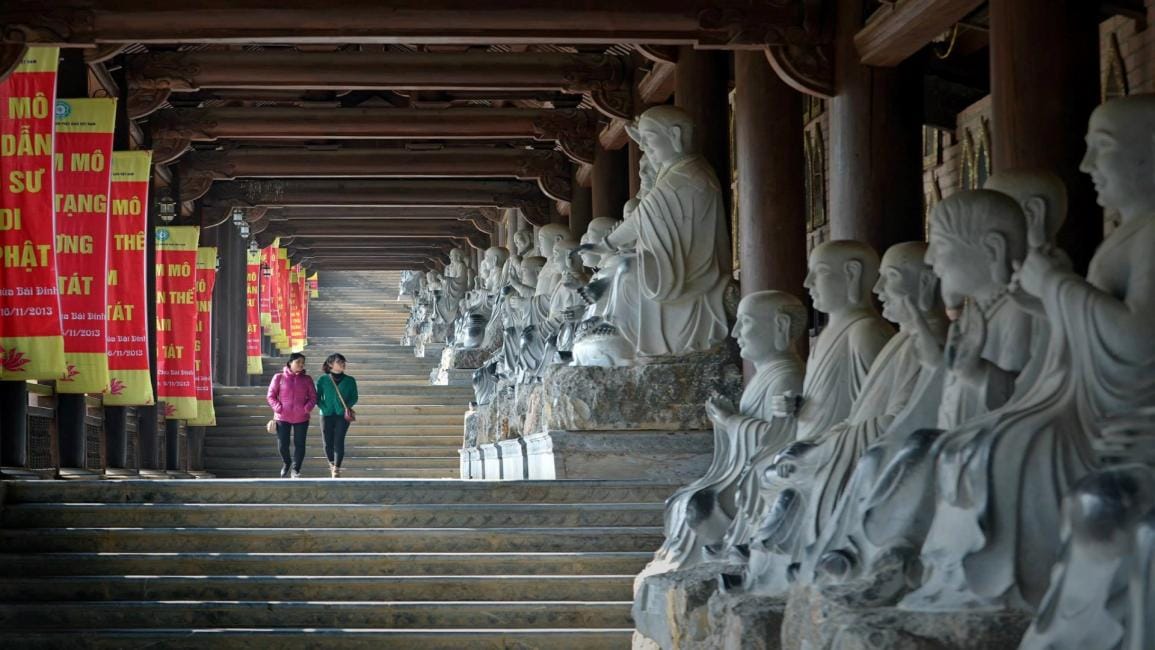
Walking the longest Arhat corridor in Asia at Bai Dinh Temple, featuring 500 unique stone carvings.
For couples and international travelers, walking through this corridor offers a meditative, “Zen-like” experience. Each Arhat statue possesses a distinct facial expression, posture, and gesture—representing the full spectrum of human emotions, from joy and anger to love and sorrow, on the path to enlightenment. It is an ideal space to slow down, reflect, and capture artistic photographs against the seemingly endless rows of stone figures.
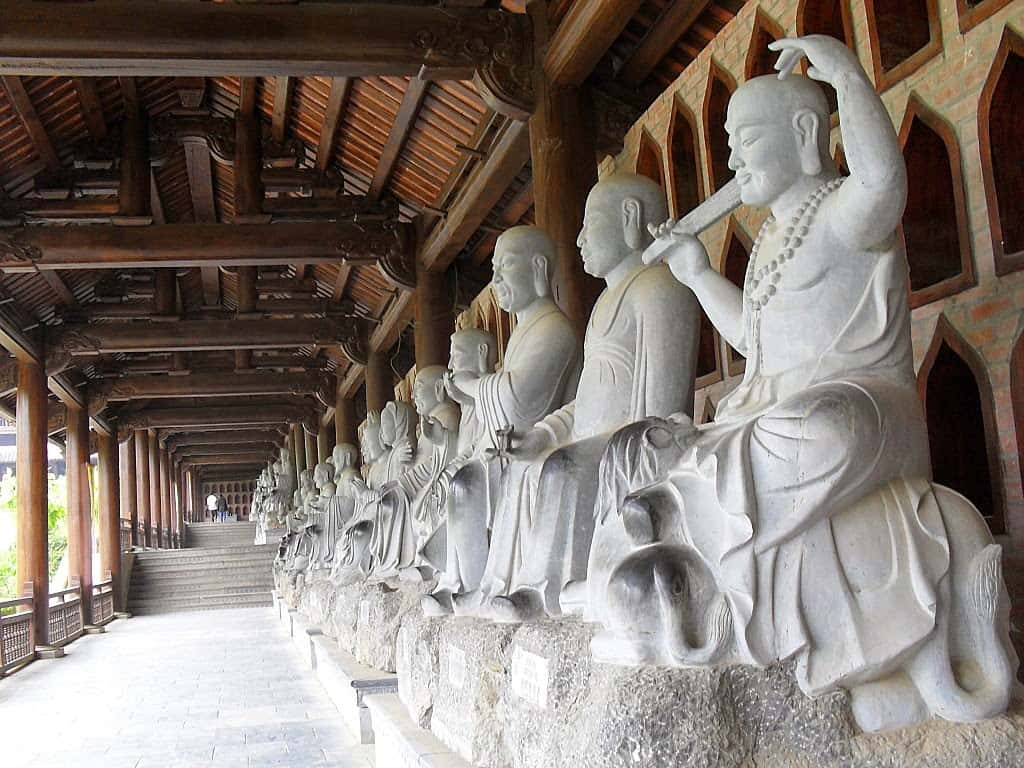
Each stone Arhat statue telling a different story of human emotion and spiritual growth.
Tam The Hall (Three-Period Buddhas)
Situated at one of the highest points of the Ninh Binh pagoda’s main architectural axis, Tam The Hall is a monumental structure with soaring, curved tiled roofs typical of Northern Vietnamese imperial design.
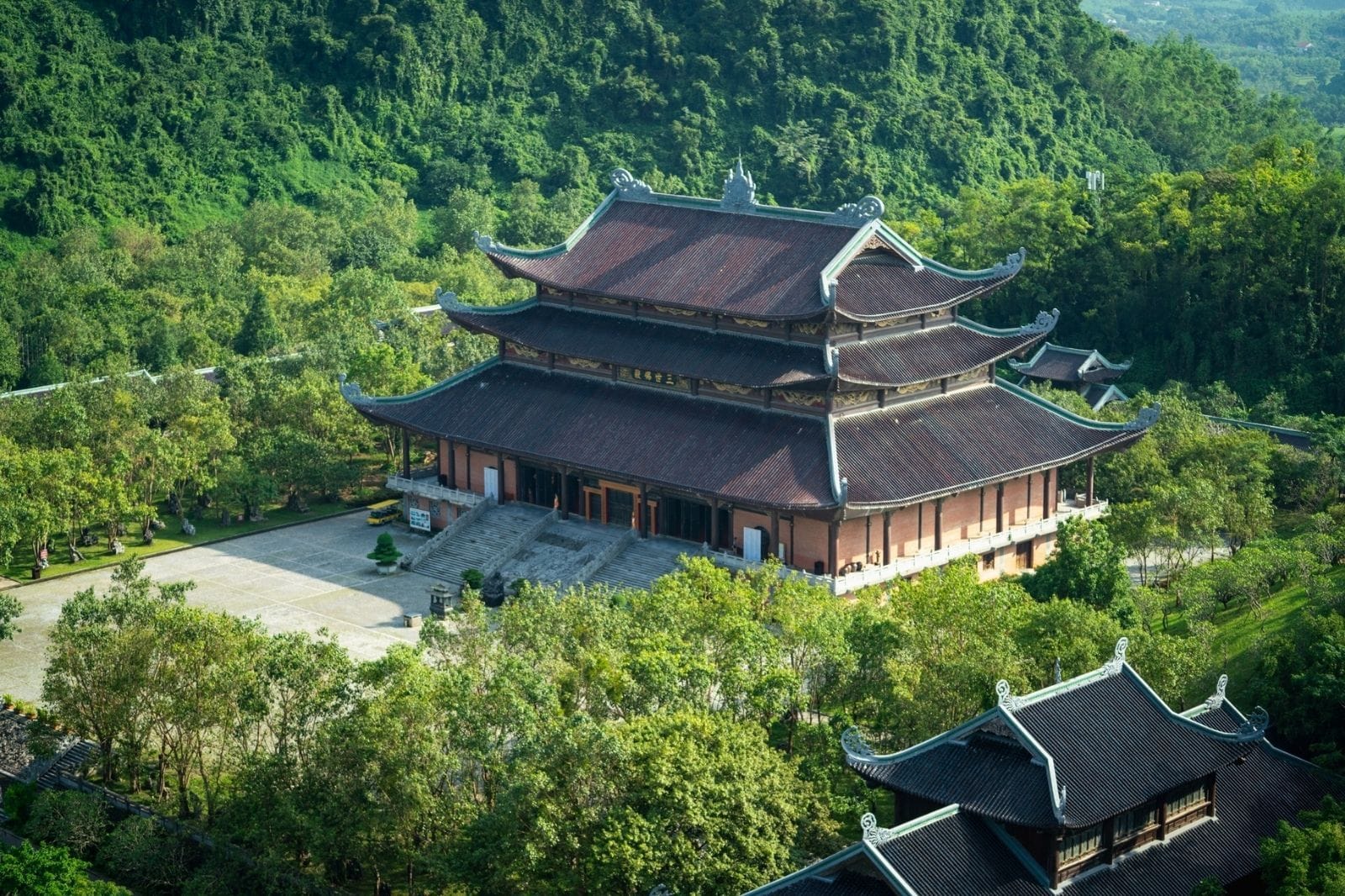
Entering the grandest sanctuary of Bai Dinh Pagoda Ninh Binh to see the colossal bronze Buddhas.
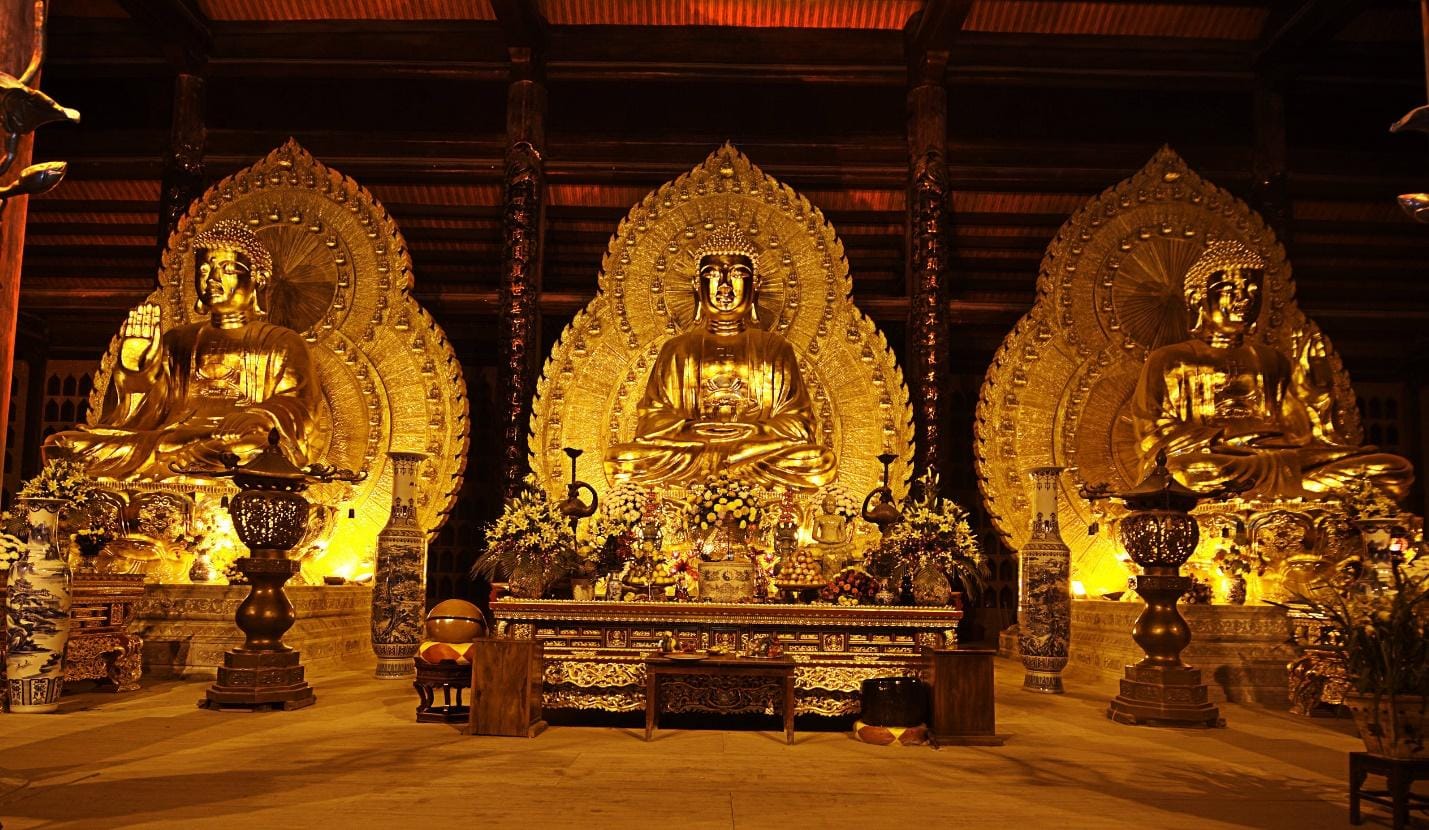
Inside this grand sanctuary sit three colossal bronze statues of the “Three-Period Buddhas,” representing the Past, Present, and Future. Each statue weighs 50 tons and stands 12 meters tall.
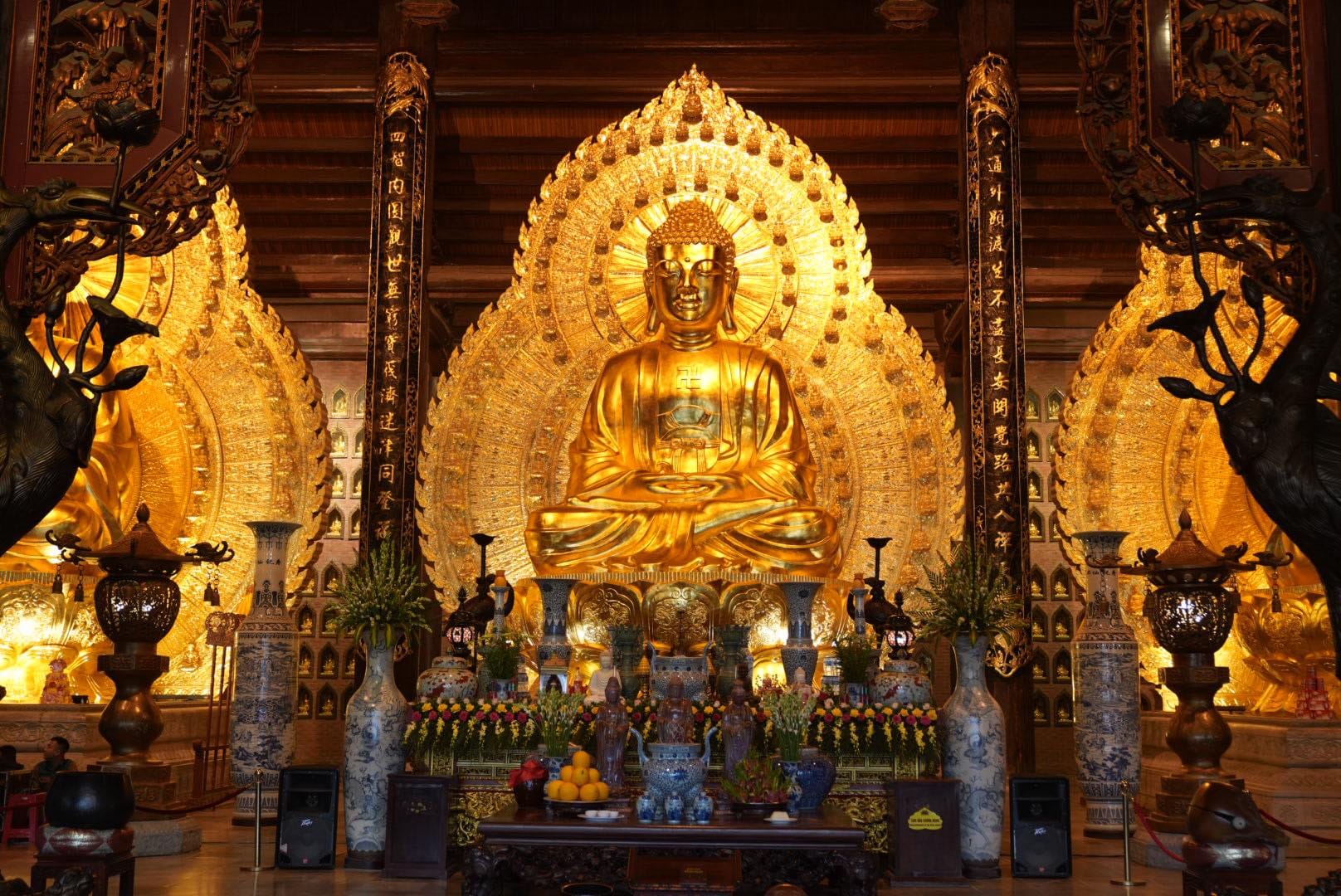
Three 50-ton bronze statues representing the Past, Present, and Future of the Buddhist path.
The interior of the hall is breathtaking, supported by massive ironwood pillars and decorated with intricate Buddhist bas-reliefs.
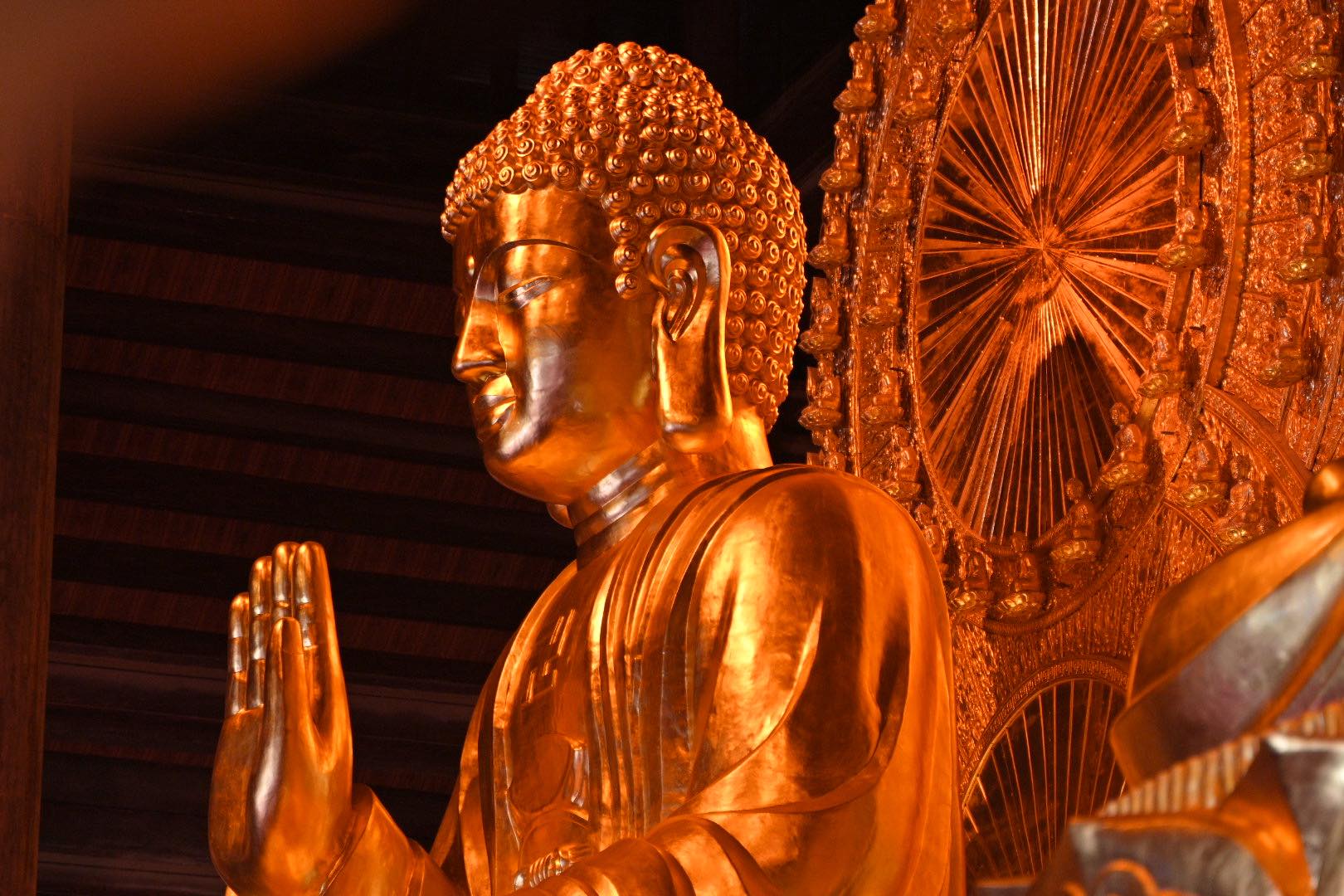
A place of profound silence and awe-inspiring scale at the highest point of the Ninh Binh pagoda.
Stepping inside, guests are often overwhelmed by the golden aura of the statues and the sacred silence of the space. It is the perfect place to learn about the Buddhist philosophy of time and find a moment of inner peace amidst the majestic heritage of the Bai Dinh temple.
Giant Bronze Buddha Statue
The Phap Chu Hall houses one of the most soul-stirring sights in the complex: the largest bronze Buddha statue in Vietnam. Weighing a staggering 100 tons and standing 10 meters tall, this golden figure depicts Gautama Buddha in a state of profound meditation on a lotus throne.
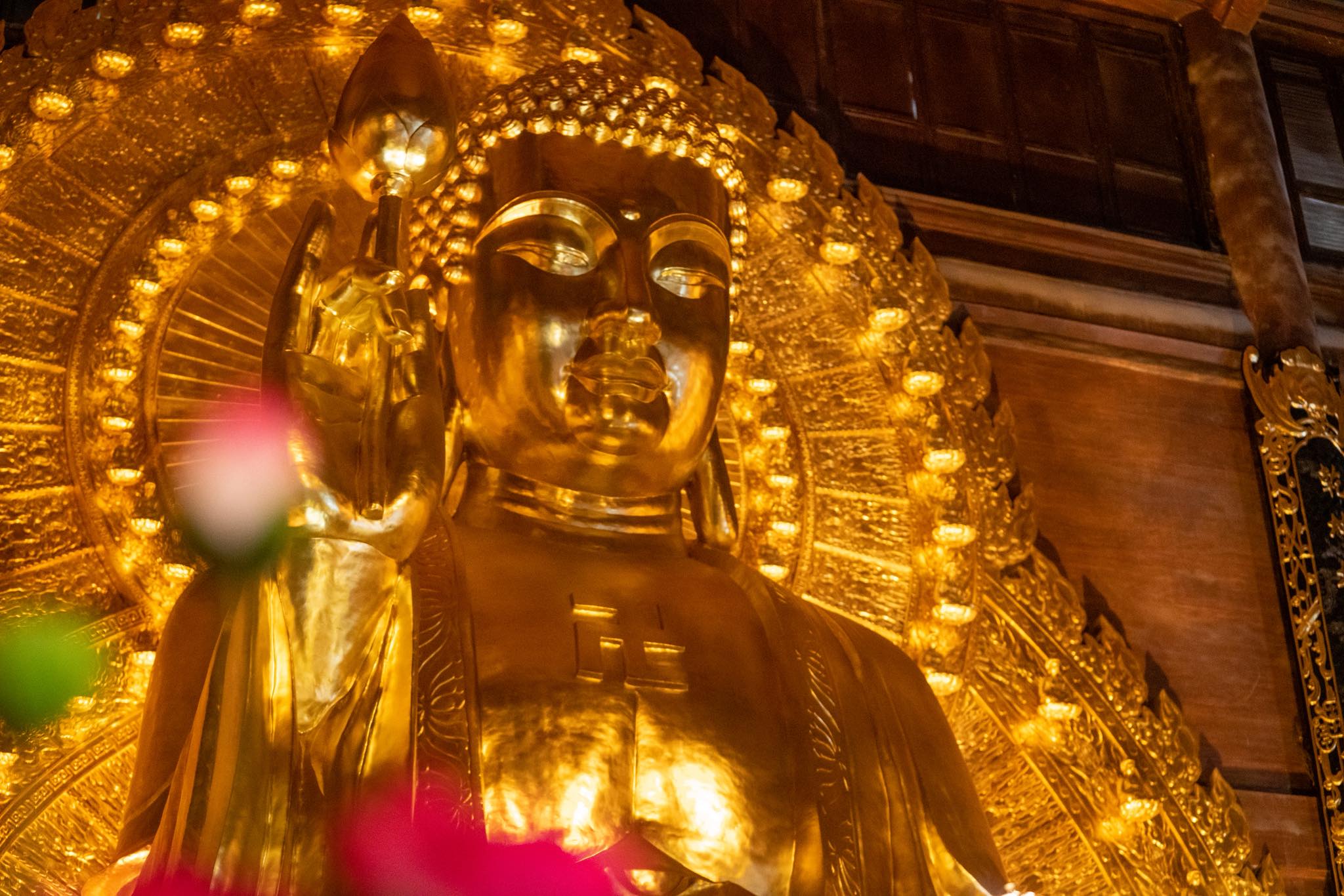
Marveling at the 100-ton bronze statue of Gautama Buddha, a centerpiece of Bai Dinh Temple.
For international visitors, the statue is a marvel of traditional bronze casting. Every detail, from the gentle curve of the eyes to the intricate patterns on the robe, reflects the skill of local artisans.
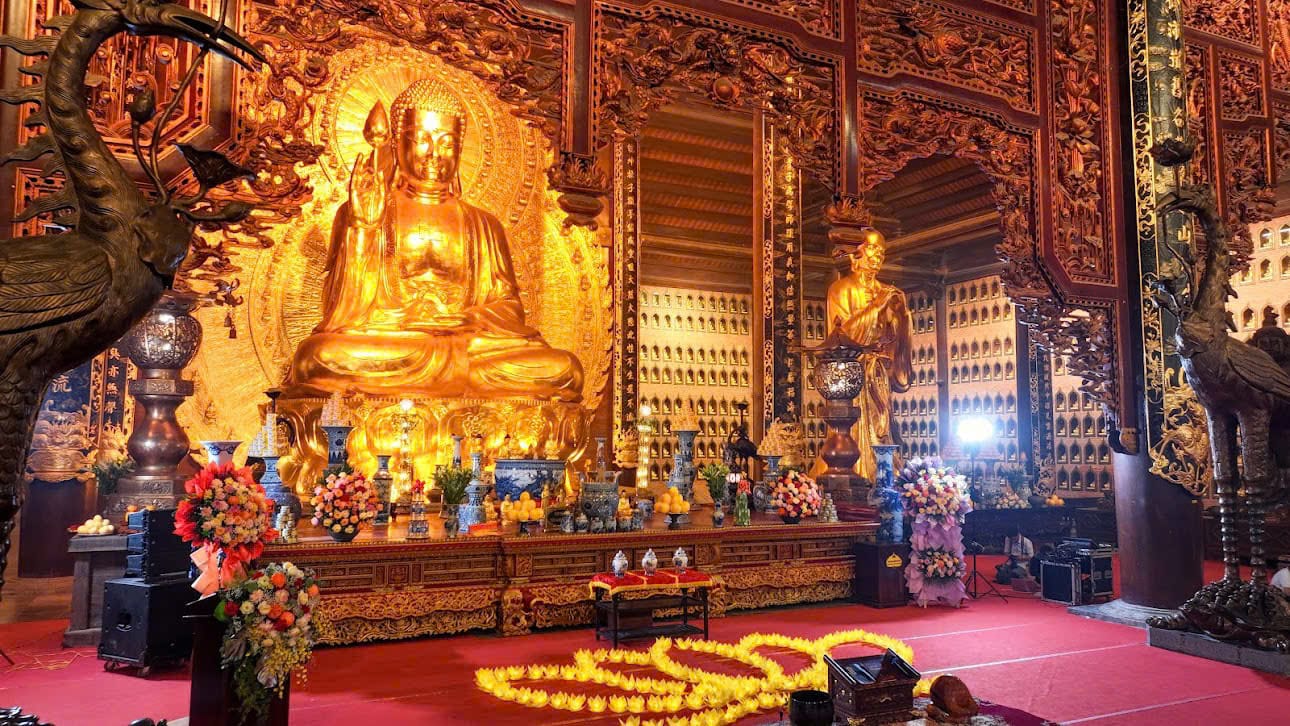
The largest bronze Buddha statue in Vietnam, radiating compassion and spiritual wisdom.
The hall itself is a majestic wooden structure, designed to create a resonant acoustic environment where the soft chanting of monks creates a powerful, “Zen-like” atmosphere. It is the perfect place for couples to find a moment of shared silence and reflection.
Bai Dinh Stupa (Bao Thap Tower)
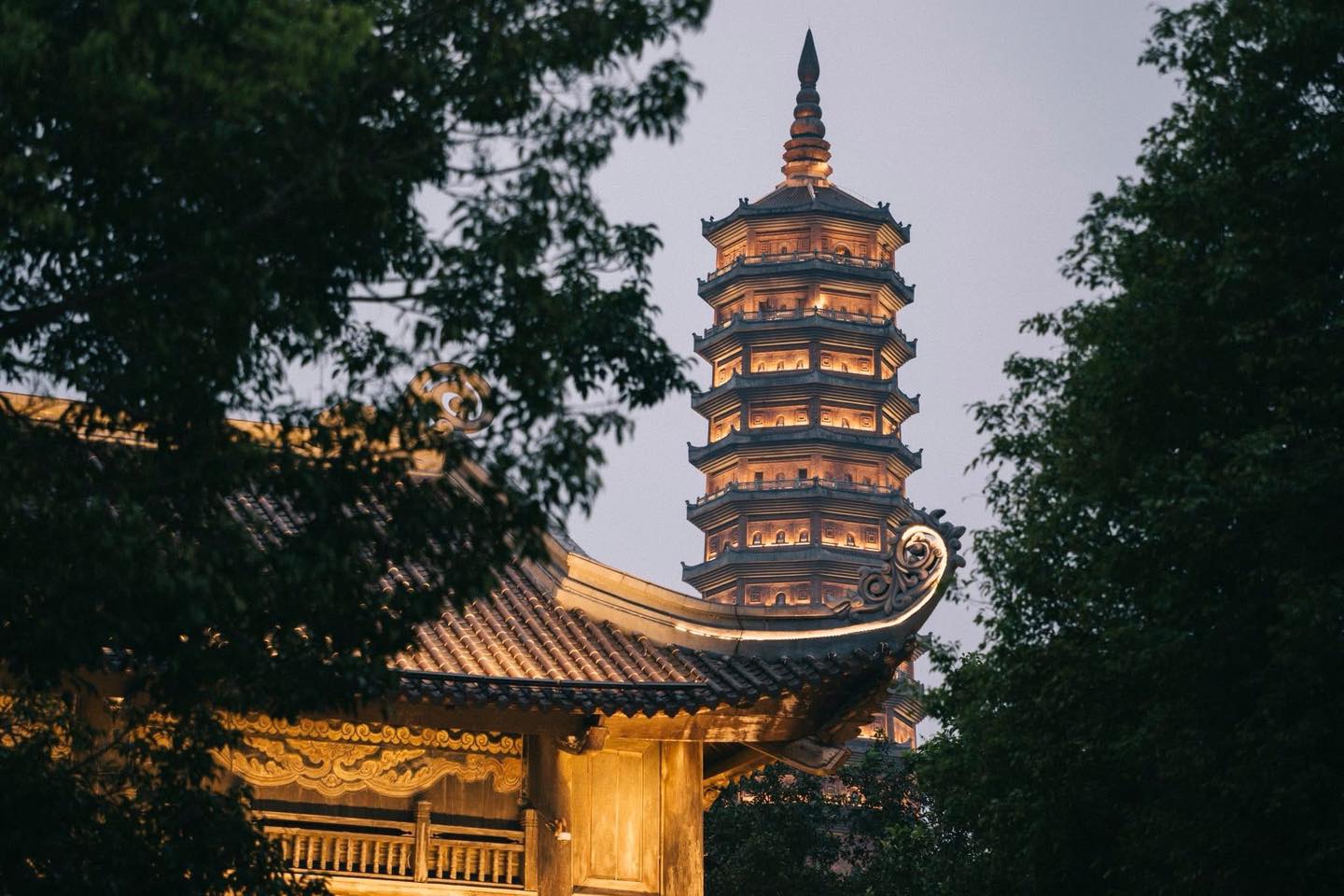
Standing as a landmark of the entire region, the Bai Dinh Stupa is the tallest Buddhist stupa in Southeast Asia, reaching a height of 100 meters. This 13-story tower is an architectural beacon, beautifully illuminated at night and visible from miles away.

Ascending the tallest Buddhist stupa in Southeast Asia at Bai Dinh Pagoda Ninh Binh for panoramic views.
What makes this stupa truly special for travelers is the experience of ascending to the top. From the highest level, you are rewarded with a breathtaking panoramic view of the entire Ninh Binh pagoda complex, nestled within the emerald karst mountains.

The 100-meter high Bao Thap tower illuminated against the night sky like a golden beacon.
Inside, the walls are adorned with thousands of small Buddha statues, and the tower houses sacred Buddha relics brought from India, making it a “must-visit” for those seeking a high-altitude spiritual connection.
Ancient Bai Dinh Pagoda
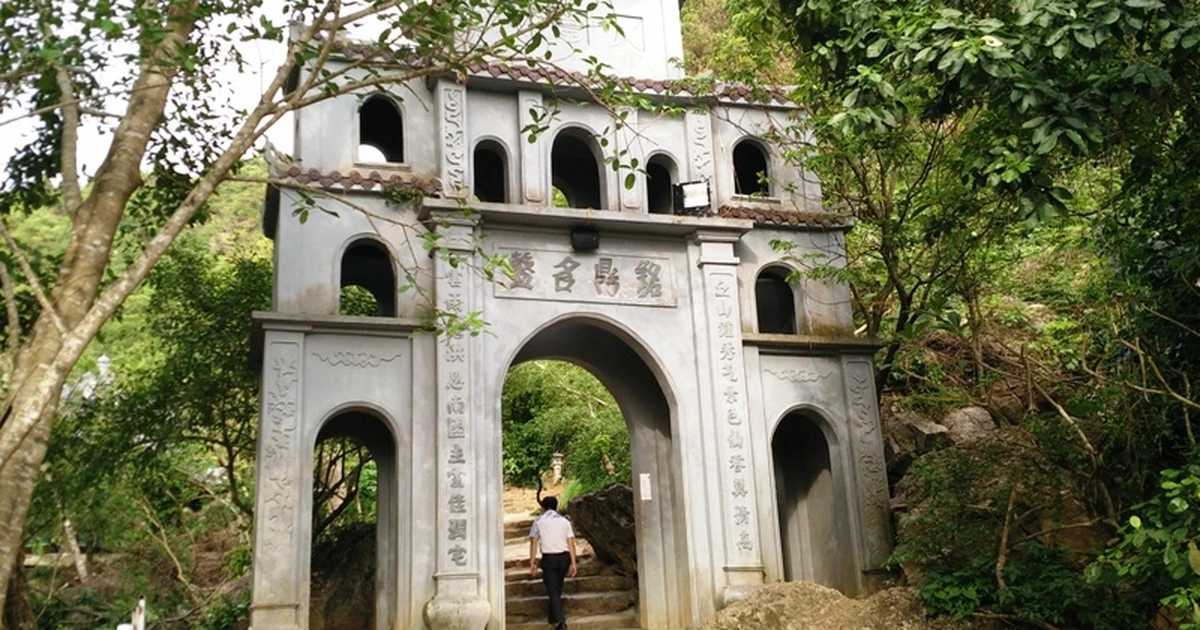
Returning to the mystical roots of the original Bai Dinh Temple inside a quiet mountain cave.
To truly understand the soul of Bai Dinh Temple, one must visit the Ancient Pagoda, located in a quiet mountain cave about 800 meters from the new halls. This is where the thousand-year legacy of the site began. Unlike the grand scale of the new buildings, the ancient section is intimate and mystical.
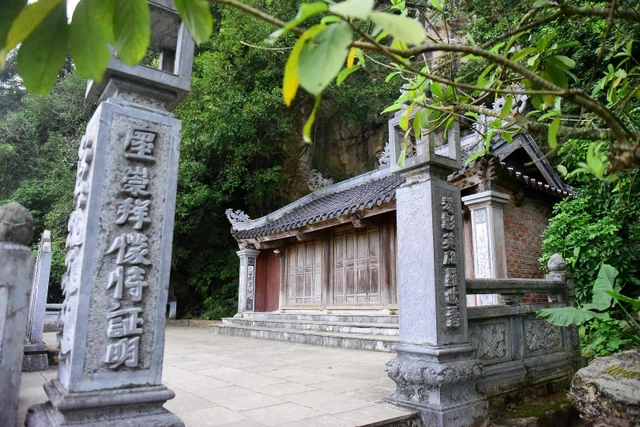
Finding a rustic and serene contrast to the grand scale of the modern halls.
Walking into the “Bright Cave” and the “Dark Cave,” you will find natural grottos transformed into places of worship. The air is cool, and the soft lighting highlights ancient stone carvings and altars dedicated to Buddhist deities and local spirits.
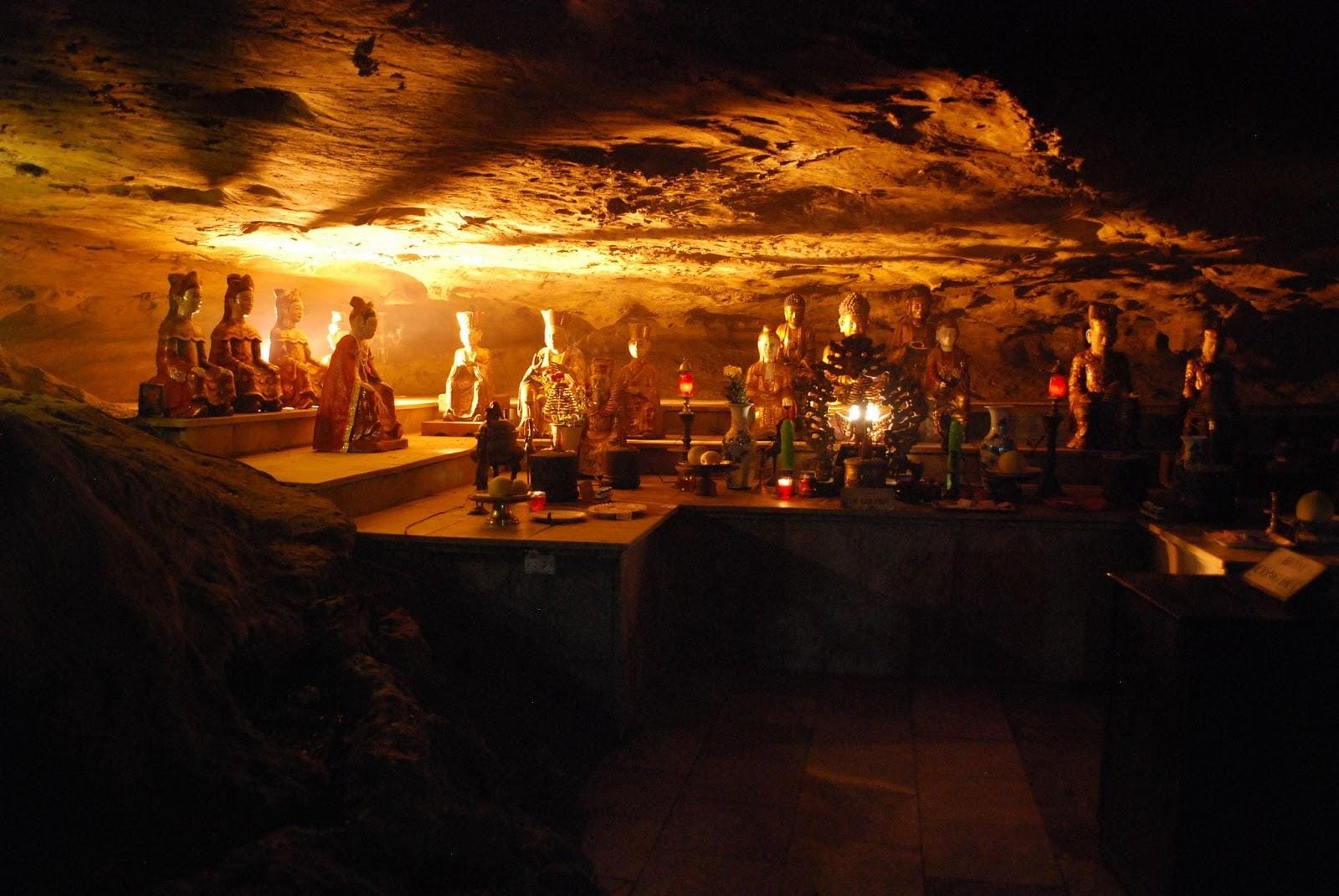
Soft lighting illuminating the ancient stone altars and historical inscriptions of the Ninh Binh pagoda.
It offers a rustic and deeply spiritual contrast to the modern complex, providing a quiet sanctuary for couples who appreciate the “luxury of stillness” and the whispers of history.

Exploring the “Bright Cave” and “Dark Cave” where nature and devotion intertwine perfectly.
Best Time to Visit Bai Dinh Pagoda
The best time to visit Bai Dinh Pagoda is from January to March, during the spring festival season when the site is most vibrant and culturally rich. However, this is also the busiest period.

Planning your arrival to experience the vibrant festival season at Bai Dinh Pagoda Ninh Binh
For a more relaxed experience, consider visiting in autumn (September to November), when the weather in Ninh Binh is cooler and less crowded, ideal for exploring the vast complex.
No matter the season, it’s best to go early in the morning or late afternoon to avoid crowds and enjoy a more peaceful atmosphere.
How to Get to Bai Dinh Pagoda
Reaching Bai Dinh Pagoda is straightforward, especially from Hanoi, which is about 100 kilometers away. The journey typically takes around 2 to 2.5 hours by limousine van, tourist bus, or private car, making it a convenient day trip from the capital.
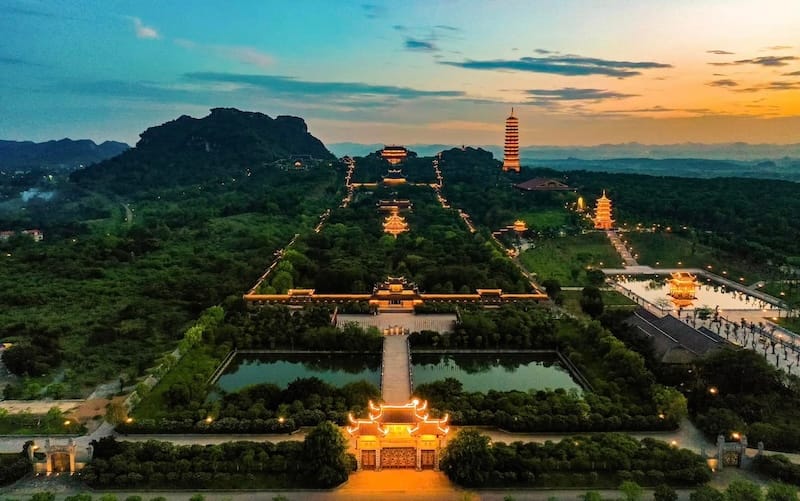
Capturing the ethereal glow of the illuminated complex during a romantic night tour.
If you are already in Ninh Binh, the pagoda is only about 15 kilometers from the city center and can be reached in 20 to 30 minutes by taxi or motorbike.
Once you arrive, keep in mind that the complex is very large. Most visitors choose to take an electric shuttle to move between key areas, especially if you want to save time and energy while exploring the site.
Entrance Fees, Opening Hours & Tickets
Visiting Bai Dinh Pagoda is relatively affordable, as the main entrance to the pagoda complex is free. However, there are additional costs for certain services and experiences within the site.

Making the most of your spiritual journey to the largest Ninh Binh pagoda in Vietnam.
The electric shuttle, which helps visitors navigate the expansive grounds, usually costs between 30,000 and 100,000 VND depending on the route. If you wish to climb the Bao Thap Tower for panoramic views, there is a separate ticket priced at around 50,000 to 60,000 VND.
The pagoda generally opens early in the morning, around 6:00 AM, and remains accessible until the evening, with peak visiting hours typically between 7:00 AM and 6:00 PM. While entry itself does not require a ticket, most services inside operate with QR-coded passes, so it is a good idea to keep them with you throughout your visit.
Travel Tips for Visiting Bai Dinh Pagoda
When visiting Bai Dinh Pagoda, it’s best to plan ahead as the complex is vast and can take several hours to explore fully. Wearing modest clothing is important, as this is an active spiritual site, and comfortable shoes will make a big difference since you’ll be walking long distances. The distance from the entrance to the main temple area can be several kilometers, so many visitors choose to take an electric shuttle to save time and energy.
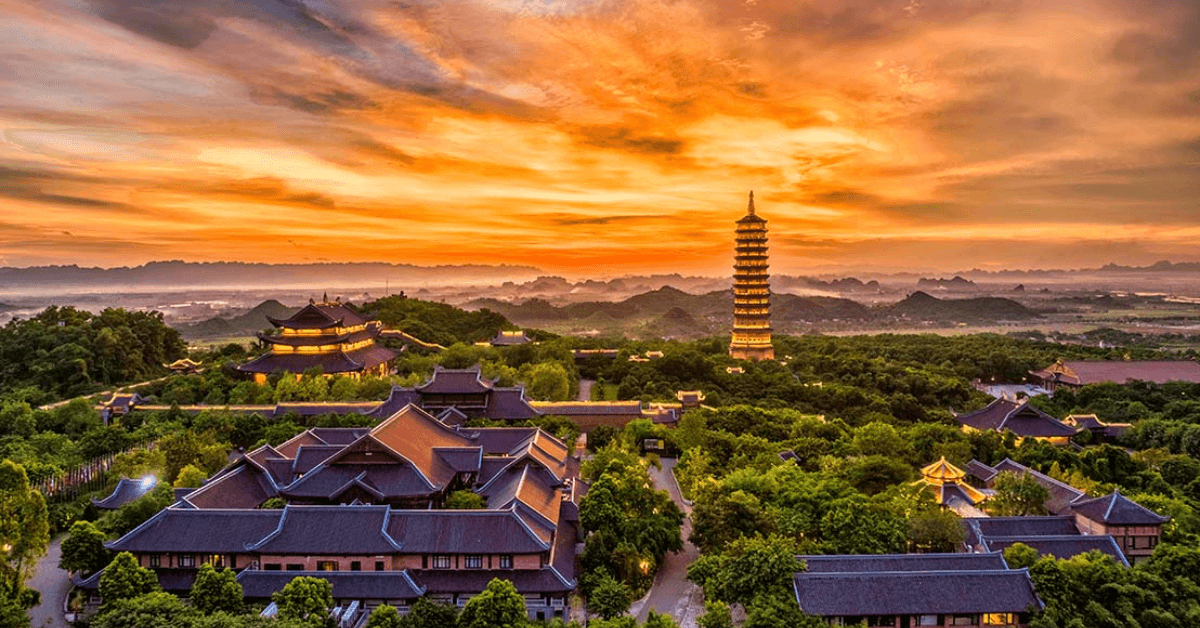
Watching the sunset over the stupa, the perfect golden hour for photography and reflection.
Try to visit early in the morning or later in the afternoon to avoid peak crowds, especially during the spring festival season. Bringing water, sunscreen, and a hat is also recommended, particularly in warmer months. Most importantly, keep a respectful attitude when entering prayer halls and sacred spaces to fully appreciate the spiritual atmosphere.
Where to Stay Near Bai Dinh Pagoda
There are several convenient areas to stay when visiting Bai Dinh Pagoda, depending on your travel style. Most visitors choose to stay in Ninh Binh city for easy transport connections, or closer to nature in areas like Trang An Scenic Landscape Complex and Tam Coc. These locations offer a mix of hotels, boutique stays, and eco-lodges surrounded by limestone mountains and rice fields.
Staying near Trang An or Tam Coc is especially popular because it allows you to combine your trip to Bai Dinh Pagoda with boat tours and other scenic attractions, creating a more immersive Ninh Binh experience. If you prefer convenience, staying in the city center makes it easier to arrange transport and tours while still being within a short drive of the pagoda.
For a more refined and tranquil stay near Bai Dinh Pagoda, consider booking your experience at Jiva Hoa Lu Retreat, where nature, heritage, and well-being come together in a serene setting.
Ready to Experience Jiva?
Immerse yourself in a stay where northern Vietnamese architecture meets world-class comfort. At Jiva Hoalu Retreat, each accommodation blends locally inspired décor with modern luxuries, offering a unique fusion of culture, tradition, and elegance. Whether you’re here for a romantic getaway, a family escape, or a tranquil retreat, Jiva promises unforgettable moments in the heart of Ninh Binh.
Contact Us:
📞 +84 933 006 886
📧 inquiry@jivahoaluretreat.com
🌐 https://jivahoaluretreat.com/