


05 November, 2026
The Vietnamese New Year is Vietnam’s most cherished celebration: a time of family, renewal, and cultural pride. Discover its ancient origins, meaningful traditions, and how travelers can experience Vietnamese New Year like locals, from festive rituals to serene getaways across the country.
What is a Vietnamese New Year called?
Vietnam celebrates two New Year holidays: Tết Dương Lịch (Gregorian New Year) and Tết Âm Lịch (Lunar New Year).
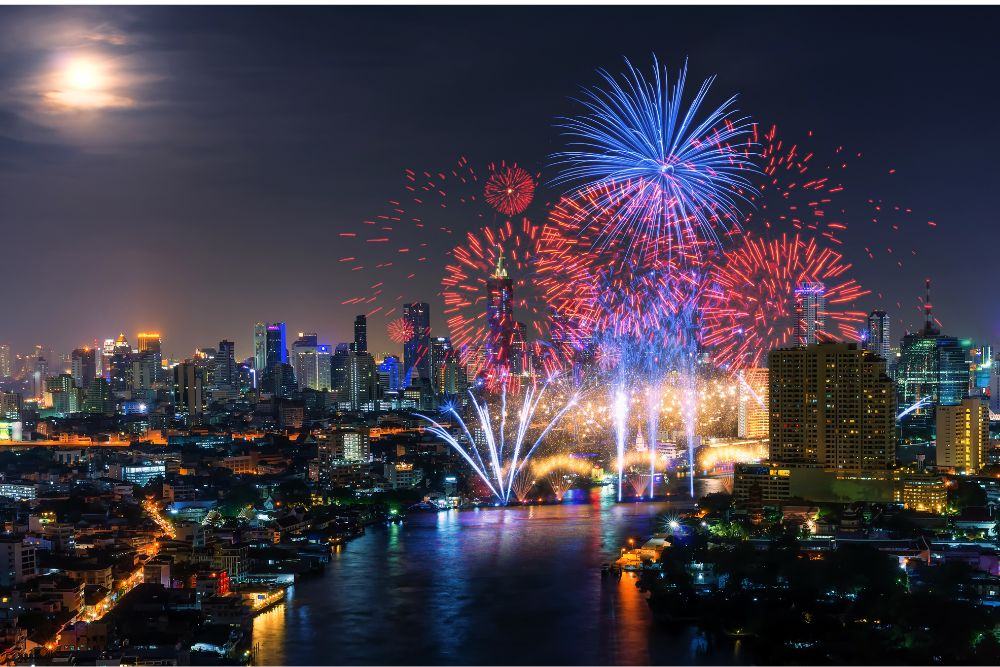
Fireworks illuminating Ho Chi Minh City as locals welcome the Vietnamese Lunar New Year
Tết Dương Lịch, or Vietnamese Gregorian New Year, takes place on January 1st, following the international calendar. It’s celebrated with countdown events, fireworks, and parties in major cities, a joyful start to the new year similar to Western traditions.
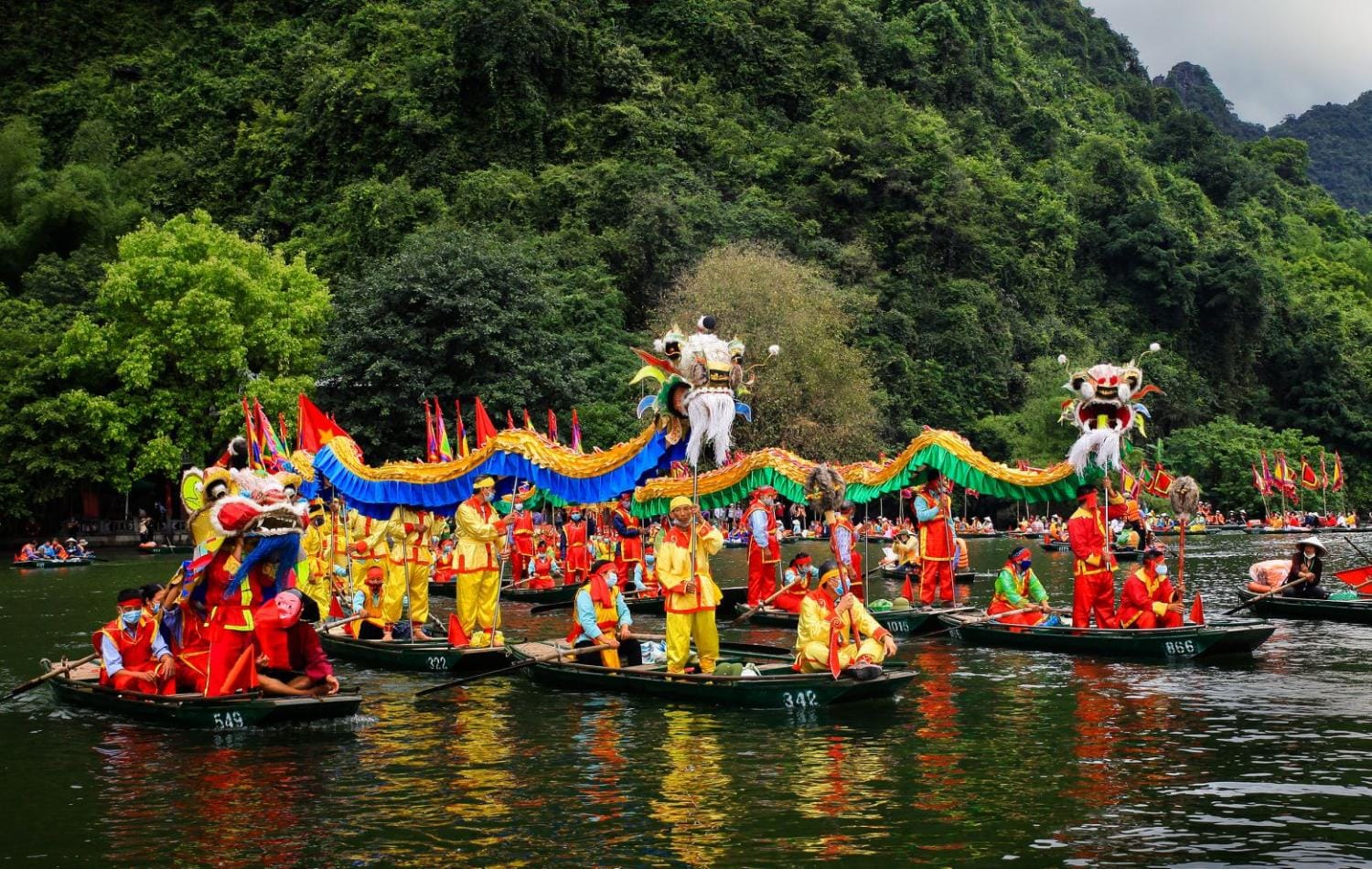
Crowds gathering to celebrate spring festival on New Year’s Eve in Vietnam
Tết Âm Lịch, officially known as Tết Nguyên Đán or Vietnamese Lunar New Year, is the most important holiday in Vietnam. It’s based on the lunar calendar and usually falls between late January and mid-February. This is a time for family reunions, ancestral worship, and traditional customs that embody the depth and beauty of Vietnamese culture.
Vietnamese New Year, also known as Tết Nguyên Đán, is the most important holiday in Vietnam, celebrated nationwide with family gatherings, ancestral worship, and festive customs.
For travelers looking to explore more local culture, check out our guide on Public Holidays in Vietnam
Exploring the Origins and Meaning of Vietnamese New Year
The Vietnamese New Year, known as Tết Nguyên Đán or Lunar New Year, is the most important and deeply rooted celebration in Vietnam.
Its origins trace back more than 2,000 years, influenced by the ancient agricultural calendar and Chinese lunar system, which shaped many East Asian traditions. Historically, Tết marked the beginning of spring, a sacred time when farmers expressed gratitude for the harvest and prayed for prosperity in the coming year.
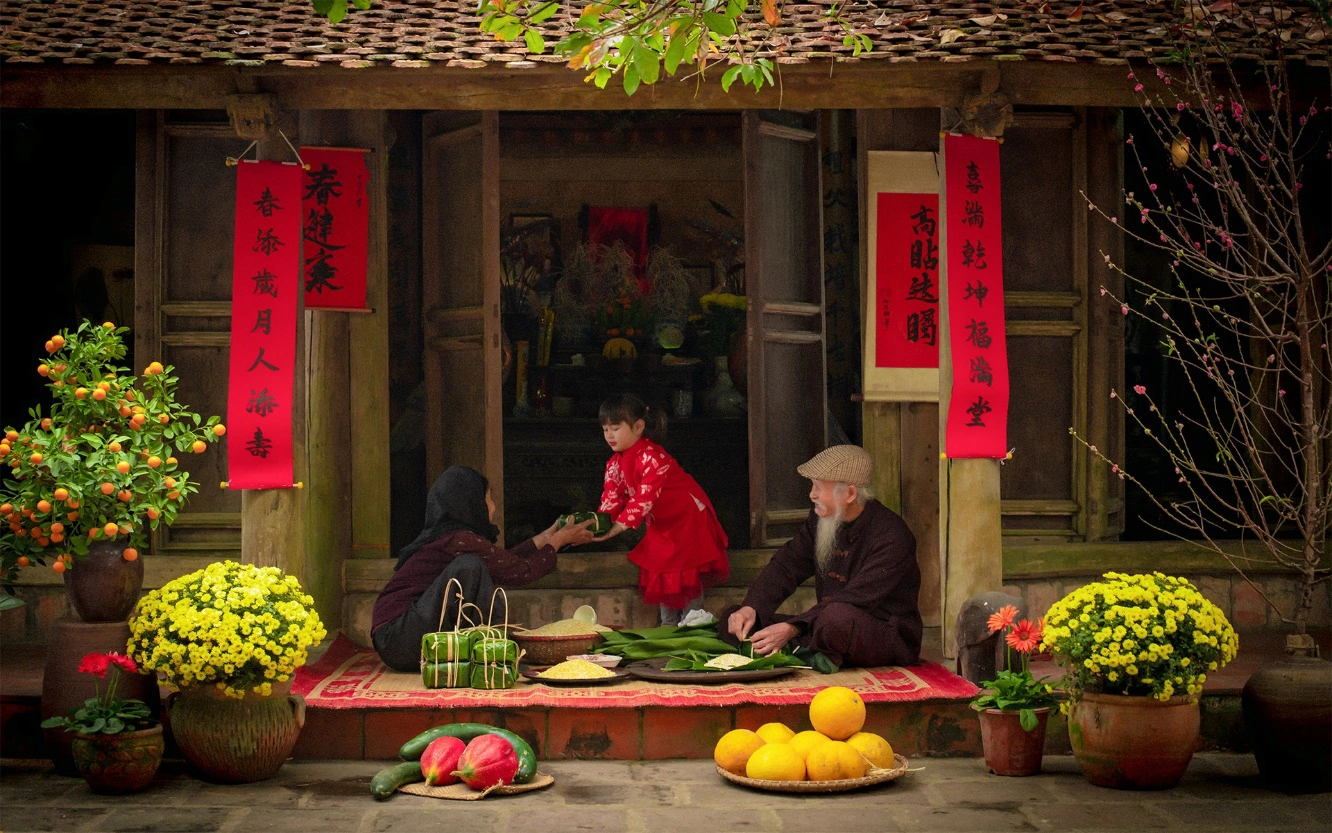
A family preparing for Vietnamese New Year with kumquat trees and red decorations symbolizing prosperity
Over centuries, Tết evolved beyond an agricultural event into a profound spiritual and cultural renewal. It symbolizes the harmony between humans, nature, and the divine. Families clean and decorate their homes to sweep away misfortune, offer food and incense to honor ancestors, and reunite to welcome the new year together.
At its heart, Vietnamese New Year represents new beginnings, filial piety, and national identity. Each custom, from giving “lì xì” (lucky money) to preparing traditional dishes like bánh chưng, carries layers of meaning that connect generations.
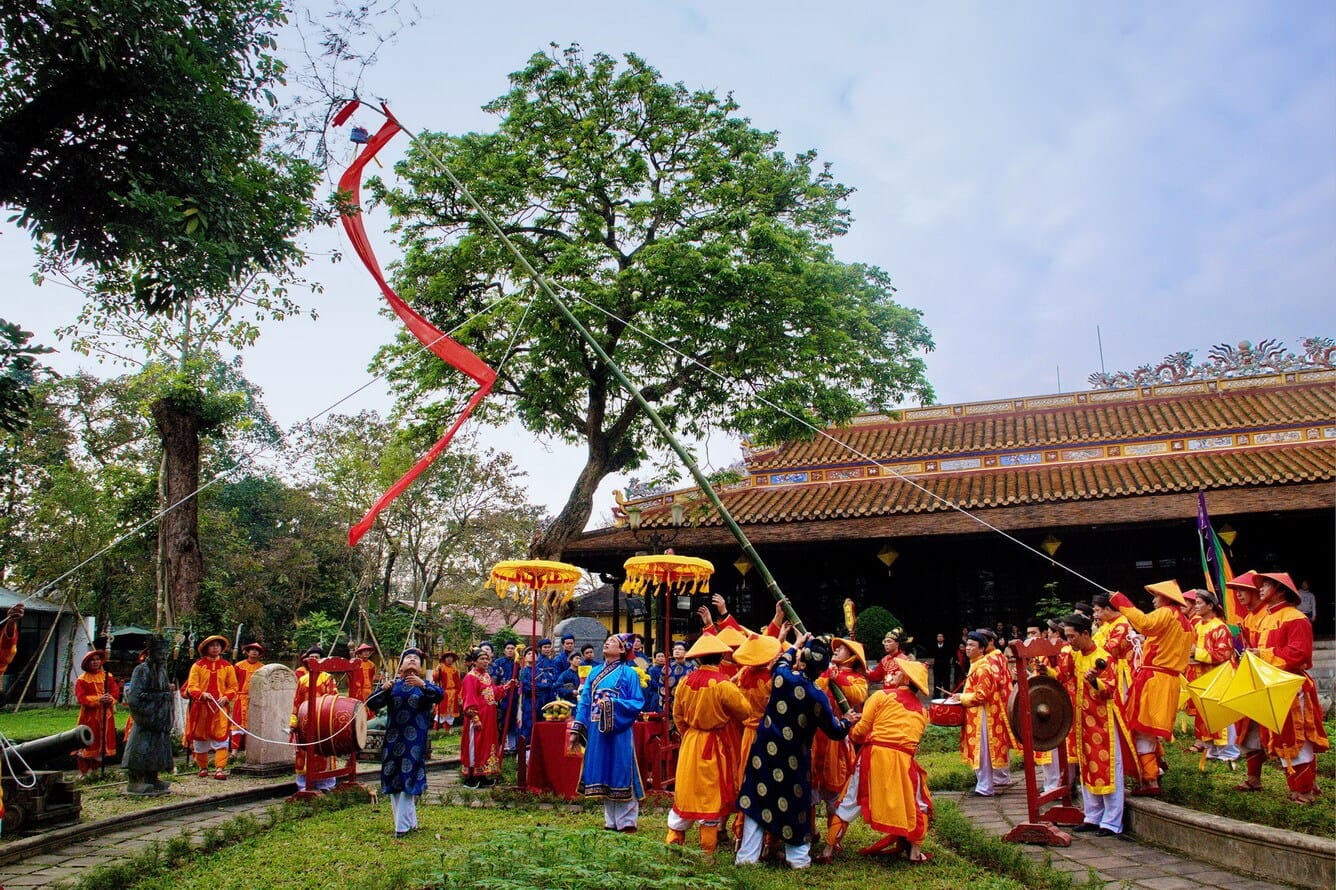
People in Hue’s Royal city put up Neu tree as a sign to begin spring break
More than just a festive season, the Vietnamese New Year embodies the national spirit of renewal, gratitude, and hope, reminding every family of their roots and shared heritage.
Tết is deeply rooted in Vietnam’s agrarian traditions and spiritual beliefs, marking a time of renewal and gratitude.
To understand how cultural heritage shapes modern tourism, visit Vietnam Holidays: Your Complete Guide to an Unforgettable Journey.
Traditional Ways to Celebrate Vietnamese New Year
Cleaning and Decorating the Home
Before Vietnamese New Year arrives, families thoroughly clean their homes to sweep away the misfortunes of the past year and invite good luck. This ritual reflects the belief that a tidy, refreshed home symbolizes a fresh start.
After cleaning, people decorate with kumquat trees, peach blossoms in the North, or yellow apricot flowers in the South, all representing prosperity and happiness. Red and gold decorations are placed around the house to attract luck and ward off evil spirits.
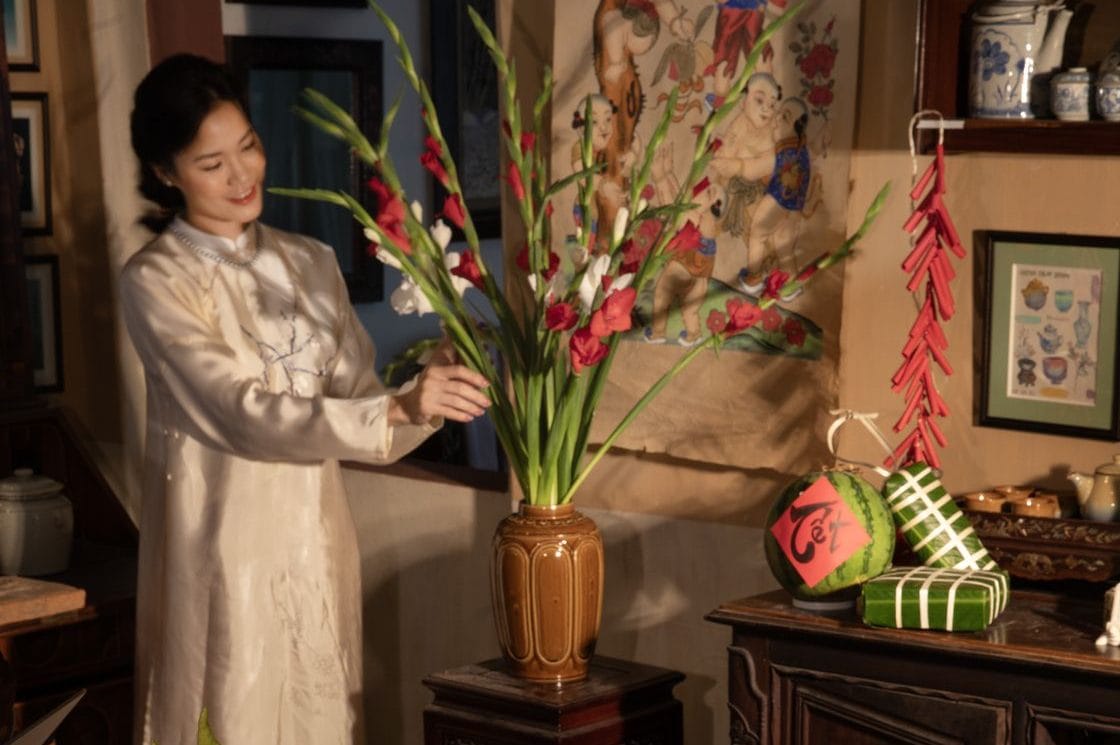
Families cleaning and decorating houses to welcome luck for Tết in Vietnam.
Many families also renew household items, repaint walls, and prepare altars with offerings to honor ancestors. The atmosphere becomes joyful and fragrant with flowers, fruits, and incense. Cleaning and decorating aren’t just chores. They’re acts of gratitude and renewal, setting the perfect tone for a prosperous year ahead.
Streets across Vietnam come alive with kumquat trees, peach blossoms, and red banners — similar to the vibrant atmosphere described in Best Time to Visit Vietnam
Worshiping Ancestors
Ancestor worship is at the heart of Vietnamese New Year traditions. During Vietnamese New Year, families prepare trays of food, fruits, and incense to invite their ancestors home to celebrate with them. This ritual represents filial piety, respect, and continuity between generations.
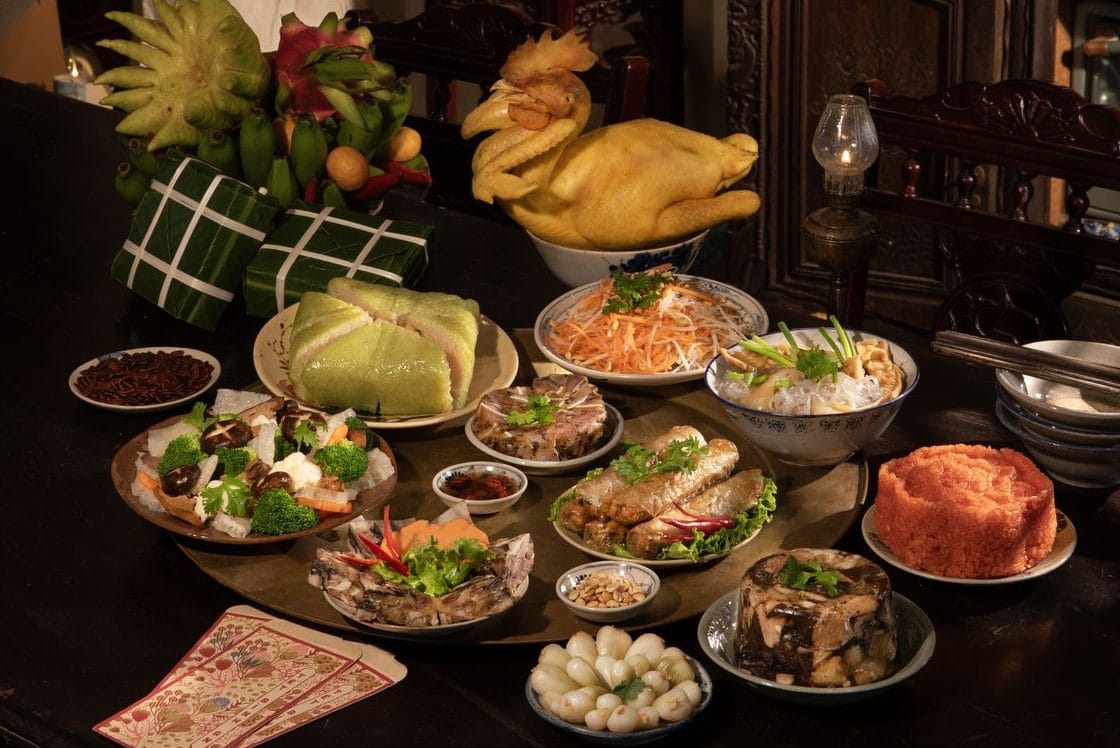
a traditional banquer with offerings of bánh chưng, fruits, and tea during Vietnamese Lunar New Year
The altar is carefully cleaned and adorned with offerings such as bánh chưng, five types of fruits (mâm ngũ quả), flowers, and tea. On New Year’s Eve, families light incense, pray for blessings, and express gratitude for the protection and guidance of their forebears.
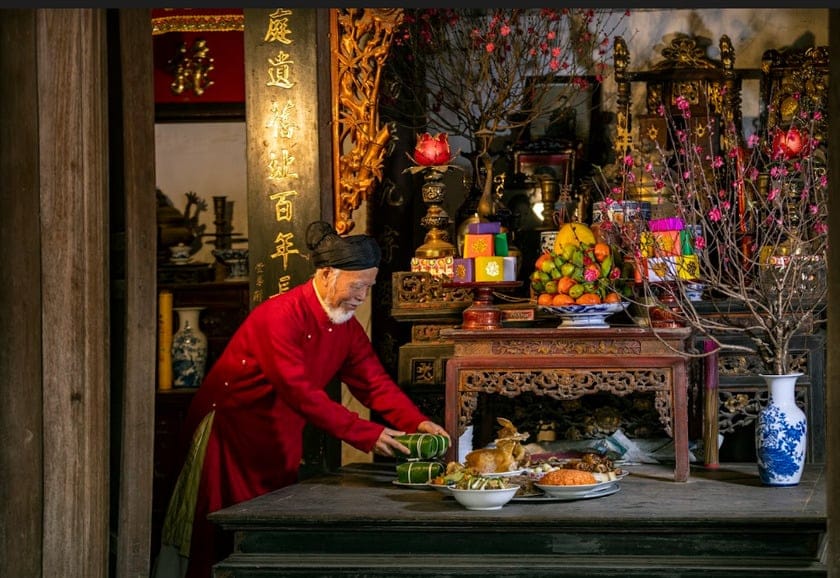
An ancestral altar decorated for Tết, reflecting the spiritual origins of Vietnamese New Year
For many Vietnamese, this moment is deeply spiritual, a quiet pause in the excitement of the season, reminding everyone of their roots. Ancestor worship transforms Tết into more than just a festival; it becomes a sacred reunion between the living and the departed, where family bonds transcend time and generations.
Giving and Receiving Lucky Money
One of the most joyful customs of Vietnamese New Year is giving and receiving lucky money, or “lì xì”. Elders present small red envelopes containing crisp banknotes to children and younger relatives as a symbol of good fortune, growth, and happiness.
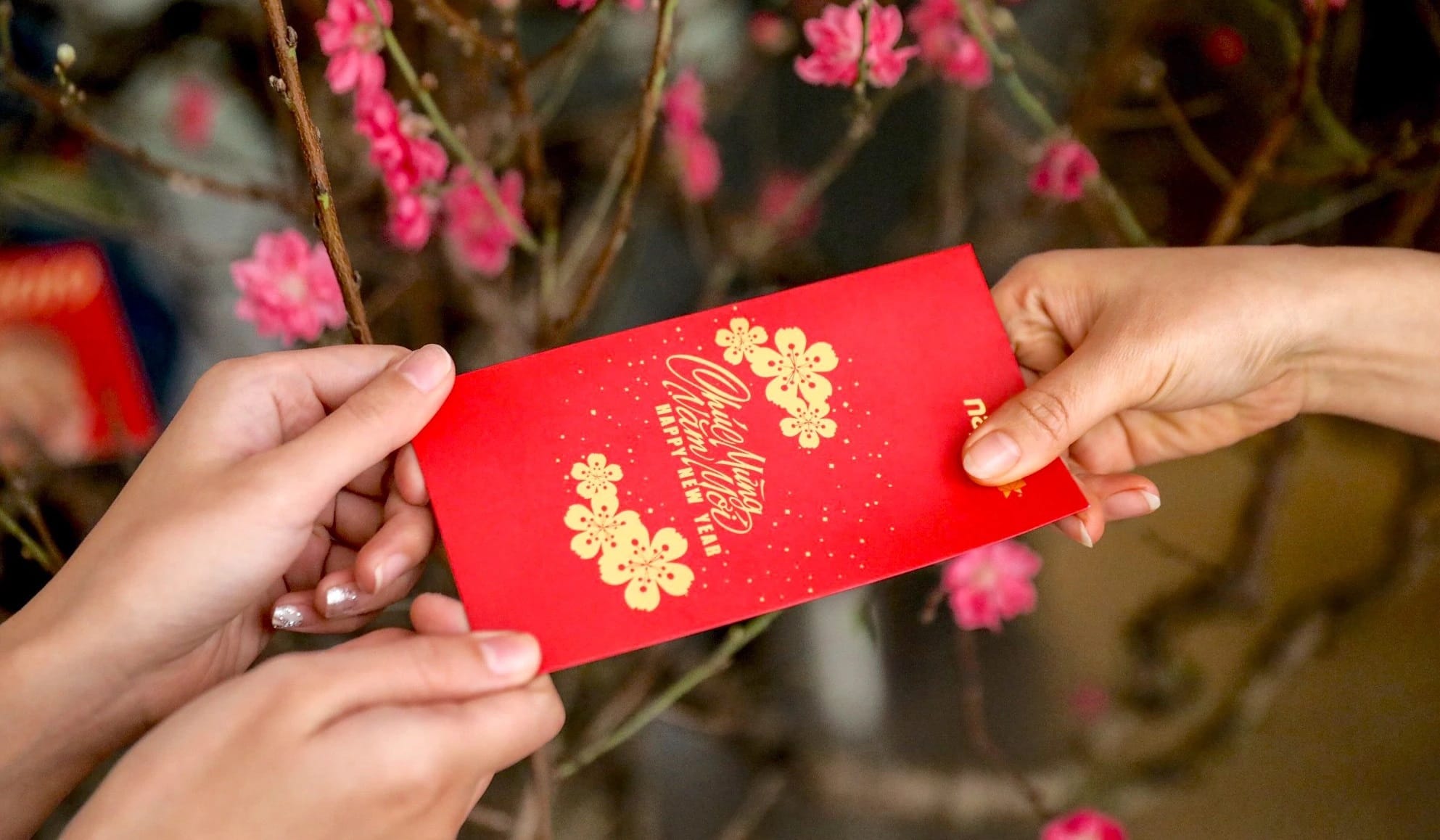
Bright red envelopes symbolizing luck and happiness during Tết in Vietnam
The red envelope itself represents prosperity and protection against bad luck. In return, children bow and wish their elders health, longevity, and success. Nowadays, the lì xì tradition has expanded beyond families, as friends, coworkers, and even business partners exchange lucky money to share good energy for the year ahead.
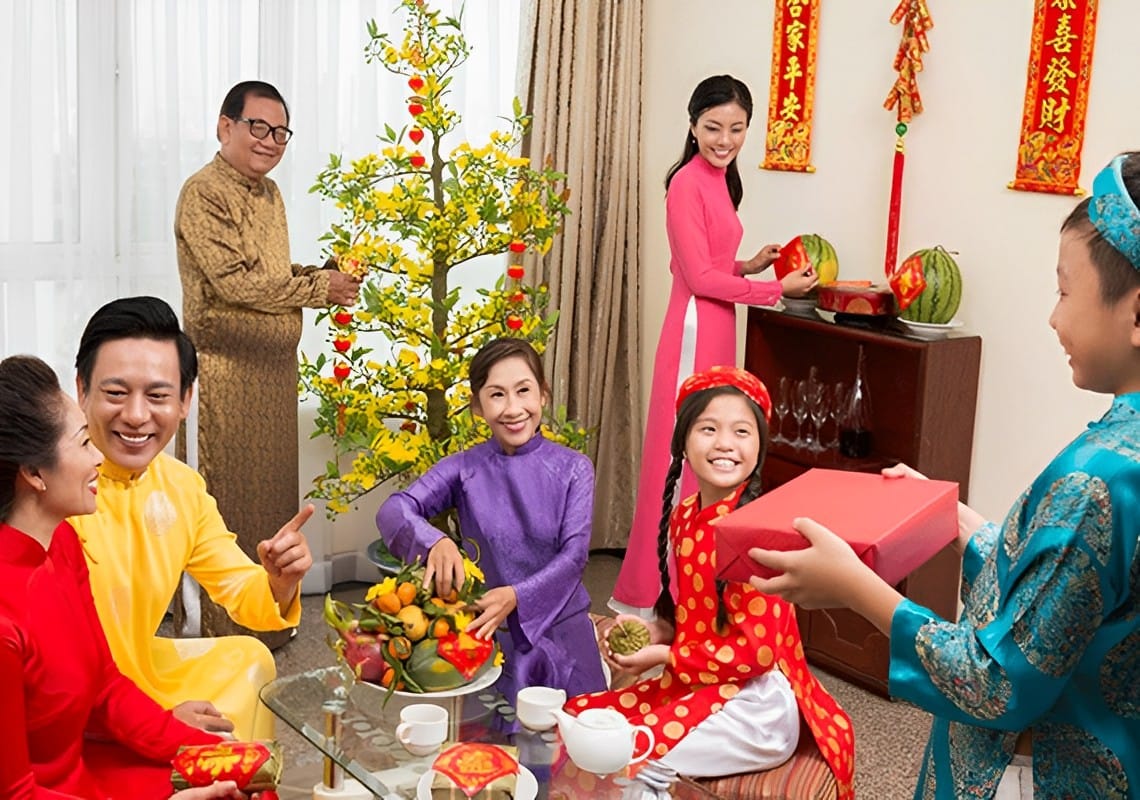
Elders sharing lì xì with smiles — a timeless gesture of good fortune
Though the amount inside is often modest, the gesture carries deep meaning: it’s a way to strengthen relationships and spread positivity. This simple yet meaningful act captures the essence of Vietnamese New Year: generosity, renewal, and the hope that every beginning brings better things to come.
Preparing Traditional Foods
Food plays a central role in Vietnamese New Year celebrations, embodying both family unity and cultural heritage. The most iconic dish is bánh chưng (square sticky rice cake) and bánh tét (cylindrical version), both made from glutinous rice, mung beans, and pork, wrapped in green leaves.
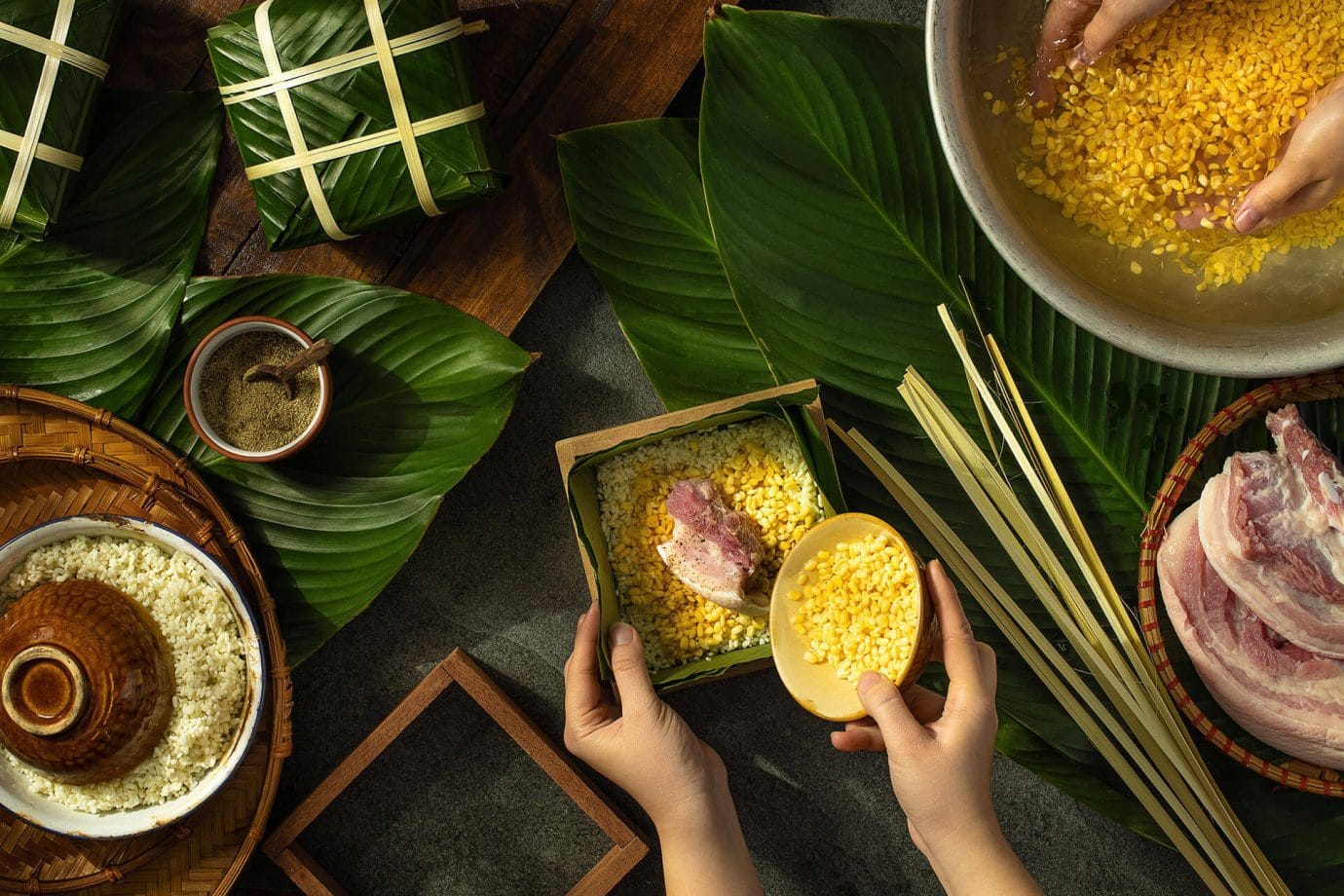
The symbolic green bánh chưng representing Earth and abundance in Tết celebrations
These dishes symbolize the Earth, abundance, and gratitude for nature’s gifts. Families often gather to cook them overnight, sharing stories and laughter around the fire. Other festive dishes include thịt kho trứng (braised pork with eggs), pickled vegetables, boiled chicken, and candied fruits.
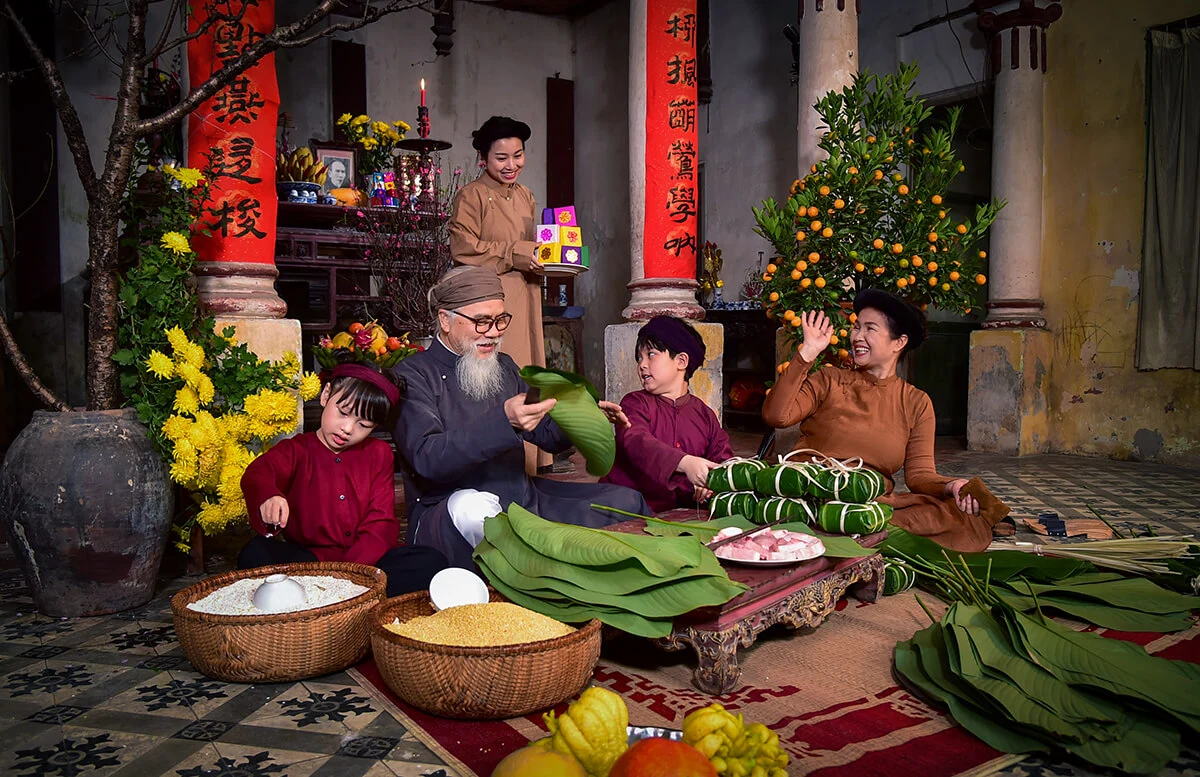
Families cooking bánh chưng together on Vietnamese New Year’s Eve
Every region adds its own flavors, but the meaning remains the same: a wish for fullness and prosperity. Through food, Vietnamese people honor their ancestors, nourish their families, and celebrate the warmth of togetherness that defines Tết.
Visiting Relatives and Friends
Visiting loved ones, or “chúc Tết”, is one of the most cherished traditions during Vietnamese New Year. On the first days of Tết, people dress in their best clothes and go from house to house, offering good wishes and exchanging warm greetings.

Families dressed in áo dài exchanging greetings and New Year wishes.
The first visitor to a home (người xông đất) is especially significant, as they are believed to bring the household good fortune for the year. Along with these visits, many people also go to temples or pagodas to “hái lộc,” which means picking symbolic buds or leaves to bring luck home.
These gestures strengthen family bonds, friendships, and community ties. The joy of laughter, the scent of incense, and the echoes of greetings like “Chúc Mừng Năm Mới” (Happy New Year) fill the air, making this custom one of the most heartfelt aspects of Vietnamese New Year.
Wearing Traditional Clothes
During Vietnamese New Year, wearing the áo dài – Vietnam’s traditional long dress – is a way to honor cultural beauty and express festive joy. Both men and women don elegant, colorful áo dài made from silk or brocade, often in shades of red, yellow, or gold to symbolize happiness and luck.
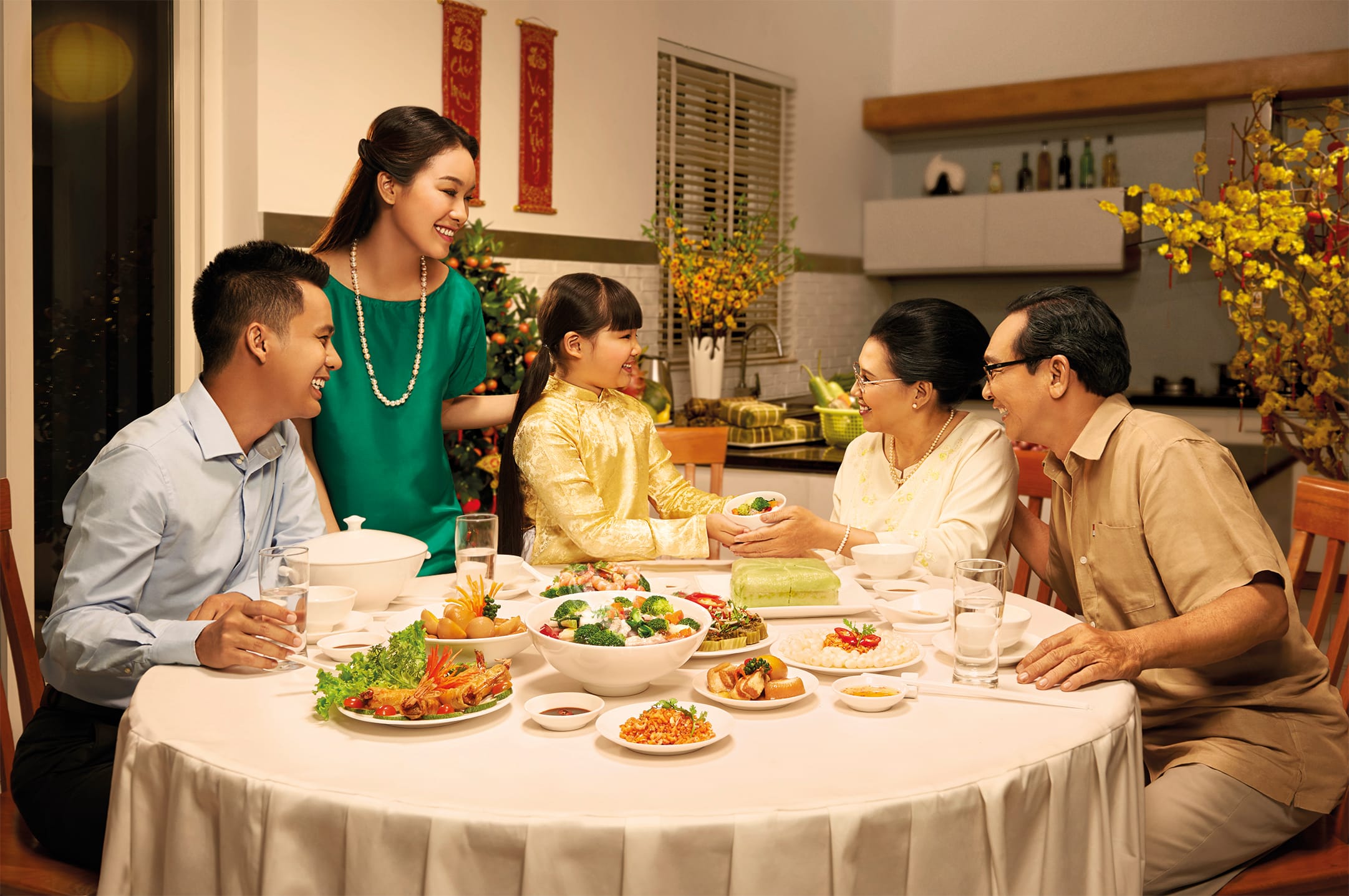
Houses filled with warmth and reunion during the first days of Vietnamese New Year
In rural areas, elders might wear simpler, traditional garments, while younger generations often add modern touches to their outfits. Many families wear matching áo dài for family portraits or when visiting relatives and temples, creating a sense of unity and pride. Beyond fashion, this custom reflects respect for tradition and family values.
The áo dài is not just clothing; it’s a symbol of national identity: graceful, proud, and timeless, making every moment of Tết feel more elegant and meaningful.
Visiting Pagodas for Blessings
For many Vietnamese, the New Year begins with a visit to temples or pagodas to pray for peace, health, and prosperity. This tradition, known as “đi chùa đầu năm”, embodies the country’s deep spiritual roots.
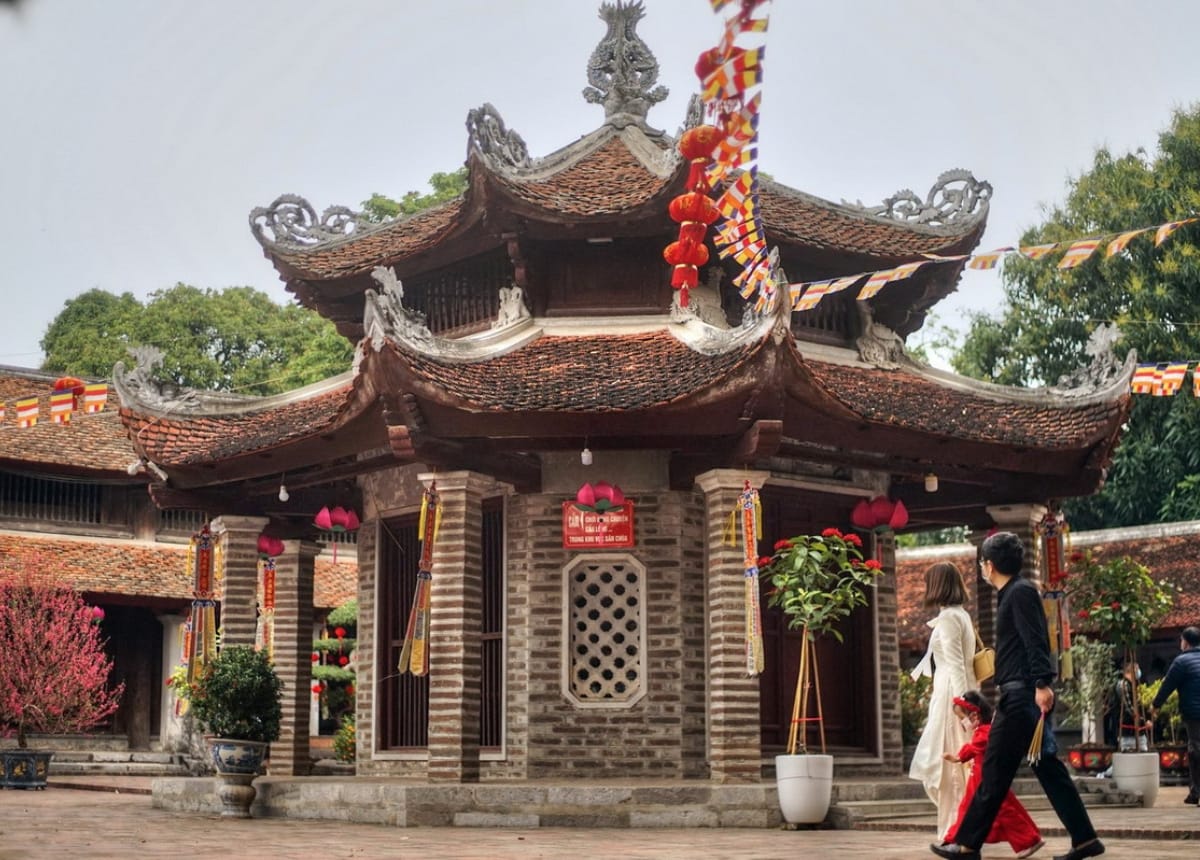
Pilgrims lighting incense at a pagoda to pray for luck and peace in the new year.
Families offer incense, flowers, and donations to the Buddha while making wishes for themselves and their loved ones. It’s also a time for quiet reflection to let go of the past and welcome new beginnings. Pagodas across Vietnam become vibrant with incense smoke, the ringing of bells, and the soft murmur of prayers.
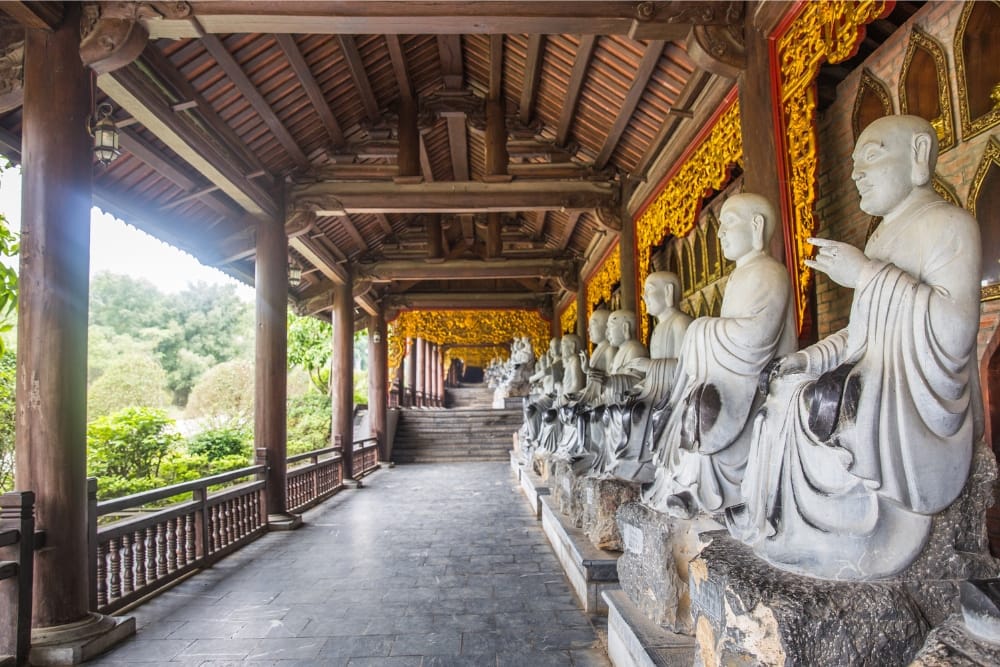
walking through Bai Dinh Pagoda, the largest Buddhist complex in Southeast Asia
Whether in bustling cities or tranquil countryside villages, visiting a pagoda during Vietnamese New Year connects people with both the divine and their inner selves, offering a sense of harmony and renewal that lasts long after the celebrations end.
For travelers who enjoy cultural and spiritual experiences, visiting temples like Bái Đính or Tràng An in Ninh Bình offers a glimpse into this living heritage —
Learn more in Best Ninh Binh Resorts to Stay In 2025
Traveling for Relaxation and Family Bonding
In recent years, a new Vietnamese New Year trend has emerged. Families choosing travel and relaxation over traditional ceremonies. As modern lifestyles become busier, many people now see Tết as the perfect time to unwind, reconnect, and create shared memories rather than focus solely on rituals.
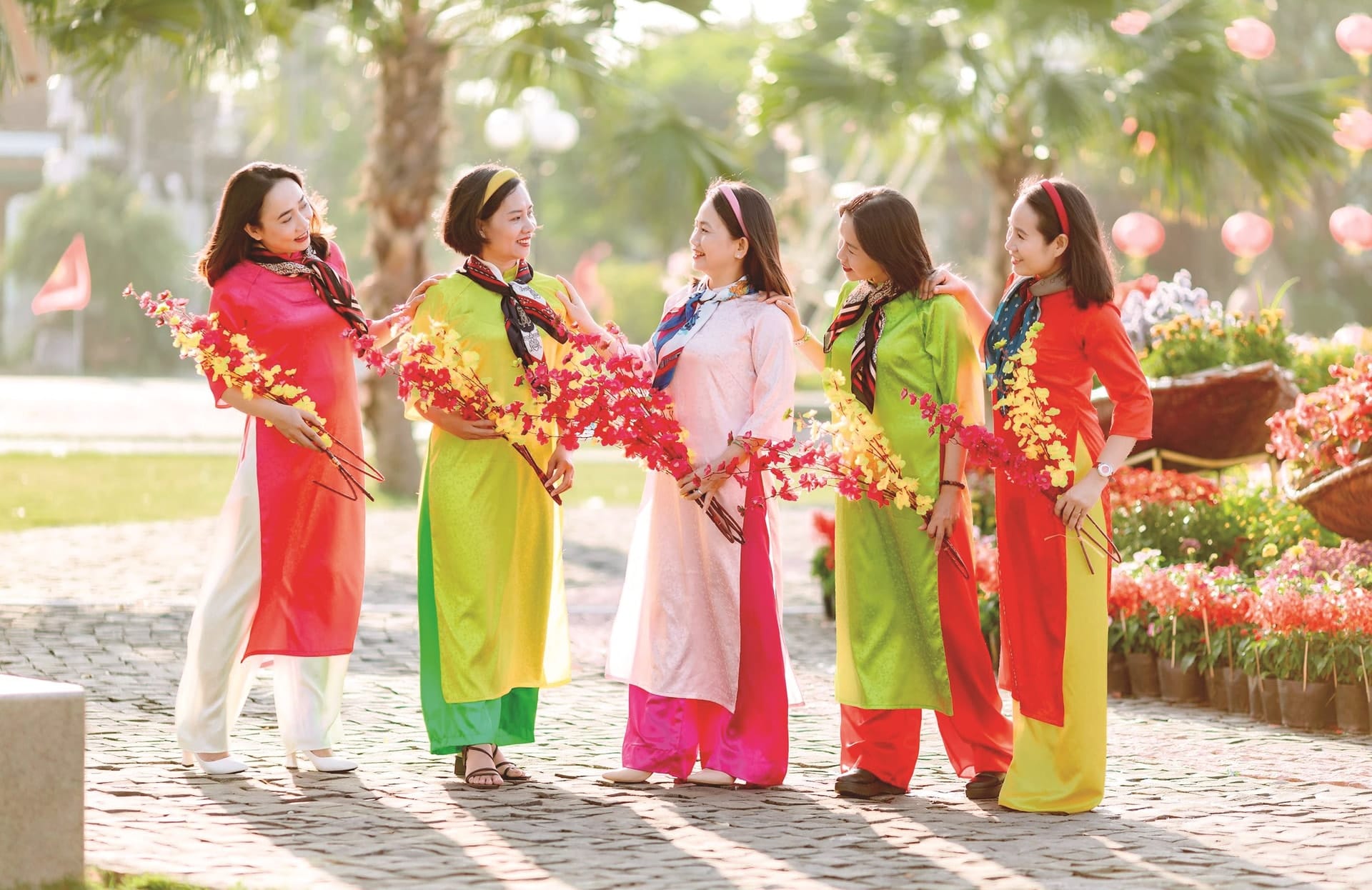
Elegant áo dài designs blending tradition and modern style for the holiday season
Popular destinations across Vietnam offer stunning natural beauty and cultural charm. In the North, travelers often head to Hạ Long Bay, Ninh Bình, Sa Pa, or Mai Châu, where they can enjoy misty mountains and tranquil rivers. In the Central and Southern regions, favorites include Đà Nẵng, Hội An, Nha Trang, Phú Quốc, and Đà Lạt, each known for their beaches, wellness retreats, and festive atmosphere.
Whether it’s sipping tea by limestone cliffs or watching fireworks from a seaside resort, this form of celebration blends rest, reflection, and family bonding beautifully.
If you’re looking to experience Tết in peaceful elegance, surrounded by nature and culture, consider booking your stay at Jiva Hoa Lư Retreat, a serene hideaway where tradition meets tranquility, and every moment feels like a renewal of the soul.
Travel Tips: Enjoying Vietnamese New Year the Local Way
Traveling to Vietnam during Tết Nguyên Đán (Vietnamese New Year) offers a once-in-a-lifetime cultural experience, but to truly enjoy it like a local, travelers should dive beyond sightseeing and join in everyday traditions.
Start by visiting local markets a few days before Tết. The atmosphere is electric, with families buying flowers, fruits, and red decorations. Try shopping for peach blossoms in Hanoi or apricot flowers in HCMC, both are symbols of luck.
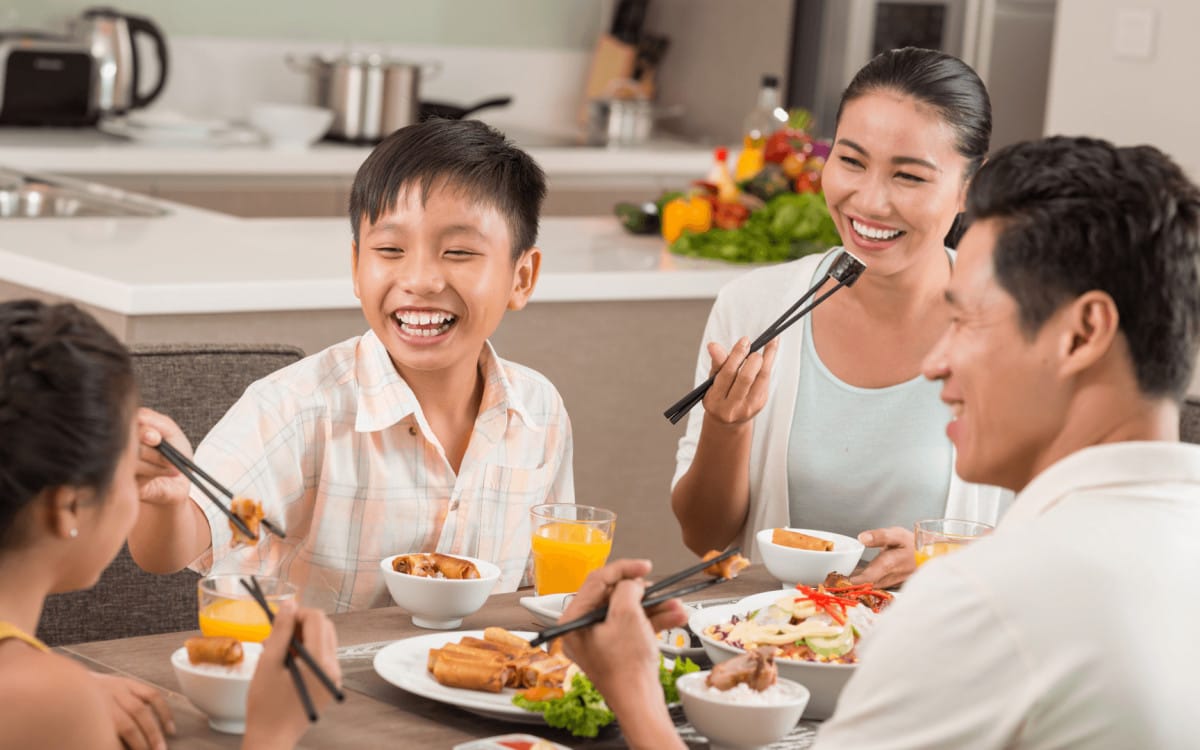
Families sharing home-cooked dishes
Join a local family if invited; sharing Tết meals like bánh chưng, thịt kho trứng, and candied fruits is the most authentic way to experience the holiday’s warmth. When meeting elders, offer a respectful greeting and say “Chúc Mừng Năm Mới” (Happy New Year).
On New Year’s Eve, head to a temple or riverside spot to watch fireworks and make a wish for good fortune.
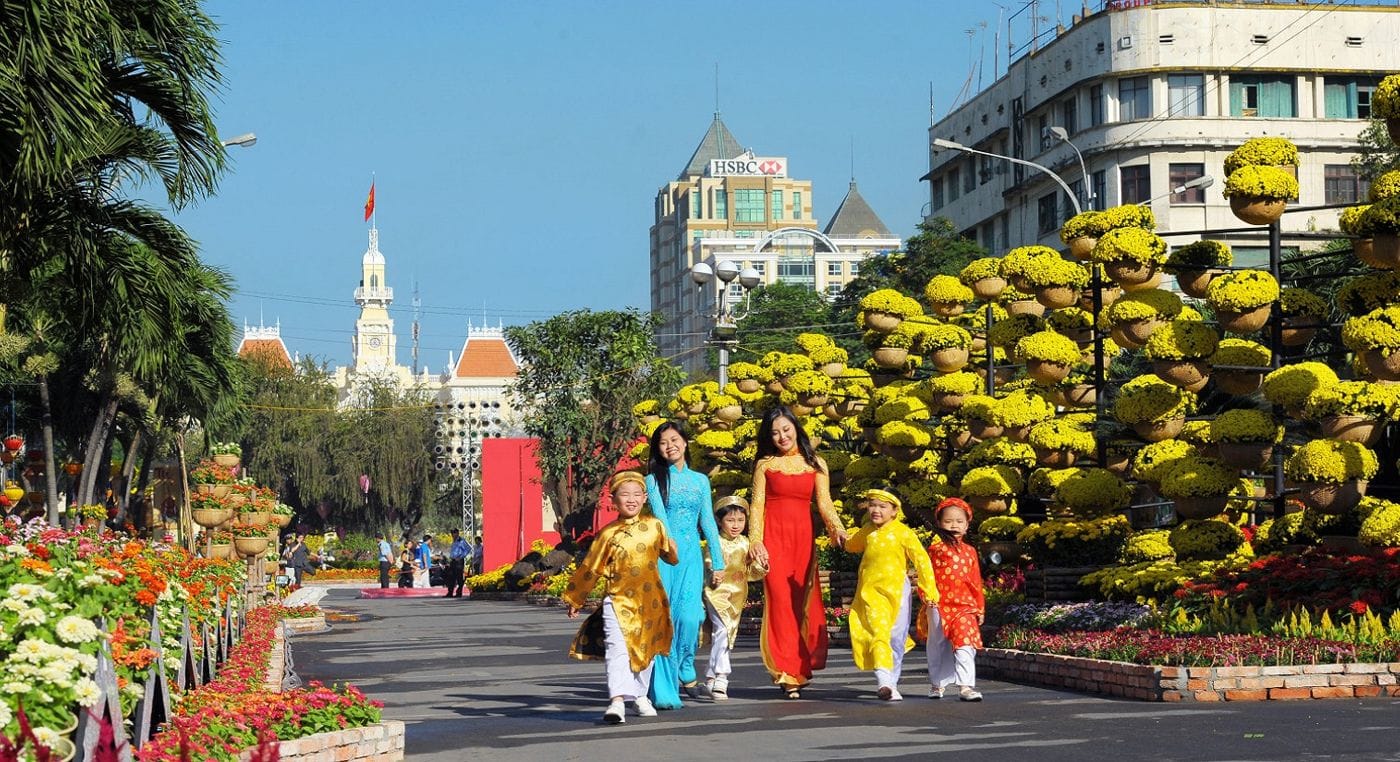
The blend of traditional music and modern festivals brings together locals and travelers in a vibrant atmosphere.
Afterward, spend time in quieter streets! Vietnam’s cities take on a rare calm, giving you a glimpse of local life at its most peaceful.
Embracing these simple customs allows travelers not just to observe, but to feel the heart of Vietnamese New Year — a celebration of gratitude, renewal, and connection.
For a full cultural travel calendar, see Public Holidays in Vietnam 2025: Must-Know Dates and How to Celebrate Like a Local and if you plan to visit northern regions, review The Comprehensive Travel Guide to Northern Vietnam Weather to choose the best timing.
Ready to Experience Jiva?
Immerse yourself in a stay where northern Vietnamese architecture meets world-class comfort. At Jiva Hoalu Retreat, each accommodation blends locally inspired décor with modern luxuries, offering a unique fusion of culture, tradition, and elegance. Whether you’re here for a romantic getaway, a family escape, or a tranquil retreat, Jiva promises unforgettable moments in the heart of Ninh Binh.
Contact Us:
📞 +84 933 006 886
📧 inquiry@jivahoaluretreat.com
🌐 https://jivahoaluretreat.com/
Book now! to enjoy super hot deals