


05 November, 2026
The Tet Holiday, or Vietnamese Lunar New Year, is the most important celebration in Vietnam. Marking a time for family, tradition, and renewal, Tet brings together cultural rituals, festive foods, and nationwide joy. Discover how Vietnamese people celebrate, what to eat, and where to go during this special holiday.
What is the Tet holiday in Vietnam?
Tet Holiday, or Lunar New Year, is the most important and widely celebrated festival in Vietnam. It marks the beginning of the lunar year and is a time for family reunions, honoring ancestors, and welcoming new beginnings.
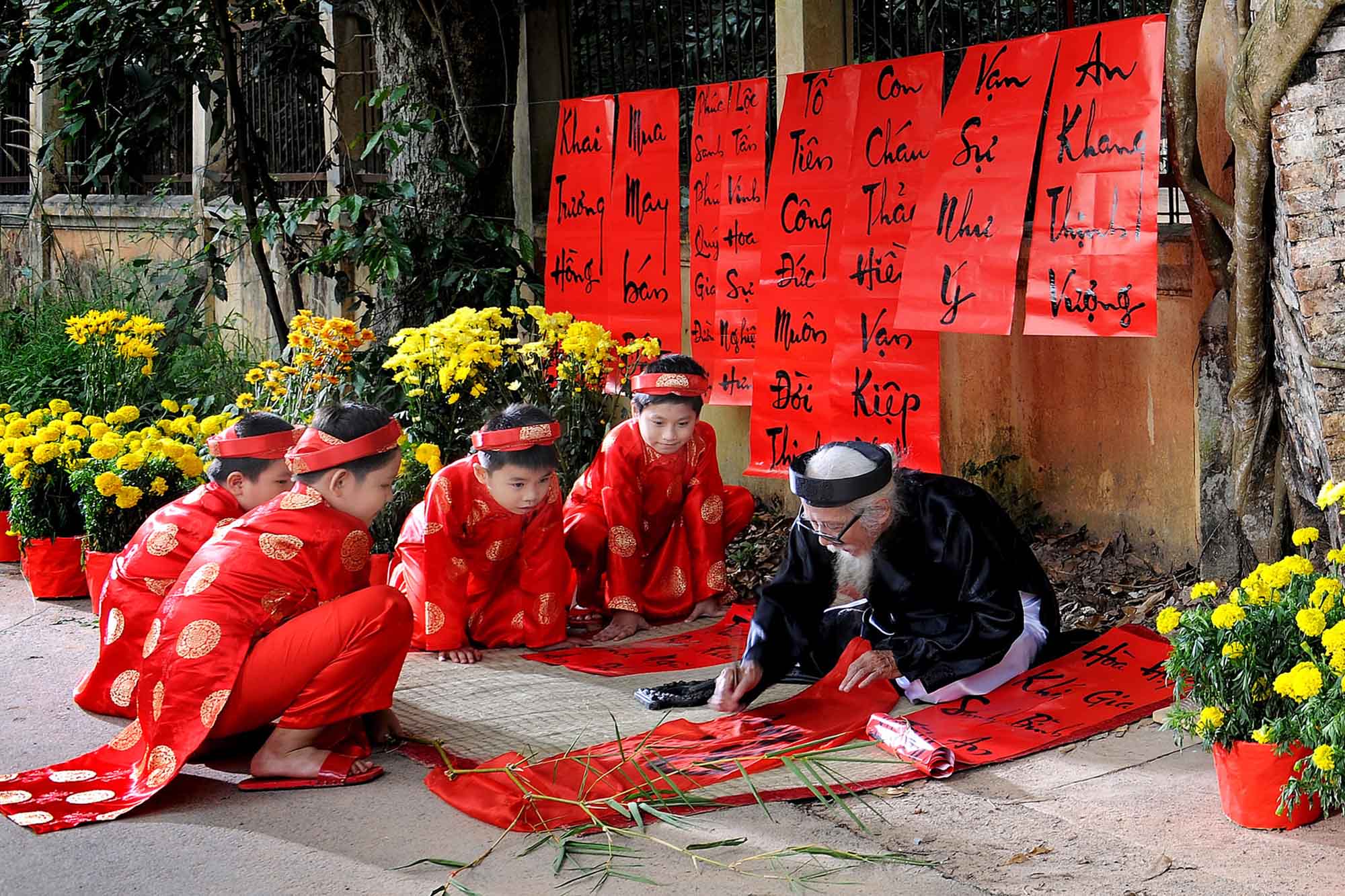
Tet Holiday is the most important holiday of the year
In the weeks leading up to Tet, people clean and decorate their homes, buy new clothes, and prepare special traditional foods such as bánh chưng and bánh tét. During Tet, families exchange best wishes, give lucky money to children and elders, and visit relatives and friends. The atmosphere is filled with joy, hope, and a deep sense of cultural pride.
How long is Tet holiday in Vietnam in 2026?
In 2026, Tet Holiday in Vietnam will last 9 days, from February 14 to February 22, 2026, as officially approved by the Prime Minister. This extended break combines the public days off for Tet Holiday with weekend adjustments, allowing Vietnamese families more time to celebrate the Vietnamese Lunar New Year.
During this period, government offices, schools, and most businesses across the country will close, creating the perfect occasion for travel, family reunions, and cultural festivities. The 9-day Tet Holiday truly marks the most joyful and meaningful time of the year for the Vietnamese people.
Popular Traditions of the Vietnamese Lunar New Year
Family Reunion and Ancestor Worship
One of the most cherished traditions during the Vietnamese Lunar New Year, or Tet Holiday, is the reunion of family members and the worship of ancestors. Days before Tet, Vietnamese people return to their hometowns, clean family altars, and prepare offerings of fruit, traditional dishes, and flowers to honor their ancestors.
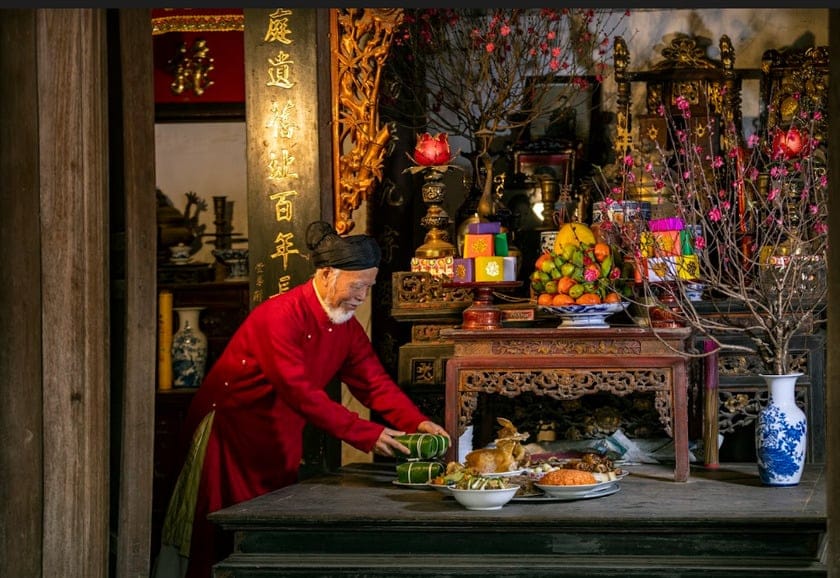
A Vietnamese family gathers around traditional offerings to honor ancestors during Tet Holiday.
On New Year’s Eve, families gather together to pray for peace, health, and prosperity in the coming year. This sacred practice reflects the Vietnamese belief in filial piety and gratitude toward past generations. The atmosphere during Tet Holiday is filled with warmth, love, and laughter as family members share stories, exchange blessings, and enjoy home-cooked meals.

Traditional dishes beautifully arranged on an offering table.
The custom of ancestor worship beautifully connects the living and the departed, reminding everyone of the importance of family bonds and cultural continuity that define the Vietnamese Lunar New Year spirit.
Bánh Chưng Wrapping Tradition
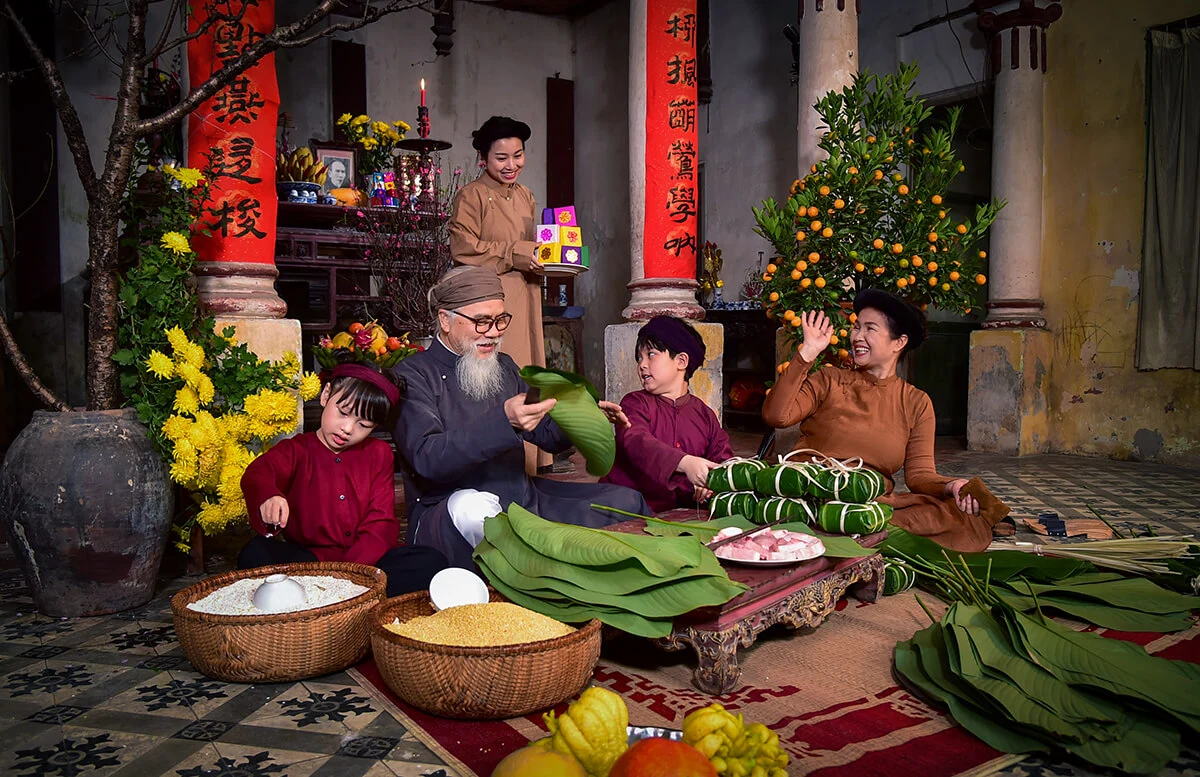
One of the most beloved traditions during the Tet Holiday is gói bánh chưng: wrapping and cooking square sticky rice cakes. Families gather to prepare this symbolic dish made from sticky rice, mung beans, and pork, wrapped in green dong leaves. The process is not just about cooking but about togetherness.
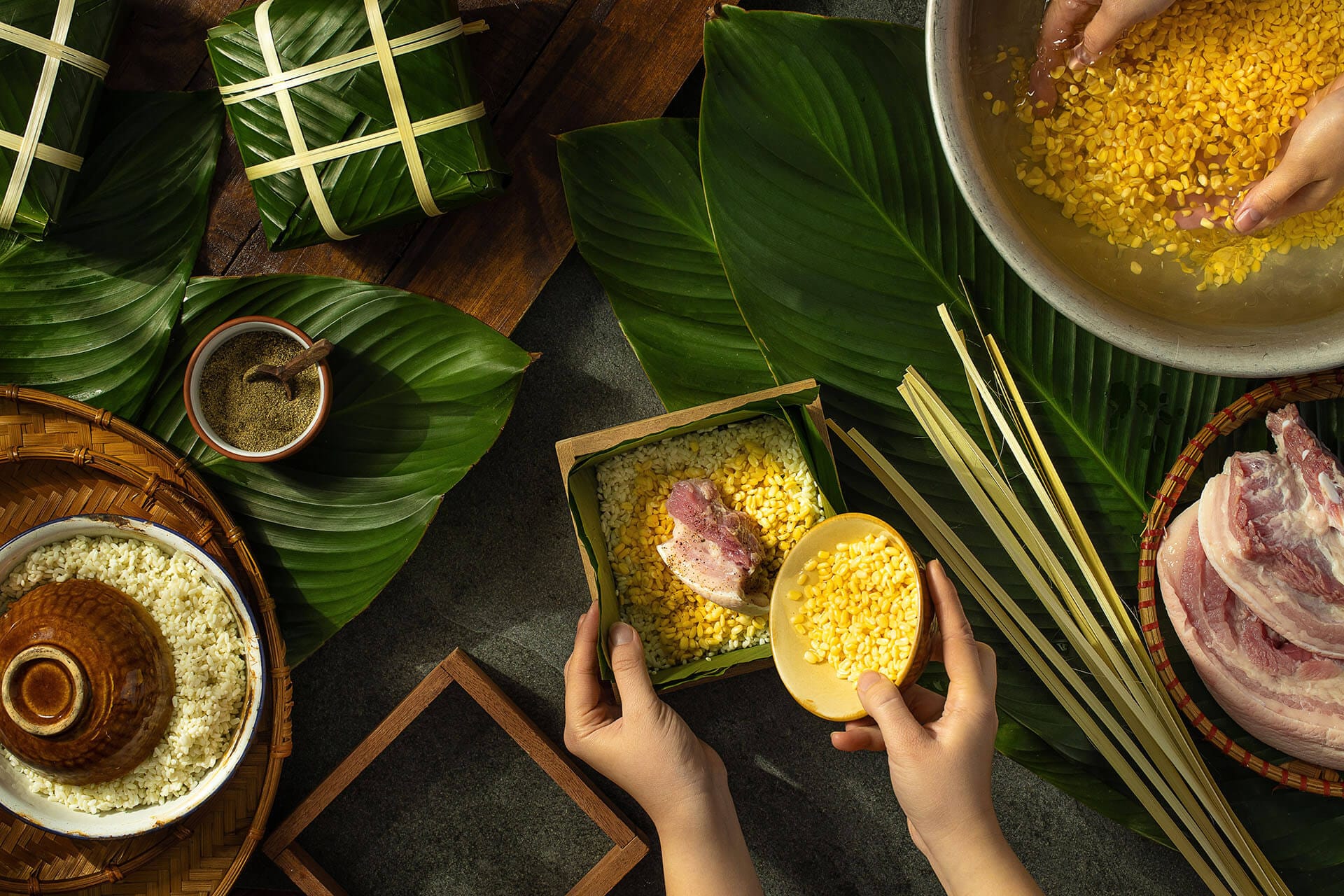
Green bánh chưng cakes symbolize the Earth and ancestral gratitude
During the Vietnamese Lunar New Year, every generation joins in — elders guide the younger ones on how to wrap the cake neatly, while children excitedly help tie the strings. The cakes are then boiled overnight, filling the air with warmth and anticipation.
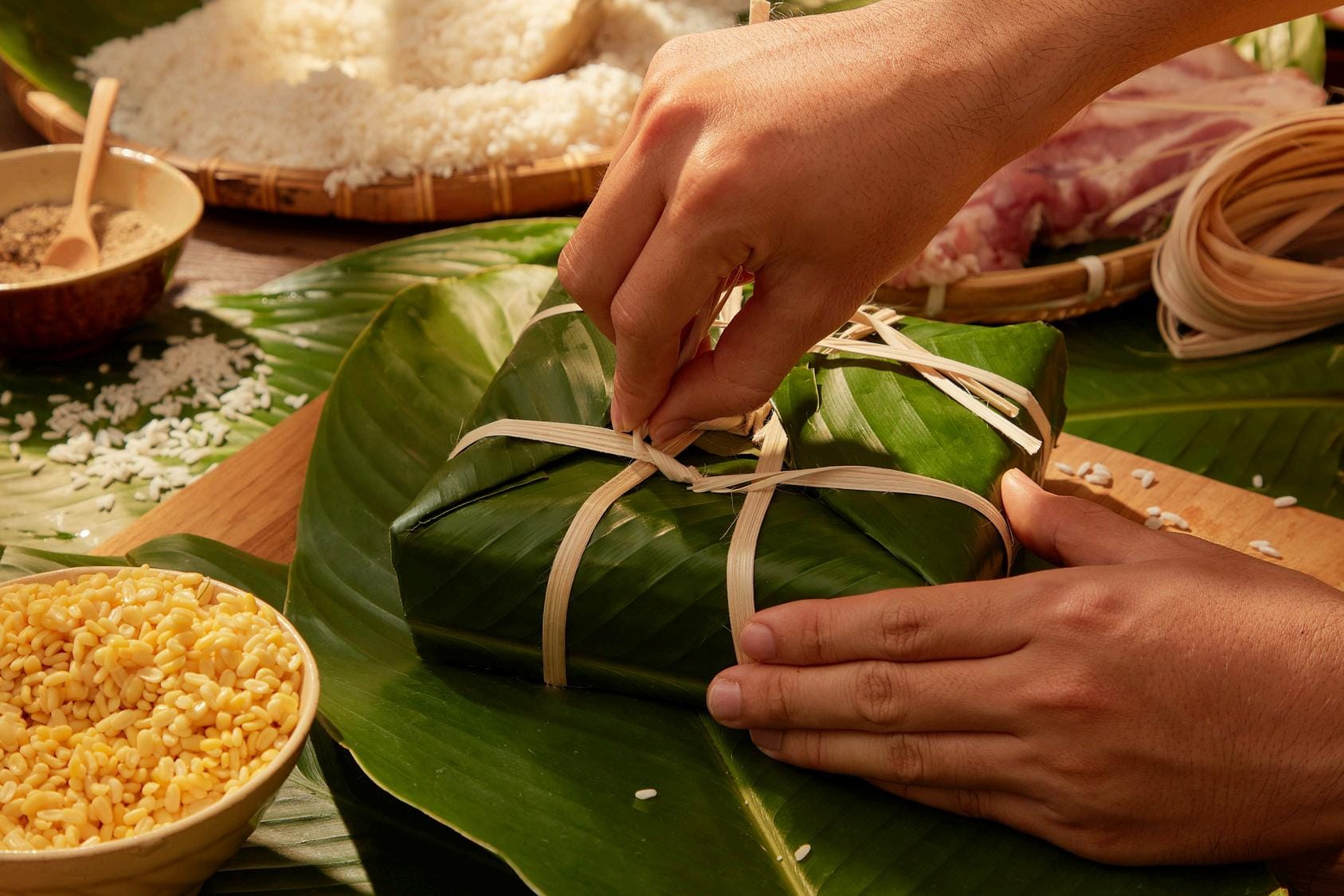
Banh Chung is an important dish that any food tray would have during Tet
This tradition represents gratitude to ancestors, harmony between heaven and earth, and the spirit of reunion that defines the Tet Holiday. The act of making bánh chưng together preserves cultural heritage and reminds everyone of the deep family connection at the heart of Vietnamese New Year.
Giving Lucky Money (Lì xì)
The tradition of giving lucky money, or lì xì, is a joyful and symbolic practice during the Vietnamese Lunar New Year. On Tet Holiday, elders give red envelopes containing money to children and younger family members, wishing them good luck, success, and happiness.
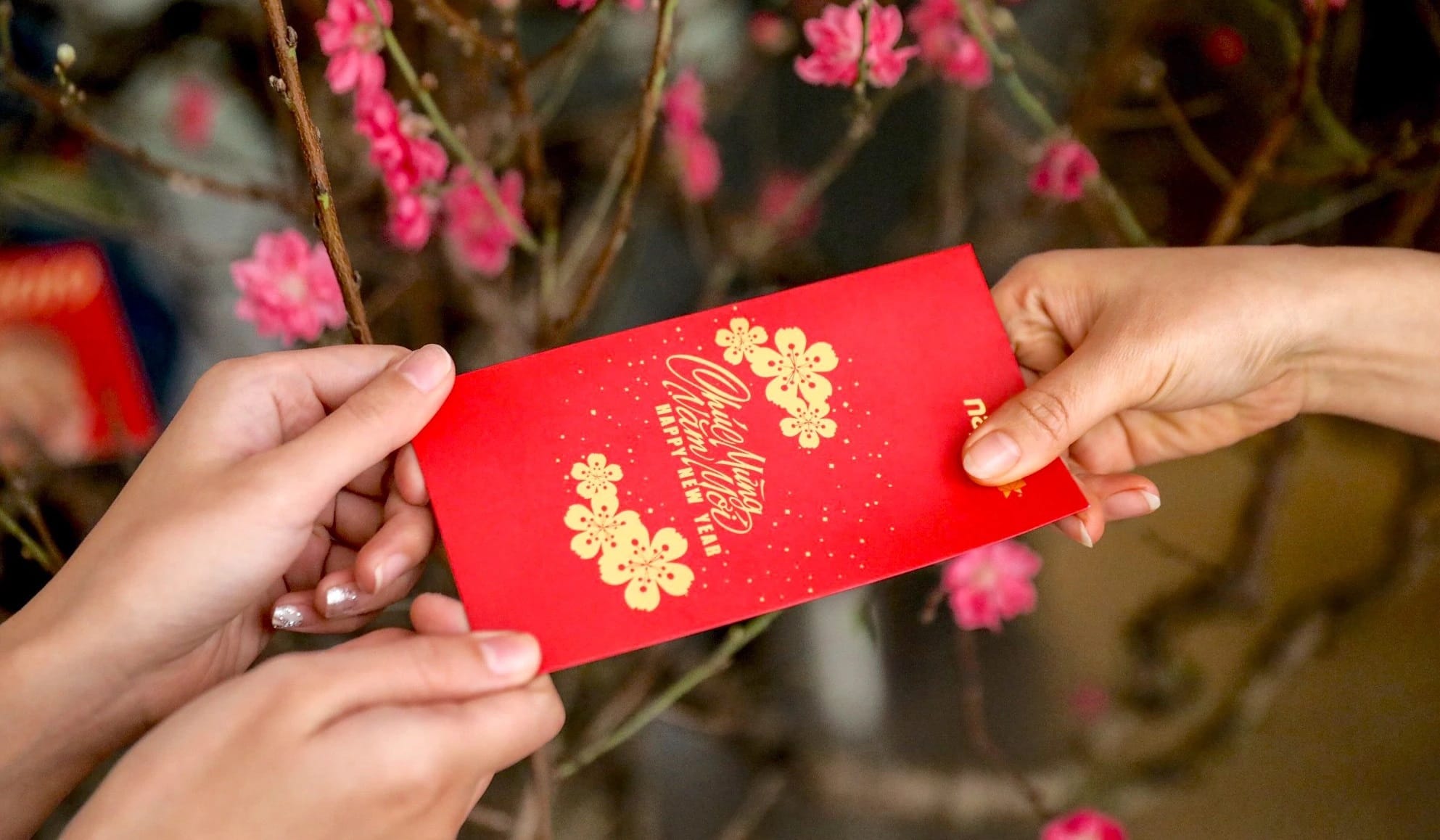
Vietnamese lucky money, or “li xi,” is traditionally given during the Lunar New Year to bestow blessings of good luck and happiness upon the recipients.
The red color of the envelope symbolizes prosperity and protection from evil spirits. Beyond its monetary value, lì xì represents the sharing of blessings and positive energy for the year ahead. Many workplaces and friends also exchange lucky money to express goodwill and strengthen relationships.
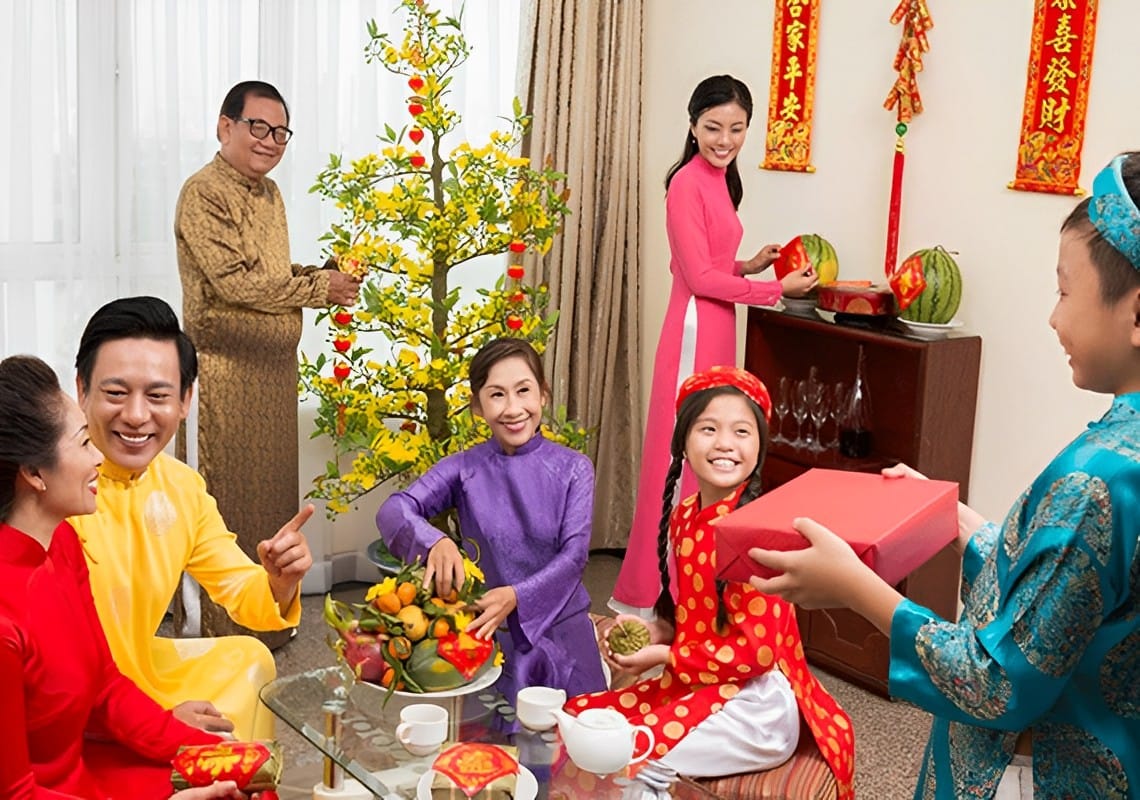
Vietnamese families exchange smiles and New Year greetings on the first day of Tet.
This simple yet meaningful custom adds a touch of excitement and hope to every Tet Holiday celebration. It is one of the most anticipated moments of the Vietnamese Lunar New Year, bringing smiles and joy to both givers and receivers while reinforcing the spirit of generosity and optimism for new beginnings.
Decorating Homes with Blossoms and Symbols
As Tet Holiday approaches, Vietnamese families enthusiastically clean and decorate their homes to welcome the Vietnamese Lunar New Year with fresh energy and positivity. Common decorations include peach blossoms in the North, apricot blossoms in the South, and kumquat trees symbolizing wealth and fertility.

Young Vietnamese wear áo dài to celebrate the extended Tet Holiday period with family visits.
Homes are also adorned with red banners, calligraphy, and paper ornaments bearing wishes for luck and happiness. This preparation not only refreshes the living space but also reflects the belief in renewal and good fortune for the coming year.
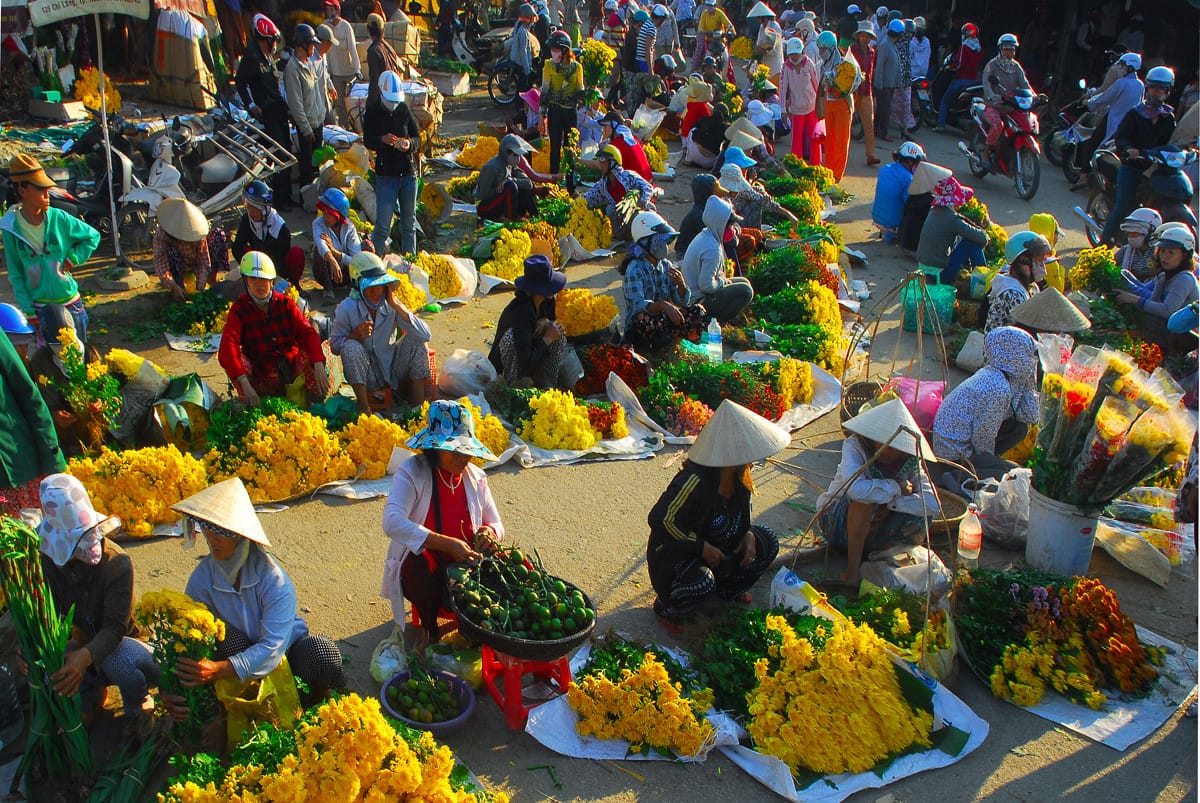
The scent of peach blossoms along with hundred types of flowers fills the air as Vietnamese people honor their ancestors.
During Tet Holiday, streets and markets are filled with vibrant colors and festive aromas, creating an atmosphere of excitement and hope. The act of decorating homes during the Vietnamese Lunar New Year is more than aesthetic, but a cultural ritual that signifies clearing away misfortune and inviting prosperity, happiness, and success into every household.
Visiting Relatives and Friends (Chúc Tết)
Visiting relatives and friends, known as chúc Tết, is an essential tradition of the Vietnamese Lunar New Year. During Tet Holiday, people wear new clothes, bring gifts, and offer warm wishes for health, happiness, and wealth. The first day of the new year is usually reserved for close family, while the following days are for friends, colleagues, and neighbors.
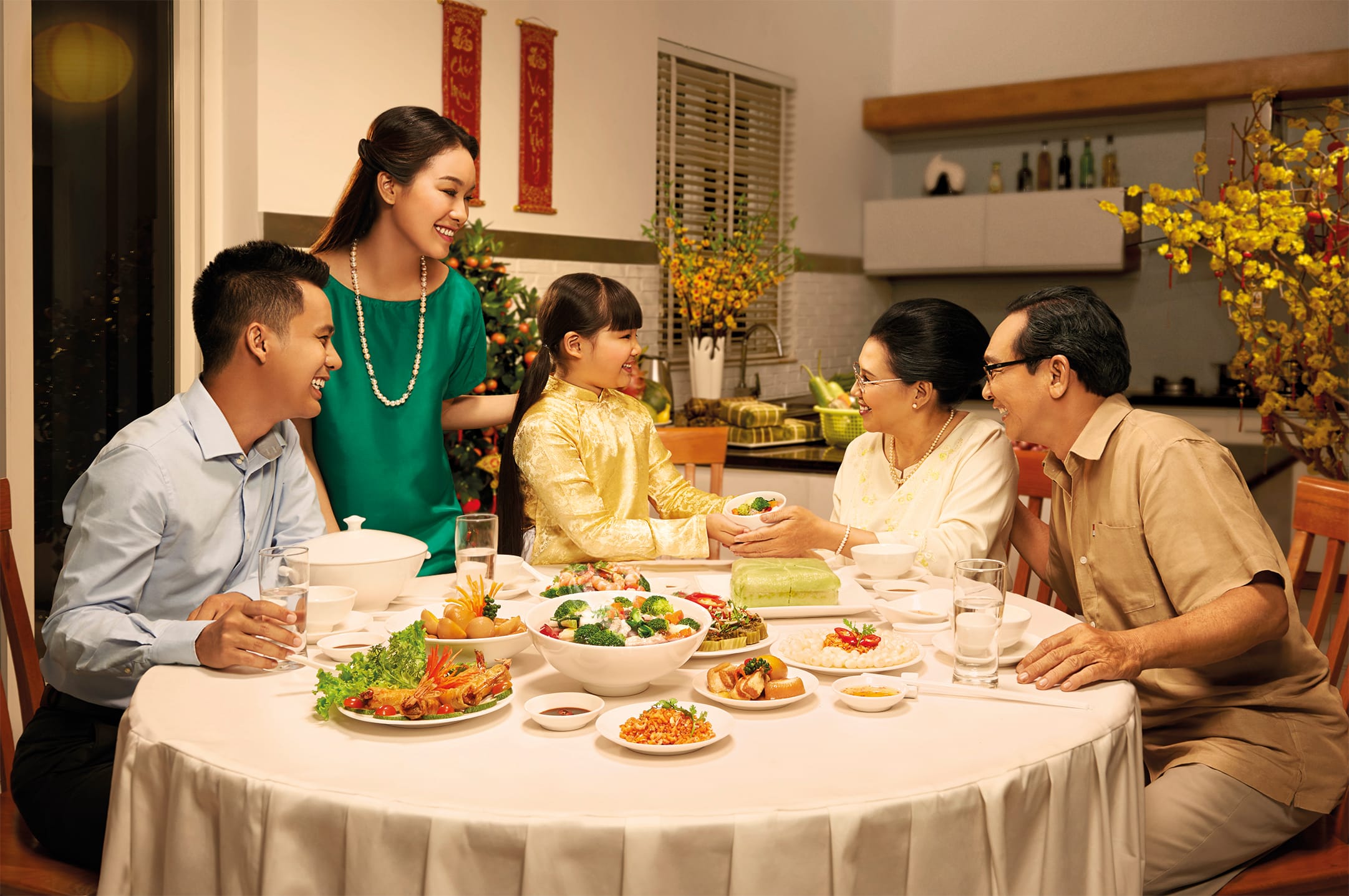
Generations gather to share stories and blessings around a festive Tet dining table.
These visits strengthen social connections and reflect the Vietnamese values of respect and harmony. The choice of the first visitor to a home, called xông đất, is also believed to influence the family’s luck for the entire year.
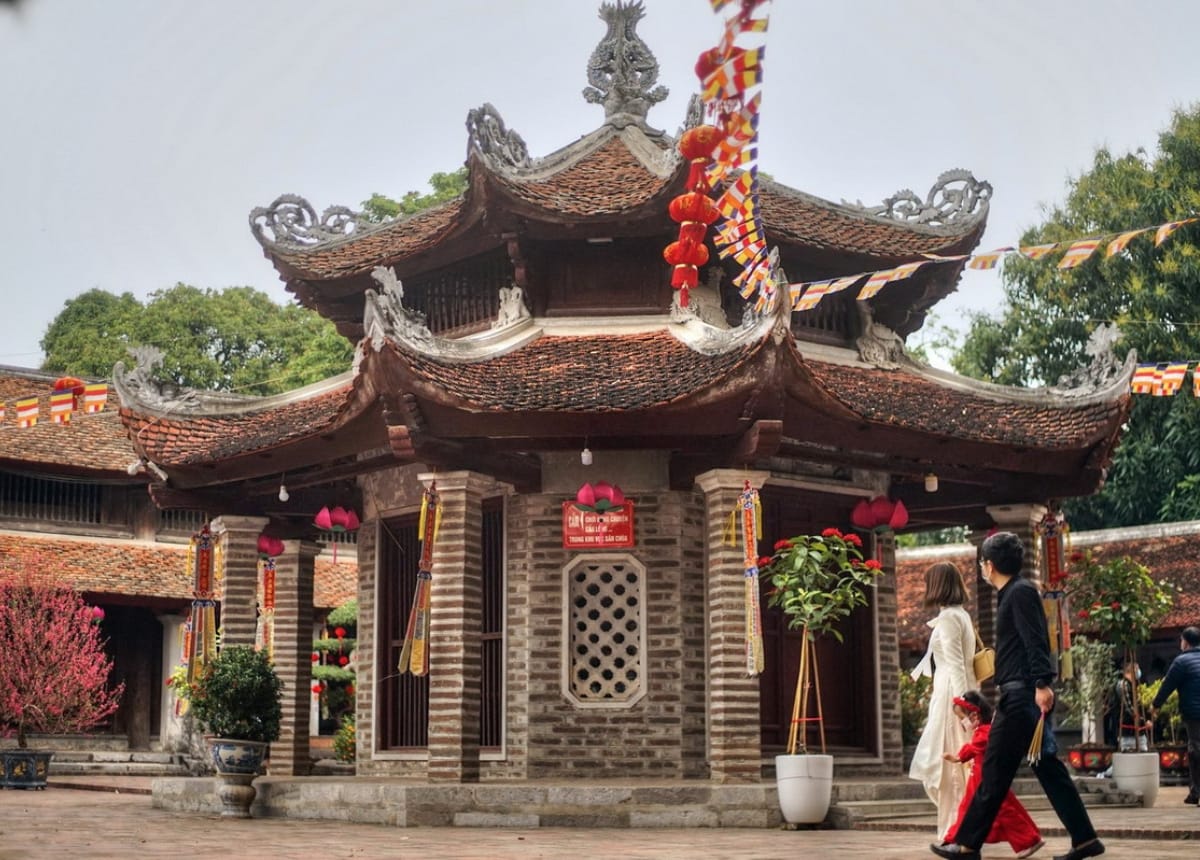
Traditionally, during the first three days of the Lunar New Year, Vietnamese families go to pagodas and temples to pray for health, happiness
Throughout the Tet Holiday, laughter and greetings fill the air, embodying the festive and communal spirit of the Vietnamese Lunar New Year. This cherished tradition not only deepens personal relationships but also reinforces the importance of kindness, respect, and togetherness in Vietnamese culture.
Must-Try Dishes for the Lunar New Year
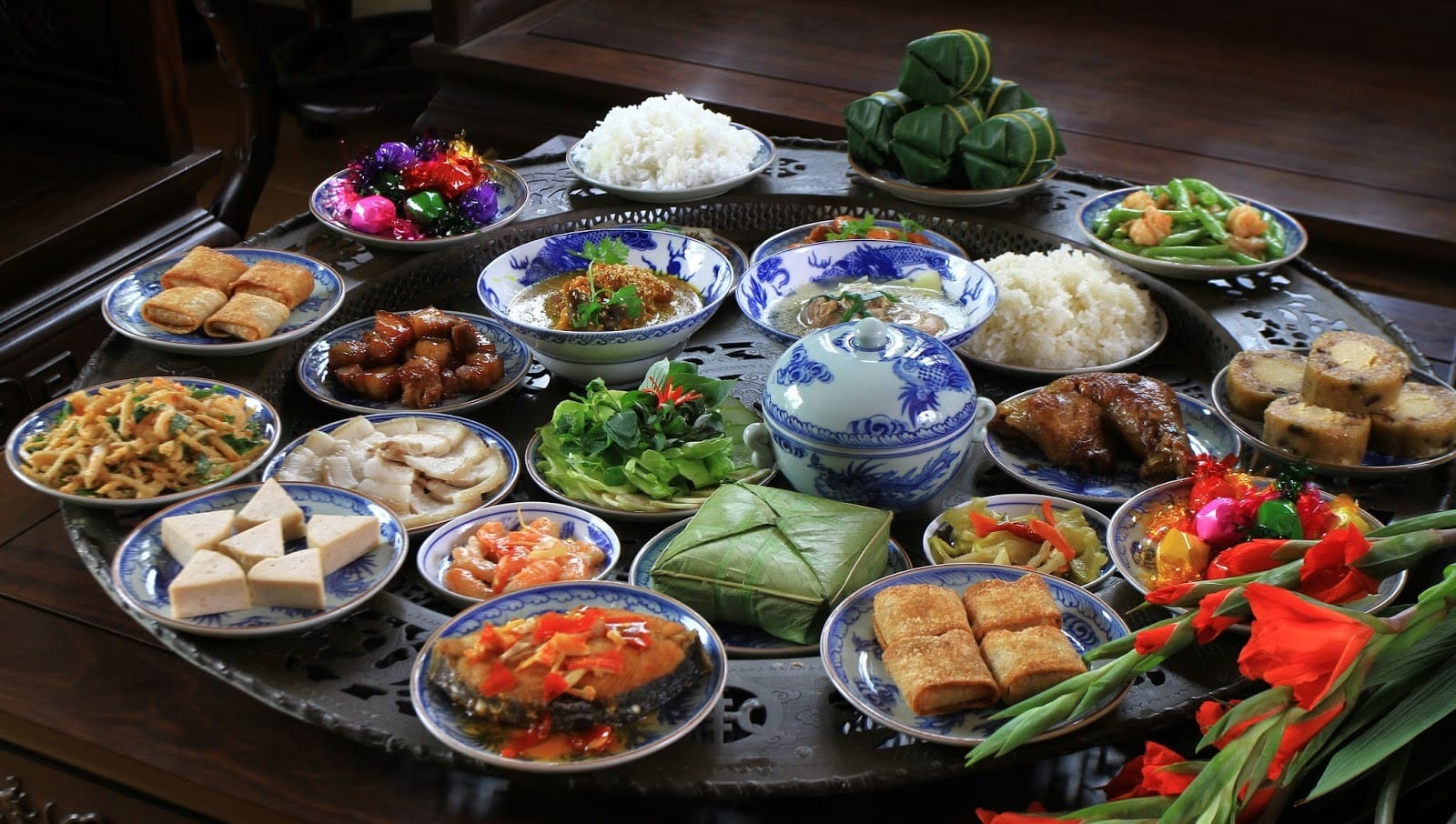
Traditional Tet banquet is a balance of starch, meat and greens following the “four dishes and four plates” or ” eight dish and eight plates” principle rooted in the four seasons, directions and pillars of the house.
Bánh Chưng (Square Sticky Rice Cake)
Bánh Chưng is the most iconic dish of the Vietnamese Lunar New Year. Made from sticky rice, mung beans, and pork, wrapped in green dong leaves, it symbolizes the Earth and the gratitude of Vietnamese people to their ancestors. During Tet Holiday, families gather to cook bánh chưng overnight, sharing stories and laughter by the fire.

To make Vietnamese Square Sticky Rice Cake, you’ll need long-grain sticky rice, split mung bean, pork belly, salt and a lot of freshly cracked black pepper.
This dish represents abundance, unity, and the importance of family. No Tet Holiday feast is complete without bánh chưng, as it embodies the essence of the Vietnamese Lunar New Year: warmth, love, and cultural pride passed down through generations.
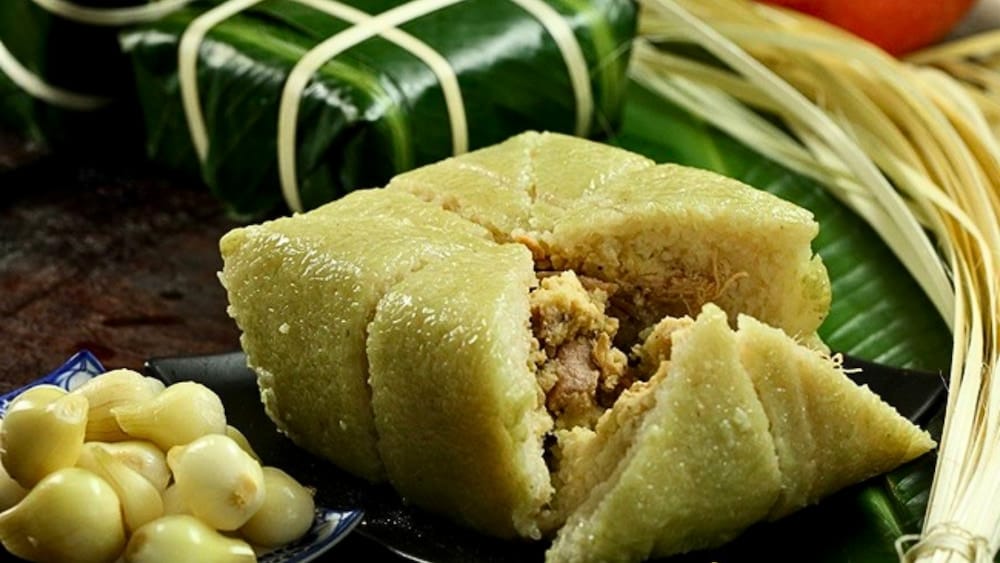
Freshly unwrapped bánh chưng served with pickled onions.
Bánh Tét (Cylindrical Sticky Rice Cake)
Bánh tét is another signature dish of the Tet Holiday, especially beloved in southern Vietnam. Similar to bánh chưng but in a cylindrical shape, it is made from glutinous rice, mung beans, and pork, tightly wrapped in banana leaves and boiled for hours. The round shape of bánh tét symbolizes continuity, luck, and unity for the Vietnamese Lunar New Year.
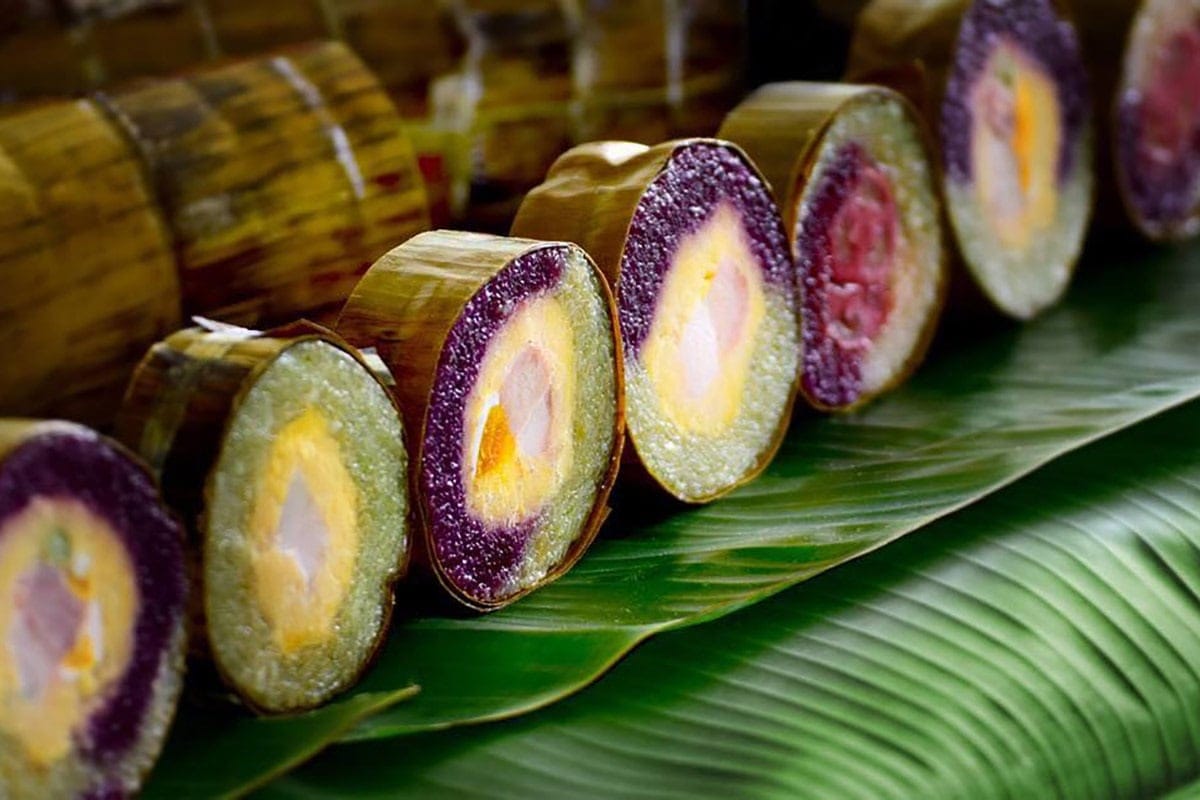
Banh tet goes beyond being a special treat for the Tet holiday; it captures the core of tradition, culture, and culinary artistry.
During Tet Holiday, families slice the cake into thick pieces to share with guests, representing togetherness and hospitality. Beyond its delicious taste, bánh tét embodies the festive spirit, tradition, and joy of the Vietnamese Lunar New Year celebration.
Giò Thủ, Giò Lụa (Vietnamese Pork Sausage)
Giò thủ and giò lụa are popular cold cuts served during Tet Holiday in Vietnam. Giò lụa is made from finely ground pork and fish sauce, tightly wrapped in banana leaves and steamed, symbolizing simplicity and purity. Meanwhile, giò thủ is made from pork head meat, wood ear mushrooms, and spices, offering a flavorful contrast.
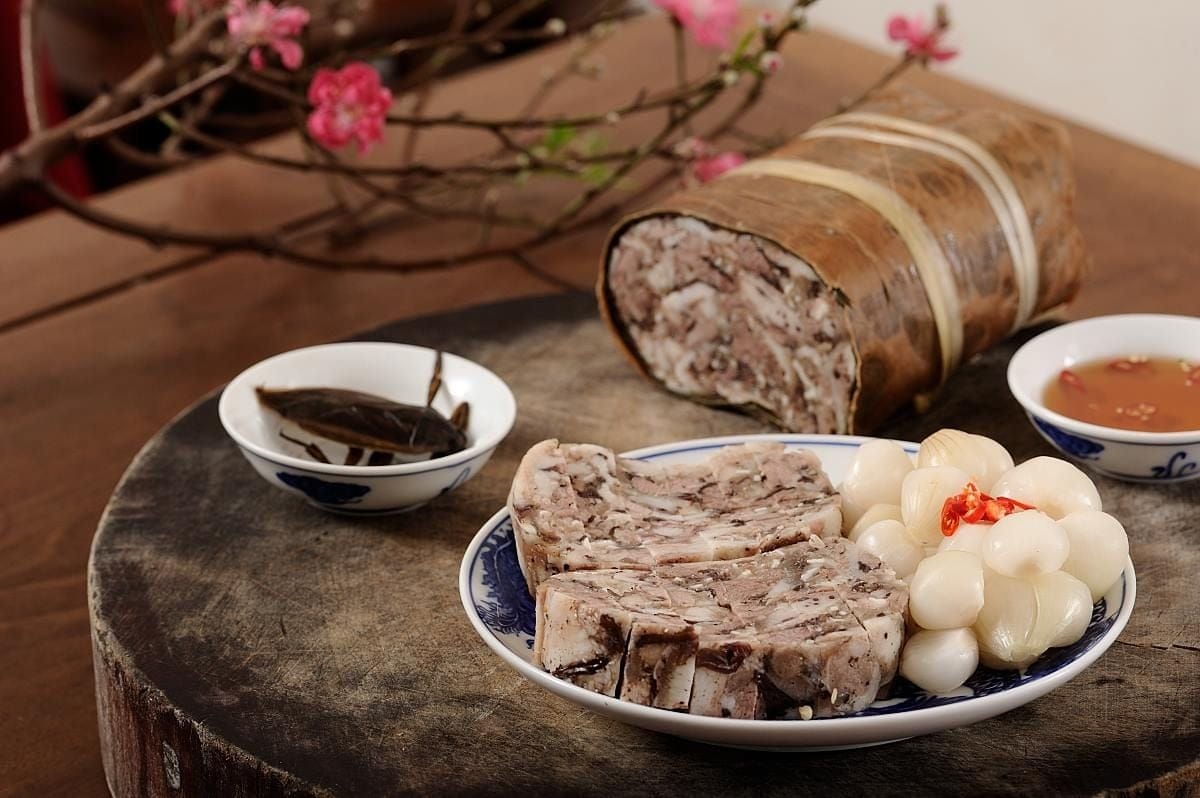
“Vietnamese cold cuts” or “head cheese.” It is a dish made from pork, mainly from the head, ears, tongue, etc., which is cooked, then chopped and seasoned with spices
Both dishes are staples on the Vietnamese Lunar New Year dining table, often sliced and paired with pickled vegetables. Their round shape signifies completeness and family reunion. Together, these traditional sausages reflect balance, gratitude, and the festive charm of the Tet Holiday.
Thịt Nấu Đông (Jellied Pork with Mushrooms)
A Northern specialty, thịt nấu đông is a traditional cold dish enjoyed during the Vietnamese Lunar New Year. It’s made from pork, mushrooms, and pepper, simmered and cooled until it naturally sets into a jelly-like texture. The transparent, shimmering surface of thịt nấu đông symbolizes clarity and peace for the new year.
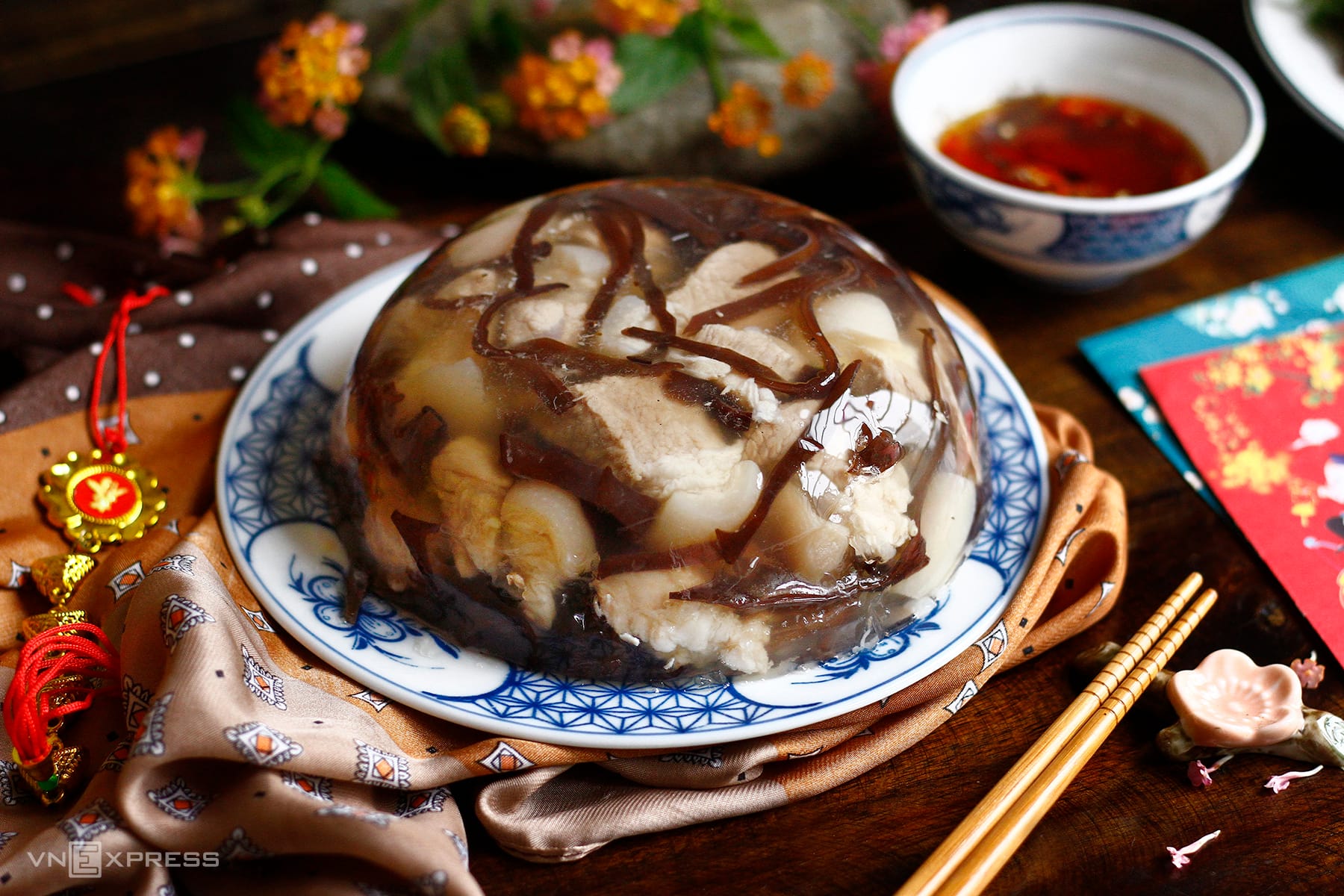
Thịt đông is a traditional Vietnamese jellied meat dish, particularly popular in northern Vietnam during winter and the Lunar New Year (Tết).
During the chilly Tet Holiday, this dish offers a refreshing yet rich flavor, best served with pickled onions and warm rice. Beyond its taste, thịt nấu đông embodies Vietnamese culinary wisdom, simple ingredients transformed into a delicate, elegant Tet Holiday delicacy.
Xôi (Sticky Rice)
Xôi, or sticky rice, is an indispensable dish during Tet Holiday celebrations. It represents unity and abundance, the sticky grains symbolizing close family ties in the Vietnamese Lunar New Year. There are many varieties, such as xôi gấc (red sticky rice) for luck, xôi đậu xanh (mung bean sticky rice) for prosperity, and xôi vò (crumbly sticky rice) for happiness.
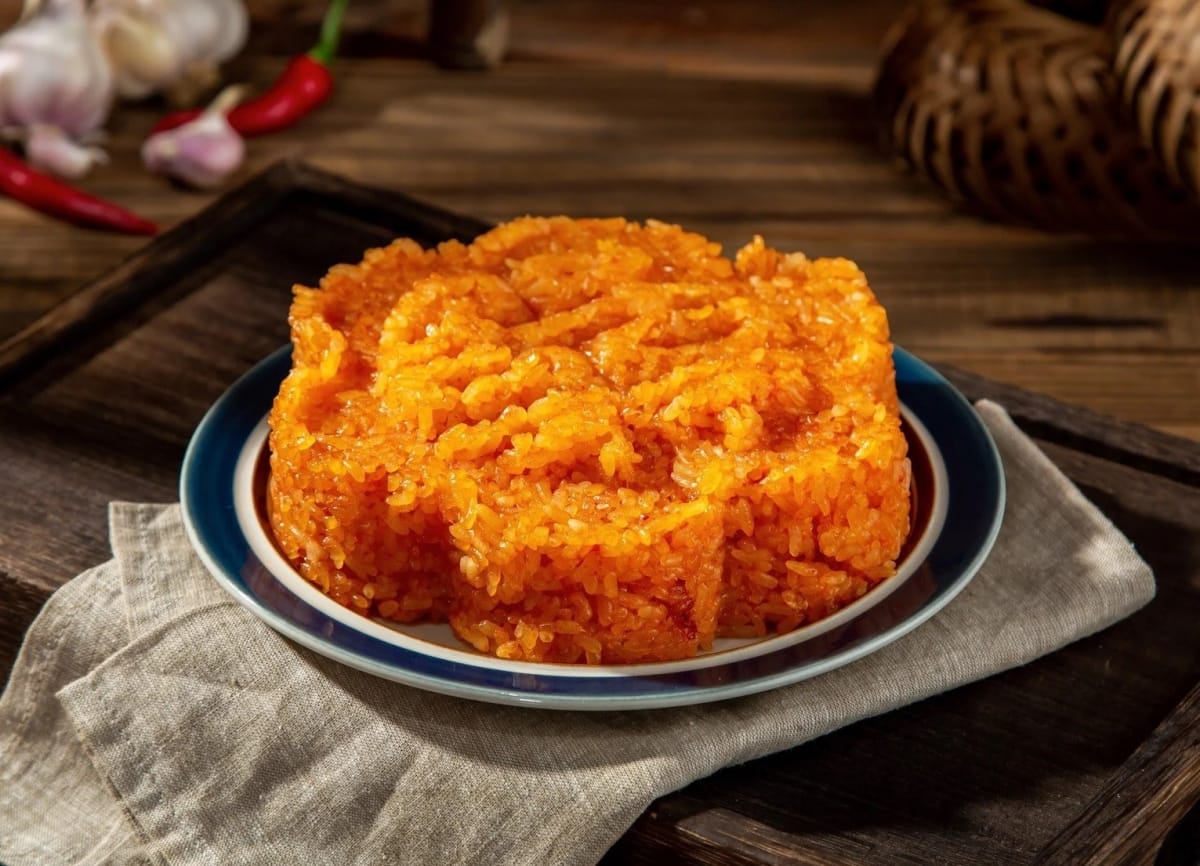
Vibrant trays of sticky rice symbolize abundance and luckiness
Served alongside savory dishes, xôi adds both color and meaning to the Tet Holiday feast. Its warm, fragrant texture captures the essence of Vietnamese hospitality, reminding everyone of love, togetherness, and joyful new beginnings.
Dưa Hành (Pickled Onions)
Dưa hành is a refreshing side dish that balances the richness of Tet Holiday meals. Its tangy, slightly spicy flavor complements bánh chưng, giò lụa, and thịt nấu đông, making it an essential part of the Vietnamese Lunar New Year menu. Prepared days before Tet, the pickled onions symbolize freshness and renewal for the coming year.
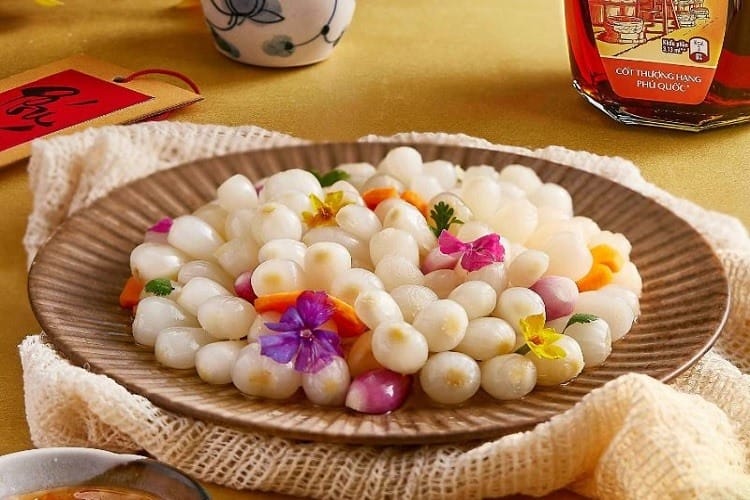
Dưa hành – tangy and slightly sweet condiment typically made with pickled shallots or small whole onions preserved in a brine of rice vinegar, sugar, and salt
During the Tet Holiday, they cleanse the palate and bring harmony to the meal. This humble dish perfectly represents Vietnamese simplicity, turning basic ingredients into something meaningful, lively, and full of festive flavor during the Vietnamese Lunar New Year.
Mứt Tết (Candied Fruits and Seeds)
Mứt Tết is the sweet highlight of every Tet Holiday celebration. A colorful mix of candied fruits, ginger, coconut, and roasted seeds, it’s served to welcome guests during the Vietnamese Lunar New Year. Each type of mứt carries symbolic meaning: sweetness for happiness, seeds for fertility, and bright colors for luck.
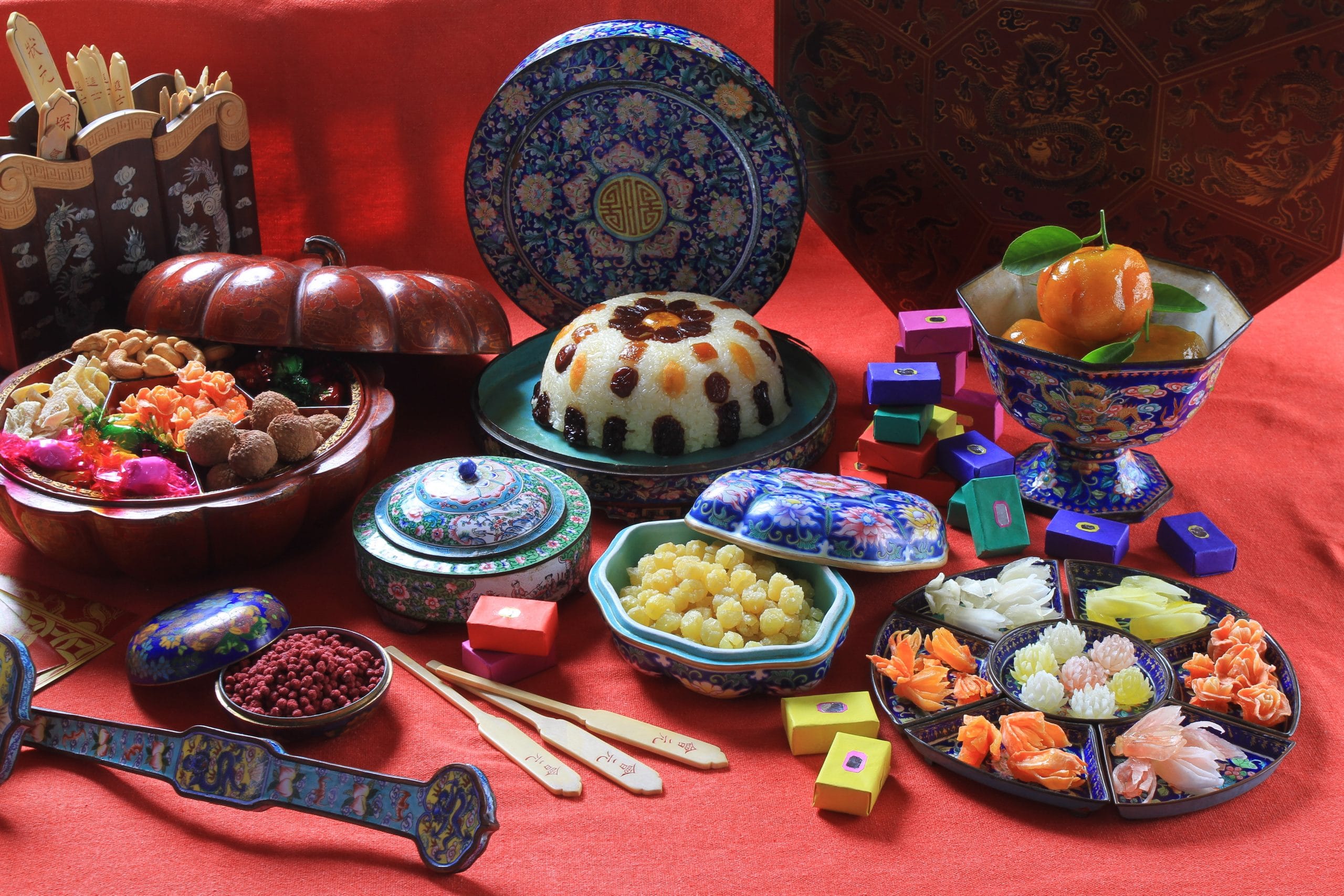
Colorful plates of mứt tết — sweet treats offered to Tet visitors.
Sharing mứt Tết with tea brings families closer, spreading warmth and good wishes. Beyond being a treat, it embodies generosity and hope for a prosperous year ahead. Mứt Tết captures the joyful, festive essence of the Tet Holiday and the vibrant culture of Vietnam.
Where to Go on Tet Holiday in Vietnam
Explore Historical and Cultural Heritage
During the Tet Holiday, exploring Vietnam’s historic landmarks offers a meaningful way to connect with its traditions.
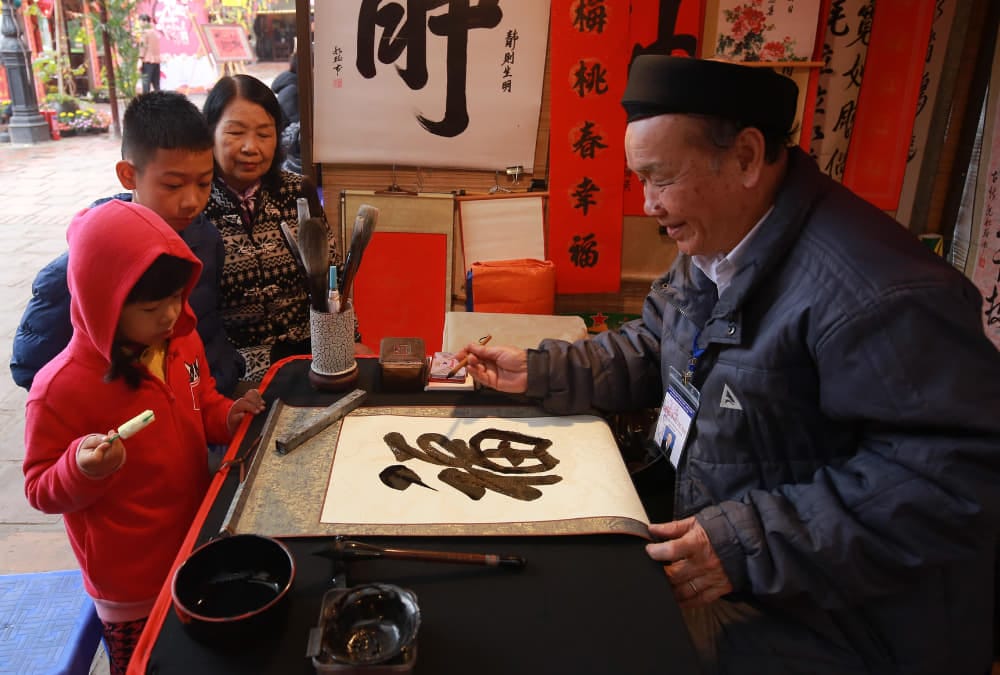
Red calligraphy and lanterns add charm to Hanoi’s Tet markets.
In the North, Hanoi captivates with the Temple of Literature, Ho Chi Minh Mausoleum, and ancient pagodas glowing with festive flowers.
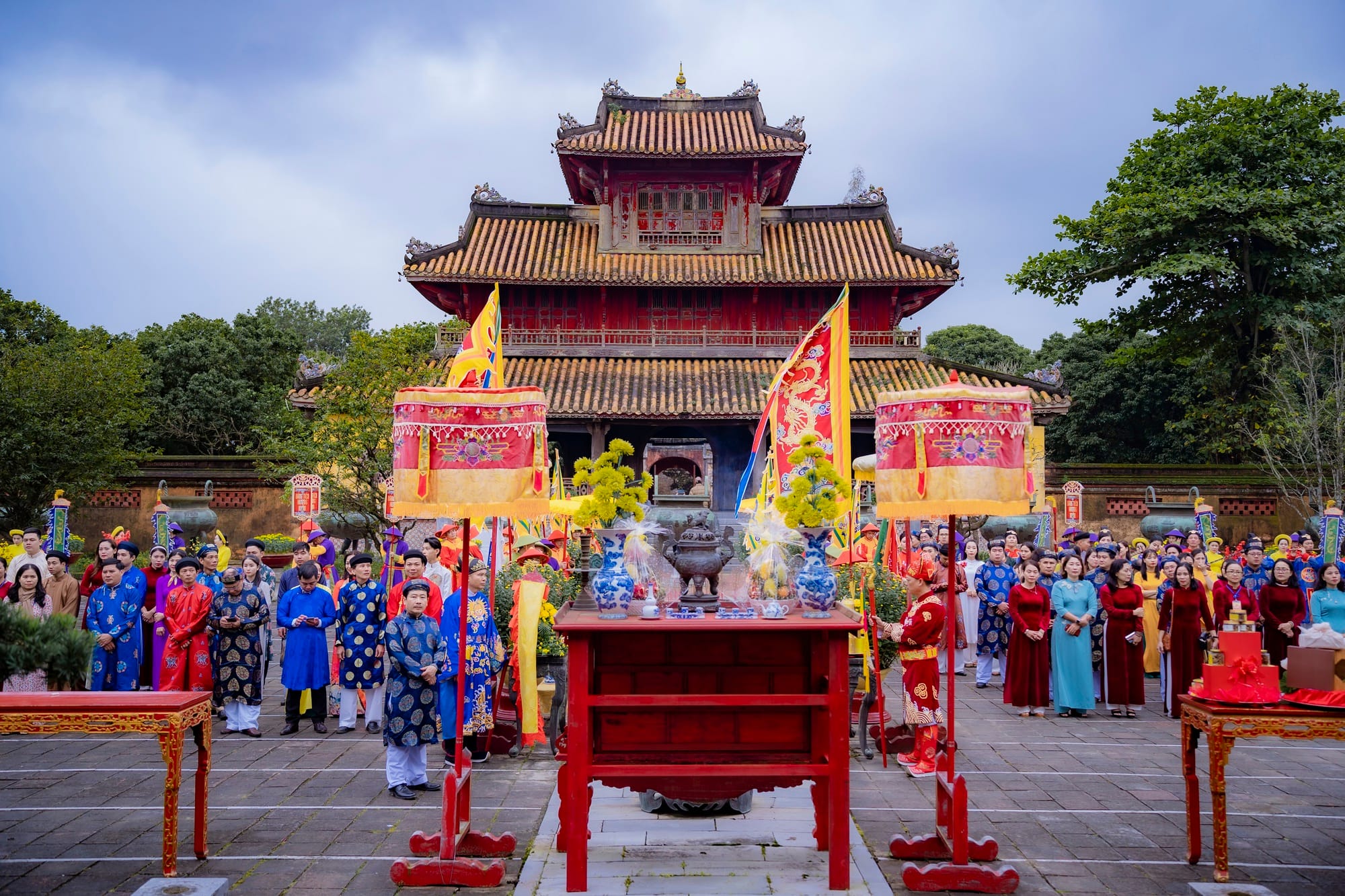
Hue Imperial City glows with lanterns and spring blossoms during Tet.
In Central Vietnam, Hue Imperial City hosts solemn rituals honoring the Nguyen emperors.
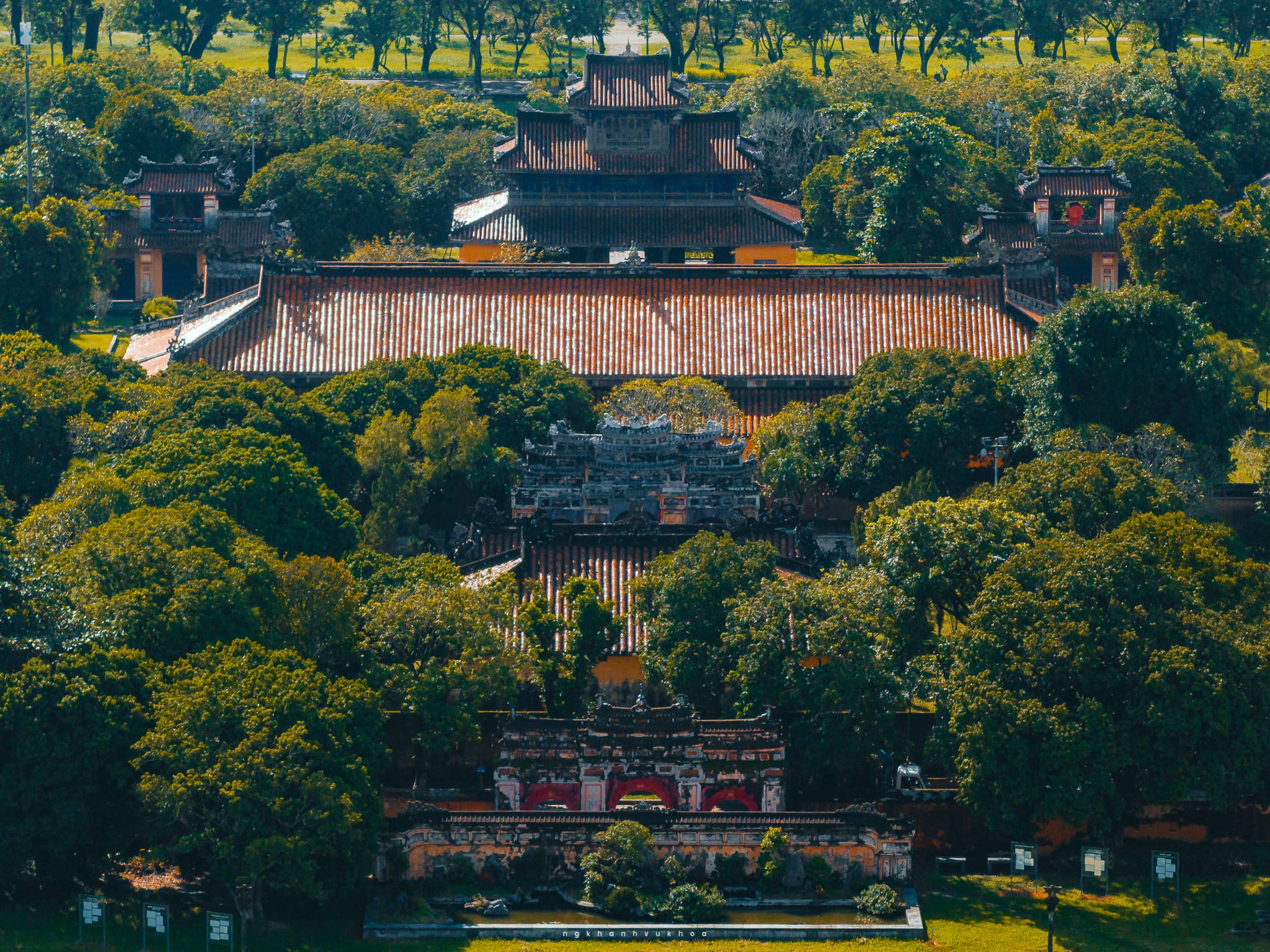
Imperial city shine under the soft spring mist.
Further south, Ho Chi Minh City, My Tho, and Vinh Long welcome visitors to charming temples and colonial architecture. Each site reflects Vietnam’s deep respect for ancestors and its vibrant Vietnamese Lunar New Year spirit.
Admire Vietnam’s Natural Wonders
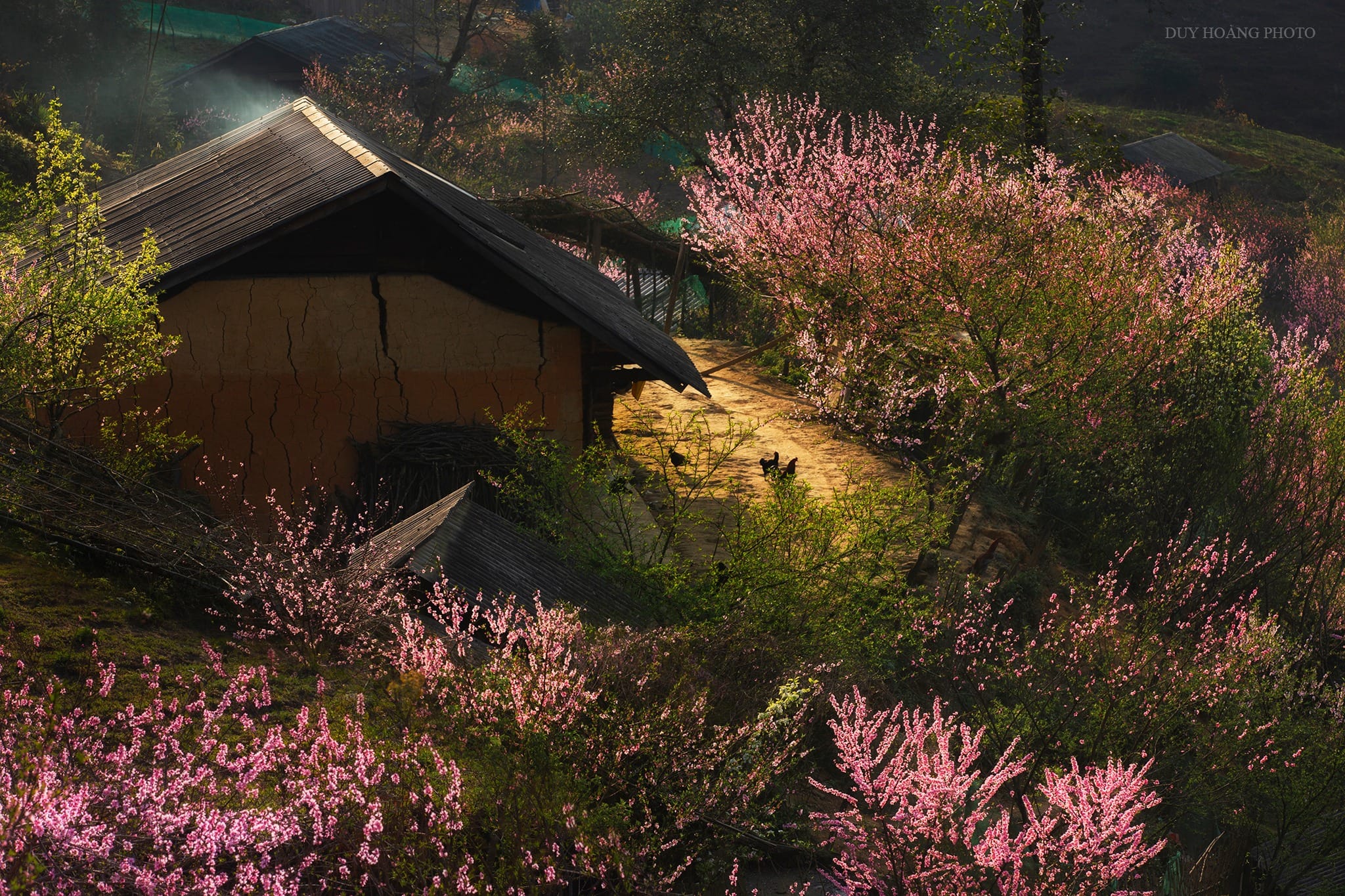
Tet Holiday is the perfect time to witness Vietnam’s breathtaking landscapes
For nature lovers, the Tet Holiday is the perfect time to witness Vietnam’s breathtaking landscapes. Visit Ha Long Bay with its emerald waters and limestone islands, or explore Trang An in Ninh Binh, a UNESCO-listed wonder of caves and river valleys.

Travelers experience wild peach blossom season in vietnam’s remote area
In Central Vietnam, Phong Nha – Ke Bang National Park impresses with majestic caves, while Da Nang’s Marble Mountains combine nature and spirituality.
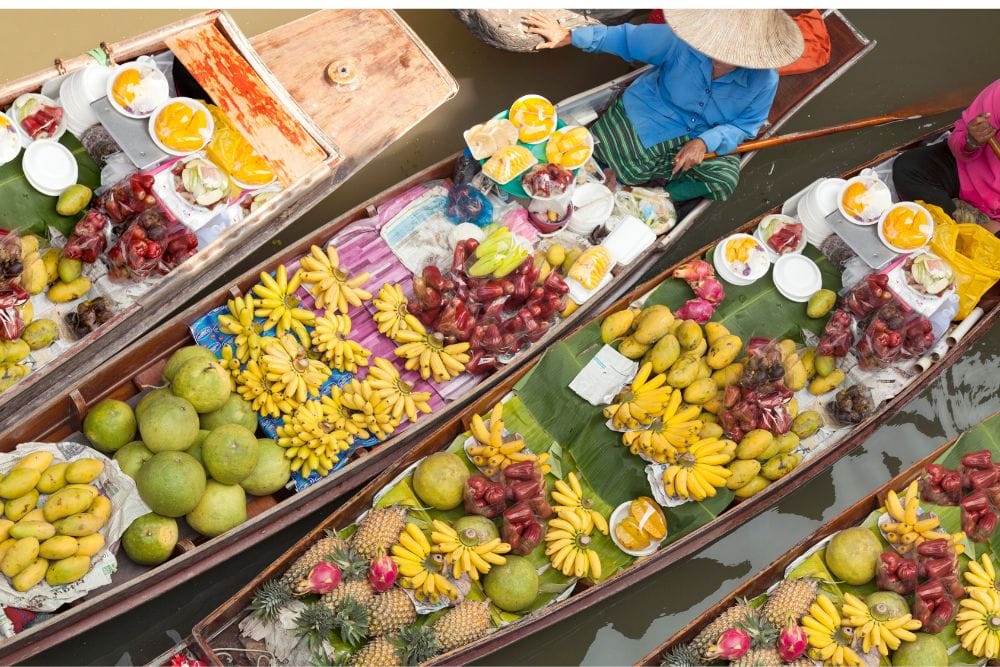
Spring float markets in Can Tho burst with life ahead of Tet.
Down south, Can Tho’s floating markets offer a lively, festive atmosphere unique to the Mekong Delta during the Vietnamese Lunar New Year.
Relax at Beautiful Beach Destinations
The Tet Holiday is also an ideal moment for a peaceful seaside escape. Vietnam’s long coastline offers endless options for relaxation. In Central Vietnam, Hoi An and Da Nang feature tranquil beaches paired with festive lanterns and spring breezes.
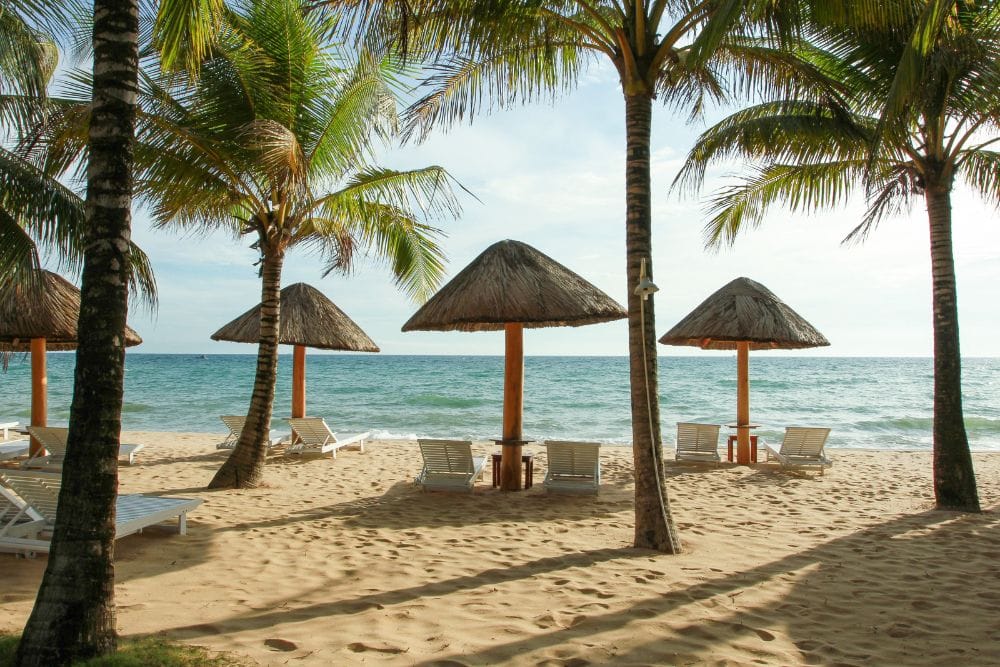
Nha Trang and Mui Ne offer serene, sunny escapes during Tet.
Heading south, Nha Trang and Mui Ne promise sunny days and crystal-clear waters, while Phu Quoc Island is perfect for luxury stays and sunset views. Celebrating the Vietnamese Lunar New Year by the sea lets travelers unwind while still feeling the warmth of local festivities.

Phu Quoc’s sunset dinners make a romantic Tet getaway.
Visiting Vietnam during the Tet Holiday: What You Need to Know
Visiting Vietnam during the Tet Holiday is an unforgettable cultural experience. As the Vietnamese Lunar New Year approaches, cities and villages burst with color, laughter, and the scent of spring flowers.
Tips to enjoy Tet like a local
To make the most of your Tet Holiday experience, embrace the local spirit of the Vietnamese Lunar New Year. Start by joining family gatherings or visiting temples to witness traditional customs. Try local specialties like bánh chưng and mứt tết, which symbolize prosperity and happiness.
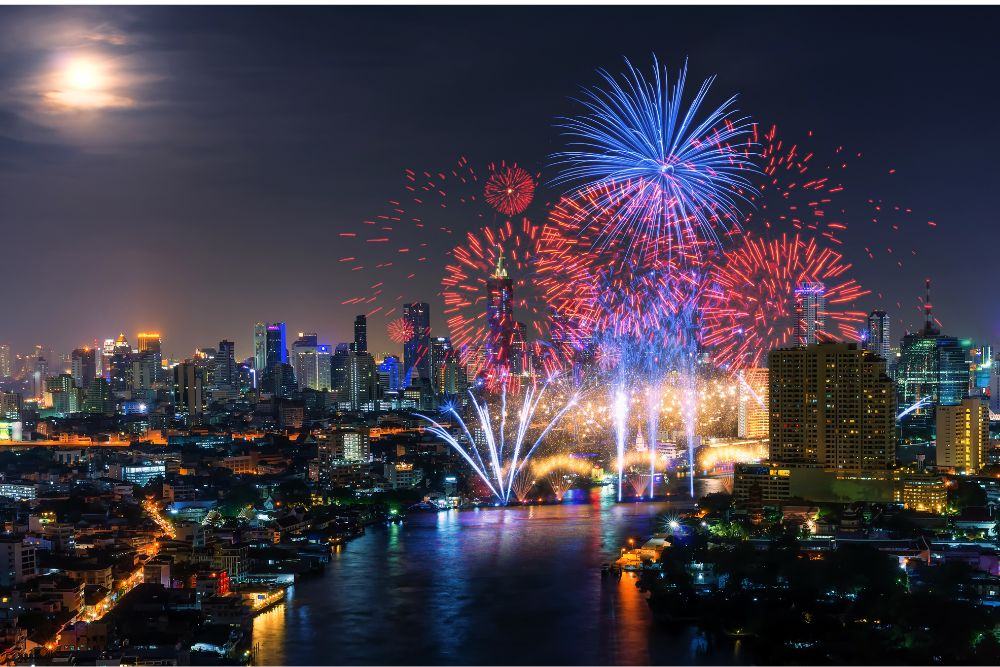
Street festivals & fireworks across Vietnam celebrating the new begin of a lunar year
Learn to say “Chúc Mừng Năm Mới” to greet locals warmly. When giving lì xì (red envelopes), use crisp new bills as a gesture of good luck. Respect cultural beliefs, avoid wearing black or arguing during the first days. These small touches help you truly enjoy Tet like a local.
From City to rural villages, streets lighted up with Tet decorations and flowers.
Lastly, travelers are encouraged to book transport and accommodation early and join in the joyful atmosphere by sharing New Year greetings.
Common phrases to try
“Chúc Mừng Năm Mới” (chook moong nahm moy) – Happy New Year!
“An khang thịnh vượng” (ahn khahng tin voo-uhng) – Wishing you peace and prosperity
“Vạn sự như ý” (vaan soo nyuh ee) – May all your wishes come true
“Sức khỏe dồi dào” (sook kwee doy zow) – Wishing you good health
“Năm mới hạnh phúc” (nam moy han fook) – Have a joyful new year!
Ready to Experience Jiva?
Immerse yourself in a stay where northern Vietnamese architecture meets world-class comfort. At Jiva Hoalu Retreat, each accommodation blends locally inspired décor with modern luxuries, offering a unique fusion of culture, tradition, and elegance. Whether you’re here for a romantic getaway, a family escape, or a tranquil retreat, Jiva promises unforgettable moments in the heart of Ninh Binh.
Contact Us:
📞 +84 933 006 886
📧 inquiry@jivahoaluretreat.com
🌐 https://jivahoaluretreat.com/
Book now! to enjoy super hot deals